
In the rapidly evolving landscape of enterprise software, few names carry as much weight in the MarTech (Marketing Technology) stack as Marketo. Since its inception in 2006 and its subsequent high-profile acquisition by Adobe in 2018 for $4.75 billion, Marketo—now officially known as Adobe Marketo Engage—has established itself as the gold standard for B2B marketing automation. But for those outside the immediate circle of digital operations, the question remains: what exactly is Marketo, and why does it dominate the technical infrastructure of the world’s most successful companies?
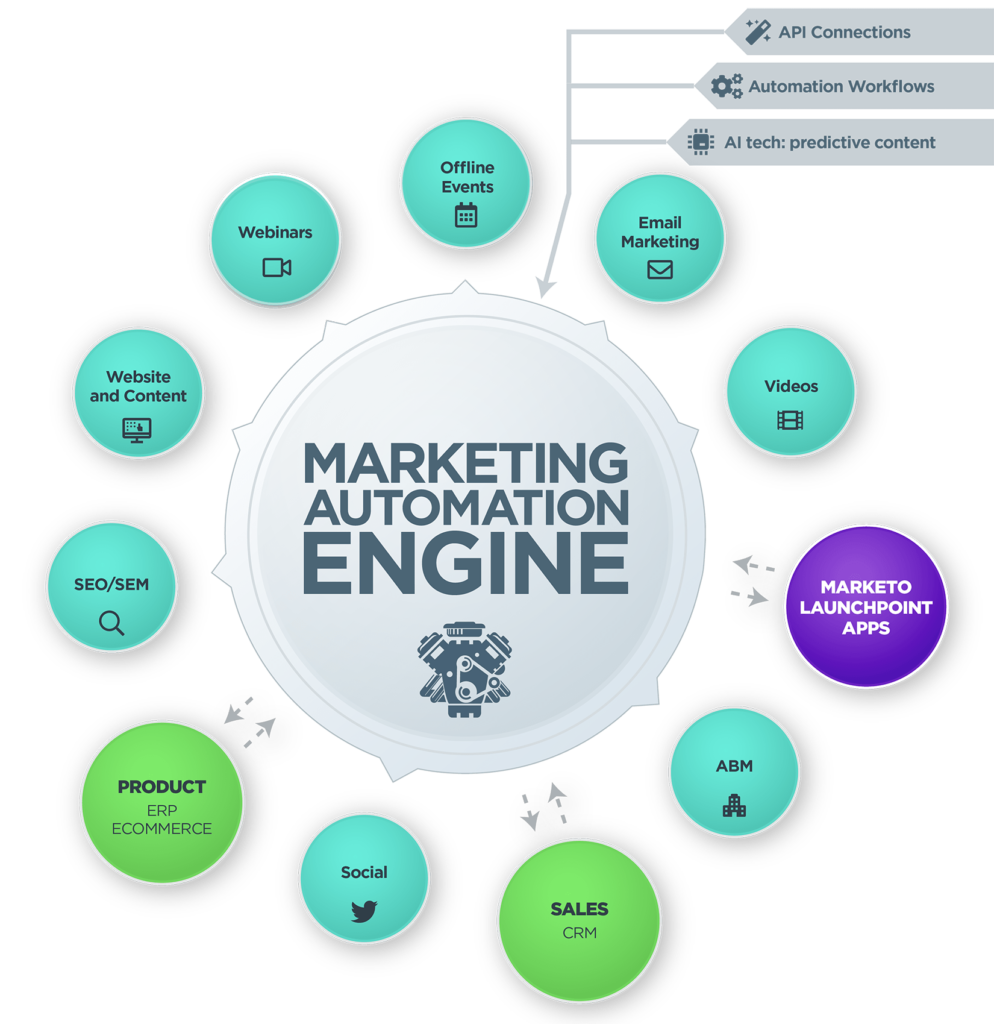
At its core, Marketo is a sophisticated software-as-a-service (SaaS) platform designed to automate, track, and optimize the complex workflows associated with digital marketing. While many smaller tools handle simple email blasts, Marketo is a multi-functional engine that manages the entire lifecycle of a customer lead through data-driven automation.
Understanding the Technical Architecture of Marketo Engage
To understand Marketo, one must first look at its underlying technical architecture. Unlike basic automation tools that function as standalone applications, Marketo is built as a robust database management system that integrates deeply with a company’s broader technological ecosystem.
The Core Lead Management Engine
The heartbeat of Marketo is its Lead Management module. From a technical perspective, this is a highly scalable database that tracks every interaction a potential customer has with a brand. This isn’t limited to just email clicks; the platform utilizes a proprietary tracking script, known as the “Munchkin” code, which is embedded on websites. This JavaScript-based snippet allows the platform to track cookies, IP addresses, and user behavior across multiple sessions, effectively bridging the gap between anonymous web traffic and known database records.
Cloud-Based Infrastructure and the Adobe Experience Cloud
Since being integrated into the Adobe Experience Cloud, Marketo has transitioned into a more modular, cloud-native architecture. It leverages Adobe’s massive server infrastructure to provide high availability and rapid data processing. For IT teams, this means the platform can handle millions of API calls and process vast amounts of behavioral data in real-time, ensuring that marketing triggers—such as an automated response to a high-value whitepaper download—occur within milliseconds.
Key Technical Features and Capabilities
Marketo is more than just a repository for contacts; it is a suite of specialized tools that allow technical marketing teams to build complex, logic-based “Smart Campaigns.” These features are what differentiate the platform from entry-level software.
Advanced Automation and Smart Campaigns
The defining feature of Marketo is its “Smart Campaign” logic. Using a “Smart List” (the target audience) and a “Flow” (the set of actions), users can build intricate “if-then” scenarios. For example, a developer can set a trigger that says: “If a user from a Fortune 500 company visits the pricing page three times in 24 hours AND has not yet spoken to sales, send a notification to the account manager and increase the lead’s technical score by 50 points.” This level of granular control over data-driven actions is what makes the platform a tech-heavy powerhouse.
Lead Scoring and Data Normalization
Marketo excels at Lead Scoring, a technical process that assigns numerical values to leads based on their interactions. This is governed by complex algorithms that the user defines. Furthermore, Marketo includes data normalization tools. When data enters the system through various forms or third-party integrations, it is often “dirty”—containing inconsistent formatting or missing fields. Marketo’s technical workflows can automatically cleanse this data, ensuring that “USA,” “United States,” and “U.S.A.” are all standardized to a single value for better reporting and segmentation.
Account-Based Marketing (ABM) Tools
For B2B organizations, Marketo provides a technical framework for Account-Based Marketing. Instead of looking at individual leads, the system uses AI-driven matching logic to group individuals under a single “Account” entity. This allows technical teams to track the “Account Score”—the collective interest of an entire company—providing a holistic view of how a specific business is engaging with the brand’s digital assets.
The Role of AI and Machine Learning in Marketo
In recent years, Adobe has infused Marketo with advanced Artificial Intelligence (AI) and Machine Learning (ML) capabilities, primarily through Adobe Sensei. This has moved the platform from being a reactive tool to a predictive one.

Leveraging Adobe Sensei for Predictive Content
One of the most powerful tech integrations in Marketo is Predictive Content. Using machine learning algorithms, the platform analyzes which pieces of content (blogs, videos, case studies) are most effective at converting specific types of users. It then automatically serves the most relevant content to new visitors based on their behavioral patterns. This eliminates the need for manual A/B testing, as the AI continuously optimizes the content delivery in the background.
Predictive Audience Clusters
Beyond content, Marketo uses ML to identify “Lookalike Audiences.” By analyzing the technical signatures and behavioral data of a company’s best customers, the AI can scan the existing database or third-party data streams to find individuals who share similar traits but haven’t yet been targeted. This predictive modeling turns the marketing database into an active engine for growth, rather than a static list of names.
Integrations and the Technical Ecosystem
A significant reason for Marketo’s dominance in the tech sector is its “extensibility.” It is designed to be the “brain” that connects to a wide variety of other software applications.
Bi-Directional CRM Integration
Marketo is famous for its deep, bi-directional synchronization with Customer Relationship Management (CRM) systems like Salesforce and Microsoft Dynamics. This is not a simple data export; it is a sophisticated sync process that ensures data integrity between the marketing and sales departments. Technical administrators can map custom fields between the two systems, ensuring that when a salesperson updates a record in Salesforce, the change is reflected in Marketo (and vice versa) within minutes.
The LaunchPoint Ecosystem and APIs
For organizations with complex requirements, Marketo offers “LaunchPoint,” an ecosystem of hundreds of pre-built integrations with other tech tools—from webinar platforms like ON24 to video hosting services like Vidyard. Furthermore, Marketo provides a robust set of REST and SOAP APIs. This allows developers to build custom integrations, push external data into Marketo “Custom Objects,” or pull detailed analytics into third-party business intelligence (BI) tools like Tableau or Power BI.
Implementation, Governance, and Digital Security
Because Marketo handles vast amounts of Sensitive Personal Information (SPI) and Personally Identifiable Information (PII), its technical implementation requires a heavy focus on security and governance.
Data Privacy and Compliance (GDPR, CCPA, and Beyond)
In an era of strict data privacy regulations, Marketo provides the technical infrastructure necessary to remain compliant with GDPR, CCPA, and other global mandates. This includes automated “Double Opt-In” workflows, centralized preference centers where users can manage their data, and robust “Right to be Forgotten” protocols. The platform’s ability to log every interaction provides a clear audit trail, which is essential for legal and technical compliance.
Governance and User Permissioning
Large enterprises often have hundreds of employees using the marketing platform. Marketo’s technical architecture includes “Workspaces” and “Partitions.” These features allow an organization to silo data and assets so that the marketing team in Europe cannot see or interfere with the data of the team in North America. This granular level of user permissioning ensures that the technical integrity of the global database is maintained, preventing accidental data overwrites or unauthorized access.
Technical Deliverability and Security
Finally, Marketo addresses the technical side of email communication. To ensure that millions of automated emails don’t end up in spam folders, the platform supports advanced email authentication protocols, including SPF (Sender Policy Framework), DKIM (DomainKeys Identified Mail), and DMARC. Marketo also allows for CNAME branding, which enables the platform to send emails and host landing pages under the company’s own domain, maintaining a consistent and secure technical footprint across the web.

Conclusion
Marketo is far more than a marketing tool; it is a comprehensive technical platform that serves as the foundation for modern digital operations. By combining a robust lead management database with advanced automation logic, AI-driven insights, and deep CRM integrations, it allows companies to scale their digital presence with surgical precision.
For the tech-savvy organization, Marketo provides the necessary tools to turn raw data into actionable intelligence. Whether through its complex API capabilities or its sophisticated machine learning algorithms, Marketo Engage remains at the forefront of the technology sector, defining how businesses interact with the digital world. As the Adobe ecosystem continues to evolve, the technical capabilities of Marketo are set to expand even further, solidifying its place as an essential component of the global enterprise tech stack.
aViewFromTheCave is a participant in the Amazon Services LLC Associates Program, an affiliate advertising program designed to provide a means for sites to earn advertising fees by advertising and linking to Amazon.com. Amazon, the Amazon logo, AmazonSupply, and the AmazonSupply logo are trademarks of Amazon.com, Inc. or its affiliates. As an Amazon Associate we earn affiliate commissions from qualifying purchases.