
In the landscape of modern technology, particularly within the realms of robotics, industrial automation, and precision engineering, we often focus on the most visible metrics of performance: speed and power. However, as our machines become more sophisticated and our manufacturing tolerances shrink to the micron level, a more nuanced physical property has moved to the forefront of engineering discourse. That property is “jerk.”
While the term may carry a different connotation in colloquial English, in the world of technology and physics, jerk is the formal name for the rate of change of acceleration with respect to time. It is the third derivative of position. As we transition into an era of high-speed autonomous vehicles, ultra-precise 3D printers, and collaborative robots (cobots), understanding and controlling jerk has become the differentiating factor between a clunky prototype and a world-class technological product.
Defining Jerk in the Context of Modern Engineering
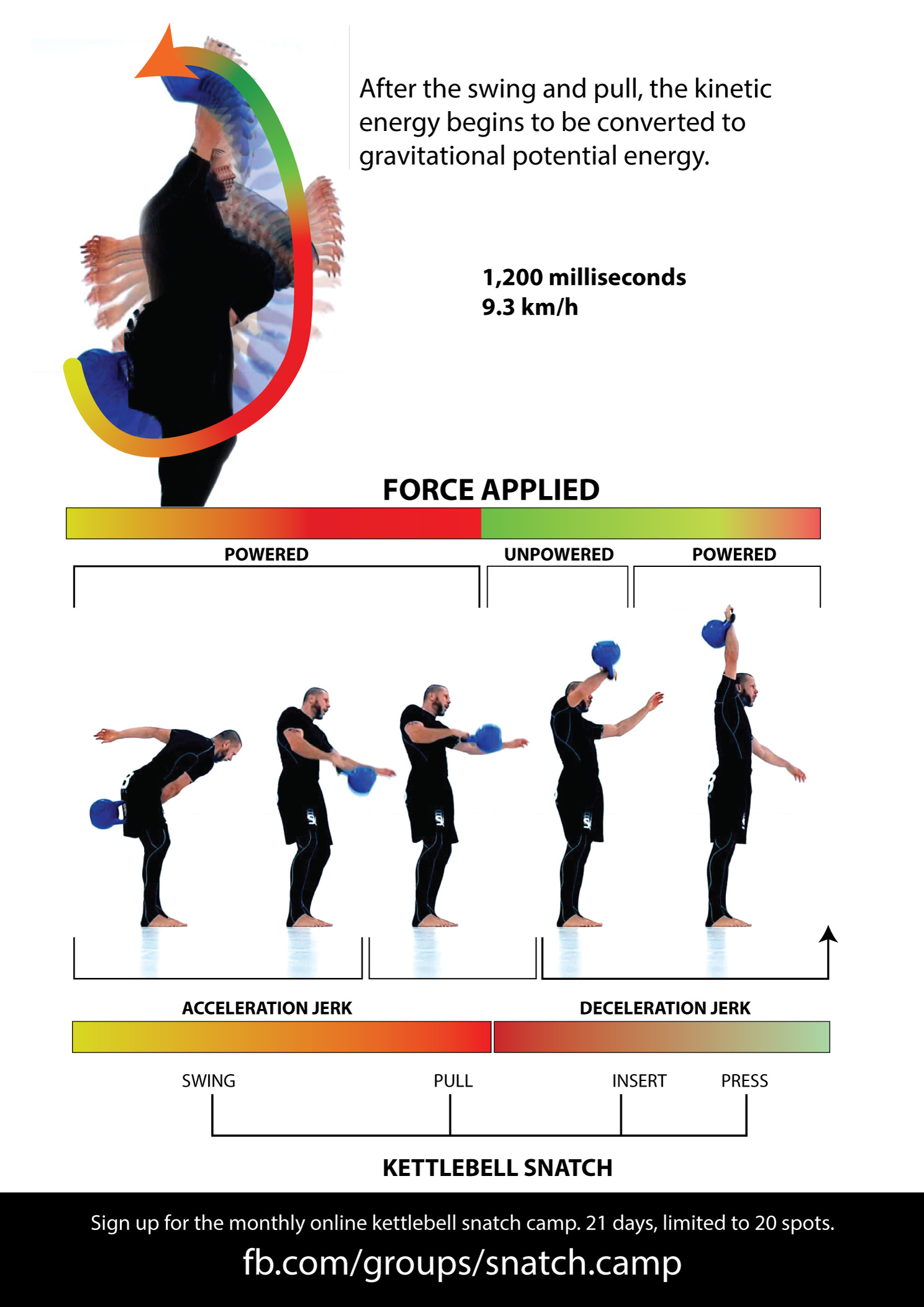
To understand why jerk is such a vital concept in technology today, one must first look at the hierarchy of motion. Most people are comfortable with position (where something is) and velocity (how fast it is moving). In the tech world, we are also intimately familiar with acceleration (how quickly the speed is changing). Jerk takes this a step further by measuring how quickly that acceleration itself starts, stops, or fluctuates.
The Calculus of Motion: Beyond Velocity and Acceleration
Mathematically, if position is the primary function, velocity is its first derivative, acceleration is its second, and jerk is its third. If a vehicle moves from a standstill to 60 mph in a perfectly linear fashion, the acceleration is constant, and the jerk is zero. However, in the real world, acceleration is rarely constant. The moment you press the accelerator, there is a transition from zero acceleration to positive acceleration. That transition is jerk.
In high-end software for motion control, engineers must account for even higher derivatives—specifically “snap,” “crackle,” and “pop” (the fourth, fifth, and sixth derivatives)—but jerk remains the most influential factor in mechanical longevity and operational smoothness.
Why Jerk Matters: The Physics of Smoothness
The reason jerk is a “tech” problem rather than just a theoretical physics problem lies in the concept of “induced vibration.” When a machine experiences a high level of jerk—meaning its acceleration changes abruptly—it creates a “snap” effect. This sudden change in force excites the natural frequencies of the mechanical structure.
In a robotic arm, this translates to oscillations at the end of a movement. In a 3D printer, it manifests as “ghosting” or “ringing” on the surface of a printed part. By mastering jerk, developers can create systems that move with organic fluidity rather than mechanical harshness, preserving both the hardware and the quality of the output.
The Role of Jerk in Industrial Automation and Robotics
In industrial settings, the goal is almost always to maximize throughput—producing the most units in the shortest time. This requires machines to move fast and stop instantly. However, the laws of physics dictate that an instantaneous stop represents infinite jerk, which would theoretically require infinite force and result in the destruction of the machine.
Minimizing Mechanical Stress and Wear
Every time a robotic actuator or a CNC (Computer Numerical Control) machine experiences a high-jerk maneuver, the internal components—gears, belts, bearings, and motors—absorb a massive amount of kinetic energy. Over time, high jerk leads to “metal fatigue.”
By implementing “jerk-limited” motion profiles, tech firms can extend the lifespan of industrial equipment by years. Instead of a hard start-and-stop, the software dictates a gradual “ramp-up” and “ramp-down” of acceleration. This reduces the peak forces applied to the mechanical joints, ensuring that the hardware remains within its elastic limit and reducing the frequency of costly maintenance cycles.
Optimizing Throughput without Sacrificing Precision
The challenge for modern AI-driven automation is finding the “sweet spot” where jerk is high enough to allow for rapid movement but low enough to maintain precision. In semiconductor manufacturing, for instance, robotic wafter-handlers must move with incredible speed across a cleanroom, yet they must stop with nanometer precision.
If the jerk is too high, the vibration caused by the stop will take several milliseconds to dissipate before the next action can be taken. By utilizing advanced jerk-filtering algorithms, engineers actually increase total throughput because they eliminate the “settling time” required for vibrations to stop. The machine may move slightly slower during the transition, but it is ready to work the instant it reaches its destination.
Software Algorithms and Jerk Limitation (S-Curve Profiling)
The primary way the tech industry manages jerk is through sophisticated software algorithms. The most common method used in modern firmware and motion controllers is known as “S-Curve Profiling.”
Trapezoidal vs. S-Curve Motion Profiles
In legacy systems, “Trapezoidal” motion profiles were the standard. In a trapezoidal profile, acceleration jumps instantly from zero to a fixed value, stays there, and then drops instantly back to zero. While simple to calculate, this creates infinite jerk at the “corners” of the trapezoid.
Modern software uses S-Curve profiles, where the acceleration itself is ramped up and down. When plotted on a graph, the velocity looks like an “S.” This ensures that the jerk is kept to a finite, manageable value. Implementing this requires significant computational overhead, as the processor must solve complex polynomial equations in real-time to determine the exact position of the motor at any given millisecond.
Real-Time Computation and Path Planning
With the rise of more powerful ARM-based microcontrollers and FPGAs (Field Programmable Gate Arrays), we are seeing the integration of “Look-Ahead” algorithms in motion control. These software tools analyze the upcoming path—for example, a complex curve in a CAD file—and pre-calculate the necessary jerk limits.
If a 3D printer’s firmware sees a sharp 90-degree corner coming up, the look-ahead algorithm will calculate the maximum jerk the frame can handle without shaking. It will then slow down the acceleration well in advance. This marriage of physics and real-time data processing is what allows modern consumer gadgets to achieve professional-grade results.
Jerk Control in Consumer Tech: From 3D Printing to EVs
While jerk is a staple of industrial engineering, it has recently become a major talking point in consumer technology, specifically regarding 3D printing and the electric vehicle (EV) revolution.
Elevating Print Quality in FDM and Resin Printing
In the 3D printing community, “Jerk” and “Junction Deviation” are settings that enthusiasts tweak to perfect their prints. When a 3D printer’s nozzle changes direction, the jerk setting determines how much the printer must slow down.
If the jerk setting is too high, the printer’s frame vibrates, leading to “ringing” (visible waves on the print surface). If it is too low, the printer slows down too much at corners, causing “blobbing” as excess filament oozes out of the nozzle. The latest generation of “Klipper” firmware uses a tech called “Input Shaping,” which uses an accelerometer to measure the machine’s resonance and then applies an inverse jerk-limited signal to cancel out vibrations. This is a prime example of how software is solving mechanical limitations.
Enhancing Passenger Comfort in Electric Vehicles and Autonomous Systems
In the automotive sector, jerk is the primary metric for “ride quality.” Electric vehicles are capable of near-instantaneous torque, which could lead to extremely high jerk. Without software-based jerk limiting, an EV would feel “twitchy” and uncomfortable, potentially causing motion sickness or even neck strain for passengers.
Tesla, Rivian, and other EV manufacturers spend thousands of hours tuning the “pedal map,” which is essentially a jerk-limiting algorithm. It ensures that when you floor the accelerator, the power is delivered in a way that feels powerful yet smooth. Furthermore, in autonomous driving, the AI must plan lane changes and braking maneuvers that stay within specific “comfort jerk” limits, mimicking the smooth driving style of a human chauffeur rather than a binary computer.
The Future of High-Precision Motion Control
As we look toward the future, the management of jerk is moving from static settings to dynamic, AI-driven optimization. The next frontier in technology involves systems that can sense their environment and adjust their motion physics on the fly.
AI-Driven Motion Optimization
We are beginning to see the emergence of “Self-Tuning” motion controllers. Using machine learning, these systems monitor their own performance via sensors. If a robotic arm detects that its joints are wearing down or that it is carrying a heavier payload than usual, the AI can automatically lower the jerk limits to prevent damage or inaccuracy. This level of adaptability is crucial for the “Lights Out” factories of the future, where machines must operate for months without human intervention.

Toward Zero-Vibration Manufacturing
The ultimate goal of jerk research in the tech sector is the realization of “Zero-Vibration” systems. By combining advanced materials (like carbon fiber composites with high damping ratios) with ultra-high-speed jerk processing, we are approaching a point where machines can move at extreme speeds with zero residual oscillation.
This will unlock new possibilities in fields like laser eye surgery, where robotic micro-surgeons must move with absolute steadiness, or in the assembly of quantum computers, where the slightest vibration could disrupt a delicate experiment.
In conclusion, while “jerk” might seem like a secondary detail in the shadow of horsepower and gigahertz, it is the silent architect of precision. Whether it is the smooth takeoff of a luxury electric sedan, the flawless finish of a 3D-printed prosthetic, or the lightning-fast precision of a semiconductor assembly line, jerk control is the technology that makes modern life feel seamless. As our digital and physical worlds continue to merge, the ability to transition between states of motion with grace and mathematical precision will remain a hallmark of technological excellence.
aViewFromTheCave is a participant in the Amazon Services LLC Associates Program, an affiliate advertising program designed to provide a means for sites to earn advertising fees by advertising and linking to Amazon.com. Amazon, the Amazon logo, AmazonSupply, and the AmazonSupply logo are trademarks of Amazon.com, Inc. or its affiliates. As an Amazon Associate we earn affiliate commissions from qualifying purchases.