
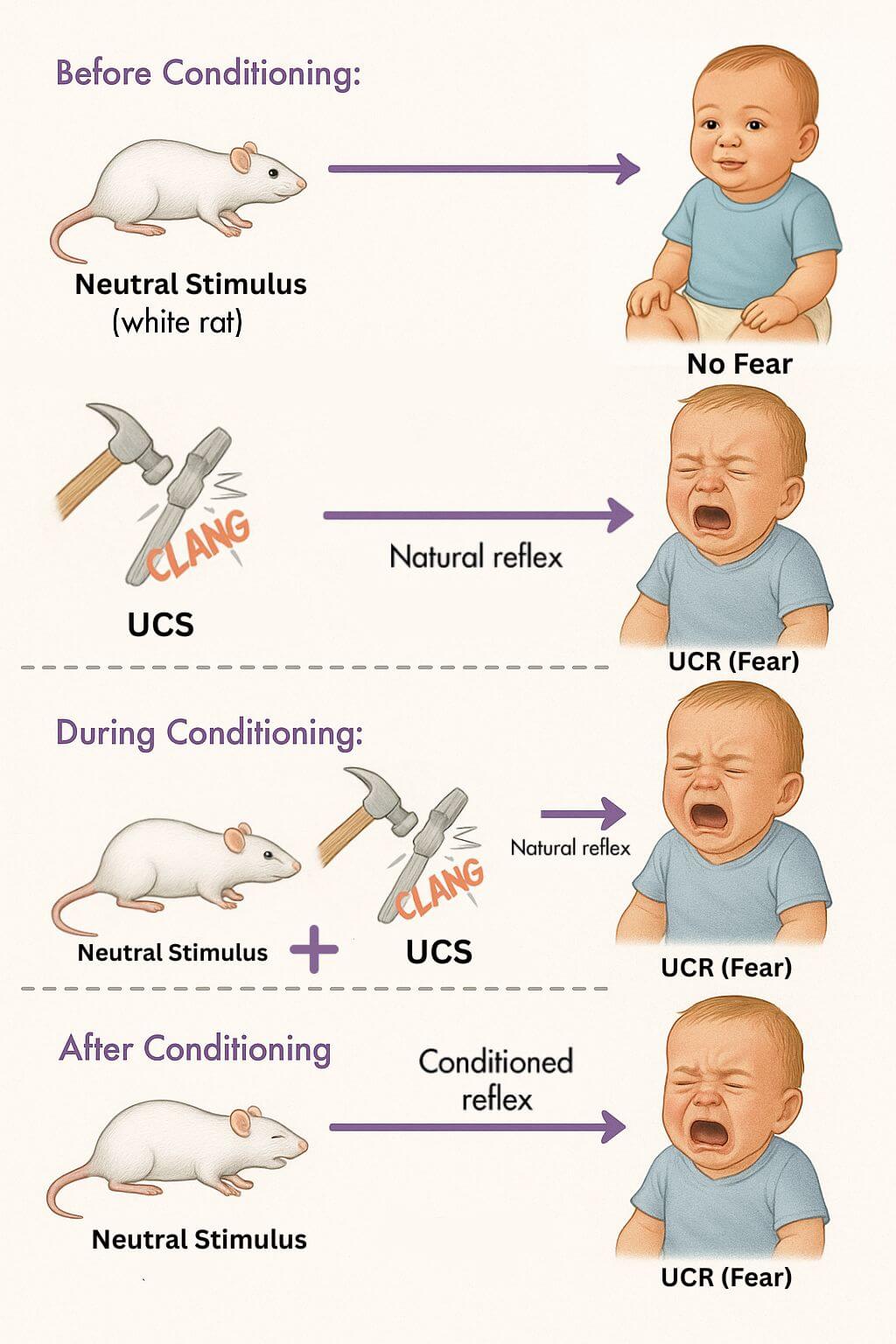
In the annals of psychological history, few names evoke as much controversy or curiosity as “Little Albert.” The 1920 experiment, conducted by John B. Watson and Rosalie Rayner at Johns Hopkins University, involved conditioning a nine-month-old infant to fear a white rat—a fear that eventually generalized to other furry objects, including rabbits and even a Santa Claus mask. While the academic world remembers this as a foundational study in behaviorism, the real story of what happened to the principles derived from Little Albert didn’t end in a laboratory.

When Watson was forced out of academia shortly after the experiment, he didn’t disappear. Instead, he took his findings to Madison Avenue, forever changing the landscape of Brand Strategy and consumer marketing. To understand what happened to Little Albert is to understand the birth of modern advertising: the transition from selling products based on utility to selling them through psychological conditioning.
From the Lab to the Living Room: The Pavlovian Roots of Brand Loyalty
The conclusion of the Little Albert experiment proved that human emotions could be engineered. Watson demonstrated that by pairing a neutral stimulus (the rat) with an unconditioned stimulus (a loud noise), he could create a programmed emotional response. When Watson joined the advertising agency J. Walter Thompson in the 1920s, he applied this “Stimulus-Response” model to the burgeoning world of corporate identity.
The Ethics of Emotional Triggering
Before Watson, advertising was largely informational. A soap company would list the ingredients of its product and state its price. Watson revolutionized this by arguing that brands should trigger three fundamental emotions: fear, rage, or love. In his view, the “Little Albert” effect could be used to make consumers feel a “need” that didn’t exist. By associating a brand with a specific emotional state, marketers could bypass the rational mind entirely. This marked the shift from “product-centric” marketing to “consumer-centric” emotional branding.
John B. Watson’s Shift from Science to Sales
At J. Walter Thompson, Watson rose to the position of Vice President. He applied the Little Albert methodology to household names like Maxwell House and Johnson & Johnson. For Maxwell House, he helped pioneer the concept of the “coffee break,” conditioning workers to associate the smell and taste of coffee with a necessary emotional reprieve from labor. He didn’t sell the beans; he sold the “break.” This was the first major instance of a brand owning a specific time of day and an emotional state through repetitive psychological association.
The “Little Albert” Blueprint in 21st-Century Marketing
The legacy of Little Albert lives on in the DNA of every major global brand. The fundamental principle—that a brand can “condition” a consumer to feel a certain way through repeated exposure and specific imagery—remains the cornerstone of modern brand strategy. Today’s brand architects use these psychological blueprints to move beyond mere recognition and toward “unconscious preference.”
Creating Artificial Needs through Fear
Just as Little Albert was conditioned to fear the white rat through an external noise, Watson taught brands to use “social fear” to sell products. He was instrumental in the campaign for Odorono, a deodorant, where he used ads to make women fear social ostracization due to body odor. By creating a “fear stimulus” (the threat of social rejection) and offering the brand as the “relief,” Watson successfully conditioned a generation of consumers. This tactic remains prevalent today in the security, insurance, and hygiene industries, where brand strategy is built on the foundation of anxiety and its subsequent resolution.
The Role of Association in Brand Identity
Modern brand identity is rarely about the physical characteristics of a product. When we see a “swoosh,” we feel “performance.” When we see a half-eaten apple, we feel “innovation.” This is high-level conditioning. Brand strategists meticulously select colors, fonts, and sounds (sonic branding) to act as the “bell” in the Pavlovian sense. The goal is to ensure that when a consumer encounters a specific brand asset, their brain automatically fires the associated emotion—be it status, safety, or excitement—long before they consider the product’s actual features.
Replicating the Experiment: How Data Replaced the White Rat
In the digital age, the Little Albert experiment has been scaled to a global level through Big Data and algorithmic targeting. The “controlled environment” of Watson’s lab has been replaced by the digital ecosystem, where every interaction provides feedback that brands use to refine their conditioning techniques.
Algorithmic Conditioning and User Habituation
If Watson were alive today, he would likely be a lead strategist at a social media giant or a major e-commerce platform. The “Like” button, the “infinite scroll,” and the “red notification dot” are modern iterations of the stimuli used in the Little Albert study. Brands now use data to identify the exact moment a consumer is most vulnerable to a specific emotional trigger. By delivering a targeted ad at a moment of boredom or loneliness, brands condition users to turn to their apps for a hit of dopamine, effectively habituating the consumer to the brand’s presence in their life.
The Modern Marketing Funnel as a Controlled Environment
The traditional marketing funnel (Awareness, Interest, Desire, Action) is essentially a roadmap for behavioral conditioning. At the “Awareness” stage, the brand introduces the stimulus. Through retargeting (the digital equivalent of repeated exposure), the brand reinforces the association until the consumer moves toward “Action.” Modern CRM (Customer Relationship Management) tools allow brands to create personalized “experiments” for every user, testing which headlines, colors, or offers trigger the highest response rate, thereby perfecting the “Little Albert” effect for the individual consumer.
The Moral Legacy: Navigating the Ethics of Consumer Manipulation
The story of Little Albert ends with a moral question mark. The child was never “de-conditioned,” and his eventual fate—whether he lived a long life or died young—remains a subject of historical debate. Similarly, the world of branding faces a moral reckoning. As we become more aware of how brands use psychological conditioning to influence our choices, the demand for “Ethical Branding” has grown.
Brand Transparency in the Age of Awareness
Modern consumers, particularly Gen Z and Millennials, are increasingly “ad-literate.” They recognize the conditioning tactics of the past and often reject brands that rely too heavily on fear-based or manipulative psychology. Consequently, the most successful modern brand strategies are shifting away from “conditioning” and toward “community.” Instead of trying to program a response, brands are attempting to align with the pre-existing values of their audience. This is a move from behaviorism to humanism in brand strategy.

Moving from Manipulation to Genuine Connection
While the “Little Albert” tactics of the 1920s built the corporate giants of the 20th century, the future of branding lies in authenticity. Brands that survive the next century will be those that use psychology not to exploit vulnerabilities, but to enhance user experience and solve genuine problems. The “What happened to Little Albert” narrative serves as a cautionary tale: while you can condition a response through fear and repetition, a brand built on such a foundation lacks the resilience of one built on trust and mutual value.
In conclusion, Little Albert didn’t just disappear into the history books. He became the invisible passenger in every marketing meeting and the silent observer in every advertising agency. By understanding his story, brand strategists can better understand the power they wield—and the responsibility they have to use it ethically in a world where the line between “consumer” and “conditioned subject” is increasingly blurred.
aViewFromTheCave is a participant in the Amazon Services LLC Associates Program, an affiliate advertising program designed to provide a means for sites to earn advertising fees by advertising and linking to Amazon.com. Amazon, the Amazon logo, AmazonSupply, and the AmazonSupply logo are trademarks of Amazon.com, Inc. or its affiliates. As an Amazon Associate we earn affiliate commissions from qualifying purchases.