
In the world of modern business, we often speak of “legacy” as a byproduct of a successful brand. However, for Cleopatra VII, the last active ruler of the Ptolemaic Kingdom of Egypt, legacy was the primary product. She didn’t just rule a country; she curated a persona that was a masterclass in personal branding, strategic alliances, and cultural synthesis. Yet, the most pressing question for any visionary leader—be it an ancient queen or a modern CEO—is what happens to the “sub-brands” when the parent company collapses?
The fate of Cleopatra’s children is more than a historical footnote; it is a profound case study in brand succession, hostile takeovers, and the dangers of brand overlap. When we look at what happened to Caesarion, Alexander Helios, Cleopatra Selene, and Ptolemy Philadelphus, we see the brutal reality of what happens when a powerful personal brand fails to secure a sustainable infrastructure for its heirs.

The Cleopatra Brand: A Case Study in Personal Authority
Before we can understand the fate of her children, we must understand the “Cleopatra Brand.” Cleopatra was a polyglot, a strategist, and a master of iconography. She understood that in the Mediterranean marketplace, perception was reality.
The Iconography of Power
Cleopatra did not simply wear a crown; she inhabited the brand of the goddess Isis. By associating herself with the “Universal Mother,” she created a brand identity that was both divine and approachable. This wasn’t just vanity; it was a strategic move to unify her Egyptian subjects with her Greek heritage. For her children, this meant they were born into a “luxury brand” ecosystem. They weren’t just heirs; they were living embodiments of a Greco-Egyptian-Roman merger.
Global Strategic Alliances
The Cleopatra brand was built on high-stakes partnerships. Her relationships with Julius Caesar and later Mark Antony were essentially strategic mergers designed to prevent a hostile takeover by the rising Roman “corporate” machine. By integrating Roman DNA into the Ptolemaic line, she was attempting to create a global conglomerate that would dominate the known world. However, as any brand strategist knows, a merger only works if the senior partners remain in power.
The Fate of the Sub-Brands: What Happened to the Heirs?
When Cleopatra and Antony were defeated at the Battle of Actium in 31 BCE, the “Cleopatra Brand” faced immediate liquidation. The Roman victor, Octavian (later Augustus), faced a branding dilemma: what should be done with the “assets” (the children) of the defeated rivals?
Caesarion: The Dangers of Brand Overlap
Ptolemy XV Caesar, better known as Caesarion, represented the ultimate threat to Octavian’s brand identity. As the biological son of Julius Caesar, Caesarion was a direct competitor to Octavian, who was Caesar’s adopted son and designated heir.
In the world of brand strategy, this is known as “brand overlap.” You cannot have two products claiming the same heritage if only one can occupy the top market position. Octavian’s advisors famously told him, “Too many Caesars is not a good thing.” Consequently, Caesarion was executed. His story serves as a grim reminder that when a sub-brand becomes a direct threat to the dominant market leader, it is often eliminated rather than integrated.
Alexander Helios and Ptolemy Philadelphus: Brand Absorption
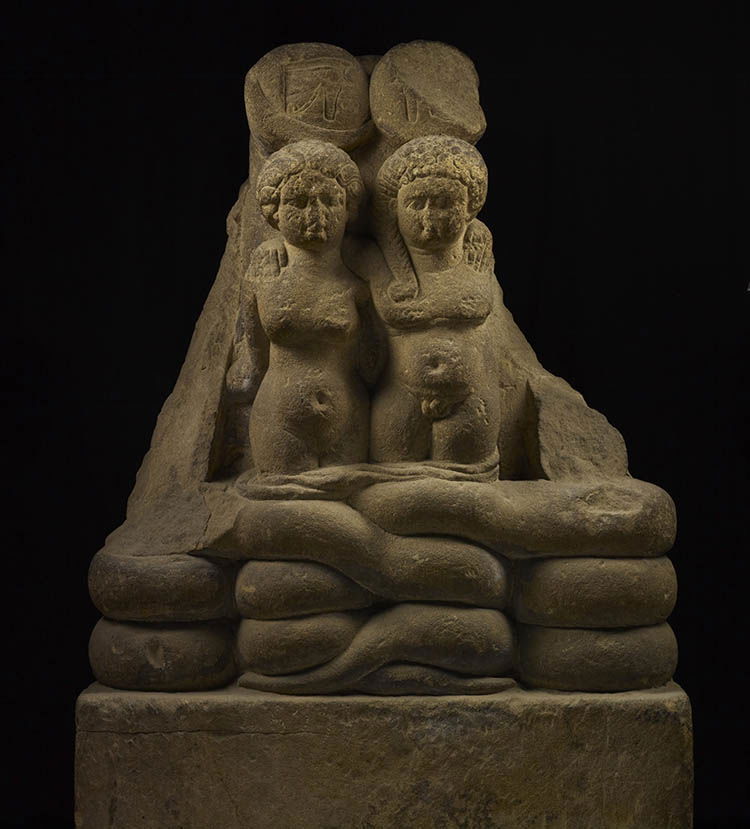
The younger sons, Alexander Helios and Ptolemy Philadelphus, suffered a different fate. They were taken to Rome to be paraded in Octavian’s “Triumph”—a literal victory parade that served as a public rebranding of Roman dominance.
After the parade, they were essentially “retired” from the public eye. Historians suggest they were raised in the household of Octavia, Mark Antony’s former Roman wife and Octavian’s sister. This was a move of sophisticated brand absorption. By keeping them alive but powerless within the heart of the Roman establishment, Octavian demonstrated “Roman Clemency”—a key pillar of his new brand—while ensuring they had no platform to relaunch the Ptolemaic brand. They eventually disappear from the historical record, their individual brands diluted into the vast ocean of Roman citizenry.
Brand Erasure and Hostile Takeover: The Roman Strategy
Octavian didn’t just want to kill Cleopatra’s children; he wanted to overwrite their narrative. This is the ancient equivalent of a hostile takeover followed by a complete corporate rebranding.
Narrative Control and Damnatio Memoriae
Octavian employed a strategy of damnatio memoriae—the erasure of a person from history. While he couldn’t erase Cleopatra herself (she was too famous), he reframed her brand from that of a “Wise Queen” to a “Foreign Seductress.” By damaging the mother’s brand, he effectively devalued the children’s claims to power.
In marketing terms, this is “repositioning the competition.” If the parent brand is seen as illegitimate or dangerous, the sub-brands lose their market value. The children were no longer “Gods on Earth”; they were the unfortunate offspring of a “failed venture.”
The Rebranding of Cleopatra Selene
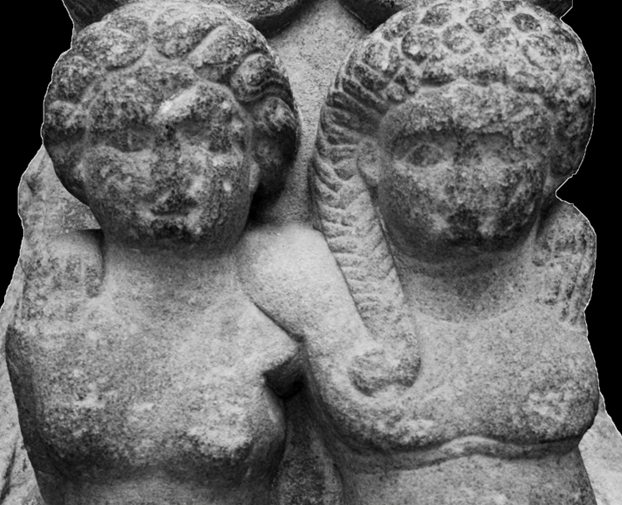
The only child of Cleopatra to truly survive and thrive was her daughter, Cleopatra Selene II. Octavian’s treatment of Selene is a fascinating example of “franchising.” Rather than erasing her, he married her off to King Juba II of Numidia and moved them to Mauretania (modern-day Algeria).
Selene was allowed to maintain some of her mother’s branding—using Egyptian motifs in her own court and naming her son Ptolemy. This was a “controlled spin-off.” Octavian allowed the Cleopatra brand to exist in a weakened, provincial state where it could serve Roman interests without threatening the central Roman brand. Selene became a successful “regional manager,” proving that with the right pivot, a legacy brand can survive in a new market.
Modern Lessons in Brand Continuity and Succession
The tragedy of Cleopatra’s children offers several vital lessons for modern brand strategists, personal brands, and corporate leaders.
Avoiding the “Single Point of Failure” in Personal Branding
The Ptolemaic brand was too heavily reliant on Cleopatra’s personal charisma and her specific alliances. When she fell, there was no institutional framework to protect her heirs. In business, this is the “Founder’s Trap.” If a brand is tied solely to the identity of a single individual, the brand’s value is incredibly volatile. For a brand to survive “the children” (the next generation of products or leaders), it must be institutionalized. Values, systems, and reputation must exist independently of the founder.
The Importance of “Exit Strategy”
Cleopatra’s “exit strategy” was suicide, which, while dramatic, left her children in a state of total vulnerability. A successful brand leader always looks at the “succession plan.” Cleopatra’s children were treated as political pawns because there was no “trust fund” of political goodwill or military power left for them.
In the financial and brand world, an exit strategy isn’t just about leaving; it’s about ensuring the assets you’ve built—whether they are children, employees, or sub-brands—have the resources to survive the transition. Cleopatra Selene survived because she was able to pivot her brand identity to fit the new Roman market; Caesarion died because he was positioned as a direct competitor to the new CEO.
Longevity Beyond the Founder
Ultimately, the Cleopatra brand survived not through her sons, but through the enduring myth of her persona and the brief, successful reign of her daughter in Mauretania. Today, “Cleopatra” is one of the most recognized names on earth—a brand that has outlasted the Roman Empire that sought to destroy it.
However, the “what happened” to her children serves as a cautionary tale. To ensure the longevity of a legacy, one must:
- Differentiate the Heirs: Ensure that sub-brands do not compete directly with the dominant market forces unless they are prepared for a total war.
- Adapt to New Ecosystems: Be prepared to rebrand and pivot when the “parent company” or the market landscape changes.
- Institutionalize Values: Build a brand that can stand on its own, even when the charismatic leader is no longer at the helm.
What happened to Cleopatra’s children was the systematic dismantling of a competing brand by a more powerful, organized corporate entity (Rome). It is a story of liquidation, absorption, and a single, brilliant pivot by a daughter who understood that to save the brand, she had to change the business model. In the end, the Cleopatra brand lived on, but only by adapting to a world where the queen was no longer the CEO.
aViewFromTheCave is a participant in the Amazon Services LLC Associates Program, an affiliate advertising program designed to provide a means for sites to earn advertising fees by advertising and linking to Amazon.com. Amazon, the Amazon logo, AmazonSupply, and the AmazonSupply logo are trademarks of Amazon.com, Inc. or its affiliates. As an Amazon Associate we earn affiliate commissions from qualifying purchases.