
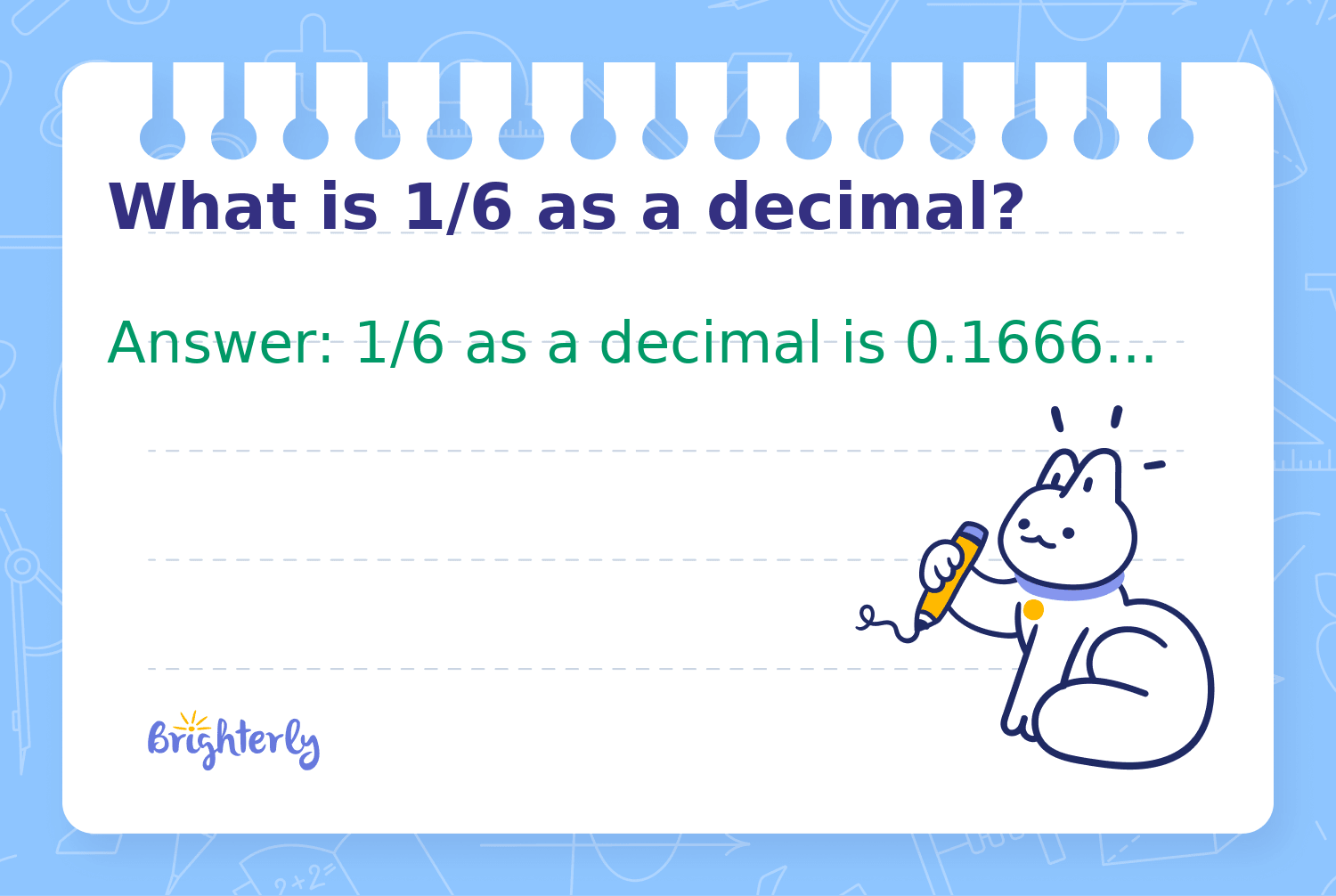
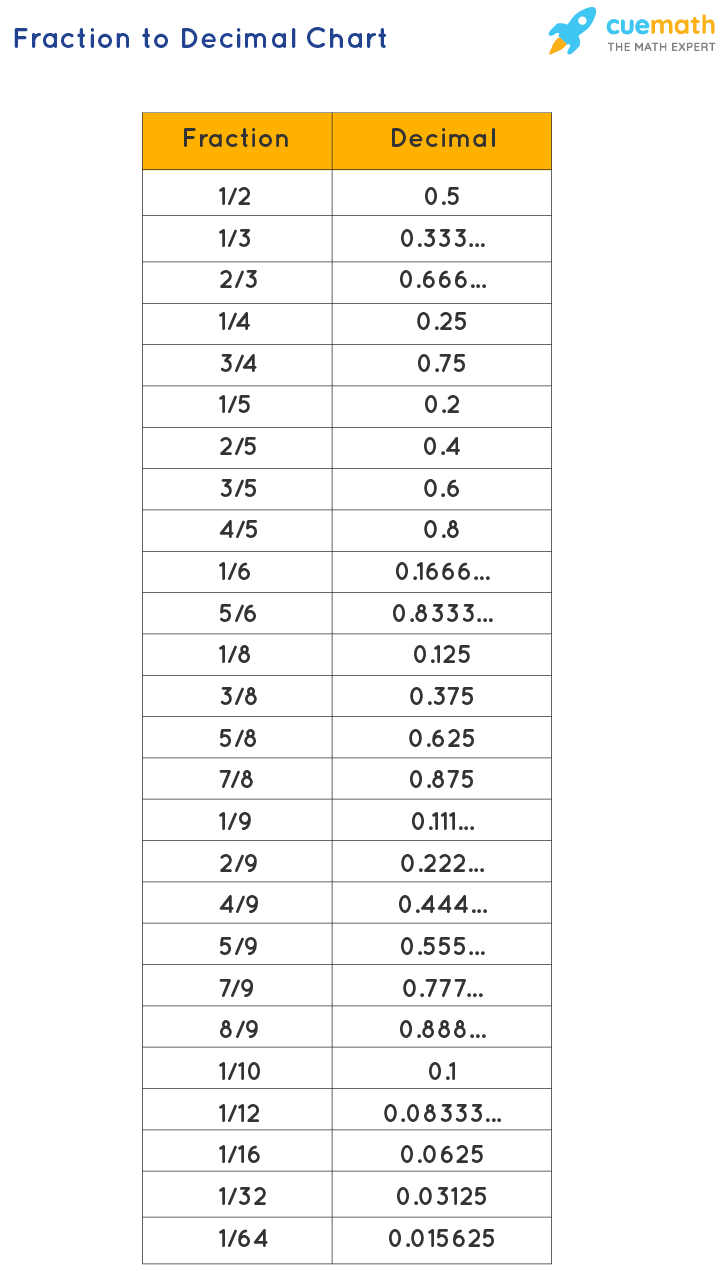
In the realm of pure mathematics, the fraction 1/6 is a simple concept: one part of a whole divided into six equal pieces. When converted to a decimal, it reveals its infinite nature: 0.1666… with the sixes repeating into eternity. However, in the world of technology, software engineering, and digital architecture, the 1/6 decimal represents a fascinating challenge. It serves as a prime example of the limitations of binary logic and the complexities of floating-point arithmetic.
To understand what 1/6 is in a technological context, we must look beyond the classroom division and explore how modern hardware and software interpret, store, and manipulate numbers that do not have a finite end. This exploration reveals the invisible friction between continuous mathematical theory and discrete digital reality.

The Mathematics of 1/6 in Digital Logic
At its core, a computer does not “know” what 1/6 is. It only understands bits—zeros and ones. When a developer inputs a fraction like 1/6 into a system, the software must translate that human-readable concept into a machine-readable format.
Fractional Representation in Binary
Humans use the Base-10 (decimal) system, where fractions like 1/2 (0.5) or 1/5 (0.2) terminate because their denominators are factors of the base (10 = 2 x 5). However, 1/6 does not terminate in Base-10 because 6 contains a prime factor (3) that does not divide 10.
In the Tech world, computers use Base-2 (binary). In binary, a fraction only terminates if its denominator is a power of 2 (2, 4, 8, 16, etc.). Because 6 is not a power of 2, the 1/6 decimal (0.1666…) becomes a “repeating binary” number. This means that no matter how much memory a computer allocates, it can never truly store the exact value of 1/6; it can only store an approximation.
The Challenge of Recurring Decimals
For software engineers, recurring decimals are a source of “approximation noise.” When a program calculates 1/6, it must eventually cut the sequence of numbers off. This truncation or rounding leads to infinitesimal errors. While a difference of 0.0000000000001 might seem irrelevant in a basic mobile app, in the context of high-speed technological systems, these errors can accumulate—a phenomenon known as “error propagation.”
Floating-Point Arithmetic and Precision Errors
To handle numbers like 0.1666…, the tech industry relies on a standard known as IEEE 754 for Floating-Point Arithmetic. This is the “language” that processors (CPUs) and graphics cards (GPUs) use to deal with decimals.
The IEEE 754 Standard
Under the IEEE 754 standard, a number is represented in three parts: a sign bit, an exponent, and a significand (or mantissa). When the 1/6 decimal is processed, the computer tries to fit as many “6s” as possible into the significand. In “Single Precision” (32-bit), you get about 7 decimal digits of accuracy. In “Double Precision” (64-bit), you get about 15 to 17 digits.
The technical reality is that 1/6 is stored as something closer to 0.1666666716282906 (in single precision). This tiny discrepancy is the foundation of many technical hurdles in modern software stacks.
Rounding Errors in High-Performance Computing
In high-performance computing (HPC) and scientific simulations—such as weather modeling or aerospace engineering—the 1/6 decimal is a liability. If an algorithm performs a million iterations where it adds 1/6 to a total, the rounding error is no longer tiny; it becomes a significant deviation. This is why specialized “Arbitrary Precision” libraries are used in tech sectors where 100% accuracy is non-negotiable, allowing software to treat 1/6 as a symbolic fraction rather than a floating-point approximation.
Applications in Software Development and Algorithms
How the 1/6 decimal is handled varies depending on the niche of software development. Different languages and frameworks offer different tools to manage the inherent “messiness” of this fraction.
Graphics, CAD Systems, and Game Engines
In computer graphics and game development engines like Unreal Engine or Unity, 1/6 often appears in coordinate geometry, lighting calculations, or physics engines (e.g., calculating the distribution of forces). Because GPUs are optimized for speed over perfect precision, they often use “fast math” approximations.
If a 3D model is rotated by an angle derived from 1/6, and the rounding is handled inconsistently, it can result in “jitter” or “tearing” in the visual output. Developers must often implement “epsilon checks”—a technique where two numbers are considered equal if their difference is less than a tiny threshold (epsilon)—rather than checking for exact equality.
The Architecture of Financial Software
While we are focusing on the technology behind the number, it is crucial to note how financial software architecture treats 1/6. Traditional float or double data types are forbidden in critical fintech backends. Instead, architects use Decimal or BigNumber classes. These tools don’t use binary floating-point logic; they use “base-10” logic in a software layer to ensure that 1/6 is rounded according to strict regulatory protocols (like the “Banker’s Rounding” algorithm) rather than the arbitrary whims of a binary processor.
1/6 in the Age of AI and Machine Learning
As we move into the era of Artificial Intelligence, the representation of decimals like 1/6 has taken on new importance, particularly regarding how neural networks “learn” and “think.”
Normalization and Feature Scaling
In Machine Learning (ML), data must be “normalized” before it is fed into a model. This often involves scaling values to a range between 0 and 1. If a dataset is split into six categories, 1/6 (0.1666…) becomes a standard weight. The way a framework like TensorFlow or PyTorch handles this precision can influence the “gradient descent”—the process by which an AI optimizes its performance. High-precision decimals allow for smoother learning curves, while low-precision decimals can cause the model to “diverge” or fail to find the optimal solution.
Quantization in Neural Networks
A major trend in AI technology is “Quantization.” To run powerful AI models on smartphones (Edge AI), developers reduce the precision of the numbers from 32-bit to 8-bit or even 4-bit. When you “quantize” 1/6, you lose almost all the repeating sixes. Tech researchers are currently focused on “Quantization Aware Training,” which teaches the AI to remain accurate even when fractions like 1/6 are heavily rounded. This is essential for making AI gadgets faster and more energy-efficient.
Best Practices for Developers Handling Fractional Data
Understanding what 1/6 is in a digital context is only the first step; the second is knowing how to manage it within a tech stack to ensure robust, bug-free software.
Choosing the Right Data Type
The most critical decision a developer makes is the choice of data type.
- Integers: If accuracy is paramount, some developers represent 1/6 by working in smaller units (e.g., instead of 1/6 of a dollar, they work with 1/6 of a cent or use a custom “fraction” object).
- Floats/Doubles: Useful for general-purpose apps and real-time rendering where speed is more important than the 15th decimal place.
- Fixed-Point Arithmetic: Used in embedded systems and digital signal processing (DSP) to provide a compromise between the speed of integers and the flexibility of decimals.
Error Mitigation Strategies
To build resilient digital tools, engineers use several strategies:
- Symbolic Computation: Using engines like Mathematica or Python’s
SymPyto keep 1/6 as a literal fraction ($1/6$) as long as possible before converting to a decimal. - Kahan Summation: A specific algorithm used in software to minimize the loss of precision when adding a sequence of finite-precision floating-point numbers.
- Unit Testing for Precision: Modern DevOps pipelines include automated tests that check for “floating-point drift,” ensuring that a software update doesn’t accidentally change how 0.1666… is rounded, which could break downstream integrations.
Conclusion: The Infinite in a Finite Box
What is 1/6 decimal? In the tech world, it is a reminder that our digital tools are approximations of a more complex reality. It is a bridge between the infinite nature of mathematics and the finite constraints of silicon and logic gates. Whether it is being used to weight a neural network, render a 3D environment, or calculate a coordinate in a global positioning system, 1/6 challenges tech professionals to balance precision, speed, and memory. By understanding the nuances of how 0.1666… exists within a computer, we can build more accurate, reliable, and powerful technology.
aViewFromTheCave is a participant in the Amazon Services LLC Associates Program, an affiliate advertising program designed to provide a means for sites to earn advertising fees by advertising and linking to Amazon.com. Amazon, the Amazon logo, AmazonSupply, and the AmazonSupply logo are trademarks of Amazon.com, Inc. or its affiliates. As an Amazon Associate we earn affiliate commissions from qualifying purchases.