
In the era of digital transformation, we often view our health through the lens of data. From heart rate monitors on our wrists to sleep trackers under our mattresses, we are surrounded by metrics. Yet, one of the most fundamental data sets we encounter—our eye prescription—remains an enigma to most. At first glance, a prescription looks like a cryptic sequence of abbreviations and numbers. However, when viewed through the lens of optical technology and refractive physics, those numbers represent a sophisticated map of your visual system’s “hardware.”

Understanding what your eye prescription means is no longer just a medical necessity; it is a dive into the intersection of biological engineering and precision software. As we move toward a future of augmented reality (AR) and smart eyewear, decoding this data is the first step in understanding how technology interfaces with our most vital sense.
Decoding the Data: The Algorithms of the Prescription Card
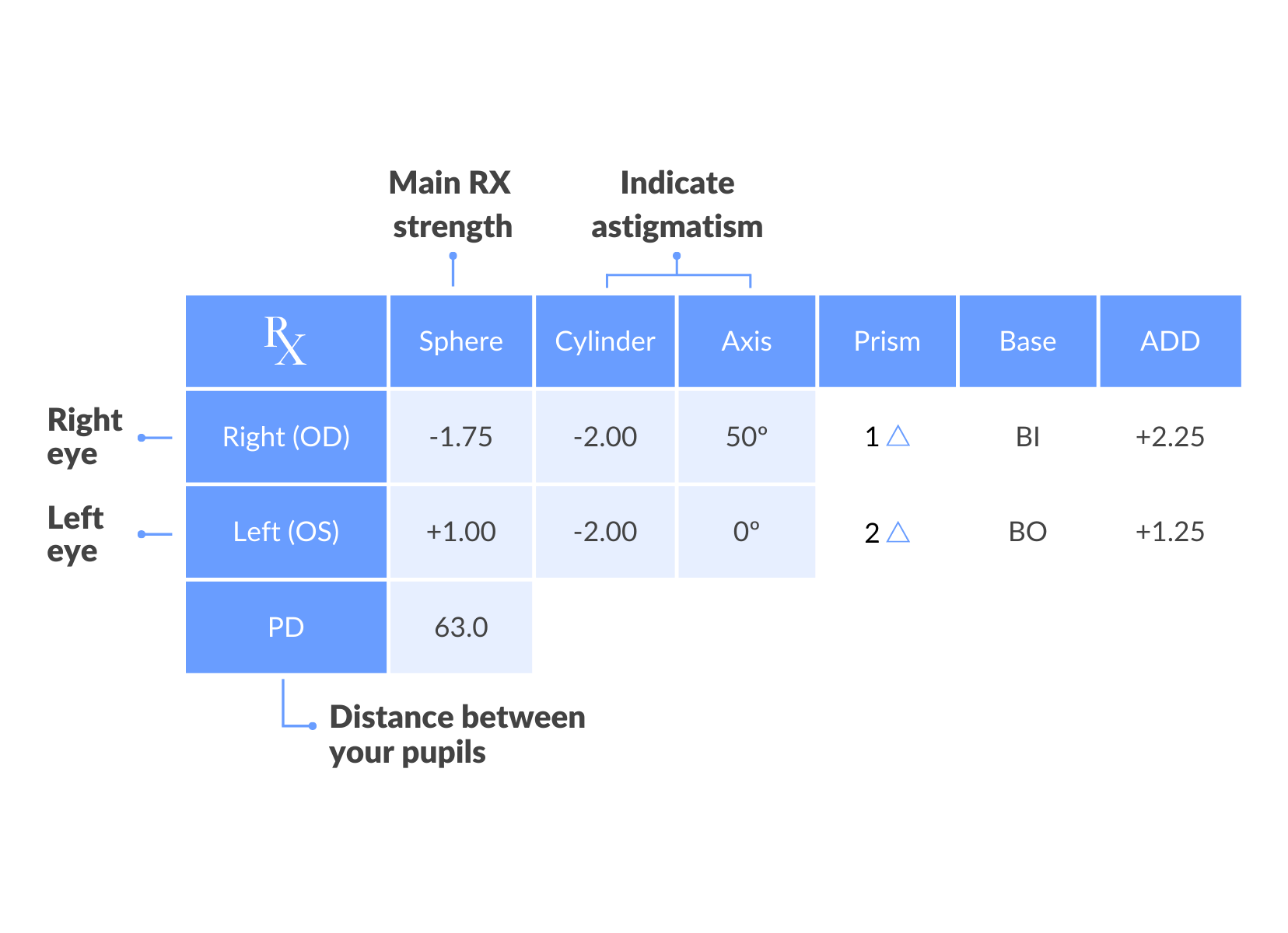
To understand the tech behind your vision, we must first translate the shorthand used by optometrists. These abbreviations—OD, OS, SPH, and CYL—are the input variables for the manufacturing software that grinds your lenses to a precision of within 0.01 millimeters.
SPH and the Physics of Light Convergence
The “Sphere” (SPH) category is the primary indicator of your eye’s refractive power. Measured in diopters, this number tells us how much the lens needs to “bend” light to ensure it hits the retina perfectly. In technical terms, a negative SPH value indicates myopia (nearsightedness), meaning the eye’s natural “focal length” is too short. The corrective lens acts as a divergent optical component, pushing the focal point back. Conversely, a positive value indicates hyperopia (farsightedness), requiring a convergent lens to pull the focal point forward. This is essentially a recalibration of your eye’s native “sensor” focus.
CYL and Axis: Mapping the Geometry of the Eye
While SPH deals with the overall power, CYL (Cylinder) and Axis deal with the “topology” of the cornea. If your eye were a perfect sphere, you wouldn’t have a cylinder value. However, most eyes have some degree of astigmatism, where the cornea is shaped more like a football than a basketball.
The CYL value represents the additional power needed to correct this irregularity in a specific meridian. The Axis, measured in degrees from 1 to 180, acts as the “coordinate” for the laboratory’s CNC (Computer Numerical Control) machines. It tells the software exactly where on the lens the cylindrical correction needs to be applied. Without this precise mapping, the light entering your eye would remain scattered, leading to “ghosting” or blurred edges in high-contrast digital environments.
The ADD Value: The “Macro Lens” for Biological Systems
For those over 40, the “ADD” column often appears. This represents the additional magnifying power required for near-vision tasks. In the world of tech, think of this as a macro lens for a camera. As the human eye’s natural autofocus mechanism (the crystalline lens) loses its “elasticity”—a biological hardware failure known as presbyopia—the ADD value provides the necessary optical boost to render close-up digital text and physical objects in high definition.
The Digital Revolution in Vision Testing
Gone are the days when an eye exam relied solely on the “better one or better two” subjective feedback of the patient. Today, the generation of an eye prescription is a high-tech process involving advanced sensors and AI-driven diagnostics.
Auto-Refraction and Wavefront Technology
Modern clinics now utilize auto-refractors, devices that use infrared light to measure how a beam of light changes as it enters the eye. The machine calculates the refractive error in seconds by analyzing the “wavefront” of the light reflecting off the retina. This provides a digital “blueprint” of the eye’s optical flaws.
Wavefront technology, originally developed for Hubble Space Telescope mirrors, is now used to map “higher-order aberrations”—tiny imperfections in the eye that standard prescriptions might miss. This high-resolution data allows for the creation of “digital lenses” or “HD lenses,” which are custom-surfaced using point-by-point digital mapping to provide superior visual clarity, much like upgrading from 1080p to 8K resolution.

AI-Driven Diagnostics in Modern Optometry
Artificial Intelligence is increasingly being integrated into the prescription process. AI algorithms can now analyze retinal scans and corneal topography to predict how a patient’s vision might change over time. By comparing a single patient’s data against millions of other data points, AI can assist practitioners in identifying early signs of conditions like keratoconus or glaucoma long before they affect the physical prescription. This shift from reactive to predictive vision care is a hallmark of the current “MedTech” revolution.
Smart Glasses and the Future of Wearable Optical Tech
Once we have decoded the prescription, the next frontier is how that data is utilized in modern hardware. We are moving away from static pieces of plastic and toward “smart” optical interfaces.
Integrating Prescriptions into AR/VR Headsets
One of the biggest hurdles in the adoption of Augmented Reality (AR) and Virtual Reality (VR) is the “focal distance” problem. Most VR headsets have a fixed focal distance, which can cause significant eye strain for users with refractive errors. Tech giants are solving this by integrating prescription inserts directly into the hardware.
Companies like Apple and Meta are working on systems where the digital display itself can adjust based on the user’s prescription data. Imagine an AR glass that doesn’t require a physical corrective lens but instead uses “computational photography” techniques to warp the digital image in a way that compensates for the user’s specific astigmatism or myopia.
Liquid Lens Technology and Adaptive Focus
The “holy grail” of optical tech is the adaptive lens. Traditional bifocals or progressives are static; the user has to move their head to find the “sweet spot.” Emerging technology in “liquid lenses” uses a mixture of water and oil controlled by an electric field (electrowetting).
When paired with sensors that track where the eye is looking, these lenses can change their curvature in real-time. If you look at a distant mountain, the lens flattens. If you look at your smartphone, the lens curves. This “active” eye prescription would effectively restore the eye’s youthful ability to autofocus, bridging the gap between biological limitations and technological solutions.
Digital Eye Strain and the Blue Light Tech Debate
As our lives become increasingly centered around OLED and LCD screens, our prescriptions are changing to reflect a new phenomenon: Digital Eye Strain (DES), or Computer Vision Syndrome.
The Impact of High-Energy Visible (HEV) Light
Digital screens emit a significant amount of High-Energy Visible (HEV) light, often referred to as blue light. While the sun is the primary source of blue light, the proximity and duration of our exposure to digital devices have led to concerns about retinal stress and disruptions to our circadian rhythms. Modern eye prescriptions often include technical “coatings” or “treatments” as a software-like patch for our eyes. Blue-light-filtering tech works by using specialized pigments or coatings that reflect or absorb a specific band of the light spectrum (usually between 415nm and 455nm), reducing the “noise” our brains have to process.
Software Solutions for Visual Comfort
The tech industry has responded to the data found in our eye prescriptions by building visual comfort features directly into operating systems. “Night Shift” on iOS or “Night Light” on Windows are essentially software-based adjustments to the color temperature of our displays. However, for those with high CYL or SPH values, software alone isn’t enough. The future of digital productivity lies in the synergy between the “wetware” (the eye), the “hardware” (the glasses), and the “software” (the device display).
Conclusion: Data as the Key to Visual Optimization
Your eye prescription is far more than a note for the optical shop; it is a sophisticated set of coordinates that defines how you interact with the world. As we have seen, the “meaning” of these numbers is deeply rooted in the evolution of technology—from the physics of diopters and the precision of CNC lens manufacturing to the cutting-edge realms of AI diagnostics and adaptive liquid lenses.
In a world where we are constantly upgrading our devices, understanding your eye prescription is the ultimate “system update.” It allows you to optimize your most important biological sensor, ensuring that whether you are coding in a terminal, navigating an AR interface, or simply enjoying the physical world, your vision is running at its highest possible resolution. As technology continues to blur the line between the digital and the physical, those small numbers on your prescription card will remain the most critical data points you own.
aViewFromTheCave is a participant in the Amazon Services LLC Associates Program, an affiliate advertising program designed to provide a means for sites to earn advertising fees by advertising and linking to Amazon.com. Amazon, the Amazon logo, AmazonSupply, and the AmazonSupply logo are trademarks of Amazon.com, Inc. or its affiliates. As an Amazon Associate we earn affiliate commissions from qualifying purchases.