
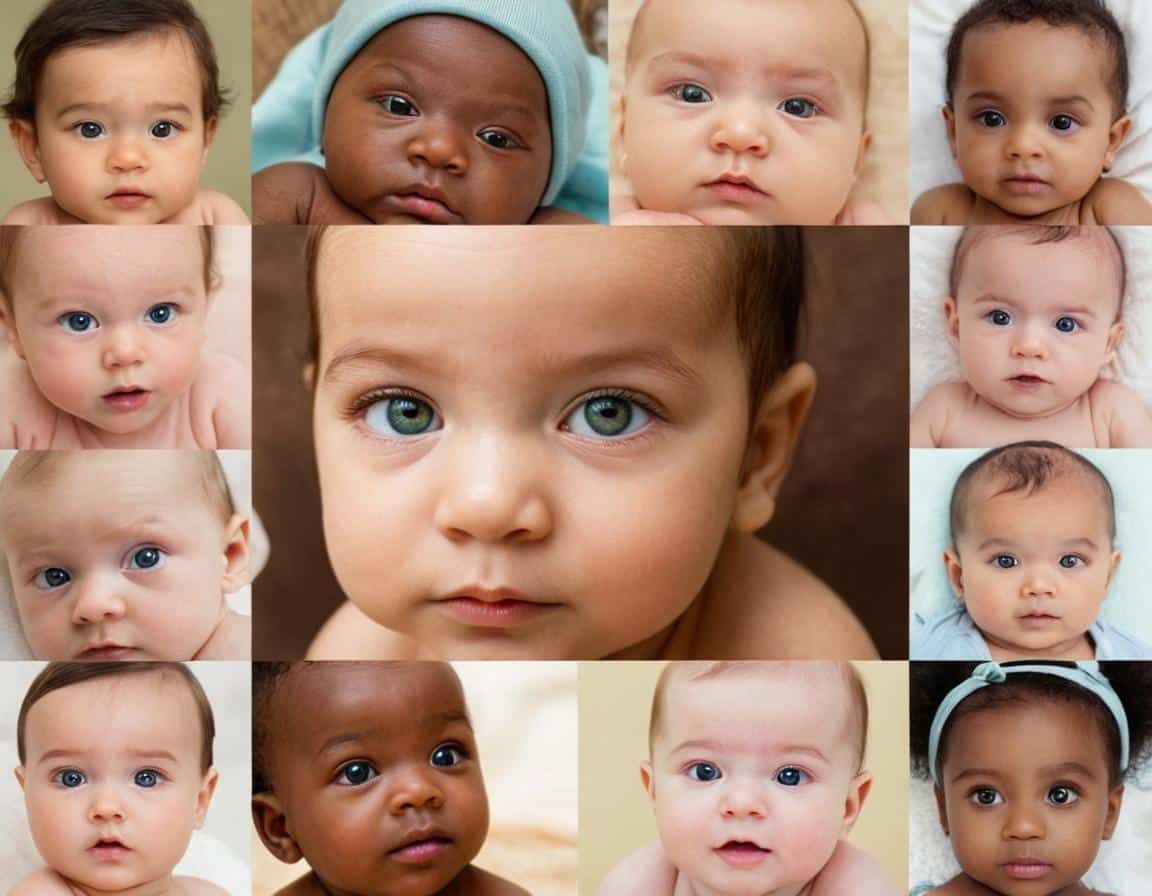
The profound journey of bringing a new life into the world is filled with immeasurable joy, anticipation, and, for many expectant parents, a healthy dose of curiosity. Among the many delightful unknowns that accompany pregnancy, the question of what color eyes their baby will inherit often surfaces. While genetics play a fascinating and complex role, the realm of technology is increasingly offering novel ways to explore and even predict these charming physical traits. This article delves into the intersection of genetic science and technological innovation, specifically focusing on how digital tools and data analysis can help shed light on the potential eye color of your newborn, operating squarely within the Tech niche.

The Genetic Blueprint of Eye Color
Understanding the genetic underpinnings of eye color is the foundational step in leveraging technology for prediction. This intricate dance of genes, passed down from parents, determines the pigment production in a child’s iris.
The Melanin Factor: Pigment as the Primary Determinant
At its core, eye color is determined by the amount and type of melanin present in the iris. Melanin, the same pigment responsible for skin and hair color, exists in two primary forms: eumelanin (brown and black) and pheomelanin (red and yellow).
- Eumelanin Dominance: The presence of significant amounts of eumelanin leads to darker eye colors like brown and black. The more eumelanin, the darker the iris.
- Limited Melanin: When there is very little melanin, light scatters more, resulting in blue eyes. This is similar to how the sky appears blue due to light scattering.
- Intermediate Amounts: Green and hazel eyes represent a spectrum between these two extremes, often involving a moderate amount of eumelanin and potentially some pheomelanin, creating unique color combinations.
Genes at Play: Beyond the Simple Dominant-Recessive Model
For decades, the understanding of eye color inheritance was simplified to a single gene model, often citing brown as dominant over blue. However, modern genetic research has revealed a far more complex picture involving multiple genes, each contributing to the final phenotype.
- OCA2 and HERC2: These two genes are considered the primary players in determining eye color. OCA2 is responsible for producing the P protein, which is involved in melanin production and transport. HERC2, located on the same chromosome, acts as a regulator, influencing the expression of OCA2. Variations within these genes can significantly impact melanin levels in the iris.
- Ancillary Genes: While OCA2 and HERC2 are dominant, other genes like TYR, TYRP1, and SLC24A5 also play supporting roles, subtly influencing the nuances of eye color, contributing to the vast array of shades from light blue and grey to deep brown and even amber. This polygenic inheritance explains why predicting eye color isn’t always straightforward, even with knowledge of parental eye colors.
The Role of Epigenetics and Environmental Influences
While genetics lay the groundwork, it’s crucial to acknowledge that other factors can influence the expression of these genes.
- Epigenetic Modifications: These are changes in gene expression that do not involve alterations to the underlying DNA sequence. While less studied in the context of eye color, they can potentially play a subtle role in how the genetic code is read.
- Developmental Factors: The iris develops significantly during fetal development, and while largely genetically determined, subtle environmental factors during gestation could theoretically have minor influences, though this is largely speculative in terms of observable color changes.
Technological Tools for Genetic Insight and Prediction
The advancements in genetic sequencing and data analysis have opened up exciting new avenues for understanding and predicting inherited traits, including eye color. These technologies are moving beyond simple Punnett squares to offer more nuanced insights.
Direct-to-Consumer (DTC) Genetic Testing Services
Several companies now offer DTC genetic testing, allowing individuals to gain insights into their genetic makeup, including predispositions to certain traits. These services are becoming increasingly accessible and sophisticated.
- How They Work: Users typically provide a saliva sample, which is then analyzed in a laboratory. The DNA is sequenced, and the data is compared against vast genetic databases.
- Eye Color Reports: Many DTC tests provide reports that detail a person’s genetic likelihood for various traits, including eye color. They often explain the specific gene variants associated with certain eye colors and can provide a probabilistic outcome for a child based on the genetic information of both parents.
- Limitations and Ethical Considerations: It’s important to note that these tests offer probabilities, not absolute certainties. They are best viewed as tools for educational exploration rather than definitive predictors. Furthermore, privacy concerns and the interpretation of genetic data require careful consideration.
Advanced Genetic Sequencing and Bioinformatics
Beyond consumer-level testing, sophisticated laboratory techniques and computational power are revolutionizing our understanding of genetics.
- Whole Genome Sequencing (WGS): This technology sequences an individual’s entire genome, providing the most comprehensive picture of their genetic makeup. While currently expensive for widespread use in predicting simple traits, it holds immense potential for future applications in personalized medicine and trait prediction.
- Bioinformatics and Machine Learning: The sheer volume of genetic data generated by sequencing requires powerful computational tools. Bioinformatics specialists use algorithms and statistical models to analyze this data, identifying patterns and correlations. Machine learning models can be trained on large datasets of genetic information and observed traits to build predictive algorithms that become increasingly accurate over time.
- Polygenic Risk Scores (PRS): For complex traits influenced by many genes, PRS are being developed. These scores aggregate the effects of many small genetic variations across the genome to estimate an individual’s overall risk or likelihood for a particular trait. While still evolving, PRS could eventually offer more refined predictions for traits like eye color.
Emerging Predictive Algorithms and Software
The fusion of genetic data with advanced analytical techniques is giving rise to specialized software and algorithms designed for trait prediction.
- Algorithm Development: Researchers are developing algorithms that consider the interactions between multiple genes, epigenetic factors, and even historical population data to predict complex traits with greater precision. These algorithms can process the intricate genetic contributions from both parents to generate a more nuanced probability distribution for different eye colors.
- Parental Data Integration: Future iterations of these tools will likely allow for seamless integration of genetic data from both parents, providing a consolidated prediction. This could be facilitated through secure data-sharing platforms or by uploading individual genetic reports.
- Visualisation Tools: Beyond numerical probabilities, some platforms are exploring ways to visually represent potential outcomes, perhaps through simulated images, to provide parents with a more engaging and intuitive understanding of the possibilities.
Interpreting the Predictions and Managing Expectations
While technology offers powerful new tools for exploring the genetic determinants of eye color, it’s essential to approach these predictions with a balanced perspective. The beauty of genetics lies in its inherent variability and the wonderful surprises it can bring.
Understanding Probabilities vs. Certainties
It is paramount to remember that any technological prediction regarding eye color is based on probabilities. Genetic inheritance is a complex interplay, and while we understand many of the key genes, unforeseen variations or the influence of less understood genetic factors can always lead to unexpected outcomes.
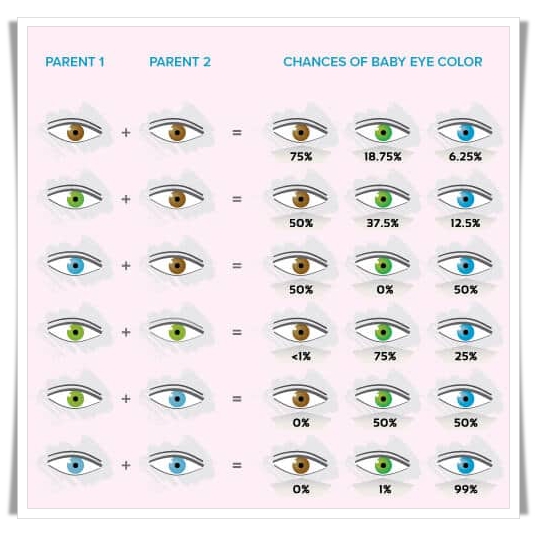
- The Range of Possibilities: Even with seemingly straightforward parental genetics, a range of potential eye colors can exist for a child. For example, two blue-eyed parents can, albeit rarely, have a brown-eyed child due to recessive genes. Conversely, two brown-eyed parents can have a blue-eyed child.
- The Influence of “Rare” Genes: While major genes like OCA2 and HERC2 are well-understood, there are likely other genes and genetic variations that contribute to eye color that are not yet fully identified or characterized. These can introduce an element of unpredictability.
The Joy of the Unknown: Embracing Nature’s Lottery
The anticipation of a newborn is a magical time, and while technology can offer fascinating insights, it’s important not to let it overshadow the inherent wonder of nature.
- The Surprise Factor: Many parents cherish the element of surprise that comes with having a baby. The discovery of their child’s eye color upon birth can be a heartwarming and memorable experience, irrespective of any prior predictions.
- Focus on Health and Well-being: While eye color is a fun topic of curiosity, the primary focus during pregnancy and after birth should always be on the health, well-being, and happiness of the child and parents.
- The Uniqueness of Every Child: Every child is unique, and their physical characteristics, including eye color, are part of what makes them special. The genetic lottery, while sometimes predictable, always holds the potential for a beautiful and individual outcome.
Leveraging Technology for Education and Engagement
Instead of solely focusing on prediction, these technological tools can serve as valuable educational resources and engaging ways for expectant parents to learn about genetics.
- Interactive Learning: Many DTC genetic services and online platforms offer interactive tools and educational content that can make learning about genetics accessible and enjoyable.
- Parental Bonding: Exploring these possibilities together can be a way for expectant parents to bond and share in the excitement of their growing family.
- A Gateway to Deeper Understanding: For those intrigued by their child’s potential eye color, these tools can act as a gateway to exploring broader concepts in genetics, human biology, and the fascinating science behind inherited traits.
In conclusion, while the question of “what color eyes will my newborn have?” may seem like a simple query, it opens the door to a complex and evolving field where genetics, technology, and human curiosity converge. As genetic sequencing becomes more accessible and analytical tools more sophisticated, our ability to explore and understand these inherited traits will continue to advance. However, the true magic often lies not just in the prediction, but in the joyful unfolding of life’s beautiful, and sometimes surprising, genetic tapestry.
aViewFromTheCave is a participant in the Amazon Services LLC Associates Program, an affiliate advertising program designed to provide a means for sites to earn advertising fees by advertising and linking to Amazon.com. Amazon, the Amazon logo, AmazonSupply, and the AmazonSupply logo are trademarks of Amazon.com, Inc. or its affiliates. As an Amazon Associate we earn affiliate commissions from qualifying purchases.