
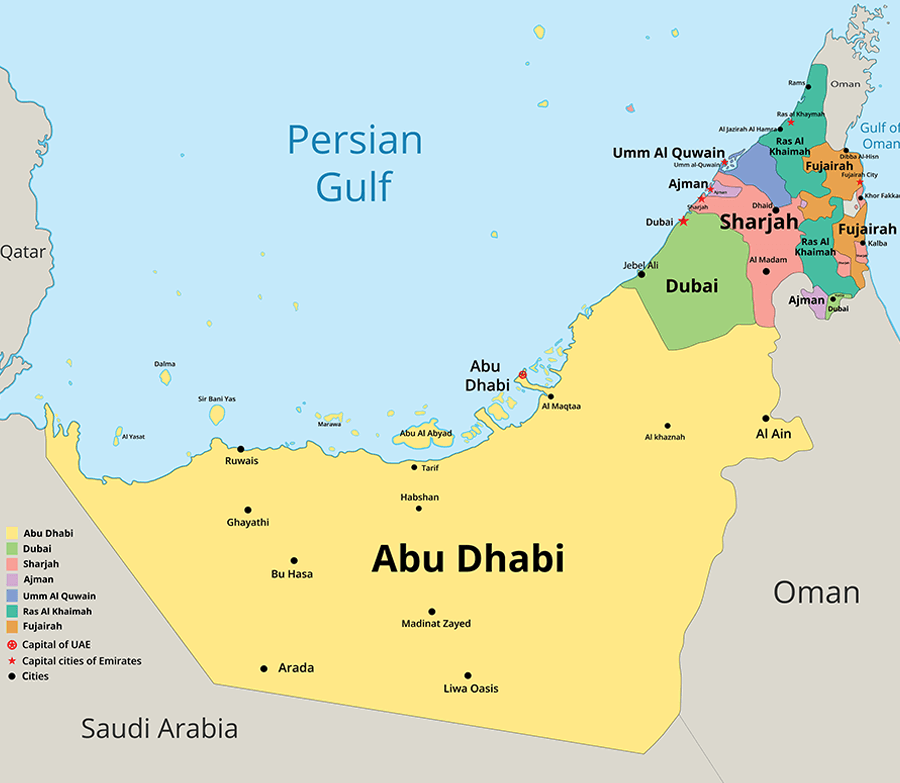
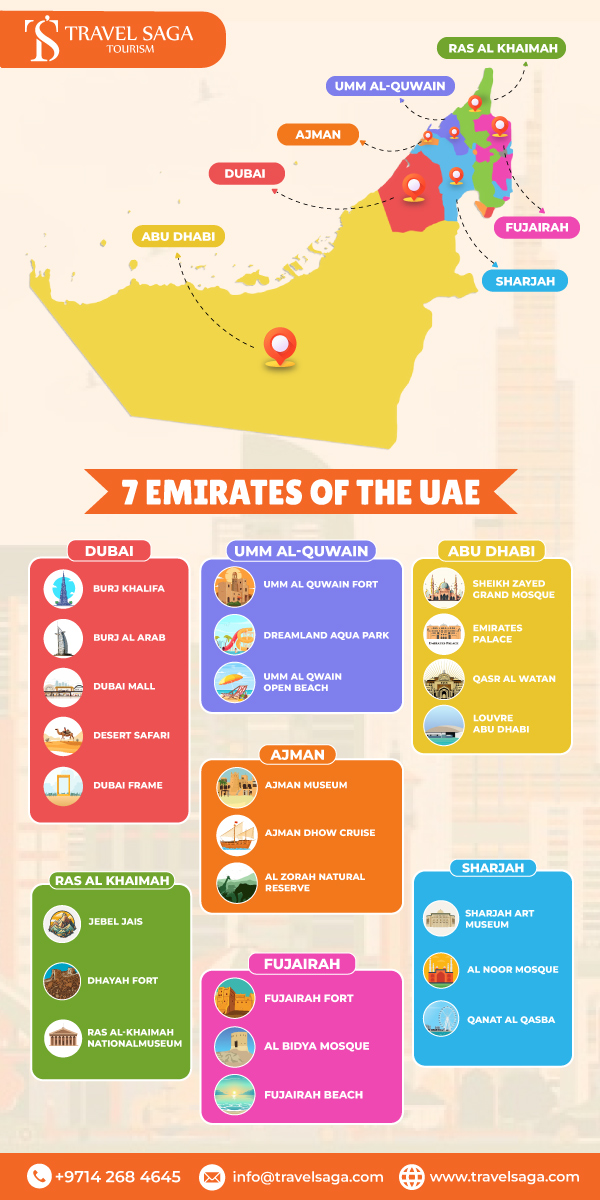
The United Arab Emirates (UAE) has evolved from a quiet coastal region into a global financial juggernaut in just half a century. While many outsiders view the federation as a monolithic entity, savvy investors and business leaders recognize that the UAE is a sophisticated tapestry of seven distinct economies. Each of the seven emirates offers a unique value proposition, specific financial incentives, and targeted growth sectors. To understand the “Money” landscape of the UAE, one must look beyond the glitz of the skyline and analyze the fiscal structures and investment opportunities that define Abu Dhabi, Dubai, Sharjah, Ras Al Khaimah, Fujairah, Ajman, and Umm Al Quwain.
The Financial Powerhouses: Abu Dhabi and Dubai
The economic engine of the UAE is primarily driven by its two largest emirates. While they share a federal goal of prosperity, their financial strategies are markedly different, providing a balanced portfolio for the nation’s wealth.
Abu Dhabi: The Sovereign Wealth and Energy Titan
Abu Dhabi is the capital and the wealthiest of the emirates, holding approximately 95% of the UAE’s oil reserves. However, the “Money” story here is no longer just about crude oil; it is about the sophisticated management of capital. Abu Dhabi is home to some of the world’s largest sovereign wealth funds, including the Abu Dhabi Investment Authority (ADIA) and Mubadala Investment Company.
For the institutional investor, Abu Dhabi represents stability and massive capital projects. The Abu Dhabi Global Market (ADGM) has emerged as a premier international financial center, pioneering regulations in digital assets, green finance, and venture capital. The emirate’s “Ghadan 21” accelerator program has pumped billions into the local economy, focusing on the knowledge economy and technology-driven returns. Investment here is characterized by high-barrier-to-entry industrial projects, aerospace, and renewable energy via Masdar.
Dubai: A Global Hub for Diversified Commerce and Real Estate
If Abu Dhabi is the “vault” of the UAE, Dubai is its “trading floor.” Having successfully diversified its economy so that oil contributes less than 1% to its GDP, Dubai thrives on trade, tourism, aviation, and real estate. The Dubai Economic Agenda (D33) aims to double the size of the emirate’s economy over the next decade, focusing on making Dubai one of the top three global cities for business and investment.
The Dubai International Financial Centre (DIFC) is the leading financial hub for the Middle East, Africa, and South Asia (MEASA), providing a platform for wealth management, fintech, and banking. From a personal finance and real estate perspective, Dubai remains a magnet for Foreign Direct Investment (FDI). The “Golden Visa” program has revolutionized the property market, allowing investors to secure long-term residency through real estate holdings, thereby stabilizing the market and ensuring a steady inflow of global private wealth.
The Northern Emirates: Emerging Markets and Industrial Growth
As the cost of operations rises in the major hubs, the Northern Emirates have carved out lucrative niches that appeal to SMEs and industrial giants looking for high ROIs and lower overheads.
Sharjah: The Cultural and Educational Capital with SME Focus
Sharjah has positioned itself as the industrial heart of the UAE, contributing a significant portion of the country’s manufacturing GDP. From a business finance perspective, Sharjah offers a more conservative and stable environment for long-term industrial investment. The Sharjah Investment and Development Authority (Shurooq) has been instrumental in driving FDI into sectors like healthcare, environmental technology, and education.
Sharjah’s specialized free zones, such as the Sharjah Research Technology and Innovation Park (SRTIP), offer unique incentives for startups and entrepreneurs. The emirate is particularly attractive for “impact investing” and businesses that require a large, educated workforce, thanks to its status as a regional educational hub. For the value-conscious investor, Sharjah provides a middle ground: proximity to Dubai’s infrastructure with significantly lower commercial rents and operational costs.
Ras Al Khaimah: The Industrial and Tourism Frontier
Ras Al Khaimah (RAK) is the UAE’s success story in industrial diversification. It is home to RAK Ceramics, one of the world’s largest ceramics manufacturers, and Julphar, a major pharmaceutical player. The Ras Al Khaimah Economic Zone (RAKEZ) is one of the most cost-effective free zones in the region, hosting over 15,000 companies across 50+ industries.
In recent years, the “Money” narrative in RAK has shifted toward high-end tourism and hospitality. The announcement of multibillion-dollar integrated resort projects has sparked a real estate and hospitality boom. Investors are increasingly looking at RAK as the next frontier for capital appreciation, with land prices and development opportunities offering higher growth percentages than the more saturated markets of Abu Dhabi or Dubai.
Strategic Logistics and Niche Economies
The remaining three emirates—Fujairah, Ajman, and Umm Al Quwain—play critical roles in the UAE’s maritime and logistical financial framework.
Fujairah: The Strategic Bunkering and Energy Hub
Fujairah occupies a unique geographical position as the only emirate with a coastline solely on the Gulf of Oman, bypassing the Strait of Hormuz. This makes it a critical node in the global energy supply chain. The Port of Fujairah is one of the world’s top three bunkering hubs.
From a financial standpoint, Fujairah is a cornerstone of the UAE’s energy security and export strategy. The Habshan-Fujairah oil pipeline ensures that the UAE can maintain exports regardless of maritime tensions. For investors, the opportunities here lie in logistics, maritime services, and oil storage. The Fujairah Free Zone offers specific incentives for companies involved in trading, assembly, and manufacturing that require direct access to the Indian Ocean.
Ajman and Umm Al Quwain: Efficiency and Specialized Manufacturing
Ajman, the smallest of the seven emirates, has built a reputation for its agile business environment. The Ajman Free Zone (AFZ) is popular among small-scale exporters and entrepreneurs due to its low setup costs and streamlined digital registration processes. Its economy is heavily supported by the Ajman Port and a growing manufacturing sector.
Umm Al Quwain (UAQ) remains the most tranquil of the emirates, but it is a sleeping giant in terms of blue-economy investment. Its focus is on maritime activities, fisheries, and increasingly, eco-tourism. The Umm Al Quwain Free Trade Zone (UAQFTZ) is particularly favored by consultants and freelancers for its “micro-business” friendly policies and minimal bureaucratic hurdles. Both emirates offer an “entry-level” financial gateway into the UAE market, making them essential for bootstrapping startups and niche industrial firms.
Strategic Financial Tools and Frameworks in the UAE
Understanding the seven emirates is only half the battle; an investor must also understand the financial instruments and regulatory frameworks that govern them.
Free Zones vs. Mainland: Choosing the Right Business Structure
One of the most critical “Money” decisions in the UAE is the choice between a Mainland and a Free Zone setup.
- Free Zones: Each emirate hosts multiple free zones (e.g., JAFZA in Dubai, KIZAD in Abu Dhabi). These offer 100% foreign ownership, 100% repatriation of capital and profits, and exemptions from import/export duties. However, they generally restrict the company from trading directly within the UAE mainland without a local agent.
- Mainland: A mainland license allows for unrestricted trade within the UAE and government tendering. Recent legislative changes now allow 100% foreign ownership for many mainland activities, a move that has significantly boosted the UAE’s ranking in ease-of-doing-business indices.

The New Tax Landscape and Wealth Planning
For decades, the UAE was synonymous with a “tax-free” life. While it remains one of the most tax-efficient jurisdictions globally, the fiscal landscape is maturing. The introduction of a 5% Value Added Tax (VAT) in 2018 and a 9% Corporate Tax on business profits exceeding AED 375,000 in 2023 marks a shift toward a more sustainable, non-oil revenue model.
For the personal finance enthusiast, the UAE still offers a 0% Personal Income Tax environment. This makes it an unparalleled location for wealth accumulation and estate planning. The DIFC and ADGM have also introduced foundations and trust laws, allowing high-net-worth individuals to manage their global legacies within a sophisticated legal framework based on English Common Law.
In conclusion, the seven emirates of the UAE—Abu Dhabi, Dubai, Sharjah, Ras Al Khaimah, Fujairah, Ajman, and Umm Al Quwain—work in a synergistic financial loop. While Abu Dhabi provides the sovereign backing and Dubai provides the commercial pulse, the other emirates offer specialized industrial, logistical, and cost-effective alternatives. For the modern investor, the UAE is not just a destination; it is a diverse financial ecosystem designed for growth, protection, and global connectivity.
aViewFromTheCave is a participant in the Amazon Services LLC Associates Program, an affiliate advertising program designed to provide a means for sites to earn advertising fees by advertising and linking to Amazon.com. Amazon, the Amazon logo, AmazonSupply, and the AmazonSupply logo are trademarks of Amazon.com, Inc. or its affiliates. As an Amazon Associate we earn affiliate commissions from qualifying purchases.