
For over a decade, Duolingo has stood as the poster child for mobile-first education. However, in recent years, users have noticed a seismic shift in how the application functions. What was once a simple translation tool has morphed into a sophisticated, AI-driven engine that leverages cutting-edge software engineering and behavioral psychology. To understand what is happening to Duolingo today, one must look beneath the surface of its friendly green mascot and examine the massive technological pivot the platform is undertaking. From the controversial redesign of its user interface to the integration of Large Language Models (LLMs), Duolingo is reinventing itself as a “tech-first” educator.

The Great Re-Architecture: From the Tree to the Path
One of the most significant changes in Duolingo’s recent history is the complete overhaul of its core UI/UX, transitioning from the “Home Tree” to the “Path.” For long-term users, this wasn’t just a cosmetic update; it was a fundamental shift in how the software processes and sequences information.
The Transition to Linear Learning
In the original “Tree” model, users had a high degree of agency, choosing which skills to level up and when. While this felt empowering, Duolingo’s internal data suggested it was suboptimal for long-term retention. The new “Path” architecture is a linear progression designed to guide users through a scientifically backed curriculum. By moving to a single-stream interface, the developers were able to implement a “spiral” learning methodology. This ensures that older concepts are automatically reintroduced at the precise moment a user’s “forgetting curve” begins to dip, a feat that was difficult to manage when users were jumping between different sections of the app.
Algorithmic Personalization of the User Journey
Behind the linear Path lies an invisible layer of sophisticated software. Every step a user takes is monitored by an algorithm known as “BirdBrain.” This system analyzes every correct and incorrect answer in real-time. If a user is struggling with the “Subjunctive Mood” in Spanish, the Path doesn’t just repeat the same questions; it dynamically adjusts the difficulty of the next several lessons. This level of personalization is only possible through a robust backend that can process billions of data points daily, ensuring that no two users’ experiences are exactly the same, even if their Path looks identical on the screen.
Generative AI and the Birth of Duolingo Max
The most transformative change happening to Duolingo is its aggressive adoption of Generative AI. While the app has used machine learning for years to power its text-to-speech and grading systems, the partnership with OpenAI has pushed the platform into a new era of digital instruction.
Roleplay and Explain My Answer: Leveraging GPT-4
With the introduction of “Duolingo Max,” a premium subscription tier, the company integrated GPT-4 to solve two of the biggest hurdles in digital language learning: the lack of open-ended conversation and the “black box” of mistakes. The “Roleplay” feature allows users to engage in non-scripted, AI-driven conversations with characters in the app. Unlike previous chatbots that relied on a decision tree, this is a fluid interaction powered by an LLM that can react to any input.
Similarly, the “Explain My Answer” feature addresses a common pain point: the frustration of getting a question wrong without knowing why. By utilizing GPT-4, the app can generate a personalized, context-aware explanation for a specific error. This moves the tech beyond simple pattern matching and into the realm of a virtual private tutor.
Moving Beyond Canned Responses to Fluid Dialogue
Technically, integrating an LLM into a high-traffic app like Duolingo is a massive undertaking. The developers have had to implement strict “guardrails” to ensure the AI remains helpful and doesn’t hallucinate or provide inappropriate content. This involves a complex layer of prompt engineering and real-time filtering. The goal is to move the app away from “canned responses”—where a user just picks from a list of words—and toward “natural language processing,” where the software truly understands the intent behind a user’s typed or spoken sentence.
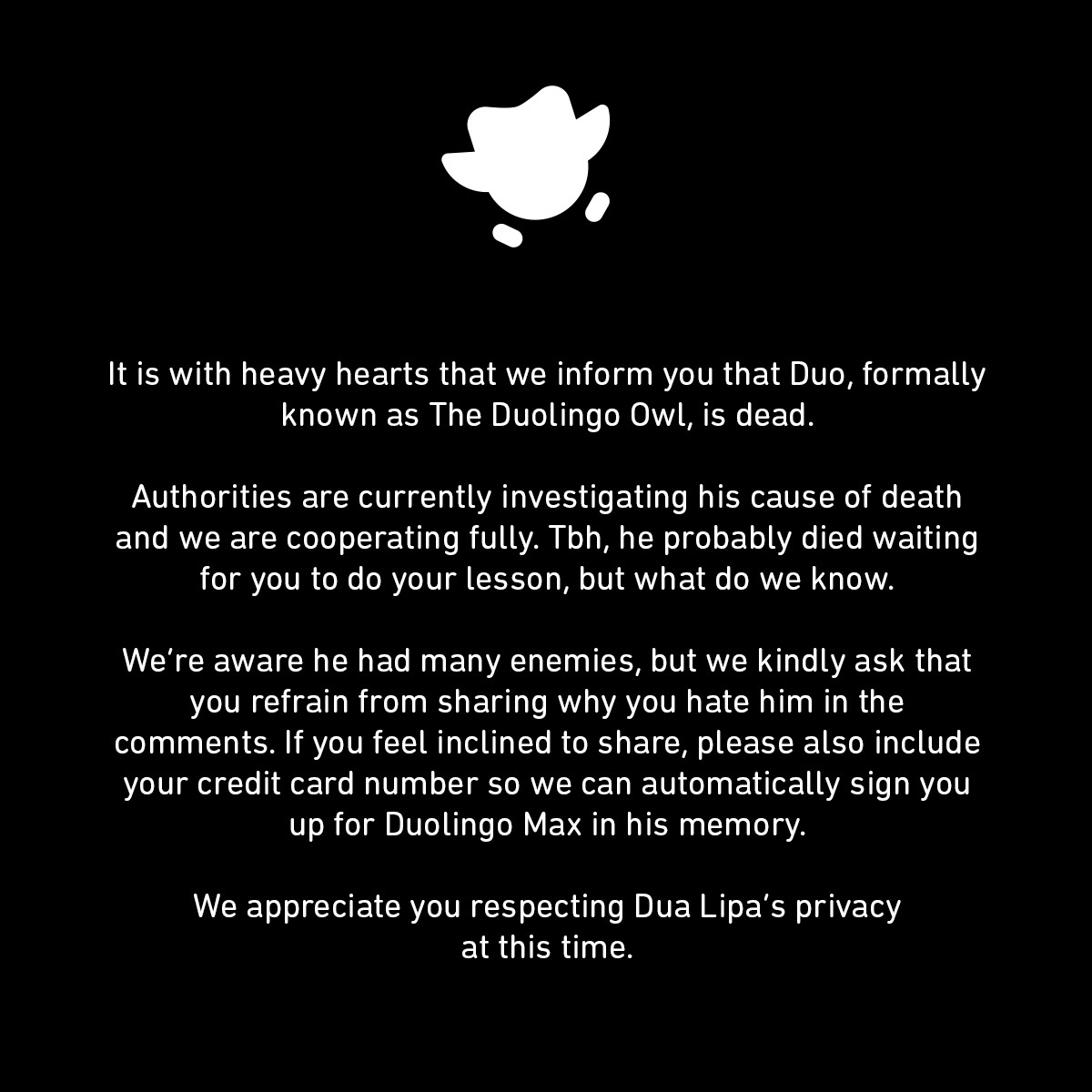
The Science of Engagement: Gamification and Behavioral Tech
Many users wonder why they feel an almost compulsive need to maintain their “Streak.” This is not by accident. Duolingo has perfected the “gamification” of education through a series of tech-driven behavioral hooks that are more commonly found in high-end mobile gaming than in classrooms.
Data-Driven Retention: Streaks, Leagues, and Notifications
The “Streak” is perhaps Duolingo’s most famous piece of engagement tech. On the backend, this is managed by a sophisticated notification engine. Duolingo uses A/B testing on a massive scale—running hundreds of experiments simultaneously—to determine which notification text, sent at what time of day, is most likely to bring a user back to the app. Whether it’s the “passive-aggressive” reminder from Duo the Owl or a congratulatory prompt about a friend’s progress, every interaction is calibrated by data to maximize the “Daily Active User” (DAU) metric.
Spaced Repetition Systems (SRS) and Neural Networks
At the heart of Duolingo’s software is the Spaced Repetition System (SRS). This is a well-known psychological concept, but Duolingo has digitized it using neural networks. The app tracks the “half-life” of every word in a user’s vocabulary. If the system calculates that you haven’t seen the word “apple” in three weeks and your previous performance on that word was shaky, the neural network will prioritize that word in your next practice session. This ensures that the tech is doing the heavy lifting of memory management, allowing the user to simply focus on the interface.
Expanding the Ecosystem: Math, Music, and the Multi-Subject App
What’s happening to Duolingo is also an expansion of scope. The company is no longer just a language-learning app; it is repositioning itself as a universal learning engine. By launching Duolingo Math and Duolingo Music, they are proving that their underlying gamified architecture is subject-agnostic.
Building a Universal Learning Engine
From a software engineering perspective, this move is highly efficient. The developers have built a modular framework where the “gamified” elements—the XP, the Leagues, the Streaks, and the reward sounds—are a separate layer from the content. This allows them to “plug in” new subjects like Music or Math without having to rebuild the app from scratch. The Music interface, which features a digital keyboard and rhythmic exercises, utilizes the same feedback loops and progress tracking that made the language courses successful.
Tech Synergies Across Disciplines
This multi-subject approach creates a “flywheel” effect. As users engage with Math or Music, Duolingo gathers more data on how humans learn different types of cognitive skills. This data is then fed back into their machine-learning models to improve the language courses, and vice versa. The ultimate goal is to create a singular, unified platform where the “Duolingo Method”—bite-sized lessons, high engagement, and AI-driven feedback—can be applied to virtually any field of study.

The Future: A Tutoring AI in Every Pocket
As Duolingo continues to evolve, the trend is clear: the app is moving away from being a digital textbook and toward becoming a digital human substitute. The integration of advanced speech recognition technology allows the app to grade pronunciation with increasing accuracy, while the evolution of LLMs is making the “conversational” aspect of the app feel more human than ever.
The “happening” at Duolingo is essentially a grand experiment in AI-mediated education. By combining the dopamine-loop mechanics of social media with the pedagogical rigor of linguistic science, Duolingo is attempting to solve the biggest problem in education: motivation. While some critics argue that the app prioritizes “streaks” over “fluency,” the technological trajectory suggests that as the AI becomes more sophisticated, the gap between “playing a game” and “learning a language” will continue to disappear. For the millions of users worldwide, Duolingo is no longer just an app; it is a live, breathing piece of software that learns about the user just as much as the user learns from it.
aViewFromTheCave is a participant in the Amazon Services LLC Associates Program, an affiliate advertising program designed to provide a means for sites to earn advertising fees by advertising and linking to Amazon.com. Amazon, the Amazon logo, AmazonSupply, and the AmazonSupply logo are trademarks of Amazon.com, Inc. or its affiliates. As an Amazon Associate we earn affiliate commissions from qualifying purchases.