
In the modern professional landscape, a job interview is far more than a simple Q&A session; it is a high-stakes brand activation. When you walk into a boardroom or sign into a Zoom call, you are not just a candidate—you are a brand representative for a product known as “You.” Long before you articulate your value proposition or detail your career milestones, your physical appearance has already begun the process of storytelling.
The question of “what to wear to a job interview” is often dismissed as a superficial concern. However, through the lens of brand strategy, it is a critical component of personal branding. Just as a luxury car manufacturer invests millions in the tactile feel of its steering wheel and the sleekness of its chassis to convey quality, a professional must curate their attire to signal competence, reliability, and cultural alignment. Your wardrobe is your packaging, and in the competitive market for talent, packaging matters.

Decoding Visual Identity: Why Your Outfit is Your First Brand Statement
Personal branding is the practice of marketing people and their careers as brands. It is an ongoing process of developing and maintaining a reputation and impression of an individual. In an interview setting, your attire serves as the visual identity of your personal brand. It functions as a non-verbal shorthand that communicates your professional narrative to a potential employer.
The Psychology of First Impressions
Psychological studies frequently highlight the “Halo Effect,” a cognitive bias where our overall impression of a person influences how we feel and think about their character. In an interview, if your visual brand is polished and appropriate, the interviewer is more likely to subconsciously attribute other positive traits to you, such as attention to detail and high organizational skills. Conversely, a mismatched visual brand can create “brand dissonance,” where the interviewer struggles to reconcile your impressive resume with a disorganized or inappropriate appearance. You have roughly seven seconds to make a first impression; your attire does the heavy lifting in those opening moments.
Aligning Personal Values with Corporate Identity
Effective branding requires a deep understanding of the “client”—in this case, the hiring company. Every organization has a corporate identity, a set of values and a culture that they project to the world. A successful job seeker uses their attire to signal that their personal brand is a perfect fit for that corporate identity. This does not mean losing your individuality; rather, it means strategically adapting your visual language to show that you “speak the same language” as the organization. Whether the company brand is built on tradition and stability or innovation and disruption, your outfit should reflect that you understand and respect their mission.
Strategic Wardrobe Choices: Curating a Brand-Consistent Aesthetic
In brand management, consistency is key. Your interview attire should be a deliberate choice based on the industry’s “brand standards.” To choose the right outfit, you must first audit the industry you are entering.
Formal Branding: The Authority Look
For sectors like finance, law, and high-level corporate consulting, the brand identity is rooted in authority, tradition, and trustworthiness. Here, the “Authority Look” is the gold standard. This typically involves a well-tailored suit in neutral, “serious” colors such as navy blue, charcoal gray, or black.
- The Navy Suit: In color psychology, navy projects confidence and stability. It is the color of the “trusted advisor.”
- The White Shirt: A crisp white shirt suggests transparency and meticulousness.
- Minimalism: In these industries, the brand is “reliable.” Bold patterns or avant-garde cuts can distract from this message. Your attire should be high-quality but understated, ensuring the focus remains on your expertise.
Business Casual: The Collaborative Professional
Many modern workplaces, particularly in marketing, management, and education, adopt a “Business Casual” brand. This aesthetic is designed to signal that you are professional yet approachable and collaborative. The challenge here is that “Business Casual” is a broad spectrum.
- The Mid-Point: Chinos or slacks paired with a blazer or a high-quality knit sweater.
- Texture and Layers: Using different textures can add depth to your personal brand, suggesting a multifaceted personality that can handle complex, collaborative environments.
- The Signal: By choosing this attire, you are signaling that you are ready to “roll up your sleeves” and join the team, while still maintaining a level of professional decorum.
Creative and Startup Branding: The Innovative Spirit
In the tech and creative sectors, wearing a full suit can actually damage your brand, making you appear “out of touch” or “too corporate” for a fast-paced, disruptive environment. Here, the brand identity is centered on innovation, agility, and authenticity.
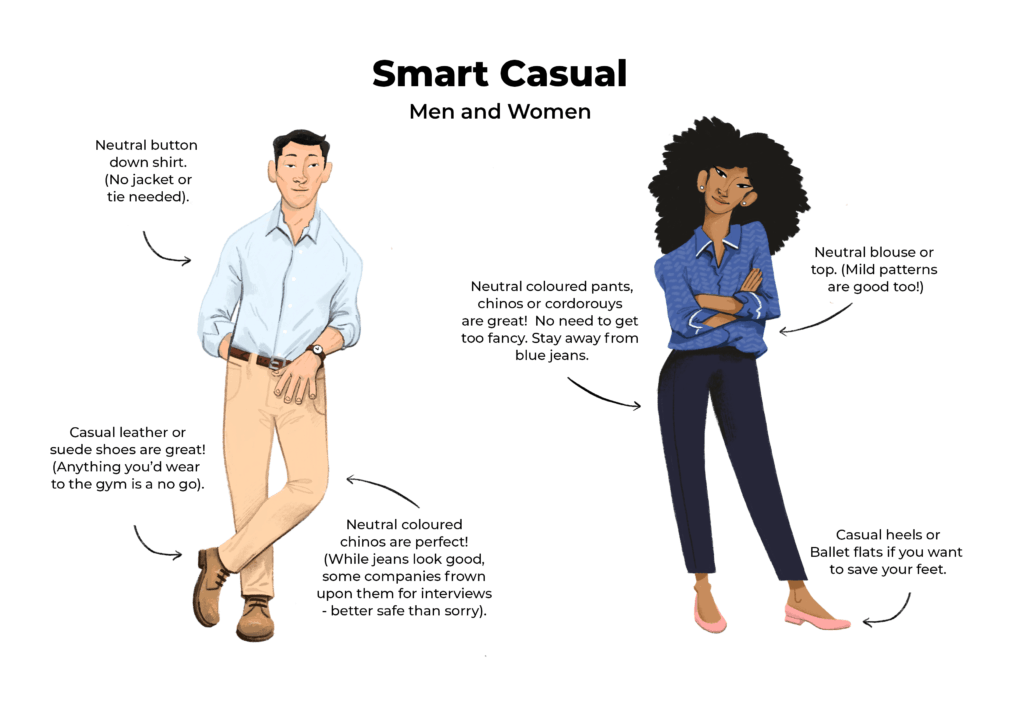
- The Smart Casual Balance: Dark denim (without holes), a clean button-down, and premium sneakers or loafers.
- Subtle Personality: This is where your personal brand can shine through more clearly. A unique accessory or a pop of color can signal creativity and “out of the box” thinking.
- The Goal: You want to look like you already work there. Researching the office culture via social media or LinkedIn can give you clues on how to calibrate this look perfectly.
The Virtual Brand: Adapting Your Aesthetic for the Digital Screen
The rise of remote work has shifted the interview landscape from physical boardrooms to digital platforms. However, the principles of personal branding remain the same; only the medium has changed. In a virtual interview, your “brand space” is limited to a small rectangle on a screen.
Color Theory and Screen Presence
When dressing for a camera, certain colors perform better than others. High-contrast patterns can cause “strobing” effects on video, which is distracting and unprofessional. To maintain a strong digital brand, solid colors are usually the best choice.
- Blue and Green Tones: These tend to look the most professional on most webcams and against varied backgrounds.
- Avoiding the “Floating Head”: If your background is white, avoid wearing a white shirt, as you will blend in. You want to create enough contrast so that your physical presence remains the focal point.
Framing and Lighting as Brand Extensions
In a virtual setting, your background is part of your attire. If you are dressed in a sharp blazer but your background is a messy bedroom, your brand message is inconsistent. Think of your video frame as a digital storefront. It should be clean, well-lit, and professional. Good lighting is the “filter” of your personal brand—it makes you look more energetic and engaged. Position your light source in front of you, not behind, to ensure your facial expressions (key brand communicators) are clearly visible.
Sustainability and Authenticity: Future-Proofing Your Personal Brand
In the current era, consumers (and employers) value authenticity and social responsibility. These trends have bled into personal branding. How you source and maintain your wardrobe can be a subtle but powerful part of your professional story.
The “Uniform” Strategy for Consistency
Many high-profile leaders, from Steve Jobs to Anna Wintour, have adopted a “personal uniform.” This isn’t just about saving time; it’s about extreme brand consistency. By having a signature style, you build a recognizable professional image. While you don’t need to wear the exact same thing every day, having a “go-to” interview silhouette helps you feel comfortable and confident. Confidence is the ultimate brand enhancer; if you feel good in what you’re wearing, your performance will reflect that.
Ethical Fashion and Brand Integrity
As corporate social responsibility (CSR) becomes a pillar of many company brands, candidates are increasingly conscious of the ethics of their own attire. Investing in high-quality, sustainable pieces rather than “fast fashion” signals that you are a person who thinks long-term and values quality over quantity. This aligns well with leadership roles where strategic thinking and stewardship are required.
Furthermore, authenticity is paramount. If your attire feels like a “costume,” it will likely come across as such. Your goal is to find the intersection between what the company expects and what feels true to your identity. A brand that feels “fake” is quickly discarded by the market. Your interview outfit should be the best, most professional version of your true self.

Conclusion: The ROI of Strategic Dressing
Ultimately, deciding what to wear to a job interview is a strategic marketing decision. By viewing your wardrobe as a component of your personal brand, you shift from a passive participant to an active architect of your professional reputation. Whether you are aiming for the high-octane environment of a financial firm or the disruptive atmosphere of a tech startup, your visual identity serves as the bridge between your past achievements and your future potential.
In a world where skills can be taught but “fit” is often felt, your attire provides the immediate evidence that you belong. By aligning your visual brand with the company’s corporate identity, mastering the nuances of digital presentation, and maintaining a consistent, authentic aesthetic, you ensure that your first impression is not just good, but unforgettable. You are the product; make sure your packaging reflects the excellence within.
aViewFromTheCave is a participant in the Amazon Services LLC Associates Program, an affiliate advertising program designed to provide a means for sites to earn advertising fees by advertising and linking to Amazon.com. Amazon, the Amazon logo, AmazonSupply, and the AmazonSupply logo are trademarks of Amazon.com, Inc. or its affiliates. As an Amazon Associate we earn affiliate commissions from qualifying purchases.