
Understanding your annual salary is more than just knowing a single number; it’s a fundamental pillar of personal finance, a critical component of business budgeting, and a key metric for evaluating financial health and progress. Whether you’re an individual planning your household budget, negotiating a job offer, or an employer managing payroll and compensation, accurately calculating annual salary provides clarity, enables informed decision-making, and empowers strategic financial planning. This comprehensive guide delves into the nuances of annual salary calculation, moving beyond the surface to explore both individual earnings and the broader cost implications for businesses, all within the sphere of sound financial management.
Understanding the Basics: Gross vs. Net Annual Salary
Before diving into the mechanics of calculation, it’s crucial to distinguish between two fundamental terms that often cause confusion: gross annual salary and net annual salary. Grasping the difference between these two figures is the cornerstone of effective financial planning.
Defining Gross Annual Salary
Gross annual salary represents the total amount of money an employer pays an employee over a year before any deductions are taken out. It’s the headline figure often quoted in job offers and salary discussions. This amount typically includes:
- Base Salary: The fixed amount paid for performing your job duties, usually expressed as an annual figure, or derived from an hourly rate, weekly, bi-weekly, or monthly pay.
- Bonuses: Additional payments made to employees, often based on individual, team, or company performance. These can be annual, quarterly, or ad-hoc.
- Commissions: Earnings based on a percentage of sales or revenue generated, common in sales roles.
- Overtime Pay: Wages earned for working beyond standard hours, typically at a higher rate (e.g., time and a half).
- Tips: Additional earnings primarily from customer gratuities, common in service industries.
- Other Allowances: Specific payments for things like travel, housing, or car allowances, depending on the role and industry.
For instance, if your base salary is $60,000 per year and you received a $5,000 annual bonus, your gross annual salary would be $65,000, assuming no other variable income components. This is the figure on which your tax liability is primarily calculated, and it forms the basis for many financial assessments, such as loan eligibility.
Understanding Net Annual Salary
Net annual salary, often referred to as “take-home pay,” is the amount of money an employee actually receives after all mandatory and voluntary deductions have been subtracted from their gross annual salary. This is the money that lands in your bank account, and it’s the figure you rely on for your daily and monthly budgeting. Key deductions typically include:
- Federal Income Tax: Withheld by the U.S. government based on your W-4 form and income level.
- State Income Tax: Applicable in most, but not all, states.
- Local Income Tax: Applicable in some cities or municipalities.
- FICA Taxes (Federal Insurance Contributions Act):
- Social Security Tax: A fixed percentage of your earnings up to an annual limit.
- Medicare Tax: A fixed percentage of all your earnings, with no income limit.
- Health Insurance Premiums: Your share of the cost for health, dental, and vision insurance plans.
- Retirement Contributions: Deductions for 401(k), 403(b), or other employer-sponsored retirement plans.
- Other Voluntary Deductions: Such as life insurance premiums, disability insurance, flexible spending accounts (FSAs), health savings accounts (HSAs), union dues, or charitable contributions.
The difference between gross and net salary can be substantial, often 20-35% or more, depending on your income level, state of residence, and chosen benefits. Ignoring this distinction can lead to significant budgeting shortfalls and financial stress. Therefore, while gross salary is important for negotiation, net salary is paramount for personal financial planning and day-to-day living expenses.
Step-by-Step Calculation Methods for Individuals
Calculating your annual salary can take various forms, depending on how your income is structured. Whether you’re paid hourly, bi-weekly, or receive significant variable income, a systematic approach ensures accuracy.
From Hourly to Annual: Projecting Your Yearly Earnings
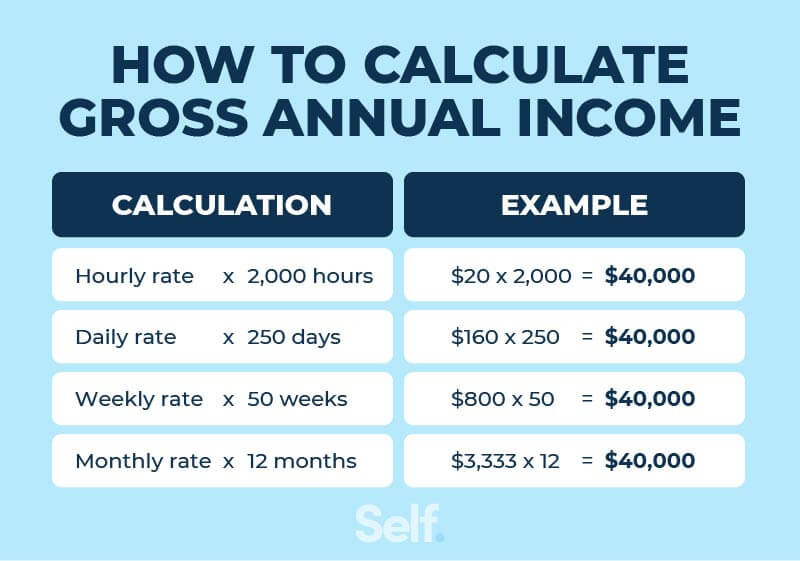
For individuals paid an hourly wage, converting this to an annual salary requires a few simple steps, but also an awareness of potential variations.
- Determine Your Standard Weekly Hours: Most full-time roles assume a 40-hour workweek.
- Calculate Weekly Gross Pay: Multiply your hourly rate by your standard weekly hours.
- Example: $25/hour x 40 hours/week = $1,000/week
- Calculate Annual Gross Pay: Multiply your weekly gross pay by the number of weeks in a year (52).
- Example: $1,000/week x 52 weeks/year = $52,000 gross annual salary
Accounting for Variations:
- Part-time Work: Use your actual average weekly hours instead of 40.
- Overtime: If you regularly work overtime, you’ll need to estimate this. For example, if you typically work an extra 5 hours per week at “time and a half” ($37.50/hour for a $25/hour base), your additional weekly pay would be $37.50 x 5 = $187.50, leading to an extra $9,750 annually. It’s best to use historical data for accurate projections.
- Unpaid Leave/Seasonal Work: If your work is seasonal or includes significant unpaid leave, adjust the “52 weeks” multiplier accordingly.
From Bi-Weekly/Semi-Monthly to Annual: Standardized Pay Periods
Many salaried employees receive paychecks on a bi-weekly or semi-monthly basis. The calculation here is straightforward, but it’s crucial to distinguish between the two pay frequencies.
-
Bi-Weekly Pay (Every Two Weeks): There are 26 bi-weekly pay periods in a year.
- Calculate Annual Gross Pay: Multiply your gross bi-weekly paycheck amount by 26.
- Example: $2,307.70 (gross bi-weekly) x 26 pay periods = $60,000 gross annual salary.
- Insight: Two months a year will have three bi-weekly paychecks, which can be a pleasant bonus for budgeting.
-
Semi-Monthly Pay (Twice a Month): There are 24 semi-monthly pay periods in a year (typically on the 15th and 30th/31st).
- Calculate Annual Gross Pay: Multiply your gross semi-monthly paycheck amount by 24.
- Example: $2,500 (gross semi-monthly) x 24 pay periods = $60,000 gross annual salary.
Including Variable Income: Bonuses, Commissions, and Tips
For roles with significant variable income, calculating a precise annual salary requires estimation and historical analysis.
- Bonuses: If bonuses are regular (e.g., annual performance bonus), use the most recent or average bonus amount. If they are discretionary, estimate conservatively or consider them “extra” rather than core salary for initial planning.
- Commissions: Review past pay stubs or sales records to determine your average monthly or quarterly commission earnings. Annualize this average. For new roles, ask about average commission earnings for current employees.
- Tips: Keep meticulous records of your tips over a period (e.g., a few months) to calculate a reliable average weekly or monthly tip income, then annualize.
Caution: When relying on variable income, it’s wise to create a budget based on your base or most conservative income, treating variable components as additional income rather than guaranteed funds.
Accounting for Deductions: From Gross to Net

Once you have your gross annual salary, the next critical step for personal finance is to estimate your net annual salary. This involves accounting for all the deductions.
- Gather Deduction Information: Refer to your pay stubs, benefits enrollment documents, and W-4 form.
- Estimate Taxes: This is the most complex part. Federal, state, and local income taxes depend on your income level, filing status, and dependents. FICA taxes (Social Security and Medicare) are a fixed percentage of your earnings up to certain limits (for Social Security).
- Tip: Online net pay calculators are invaluable here, as they often factor in current tax laws and state-specific rates. You’ll need to input your gross salary, filing status, and any pre-tax deductions like 401(k) contributions or health insurance premiums.
- Sum All Deductions: Add up your estimated taxes, health insurance premiums, retirement contributions, and any other regular deductions.
- Calculate Net Annual Salary: Subtract the total estimated annual deductions from your gross annual salary.
- Example (Simplified): $60,000 (Gross) – $10,000 (Federal Tax) – $3,000 (State Tax) – $4,590 (FICA) – $2,400 (Health Premiums) – $3,600 (401k) = $36,410 (Net Annual Salary).
This net figure is the one that truly dictates your purchasing power and ability to meet financial obligations.
The Employer’s Perspective: Calculating Salary Costs
From an employer’s viewpoint, the “cost” of an employee extends far beyond their gross annual salary. Businesses must account for a range of additional expenses to accurately budget for human capital, understand their operational costs, and offer competitive total compensation packages.
Beyond Base Salary: Employer-Side Costs
When a business budgets for an employee, the gross salary is just one line item. Several mandatory and voluntary contributions add significantly to the total cost:
- Employer FICA Contributions: Employers are legally required to match the employee’s Social Security and Medicare contributions. This means an additional 6.2% for Social Security (up to the annual limit) and 1.45% for Medicare, for a total of 7.65% of the employee’s gross wages.
- Unemployment Insurance (FUTA & SUTA): Employers pay federal unemployment tax (FUTA) and state unemployment tax (SUTA) to fund unemployment benefits. These rates vary by state and the employer’s claims history.
- Workers’ Compensation Insurance: This insurance covers employees who are injured or become ill on the job. Premiums vary widely based on the industry, risk level of the job, and the employer’s claims history.
- Health and Welfare Benefits: This is often one of the largest additional costs. Employers typically contribute a significant portion (or all) of the premiums for health, dental, and vision insurance plans, as well as life and disability insurance.
- Retirement Plan Contributions: Many employers offer matching contributions to 401(k)s or other retirement plans, which is a direct cost to the business.
- Paid Time Off (PTO): This includes vacation, sick leave, and holidays. While not a direct cash outlay beyond salary, it represents paid non-productive time that must be accounted for in staffing and project planning.
- Other Benefits: Examples include tuition reimbursement, employee assistance programs (EAPs), commuter benefits, wellness programs, and professional development training.
Total Compensation Package: The Full Picture
When considering an employee, smart businesses look at the “total compensation package,” which encompasses the gross salary plus the monetary value of all benefits and employer-paid taxes. This holistic view is critical for several reasons:
- Budgeting and Financial Forecasting: Accurate cost per employee is essential for setting realistic budgets, managing cash flow, and forecasting future expenses.
- Compensation Strategy: Understanding the full cost allows companies to design competitive compensation packages that attract and retain talent while remaining financially viable. A lower base salary might be acceptable to a candidate if the benefits package (e.g., generous health insurance, strong 401(k) match) significantly boosts the total value.
- Recruitment and Retention: Highlighting the value of the total compensation package, rather than just the base salary, can be a powerful recruitment tool. Employees who understand the full investment their employer makes in them are often more engaged and loyal.
- Compliance: Ensuring all mandatory taxes and insurance premiums are correctly calculated and remitted is vital for legal and regulatory compliance.
For a business, the true cost of an employee can easily be 1.25 to 1.4 times (or even more) their gross annual salary, making comprehensive salary calculation a cornerstone of sound business finance.
Leveraging Financial Tools for Accuracy and Planning
In an age of digital transformation, relying solely on manual calculations for annual salary can be time-consuming and prone to error. A variety of financial tools are available to streamline this process, enhance accuracy, and integrate salary data into broader financial planning.
Spreadsheet Applications: Customization and Control
Tools like Microsoft Excel, Google Sheets, or Apple Numbers offer unparalleled flexibility for calculating annual salary and projecting net pay.
- Custom Formulas: You can set up custom formulas to convert hourly rates, factor in variable income, and apply specific tax rates or deduction percentages.
- Budgeting Templates: Many pre-built templates exist for personal and business budgeting that allow you to plug in your gross annual salary and automatically calculate net pay, allocate funds to various categories, and track expenses.
- “What-If” Scenarios: Spreadsheets are ideal for running scenarios. For example, “What if I get a 5% raise?” or “How would increasing my 401(k) contribution impact my net pay?”
- Data Organization: They provide a centralized place to store all your income, deduction, and expense data, making it easy to review and adjust over time.
While requiring some initial setup, spreadsheets offer the most control and adaptability for complex or personalized salary calculations.
Online Salary Calculators: Quick Estimates and Tax Insights
For quick estimates and understanding the impact of various deductions, online salary and payroll calculators are invaluable resources.
- Ease of Use: Simply input your gross salary, pay frequency, state, and basic W-4 information, and the calculator will provide an estimate of your net pay.
- Tax Specificity: Many calculators are updated regularly with current federal and state tax laws, including FICA limits, providing a more accurate reflection of potential tax withholdings.
- Deduction Impact: They often allow you to input various pre-tax (e.g., 401k, health premiums) and post-tax deductions to see their immediate impact on your take-home pay.
- Comparison: Some sites offer tools to compare salaries across different locations or industries, providing context for your own earnings.
Popular examples include calculators from financial news sites, payroll software providers, and government tax agencies. These are excellent for initial estimations or verifying your pay stub, though they may not capture every single nuance of your personal financial situation.
Financial Planning Software: Integrating Salary into Your Broader Goals
For a more holistic approach, integrating your annual salary calculations into comprehensive financial planning software allows you to see how your income fits into your overall financial picture.
- Budgeting and Expense Tracking: Software like Mint, YNAB (You Need A Budget), or Personal Capital automatically categorize transactions and help you stick to your budget based on your net annual income.
- Investment Planning: Your annual salary is a key input for determining how much you can realistically save and invest for retirement, college, or other long-term goals.
- Debt Management: Understanding your disposable income after expenses and taxes helps in strategizing debt repayment plans.
- Goal Setting: Whether it’s buying a house, saving for a major purchase, or achieving early retirement, your annual salary forms the foundation of these financial goals, and planning software helps you model their attainability.
- Net Worth Tracking: By connecting bank accounts, investment accounts, and tracking liabilities, these tools provide a dynamic view of your net worth, with your salary being the engine driving its growth.
By leveraging these tools, individuals and businesses can move beyond mere calculation to strategic financial management, transforming raw salary data into actionable insights that foster financial stability and growth.

Conclusion
The ability to accurately calculate annual salary is a fundamental financial skill, serving as a cornerstone for both personal and business fiscal health. For individuals, a clear understanding of gross versus net pay empowers informed budgeting, tax planning, and goal setting, transforming a simple number into a powerful tool for financial control. For businesses, recognizing the total cost of an employee—far beyond just their base salary—is critical for sustainable budgeting, strategic compensation planning, and fostering a competitive and compliant workplace.
In an increasingly complex financial landscape, embracing both the meticulous detail of manual calculation and the efficiency of modern financial tools is paramount. From hourly wages to comprehensive total compensation packages, mastering the art of annual salary calculation is not merely an exercise in arithmetic; it’s an investment in financial clarity, strategic decision-making, and ultimately, greater financial freedom and security. By taking a proactive, informed approach, individuals can unlock their earning potential, and businesses can optimize their human capital investments, paving the way for prosperity and growth.
aViewFromTheCave is a participant in the Amazon Services LLC Associates Program, an affiliate advertising program designed to provide a means for sites to earn advertising fees by advertising and linking to Amazon.com. Amazon, the Amazon logo, AmazonSupply, and the AmazonSupply logo are trademarks of Amazon.com, Inc. or its affiliates. As an Amazon Associate we earn affiliate commissions from qualifying purchases.