
In the traditional sense, the word “conclave” evokes images of locked doors, secret deliberations, and high-stakes decision-making behind the thick stone walls of the Vatican. Derived from the Latin cum clave, meaning “with a key,” it represents a space where participants can operate in absolute privacy, shielded from outside influence or observation. However, in the rapidly evolving landscape of modern technology, the meaning of “conclave” has undergone a digital transformation.
Today, in the realms of cybersecurity, software architecture, and artificial intelligence, a “conclave” refers to a revolutionary approach to data privacy known as Confidential Computing. It represents a paradigm shift where data is not only protected while at rest or in transit but is also shielded while it is being actively processed. This article explores the technical meaning of the conclave in the digital age, the mechanisms that power it, and why it is becoming the cornerstone of secure enterprise ecosystems.
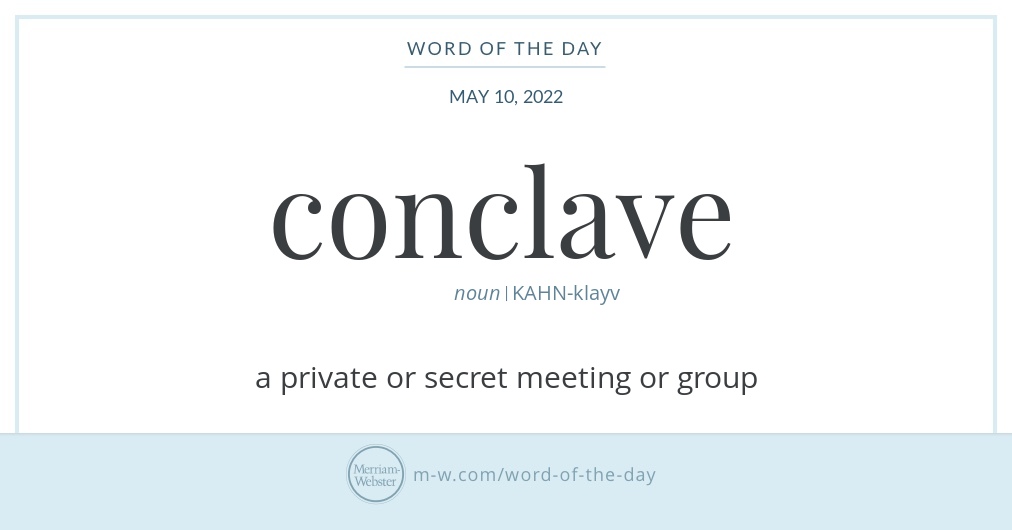
The Evolution of the Digital Conclave: From Secrecy to Security
The transition of the term “conclave” from a theological context to a technological one is not merely a linguistic quirk; it is a perfect metaphor for the current state of data security. As businesses migrate to the cloud and integrate complex AI models, the “walls” that used to protect proprietary information have become increasingly porous.
The Etymology and Its Transition to Tech
In classical history, a conclave was a secure room designed to ensure that the election of a leader was free from bribery or coercion. In the tech sector, specifically within the world of Confidential Computing, a “Conclave” serves a nearly identical purpose. It is a secure, hardware-isolated environment—often referred to as a “Trusted Execution Environment” (TEE) or an “enclave”—where code can run and data can be processed without being visible to the underlying operating system, the cloud provider, or even a system administrator with root access.
The Core Pillars of a Digital Conclave
A digital conclave is defined by three primary pillars: isolation, attestation, and encryption. Isolation ensures that the data being processed is kept separate from the rest of the system. Attestation provides a cryptographic proof that the software running inside the enclave is exactly what it claims to be, and has not been tampered with. Finally, encryption ensures that any data entering or leaving the enclave is unreadable to anyone without the specific “key.” Together, these pillars create a virtual “locked room” where sensitive digital operations can occur in total secrecy.
Why “Conclave” Matters Now
For decades, the industry standard for security was a “perimeter-based” model—building firewalls to keep hackers out. However, as cyber threats become more sophisticated and internal “insider threats” rise, the perimeter is no longer enough. The digital conclave moves the security boundary from the network edge to the data itself. In an era where data is the most valuable asset a company owns, the meaning of conclave has evolved to represent the ultimate safeguard against data breaches and industrial espionage.
Confidential Computing: The Engine Behind Modern Conclaves
To understand the meaning of a conclave in a technical sense, one must look under the hood at Confidential Computing. This technology is the engine that allows software developers to build applications that are functionally “blind” to the sensitive data they process.
Hardware-Based Trusted Execution Environments (TEEs)
The physical foundation of a conclave is the hardware. Companies like Intel (with SGX), AMD (with SEV), and ARM (with TrustZone) have developed specialized processor features that create these isolated enclaves. When an application runs within a TEE, the processor sets aside a portion of memory that is encrypted at the hardware level. Even if a hacker gains full control over the server’s operating system, they cannot “see” into this encrypted memory space. This is the digital equivalent of the locked door in a traditional conclave.
Encryption in Use: The Final Frontier of Data Security
Historically, data security focused on two states: “Data at Rest” (stored on a hard drive) and “Data in Transit” (moving across the internet). We have become very good at encrypting data in these states. However, the “Data in Use” state—when a program is actually calculating numbers or analyzing text—has traditionally required the data to be decrypted, leaving it vulnerable. Conclave technology solves this “Final Frontier” of security by allowing the CPU to process encrypted data without ever exposing the raw, unencrypted information to the rest of the system.

The Role of Software Frameworks
While hardware provides the foundation, software frameworks like R3’s “Conclave” platform simplify the process for developers. Building for a TEE is notoriously difficult; it requires deep knowledge of low-level hardware instructions. Modern “Conclave-as-a-service” tools act as a bridge, allowing developers to write high-level code (like Java or Python) that automatically benefits from hardware-level isolation. This democratization of the technology is what is allowing the “conclave” concept to spread across the global economy.
Practical Applications of Conclave Technology
The meaning of conclave is best understood through its applications. It is not just a theoretical security concept; it is a functional tool being used to solve some of the most complex problems in the tech industry today.
Collaborative Machine Learning and AI Training
Artificial Intelligence requires massive amounts of data to be effective. Often, the best data belongs to different organizations who are competitors or who are bound by strict privacy laws (like healthcare providers). Using a digital conclave, multiple parties can upload their sensitive data into a single, secure environment. The AI model can “learn” from all the data simultaneously, but the participants cannot see each other’s data, and the host of the server cannot see the data or the resulting model. This is known as “Privacy-Preserving Machine Learning.”
Secure Data Monetization and Multi-Party Analytics
In the world of finance, banks often need to collaborate to detect fraud or money laundering. However, they cannot simply share their customer databases due to privacy regulations. By utilizing a conclave, banks can run joint analytics on their combined datasets to find patterns of criminal activity without ever actually “sharing” or “exposing” individual customer records. The conclave acts as a neutral “clean room” where the data meets, interacts, and then disappears, leaving behind only the insights.
Decentralized Finance (DeFi) and Privacy Layers
The blockchain industry has long struggled with a paradox: it offers transparency but lacks privacy. Every transaction on a public ledger is visible to everyone. Conclave technology is being integrated into “Layer 2” solutions to provide “Private Smart Contracts.” This allows users to enjoy the security and decentralization of a blockchain while keeping the specific details of their trades and balances hidden within a secure enclave.
The Future of Conclave Solutions in Enterprise Architecture
As we look toward the future, the meaning of “conclave” will likely become synonymous with standard enterprise architecture. We are moving toward a “Zero Trust” world where no user, device, or server is trusted by default.
Overcoming the Trust Deficit in Cloud Computing
One of the biggest hurdles to cloud adoption for highly regulated industries (like defense or banking) is the “Trust Deficit.” These organizations are hesitant to put their most sensitive secrets on servers owned by third-party providers like Amazon, Microsoft, or Google. Conclave technology changes the power dynamic. It allows the customer to maintain the “key” to their data, ensuring that even the cloud provider cannot access it. This “Verifiable Computing” ensures that the cloud remains a utility rather than a liability.
Regulatory Compliance and Data Sovereignty
With the rise of the GDPR in Europe, the CCPA in California, and similar laws globally, the legal cost of a data breach is higher than ever. Conclave technology provides a technical “safe harbor.” If data is processed within a certified secure enclave and is never visible in an unencrypted state, it significantly reduces the compliance burden on the organization. It allows for “Data Sovereignty,” where data can be processed in a foreign data center while remaining under the strict technical control of the home country.

The Intersection of Conclave and Edge Computing
As the Internet of Things (IoT) grows, more data is being processed at the “edge”—on cameras, sensors, and smart devices. These devices are often physically vulnerable. Implementing conclave-style security at the edge ensures that even if a device is stolen or tampered with, the data inside remains encrypted and inaccessible. This is critical for the future of autonomous vehicles, smart cities, and remote medical monitoring.
In conclusion, the meaning of “conclave” has transitioned from an ancient tradition of physical seclusion to a cutting-edge requirement for digital existence. It represents the “key” to a future where data can be shared without being exposed, where AI can be trained without violating privacy, and where the cloud can be used without sacrificing control. As we continue to digitize every aspect of human life, the digital conclave will stand as the ultimate fortress for our most sensitive information, proving that true security is not just about keeping people out, but about keeping data “in” a state of absolute, verifiable privacy.
aViewFromTheCave is a participant in the Amazon Services LLC Associates Program, an affiliate advertising program designed to provide a means for sites to earn advertising fees by advertising and linking to Amazon.com. Amazon, the Amazon logo, AmazonSupply, and the AmazonSupply logo are trademarks of Amazon.com, Inc. or its affiliates. As an Amazon Associate we earn affiliate commissions from qualifying purchases.