
In the competitive landscape of the home textile industry, few metrics have held as much sway over consumer behavior as the “thread count.” For decades, the answer to the question “what is the highest thread count for sheets” has served as a cornerstone for brand positioning, pricing strategy, and corporate identity. However, for the modern brand strategist, thread count represents more than just a physical measurement of fabric density; it is a masterclass in how a technical specification can be transformed into a powerful marketing hook—and how that same hook can eventually become a liability.
The pursuit of the “highest” thread count has driven billions of dollars in sales, shaped the identity of luxury heritage brands, and provided an entry point for disruptive direct-to-consumer (DTC) startups. To understand the branding mechanics behind this phenomenon, we must look past the cotton fibers and analyze the strategic maneuvers that turned a textile measurement into a global symbol of prestige.
The Illusion of Quality: How Thread Count Became a Marketing Powerhouse
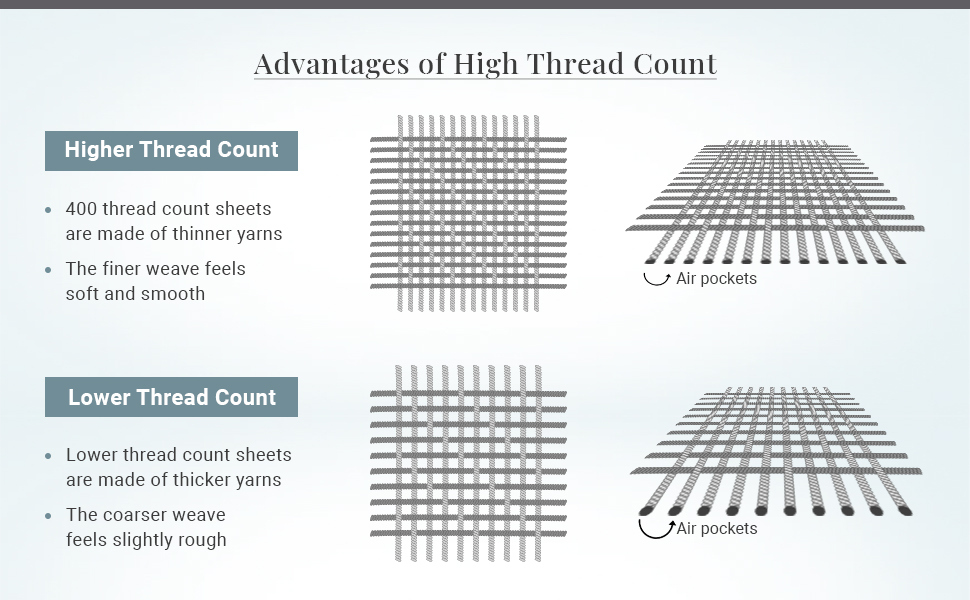
The concept of thread count—the number of horizontal and vertical threads per square inch of fabric—was originally a neutral technical specification used by manufacturers to denote weave density. However, in the late 20th century, savvy brand marketers identified a psychological opening: the consumer’s desire for a quantifiable “best.”
The Origin of the Thread Count Metric
Initially, the textile industry operated on craftsmanship and tactile experience. Luxury brands built their reputation on the heritage of European mills and the quality of raw materials like extra-long-staple Egyptian cotton. As the market expanded, brands needed a way to communicate quality to a mass audience that couldn’t necessarily feel the fabric through a plastic package. Thread count became that shorthand. It simplified a complex manufacturing process into a single, easy-to-compare number.
From Technical Spec to Brand Hook
Once the market accepted thread count as a proxy for quality, a “numbers race” ensued. Brands began to realize that if a 300-thread-count sheet was considered “good,” a 600-thread-count sheet could be marketed as “premium,” and a 1,000-thread-count sheet as “ultra-luxury.” This led to the creation of a tiered brand architecture based almost entirely on a numerical hierarchy. By anchoring their identity to higher numbers, brands could justify higher price points, creating a perceived value that far exceeded the incremental cost of production.
The Psychology of “More is Better”
The success of thread count as a branding tool relies on the “more is better” heuristic. Consumers, when faced with overwhelming choices, often default to the highest available metric as a safety net for quality. Brands capitalized on this cognitive bias, positioning their 800+ thread count products as the gold standard. This strategy effectively crowded out discussions about fiber length, finishing processes, or weave types—factors that arguably matter more for sleep quality but are harder to quantify in a 30-second marketing pitch.
Strategic Positioning: High Thread Count vs. Material Integrity
As the market matured, the strategy of pursuing the “highest” thread count hit a physical and ethical wall. Textiles have a physical limit; you can only fit so many threads into a square inch before the fabric becomes stiff, heavy, and unbreathable. This led to a divergence in brand strategies: those who doubled down on the numbers and those who pivoted toward material integrity.
The Luxury Brand Dilemma: Quality vs. Perception
Established luxury brands faced a dilemma. To compete with mass-market retailers claiming 1,200 thread counts, they had to decide whether to participate in the “inflated count” game or stick to their artisanal roots. Many premium brands opted for the latter, choosing to educate their customers that the “sweet spot” for true luxury is actually between 300 and 500. Their branding shifted from “The Highest Count” to “The Perfect Count,” positioning themselves as the experts who refuse to compromise quality for marketing gimmicks.
Redefining the High-End Narrative
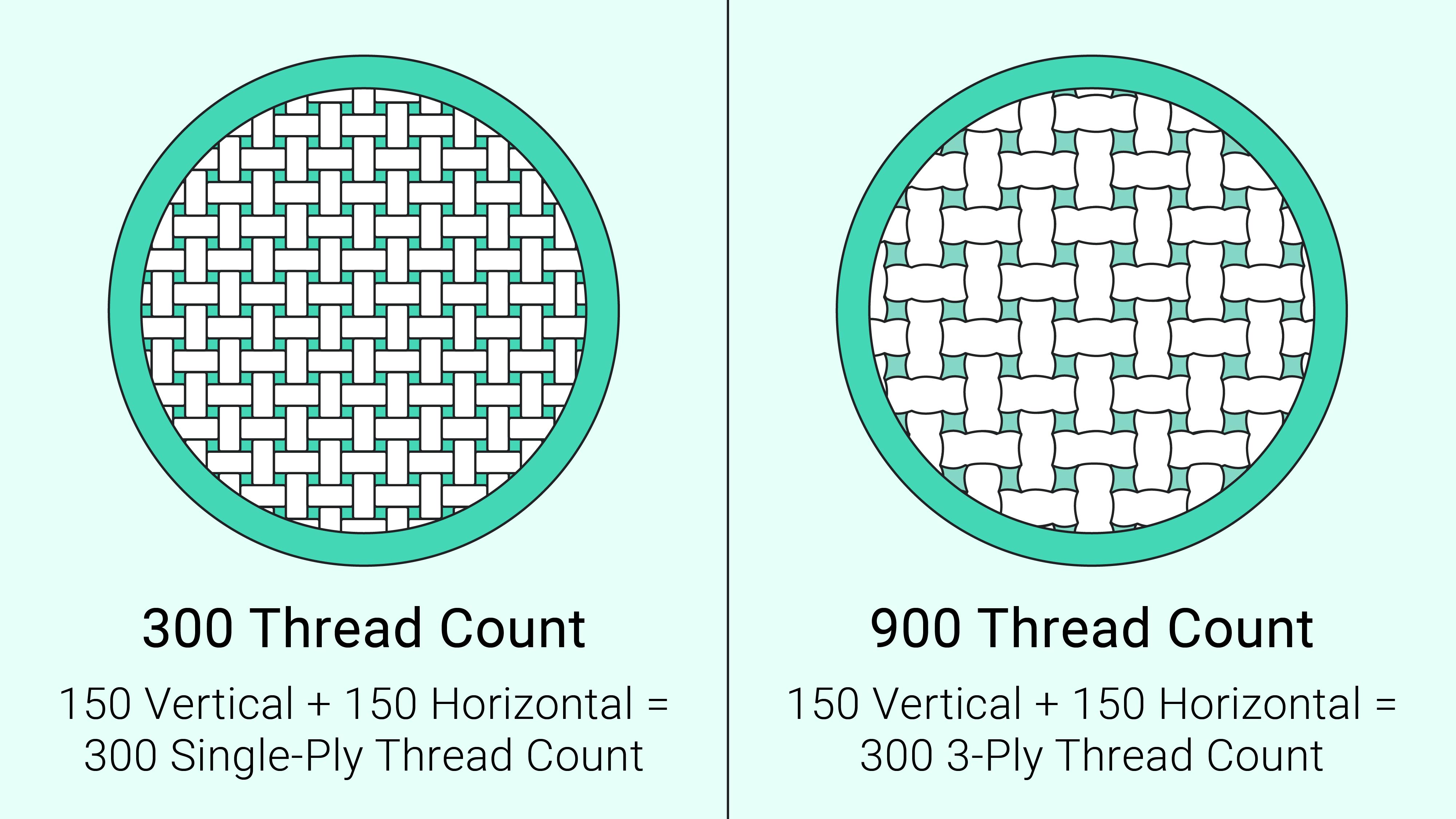
This pivot allowed for a new form of corporate identity: the “Curated Expert.” Brands like Frette or Sferra began to emphasize the provenance of their cotton and the heritage of their Italian weaving mills. They positioned high thread counts as a potential red flag, suggesting that excessively high numbers often indicated the use of multi-ply yarns—lower-quality fibers twisted together to artificially inflate the count. This “counter-signaling” became a powerful tool for high-end brands to distinguish themselves from mid-market competitors.
Case Studies in Disruptive Bedding Brands
The rise of DTC brands like Brooklinen and Parachute in the mid-2010s further disrupted the thread count narrative. These companies built their brands on transparency. Instead of boasting about the highest thread count, they focused on “The Feel.” Their marketing campaigns explicitly told consumers that thread count was a “marketing myth.” By debunking the very metric that had sustained the industry for decades, these brands built immense trust and a modern, “no-nonsense” corporate identity that resonated with Millennial and Gen Z consumers.
Brand Equity and Consumer Trust: The Risks of Inflated Claims
The “thread count wars” eventually led to a crisis of brand equity. When marketing overrides reality, consumer trust is the first casualty. The industry reached a breaking point when it was revealed that many “1,000-count” sheets were actually 250-count fabrics using four-ply yarns.
The FTC and the Fall of 1000+ Thread Counts
The Federal Trade Commission (FTC) eventually stepped in, noting that counting multi-ply yarns as multiple threads was deceptive to consumers. This led to a series of high-profile lawsuits and recalls that tarnished the reputations of several major retailers. For these brands, the short-term gain of high-count marketing resulted in long-term damage to their corporate identity. It served as a cautionary tale: a brand built on a technicality is only as strong as the consumer’s ignorance of that technicality.
Building Brand Authority through Education
In the wake of the thread count scandals, successful brands transitioned from being “sellers” to “educators.” They realized that brand authority is built by providing value through information. Modern bedding brands now use their digital platforms to explain the difference between Percale and Sateen, or why Giza cotton is superior to standard varieties. This educational approach builds a deeper emotional connection with the consumer, as the brand is seen as a helpful guide rather than a deceptive salesperson.
Transparency as a Modern Brand Moat
In today’s market, transparency is a competitive advantage. Brands that disclose their entire supply chain—from the farm in Egypt to the mill in Portugal—create a “brand moat” that is difficult for low-quality competitors to cross. By moving the conversation away from “what is the highest thread count” and toward “what is the most ethical and durable fabric,” brands are able to cultivate a loyal customer base that values substance over slogans.
Future-Proofing the Brand: Moving Beyond the Thread Count Metric
The future of bedding brand strategy lies in a holistic approach to “sleep wellness” rather than a singular focus on textile density. As consumer preferences shift toward sustainability and performance, brands must evolve their messaging to stay relevant.
Emphasizing Fiber Origin and Weave Type
The new frontier of branding in this space is fiber technology. We are seeing a surge in brands built around Tencel, Bamboo, or Belgian Linen. These materials offer unique selling points—such as moisture-wicking properties or sustainability—that are far more compelling to the modern consumer than a high thread count. By focusing on the type of thread rather than the number of threads, brands can create a unique market niche.
Sustainability and Ethical Branding
Corporate social responsibility (CSR) has moved from a “nice-to-have” to a core pillar of brand identity. Consumers are increasingly asking where their sheets come from and how the workers were treated. Brands like Boll & Branch have successfully built their entire identity around Fair Trade certification and organic materials. In this context, a “high thread count” is irrelevant if the product doesn’t meet the consumer’s ethical standards.

The Shift Toward Holistic Sleep Wellness
Ultimately, the bedding industry is being subsumed into the broader $4 trillion global wellness market. Brands are no longer just selling sheets; they are selling a better night’s sleep. This allows for a more expansive brand strategy that includes temperature-regulating technologies, hypoallergenic properties, and aesthetic design. The highest thread count is no longer the destination—it’s just a footnote in a much larger story about health, comfort, and lifestyle.
In conclusion, while the question “what is the highest thread count for sheets” may still be a common search query, the brands that win in the long run are those that use that question as a starting point for a deeper conversation. By understanding the history of thread count as a marketing tool, brand strategists can navigate the pitfalls of numerical inflation and build a corporate identity rooted in quality, transparency, and genuine consumer value. The era of the “number” is giving way to the era of the “narrative,” and in this new landscape, integrity is the most valuable thread a brand can weave.
aViewFromTheCave is a participant in the Amazon Services LLC Associates Program, an affiliate advertising program designed to provide a means for sites to earn advertising fees by advertising and linking to Amazon.com. Amazon, the Amazon logo, AmazonSupply, and the AmazonSupply logo are trademarks of Amazon.com, Inc. or its affiliates. As an Amazon Associate we earn affiliate commissions from qualifying purchases.