
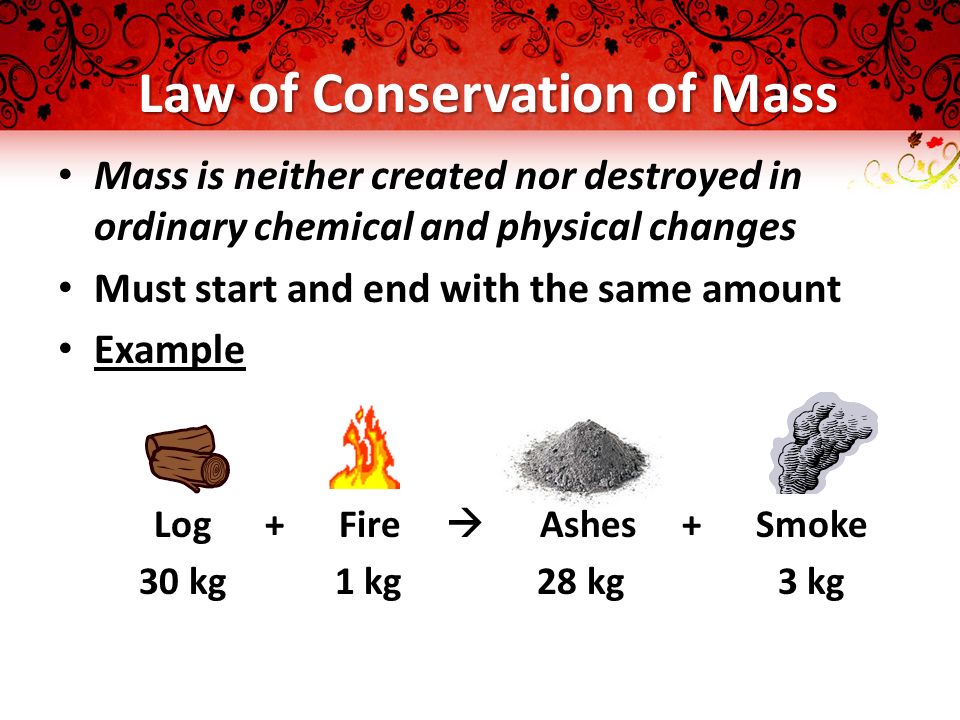
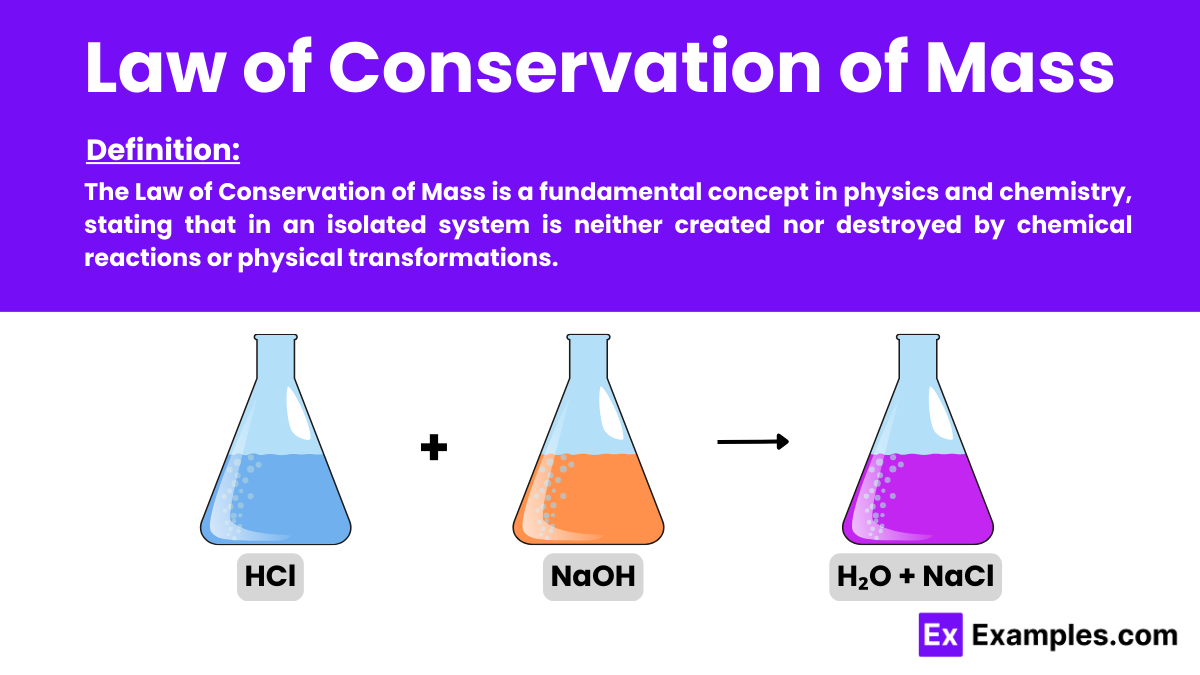
In the realm of physics, the Law of Conservation of Mass dictates that matter can neither be created nor destroyed in an isolated system. It can only change forms—from a solid to a liquid, or from a gas back to a solid. While this is a foundational principle of the natural world, it holds a surprisingly profound mirror to the world of Money and Personal Finance. In the economic theater, we often speak of wealth being “wiped out” during market crashes or “created” during bull runs. However, if we view the global economy through the lens of financial conservation, we begin to see that capital rarely disappears; it simply shifts, transforms, and relocates.

Understanding the “Financial Law of Conservation” is essential for any investor, entrepreneur, or individual seeking to master their personal economy. By recognizing that value is a fluid entity that obeys specific rules of movement, you can better position yourself to capture wealth as it changes state, rather than being left holding an empty container when the “mass” moves elsewhere.
Understanding the Core Principle: From Chemistry to Personal Finance
To apply a scientific law to money, we must first establish a metaphorical bridge. In chemistry, mass is the measure of the amount of matter in an object. In finance, our “mass” is Value—the purchasing power, assets, and equity we hold.
The Definition of Conservation in a Monetary Context
In a traditional sense, money is a medium of exchange and a store of value. When we look at a closed system, such as a household budget or a specific market sector, the total “mass” of available capital is often fixed in the short term. If you spend $1,000 on a new laptop, that capital hasn’t vanished from the universe; it has been transferred from your bank account to the retailer’s revenue stream. The “mass” of your net worth has transformed from liquid cash into a depreciating physical asset.
The Law of Conservation in finance reminds us that every financial transaction is an exchange of states. When the stock market “loses” a trillion dollars in value in a single day, that value hasn’t necessarily been deleted. In many cases, it represents a shift in sentiment where capital moves from “risk-on” assets (stocks) to “risk-off” havens (cash, gold, or bonds), or it reflects the correction of an over-inflated “bubble” where the mass was merely an illusion of accounting.
The Zero-Sum Game vs. Value Transformation
Many financial theorists argue whether the economy is a zero-sum game. While the total global wealth can grow through innovation and productivity (adding “new mass” to the system), the day-to-day fluctuations of the market function much like conservation. For every seller of a stock at a peak, there is a buyer. The profit realized by the seller is the “mass” transferred from the buyer’s future potential.
Insightful investors don’t view losses as disappearances; they view them as migrations. When you understand that capital is always going somewhere, you stop asking “Why did I lose money?” and start asking “Where did the money go, and how can I meet it there next time?”
The Conservation of Wealth in Investment Portfolios
In the world of investing, the Law of Conservation of Mass manifests most clearly in asset allocation and market cycles. A portfolio is a closed system of your own making, and how you manage the “mass” within that system determines your long-term financial health.
Asset Allocation and the Movement of Liquidity
Consider the relationship between different asset classes. Historically, there is an inverse relationship between stocks and bonds. When investors become fearful, the “mass” of capital flows out of the equity market and into the safety of debt instruments. This is the Financial Law of Conservation in action: the total volume of investable capital stays relatively consistent, but its “state” changes from aggressive growth to defensive preservation.
By maintaining a diversified portfolio, you are essentially acknowledging that you cannot destroy the volatility of the market; you can only manage the transformation of your assets. Rebalancing a portfolio—selling high-performing assets to buy underperforming ones—is a strategic way to ensure that your “financial mass” is distributed in a way that maximizes stability and growth potential.
Market Volatility: Where Does the Money Go?
One of the most common questions during a market downturn is: “Where did the trillions of dollars go?” If the Law of Conservation applies, surely that value must exist somewhere.
In reality, much of what we call “wealth” in the stock market is “unrealized gain”—a theoretical mass based on the last price someone was willing to pay. When the market drops, the “mass” of perceived value evaporates because it was never truly “solid.” However, the actual currency used to buy those shares remains in the hands of whoever sold them previously. This highlights a crucial financial lesson: Liquidity is the most stable form of financial mass. Those who hold cash during a downturn are holding the “mass” that others have lost, giving them the “gravitational pull” to attract discounted assets.
Corporate Finance and the Balance Sheet Equilibrium
For business owners and corporate leaders, the Law of Conservation of Mass is best represented by the most fundamental tool in accounting: the Balance Sheet.
Double-Entry Bookkeeping: The Accounting Equivalent of Mass Balance
In 1494, Luca Pacioli documented the double-entry bookkeeping system, which is the ultimate expression of conservation in finance. The equation Assets = Liabilities + Equity is a perfect balance. You cannot increase an asset without either increasing a liability (borrowing) or increasing equity (retained earnings or investment).
This equilibrium ensures that every dollar is accounted for. If a company shows a sudden spike in cash (mass), it must be balanced by a corresponding entry—perhaps a loan taken or a product sold. For a business to be sustainable, it must respect this conservation. Attempting to “create” assets without a corresponding source of value leads to the accounting frauds that have toppled giants like Enron. In finance, as in physics, you cannot get something from nothing.
Managing Cash Flow Cycles
The conservation of capital is also evident in a company’s working capital cycle. Money is transformed from cash into raw materials, then into finished goods (inventory), and finally into accounts receivable before returning to cash.
Successful business finance is about increasing the “velocity” of this mass. The faster you can move through these states, the more “energy” (profit) the system generates. However, if the mass gets stuck in any one state—such as excess inventory that doesn’t sell—the entire system becomes stagnant. A professional financial manager treats a company’s capital like a physical substance, ensuring it never stays in a low-value state for too long.
Side Hustles and the Conservation of Energy and Time
For those looking to increase their income through side hustles or entrepreneurship, the Law of Conservation applies to the most valuable resources: Time and Energy.
Converting Effort into Scalable Assets
In the context of online income and side hustles, “mass” can be thought of as the effort you exert. According to the principle of conservation, the energy you put into a project doesn’t just disappear; it is transformed into an asset.
If you spend 100 hours building an e-commerce store or writing an e-book, you have converted your temporal energy into a digital asset. This asset now has the potential to generate “financial mass” (income) while you sleep. The key to successful side hustling is choosing activities that have a high “conversion rate”—where a small amount of initial energy creates a large, long-lasting financial asset.
The Opportunity Cost of Mismanaged Resources
Every hour spent on a low-return task is an hour of “mass” that cannot be used elsewhere. This is the financial equivalent of energy dissipation in a machine—heat loss that does no useful work. In personal finance, this is known as Opportunity Cost.
To maximize your wealth, you must be a disciplined engineer of your own resources. Are you spending your “mass” on liabilities (streaming services, doom-scrolling, impulse buys) or are you investing it in systems that conserve and grow your value? Mastery of the Law of Conservation means recognizing that you have a finite amount of “mass” (time) to work with, and your primary job is to transform it into the most durable form of wealth possible.
Conclusion: Mastering the Flow of Financial Mass
The Law of Conservation of Mass teaches us that the world is a closed, interconnected system where nothing is truly lost, only repurposed. By applying this lens to Money, we move away from a scarcity mindset and toward a strategy of movement and transformation.
Whether you are balancing a corporate ledger, diversifying an investment portfolio, or launching a new side hustle, the principles remain the same:
- Value never vanishes; it moves. Identify the trends and follow the flow of capital.
- Maintain equilibrium. Use the balance sheet of your life to ensure your assets always outweigh your liabilities.
- Optimize transformation. Focus your time and energy on creating assets that convert your effort into sustainable, long-term wealth.
In the end, financial success is not about “creating” money out of thin air. It is about understanding the immutable laws of the economic universe and positioning yourself so that when the mass of global wealth shifts—as it inevitably does—it flows toward you, not away from you. By respecting the conservation of capital, you become a master of your financial destiny, turning the inevitable cycles of the market into opportunities for growth and preservation.
aViewFromTheCave is a participant in the Amazon Services LLC Associates Program, an affiliate advertising program designed to provide a means for sites to earn advertising fees by advertising and linking to Amazon.com. Amazon, the Amazon logo, AmazonSupply, and the AmazonSupply logo are trademarks of Amazon.com, Inc. or its affiliates. As an Amazon Associate we earn affiliate commissions from qualifying purchases.