
The Engine Control Module (ECM), often referred to as the Engine Control Unit (ECU) or Powertrain Control Module (PCM), is the central nervous system of a modern vehicle’s engine. It’s a sophisticated piece of computer hardware responsible for managing a myriad of critical engine functions, from fuel injection and ignition timing to emissions control and diagnostics. In essence, it’s the brain that dictates how your engine performs, operates efficiently, and meets increasingly stringent environmental regulations. Understanding the ECM’s role is fundamental to grasping the technological advancements that have revolutionized automotive engineering and continue to shape the future of transportation. This article delves into the intricacies of the ECM, exploring its core functions, the technological evolution it represents, its diagnostic capabilities, and its profound impact on vehicle performance and efficiency.

The Evolution of Engine Management: From Carburetors to ECMS
The journey to the modern ECM is a testament to continuous innovation in automotive technology. Before the advent of electronic control, engines relied on mechanical systems that were often less precise and adaptable. Understanding this historical progression provides crucial context for appreciating the sophistication of today’s ECMS.
Mechanical Simplicity: The Carburetor Era
In the early days of internal combustion engines, fuel delivery and ignition were primarily controlled by mechanical devices. The carburetor was the undisputed king of fuel management. It was a relatively simple device that used the Venturi effect to draw fuel and air into the engine cylinders in a fixed ratio. While ingenious for its time, the carburetor had significant limitations. It struggled to adapt to varying atmospheric conditions, engine loads, and temperature changes, leading to suboptimal fuel efficiency and increased emissions. Ignition timing was often dictated by a distributor, which relied on mechanical weights and vacuum diaphragms to advance or retard spark. This system, while functional, lacked the fine-tuning capabilities needed for peak performance and efficiency across all operating conditions.
The Dawn of Electronics: Early Fuel Injection and Ignition Systems
The late 1970s and early 1980s marked a pivotal shift with the introduction of rudimentary electronic fuel injection (EFI) systems and electronic ignition. These early systems were often composed of separate modules for fuel and ignition control, paving the way for a more integrated approach. EFI systems, compared to carburetors, offered more precise fuel delivery, leading to improved fuel economy and smoother engine operation. Electronic ignition systems allowed for more accurate spark timing, which further enhanced performance and reduced emissions. These initial forays into electronic engine management were significant steps, demonstrating the potential for computers to optimize engine performance beyond the limitations of purely mechanical systems. However, these early systems were often less complex and lacked the comprehensive control capabilities of modern ECMS.
The Integrated Powerhouse: The Rise of the ECM/ECU/PCM
The true revolution arrived with the development of integrated Engine Control Modules (ECMS) or Engine Control Units (ECUS). These powerful microprocessors began to consolidate control over multiple engine functions into a single unit. Early ECMS were tasked with managing fuel injection and ignition timing, but as technology advanced, their responsibilities rapidly expanded. The term Powertrain Control Module (PCM) emerged to reflect the broader scope of these units, which often also manage transmission functions in addition to engine operations. This integration allowed for a holistic approach to powertrain management, enabling the ECM to coordinate engine and transmission behavior for optimal performance, fuel efficiency, and emissions compliance. The processing power and sophistication of these modules have grown exponentially, allowing them to process vast amounts of data from numerous sensors in real-time and make millisecond-by-millisecond adjustments to engine operation.
The Core Functions of an ECM: Orchestrating Engine Performance
The ECM’s primary role is to act as the brain of the engine, meticulously monitoring and controlling various parameters to ensure optimal operation. This involves a complex interplay of sensor data, programmed algorithms, and actuator commands.
Sensor Input: The ECM’s Eyes and Ears
The ECM relies on a sophisticated network of sensors strategically placed throughout the engine and vehicle to gather critical real-time data. These sensors provide the ECM with information about a multitude of variables, allowing it to make informed decisions. Key sensors include:
- Mass Airflow (MAF) Sensor: Measures the amount of air entering the engine, which is crucial for calculating the correct fuel-air mixture.
- Oxygen (O2) Sensors (Lambda Sensors): Monitor the oxygen content in the exhaust gases, indicating whether the fuel-air mixture is too rich or too lean. This feedback loop is vital for emissions control and fuel efficiency.
- Throttle Position Sensor (TPS): Reports the position of the accelerator pedal, indicating the driver’s demand for engine power.
- Crankshaft Position Sensor (CKP): Determines the rotational speed and precise position of the crankshaft, essential for ignition timing and fuel injection pulses.
- Camshaft Position Sensor (CMP): Identifies the position of the camshaft, crucial for synchronizing valve operation with piston movement, particularly in engines with variable valve timing.
- Engine Coolant Temperature (ECT) Sensor: Monitors the engine’s operating temperature, affecting fuel mixture and idle speed.
- Manifold Absolute Pressure (MAP) Sensor: Measures the pressure in the intake manifold, providing an indication of engine load.
- Knock Sensor: Detects engine knocking or pinging, allowing the ECM to retard ignition timing to prevent engine damage.
This continuous stream of data from these and other sensors forms the basis upon which the ECM makes its operational decisions.
Actuator Output: Translating Decisions into Action
Once the ECM has processed the sensor data, it sends precise commands to various actuators to adjust engine operation. These actuators are the components that physically execute the ECM’s decisions. Principal actuators include:
- Fuel Injectors: Electronically controlled valves that spray fuel into the engine cylinders. The ECM precisely controls the duration and timing of these injections to achieve the optimal fuel-air ratio.
- Ignition Coils/Spark Plugs: The ECM dictates the timing of the spark delivered to each cylinder, ensuring ignition occurs at the most efficient moment.
- Idle Air Control (IAC) Valve: Regulates the amount of air bypassing the throttle plate to control engine idle speed.
- Variable Valve Timing (VVT) Solenoids: In vehicles equipped with VVT systems, these solenoids adjust the timing of valve opening and closing to optimize performance and efficiency across different engine speeds and loads.
- Exhaust Gas Recirculation (EGR) Valve: Controls the flow of exhaust gases back into the combustion chamber to reduce NOx emissions.
- Throttle Body Actuator: In drive-by-wire systems, this electric motor controls the throttle plate’s opening based on the ECM’s commands, replacing the mechanical linkage.
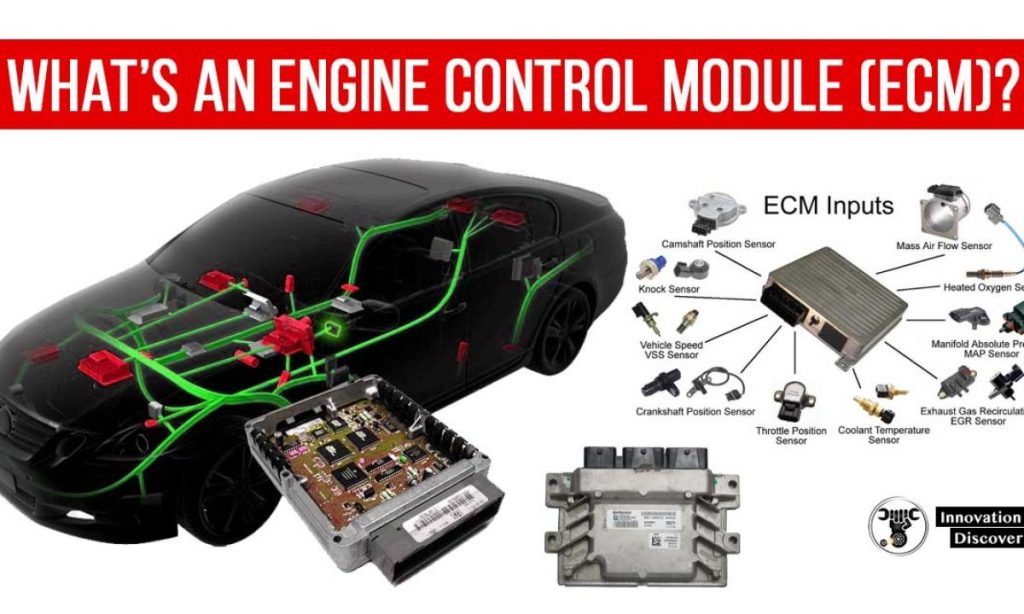
The sophisticated coordination between sensor inputs and actuator outputs allows the ECM to maintain a delicate balance of engine parameters, ensuring smooth operation, optimal power delivery, and minimized emissions.
Diagnostic Capabilities and the ECM: Troubleshooting Engine Issues
One of the most significant advantages of the ECM is its ability to monitor its own operation and the health of the engine. This self-diagnostic capability, coupled with standardized communication protocols, has revolutionized automotive repair and maintenance.
The On-Board Diagnostics (OBD) System
Modern vehicles are equipped with an On-Board Diagnostics (OBD) system, with OBD-II being the most prevalent standard today. The ECM is the central component of this system. It continuously monitors engine performance and emissions, comparing actual readings to pre-programmed specifications. If it detects a deviation that exceeds acceptable thresholds, it triggers a diagnostic trouble code (DTC).
Diagnostic Trouble Codes (DTCs) and Warning Lights
When a DTC is generated, the ECM illuminates the Malfunction Indicator Lamp (MIL), commonly known as the “check engine” light, on the vehicle’s dashboard. This serves as a warning to the driver that a problem has been detected. Each DTC is a standardized alphanumeric code that points to a specific fault detected by the ECM. For example, a code like P0300 might indicate a “random/multiple cylinder misfire detected,” while P0420 could suggest a “catalyst system efficiency below threshold (bank 1).”
The Role of Scan Tools in Diagnosis
Mechanics and technicians use specialized diagnostic scan tools to communicate with the vehicle’s ECM via the OBD-II port. These tools can:
- Retrieve DTCs: Read the stored trouble codes to identify the nature of the problem.
- View Live Data: Monitor real-time sensor readings, allowing technicians to observe how different components are performing under various operating conditions. This can help differentiate between a faulty sensor and a mechanical issue.
- Graph Data: Visualize sensor data over time, making it easier to spot anomalies.
- Perform Actuator Tests: Command certain actuators to operate, helping to verify their functionality.
- Clear DTCs: Erase stored codes once a repair has been made, allowing for retesting.
- Access Freeze Frame Data: View a snapshot of sensor readings at the precise moment a DTC was triggered. This can provide invaluable clues about the operating conditions that led to the fault.
The ECM’s diagnostic capabilities, facilitated by the OBD system and scan tools, have significantly reduced diagnostic time and guesswork, making vehicle repair more efficient and accurate.
The ECM’s Impact on Vehicle Performance, Efficiency, and Emissions
The ECM is not merely a diagnostic tool; it is the primary driver behind a vehicle’s performance characteristics, fuel efficiency, and its ability to meet environmental standards. Its intricate control over engine functions has led to remarkable advancements in all these areas.
Optimizing Fuel Efficiency
Modern ECMS are finely tuned to optimize the air-fuel mixture for varying driving conditions. By precisely metering fuel injection, the ECM ensures that only the necessary amount of fuel is consumed, leading to significant improvements in miles per gallon (MPG). Furthermore, by controlling ignition timing and managing other engine parameters, the ECM helps to burn fuel more completely, reducing wasted energy and further enhancing efficiency. In hybrid and electric vehicles, the ECM’s role expands to managing the seamless transition between the internal combustion engine and electric motor, maximizing energy recovery and minimizing fuel consumption.
Enhancing Performance and Drivability
The ECM’s ability to make rapid adjustments to fuel delivery, ignition timing, and other engine parameters translates directly into improved performance. It can fine-tune the engine to deliver optimal power and torque across the entire RPM range, providing a more responsive and engaging driving experience. Features like cruise control, traction control, and electronic stability control are all managed or coordinated by the ECM or related control modules, contributing to overall vehicle safety and drivability. Variable valve timing, actively managed by the ECM, further enhances both low-end torque and high-end power.

Meeting Stringent Emissions Regulations
Perhaps one of the most critical roles of the ECM is ensuring that vehicles comply with increasingly strict emissions standards. By precisely controlling the combustion process and working in conjunction with emissions control devices like catalytic converters and particulate filters, the ECM minimizes the release of harmful pollutants such as carbon monoxide (CO), hydrocarbons (HC), and oxides of nitrogen (NOx). The ECM’s ability to monitor O2 sensors and adjust fuel-air mixtures in real-time is fundamental to the effective operation of these emissions control systems, making it a cornerstone of modern environmental responsibility in automotive design. The continuous evolution of ECM software and hardware is directly driven by the need to achieve cleaner and more sustainable transportation.
aViewFromTheCave is a participant in the Amazon Services LLC Associates Program, an affiliate advertising program designed to provide a means for sites to earn advertising fees by advertising and linking to Amazon.com. Amazon, the Amazon logo, AmazonSupply, and the AmazonSupply logo are trademarks of Amazon.com, Inc. or its affiliates. As an Amazon Associate we earn affiliate commissions from qualifying purchases.