
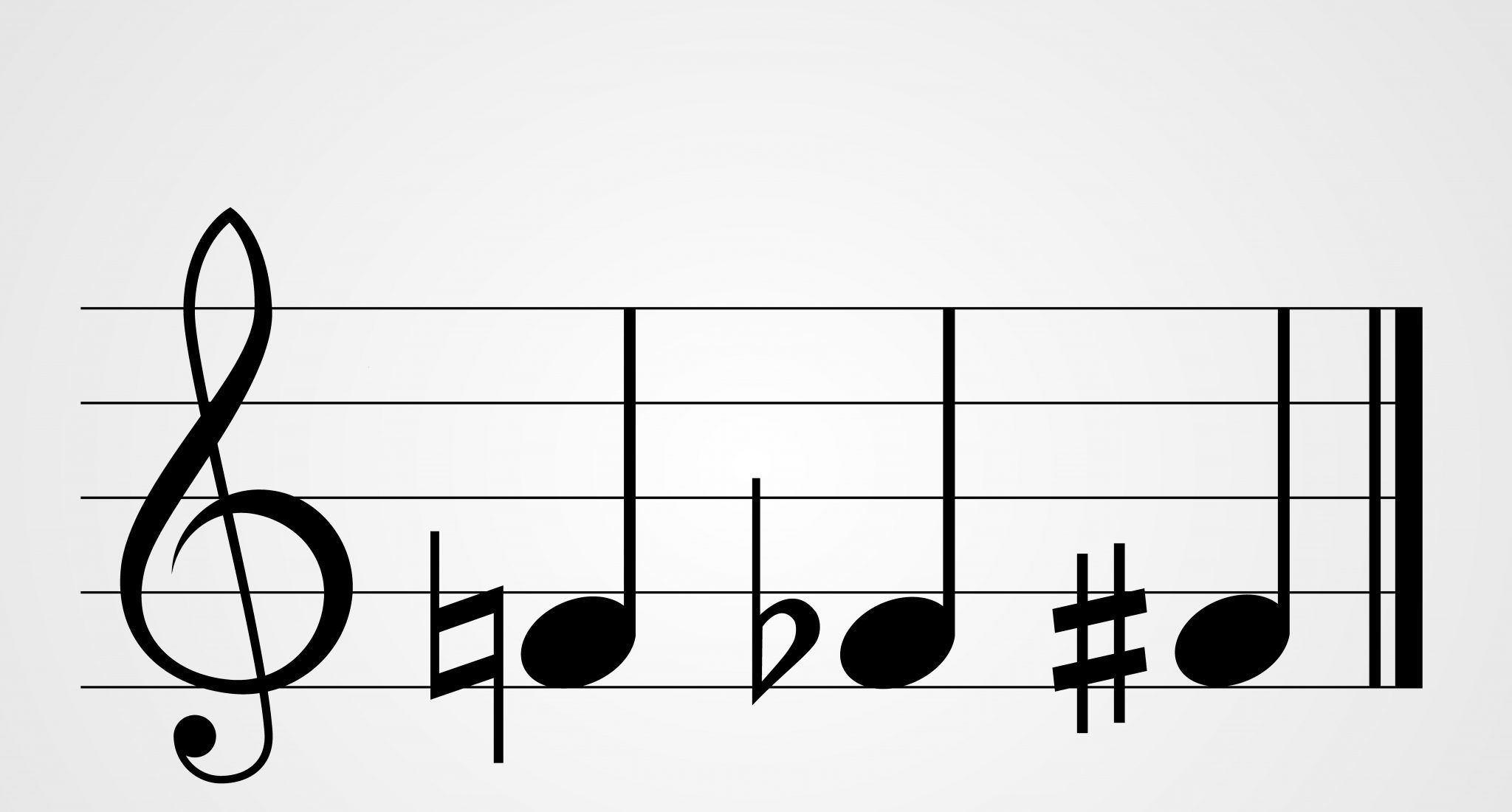
In the traditional sense, an accidental is a musical notation that modifies a note’s pitch, raising or lowering it from its natural state within a given key signature. For centuries, these symbols—sharps, flats, and naturals—were the domain of ink and parchment. However, in the modern landscape of music technology, the “accidental” has evolved from a simple ink stroke into a complex data point. As we transition from manual composition to software-driven production and AI-assisted creation, understanding the technical infrastructure of accidentals is essential for any developer, digital composer, or tech enthusiast.
This article explores the technical architecture of accidentals within Digital Audio Workstations (DAWs), the algorithmic challenges of enharmonic spelling, and how artificial intelligence is redefining the way we process chromaticism in the digital age.
The Digital Architecture of Chromaticism: How Software Processes Accidentals
At its core, music technology translates physical sound into binary data. To understand how a computer interprets an accidental, one must look at the underlying protocol that governs almost all modern music tech: MIDI (Musical Instrument Digital Interface).
From Pitch to Data: The MIDI Protocol
In a digital environment, an accidental is not merely a visual symbol; it is represented by a specific MIDI note number. The standard MIDI scale assigns a value from 0 to 127. For instance, Middle C is MIDI note 60. When a composer adds a “sharp” to that C, the software does not see a “C plus a sharp sign”; it simply registers the integer 61.
The challenge for music software developers lies in “enharmonic equivalence.” In many contexts, a C# (C-sharp) and a Db (D-flat) sound identical—they both occupy the frequency of approximately 277.18 Hz. However, for a digital notation tool like Sibelius or Finale, the distinction is vital for readability and theoretical correctness. The tech must decide whether to display 61 as a sharp or a flat based on the surrounding algorithmic context of the key signature.
Frequency Mapping and Digital Oscillators
Beyond simple MIDI integers, synthesis software—such as Xfer Records’ Serum or Arturia’s V Collection—handles accidentals through frequency modulation. When a user triggers an accidental on a digital keyboard, the software’s oscillator shifts its vibration rate. The tech behind this involves precise mathematical scaling. Because Western music utilizes “Equal Temperament,” the software calculates the frequency of an accidental by multiplying the base frequency by the twelfth root of two. This ensures that the digital accidental is perfectly “in tune” across the entire software ecosystem.
Algorithmic Harmony: How AI and Notation Tools Interpret Accidentals
As we move into the era of AI-driven composition, the “accidental” has become a test of a machine’s understanding of musical logic. Tools like OpenAI’s MuseNet or Google’s Magenta project must do more than just pick random notes; they must understand the functional role of accidentals in voice leading and tension.
Predictive Coding and Chromatic Nuance
Artificial Intelligence models are trained on massive datasets of MIDI and XML files. Through deep learning, these models recognize that an accidental is rarely a random occurrence. In a minor key, for example, the “accidental” raising of the seventh scale degree (the leading tone) is a predictive pattern the AI learns to replicate to create a sense of resolution.
Modern AI music tools use transformer architectures to predict the next note in a sequence. If the AI detects a “natural” accidental in a piece heavily laden with flats, it calculates the probability of a key change or a secondary dominant. This isn’t just art; it is a high-level computational analysis of frequency trends and historical data patterns.
The Challenge of Enharmonic Spelling in Tech
One of the most significant “tech” hurdles in music software is automated notation. If you play a MIDI keyboard into a DAW, the software must decide in real-time whether to display your accidental as a sharp or a flat. This is known as the “Enharmonic Dilemma.”
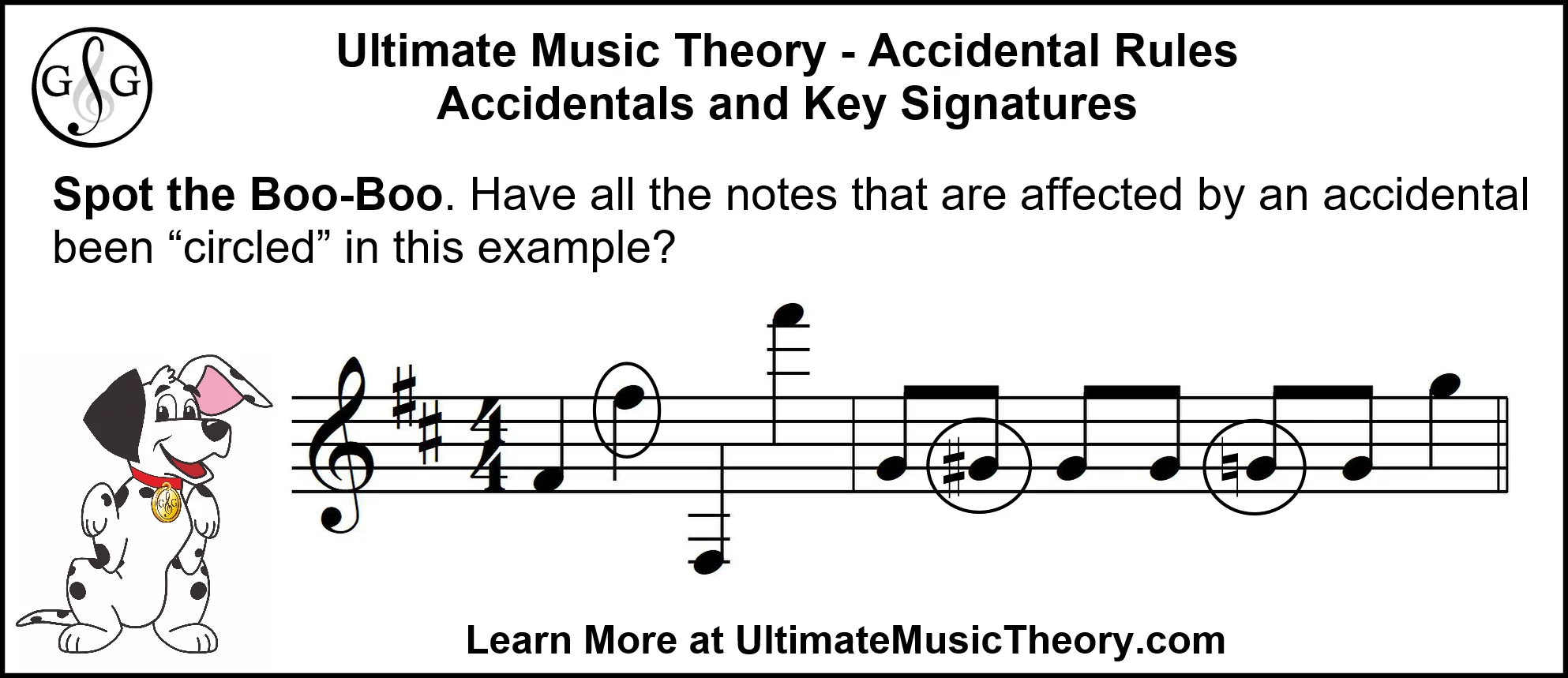
Sophisticated algorithms analyze the key signature and the direction of the melody. If the melody is ascending, the algorithm is programmed to prefer sharps; if descending, it prefers flats. The complexity increases in “atonal” or “polytonal” software environments where traditional rules don’t apply, requiring developers to build robust heuristic engines to ensure the visual UI remains intuitive for the musician.
The Professional Tech Stack: Tools for Managing Accidentals
For those working in the professional music tech industry, the management of accidentals is a daily technical requirement. From the User Interface (UI) of a mobile app to the backend of a cloud-based collaboration tool, the accidental must be handled with precision.
Sibelius, Dorico, and the UI of Musical Logic
Professional notation software has revolutionized the “User Experience” (UX) of accidentals. In older software, “collision avoidance” was a major issue—accidentals would often overlap with notes or bar lines. Modern software like Steinberg’s Dorico uses advanced layout engines that treat accidentals as dynamic objects.
These objects have “bounding boxes” that interact with the digital canvas, automatically shifting other elements to maintain visual clarity. This is a feat of graphical engineering, ensuring that as a composer adds chromatic complexity, the software’s rendering engine maintains a clean, professional output without manual intervention.
MIDI Polyphonic Expression (MPE) and Microtonal Accidentals
The newest frontier in music technology is MPE. Traditional accidentals are limited to the 12-tone chromatic scale. However, MPE-capable hardware and software (like the Roli Seaboard or Ableton Live 11) allow for “microtonal” accidentals.
This tech allows a performer to slide between notes, accessing the frequencies between a C and a C#. The data generated here is no longer a simple integer; it is a continuous stream of “pitch bend” data. For developers, this means shifting from discrete data points to a continuous flow of information, requiring higher processing power and more sophisticated digital-to-analog converters (DACs).
The Future of Music Tech: Beyond the Traditional Accidental
As we look toward the future, the concept of the accidental is being pushed further by tech innovations in virtual reality (VR) and spatial audio.
Adaptive Tuning Systems
We are seeing the rise of “Adaptive Tuning” software. This technology analyzes the chords being played in real-time and adjusts the tuning of every accidental to achieve “Just Intonation”—a mathematically “pure” tuning that is impossible on a standard piano but possible via real-time digital processing. This tech effectively eliminates the “beating” caused by the imperfections of equal temperament, creating a shimmering, ultra-professional sound profile that was previously unattainable in digital recording.
Blockchain and Metadata in Composition
In the world of digital rights and music metadata, an accidental can even play a role in fingerprinting. High-tech “audio watermarking” can use specific chromatic patterns—unique uses of accidentals—as a way to identify a composer’s “digital signature.” This metadata is then stored on a blockchain to ensure that the intellectual property of a complex, chromatic work is protected in the digital marketplace.
Conclusion: The Precision of Digital Harmony
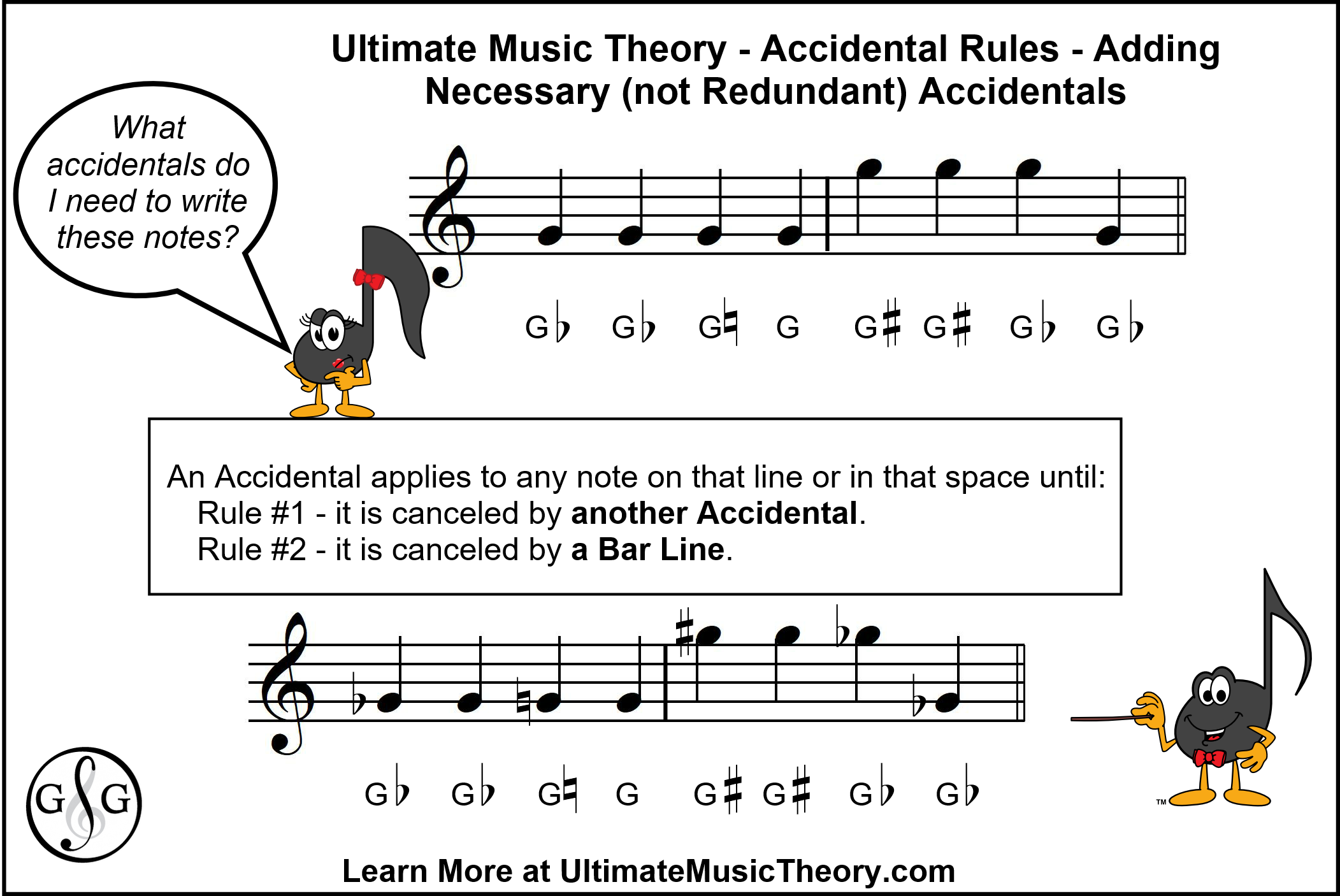
What is an accidental in music? In the modern tech-driven world, it is far more than a symbol on a page. It is a MIDI integer, a frequency calculation, a challenge for AI transformers, and a data-heavy object in a notation engine.
As technology continues to merge with artistic expression, the “accidental” remains a crucial bridge between human emotion and digital precision. Whether you are a developer building the next great DAW or a producer layering synthesizers in a home studio, understanding the technical infrastructure of these chromatic shifts is essential. The future of music is digital, and in that world, the accidental is a vital bit of code that allows for the infinite complexity of human sound.
aViewFromTheCave is a participant in the Amazon Services LLC Associates Program, an affiliate advertising program designed to provide a means for sites to earn advertising fees by advertising and linking to Amazon.com. Amazon, the Amazon logo, AmazonSupply, and the AmazonSupply logo are trademarks of Amazon.com, Inc. or its affiliates. As an Amazon Associate we earn affiliate commissions from qualifying purchases.