
In the sophisticated world of personal finance and wealth management, investors are constantly seeking ways to optimize their portfolios and accelerate capital growth. While traditional investing involves purchasing assets with available cash, seasoned investors often turn to a powerful financial tool known as a margin loan. A margin loan allows you to borrow money against the value of the securities you already own, effectively providing you with leverage to increase your market exposure.
However, with increased potential for reward comes a heightened level of risk. Understanding the mechanics, costs, and pitfalls of margin lending is essential for anyone looking to incorporate this strategy into their financial toolkit. This article explores the intricacies of margin loans, how they function within a brokerage environment, and the strategic considerations necessary to use them effectively.
Understanding the Fundamentals of Margin Loans
At its core, a margin loan is a form of revolving credit provided by a brokerage firm. Unlike a personal loan from a bank, which may be unsecured or tied to a physical asset like a house, a margin loan is collateralized by your investment portfolio. By using your existing stocks, bonds, or mutual funds as collateral, you can access additional funds to purchase more securities or manage short-term liquidity needs.
How Margin Trading Works
When you open a margin account, your broker grants you the ability to borrow up to a certain percentage of the value of eligible securities. This process is often referred to as “buying on margin.” In a typical scenario, an investor might contribute 50% of the purchase price of a stock, while the broker lends the remaining 50%.
The amount you can borrow is governed by regulatory bodies—such as the Federal Reserve’s Regulation T in the United States—as well as the specific internal policies of the brokerage firm. These rules dictate the “Initial Margin,” which is the percentage of the purchase price that an investor must pay for with their own cash or eligible securities.
The Concept of Initial and Maintenance Margin
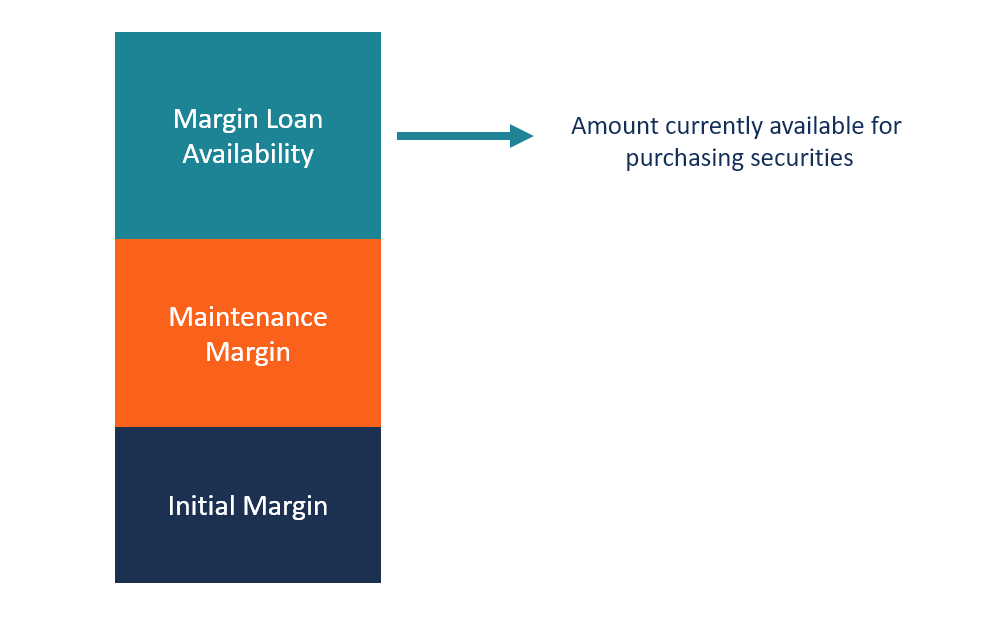
To navigate a margin loan safely, one must distinguish between initial and maintenance margin requirements.
- Initial Margin: This is the equity required at the time of the trade. If you want to buy $10,000 worth of stock, an initial margin requirement of 50% means you must have $5,000 in your account.
- Maintenance Margin: Once you hold the position, the value of your equity must stay above a certain threshold, known as the maintenance margin. Regulators often set this at 25%, though many brokers require 30% to 40% to provide a safety buffer. If the market value of your securities drops and your equity falls below this level, the broker will trigger a margin call.
The Strategic Benefits of Using Margin
While the risks of debt are often highlighted, margin loans remain a staple in professional investing because they offer flexibility and the potential for enhanced performance. When used judiciously, they can serve as a bridge to greater wealth accumulation.
Magnifying Investment Returns
The primary draw of a margin loan is leverage. Leverage allows an investor to control a larger position than they could with cash alone. For instance, if you invest $5,000 of your own money and borrow $5,000 on margin to buy $10,000 of a stock, a 10% increase in the stock price results in a $1,000 gain. Without the loan, your $5,000 investment would have only gained $500. By using margin, you have effectively doubled your return on equity (minus the cost of interest).
Portfolio Diversification and Liquidity
Margin loans are not exclusively for buying more of the same stock. They can also be used for portfolio diversification. An investor with a concentrated position in one blue-chip stock might use a margin loan to buy shares in a different sector, thereby spreading risk without having to sell their original holdings and trigger capital gains taxes.
Furthermore, margin loans provide a source of “asset-backed liquidity.” If an investor faces an unexpected expense or a short-term business opportunity, they can withdraw cash from their margin account rather than selling stocks at an inopportune time. This prevents the disruption of a long-term investment strategy and avoids the tax consequences of a sale.
Navigating the Risks: Margin Calls and Forced Liquidations
The “double-edged sword” of leverage means that while gains are magnified, losses are equally amplified. If the market moves against your position, you can lose money much faster than you would in a cash-only account. In extreme cases, you can lose more than your initial investment.

What is a Margin Call?
A margin call is a demand from your broker to increase the equity in your account. This happens when the value of your portfolio declines to the point where your equity falls below the maintenance margin requirement. To satisfy a margin call, you must either deposit more cash, transfer in more marginable securities, or sell some of your existing holdings to pay down the loan.
The psychological and financial stress of a margin call can be significant. If an investor is unable to meet the call within the specified timeframe—which can sometimes be as short as 24 hours—the broker has the legal right to sell the securities in the account without the investor’s consent to cover the shortfall.
The Impact of Market Volatility
In a volatile market, prices can swing wildly in a single trading session. Because margin requirements are calculated based on real-time market values, a sudden “flash crash” can trigger a wave of margin calls. This often leads to a “liquidation spiral,” where brokers sell off assets to protect their loans, which further drives down prices, triggering even more margin calls for other investors. This systemic risk is why margin is generally recommended only for those with a high risk tolerance and a deep understanding of market mechanics.
Interest Rates and the Cost of Borrowing
A margin loan is not free capital. Like any other loan, it carries an interest rate, which is typically tied to the “broker call rate” or a benchmark like the Effective Federal Funds Rate.
Understanding Margin Interest Rates
Margin interest is calculated daily and charged monthly. Rates are usually tiered, meaning investors with larger loan balances often receive more favorable rates. For the average retail investor, margin rates may range from 6% to 12% or higher, depending on the brokerage.
It is vital to realize that the interest costs add up over time and act as a “drag” on your total return. For a margin-funded investment to be profitable, the asset must appreciate at a rate higher than the interest charged on the loan. If the stock remains flat, you are effectively losing money every day you hold the position on margin.
Tax Implications of Margin Interest
One silver lining of margin loans in many jurisdictions, including the United States, is the potential for tax deductibility. If the borrowed funds are used to purchase taxable investments, the interest paid may be deductible as “investment interest expense” up to the amount of your net investment income. This can effectively lower the “break-even” point of the loan, though investors should always consult with a tax professional to ensure compliance with current tax codes.
Best Practices for Managing a Margin Account
Given the complexities and risks involved, managing a margin account requires discipline and a proactive approach. Successful leveraged investors do not simply “set it and forget it”; they treat margin as a tactical instrument that requires constant oversight.
Setting Conservative Limits
Just because a broker allows you to borrow 50% of your portfolio value doesn’t mean you should. One of the best ways to mitigate risk is to maintain a “cushion.” By only borrowing 10% or 20% of your available margin, you create a massive buffer that allows your portfolio to withstand significant market corrections without triggering a margin call. This conservative approach allows you to benefit from leverage while sleeping soundly during periods of market turbulence.
Monitoring Portfolio Health
In a margin account, your “Equity Percentage” is the most important metric. Investors should monitor this daily. It is also wise to use stop-loss orders to automatically exit a position if it drops to a certain price, preventing a catastrophic loss that could lead to liquidation.
Furthermore, investors should be mindful of “concentration risk.” If your margin loan is backed by a single stock, a bad earnings report for that one company could wipe out your account. A diversified portfolio of liquid, high-quality assets is the best collateral for a margin loan, as it is less likely to experience the extreme volatility that leads to forced sales.

Conclusion
A margin loan is a sophisticated financial instrument that offers the potential for significant wealth creation and strategic flexibility. By turning existing securities into a source of liquidity and purchasing power, investors can optimize their market exposure and manage their finances with greater agility.
However, the power of leverage is matched by its peril. The threat of margin calls, the impact of interest costs, and the speed of potential losses make it a tool that requires respect and careful management. For the informed investor who understands the mechanics of initial and maintenance margins and employs strict risk-management protocols, a margin loan can be a valuable component of a long-term financial strategy. As with all things in the world of money, the key to success lies in balance: using leverage to grow, but never so much that you risk the foundation of your financial future.
aViewFromTheCave is a participant in the Amazon Services LLC Associates Program, an affiliate advertising program designed to provide a means for sites to earn advertising fees by advertising and linking to Amazon.com. Amazon, the Amazon logo, AmazonSupply, and the AmazonSupply logo are trademarks of Amazon.com, Inc. or its affiliates. As an Amazon Associate we earn affiliate commissions from qualifying purchases.