
In the world of finance, whether you are managing a multinational corporation, a burgeoning startup, or your own personal portfolio, the language of the balance sheet is the foundation of literacy. At the heart of this financial statement lies a trio of critical components: Assets, Liabilities, and Equity. While assets represent what you own and equity represents your net worth, liabilities represent what you owe.
Understanding what a liability is in accounting is far more than an academic exercise. It is a fundamental requirement for assessing the solvency, risk profile, and growth potential of any economic entity. In this guide, we will explore the nuances of liabilities, how they are categorized, and why they serve as a double-edged sword in the realm of business finance.

Understanding the Fundamental Nature of Liabilities
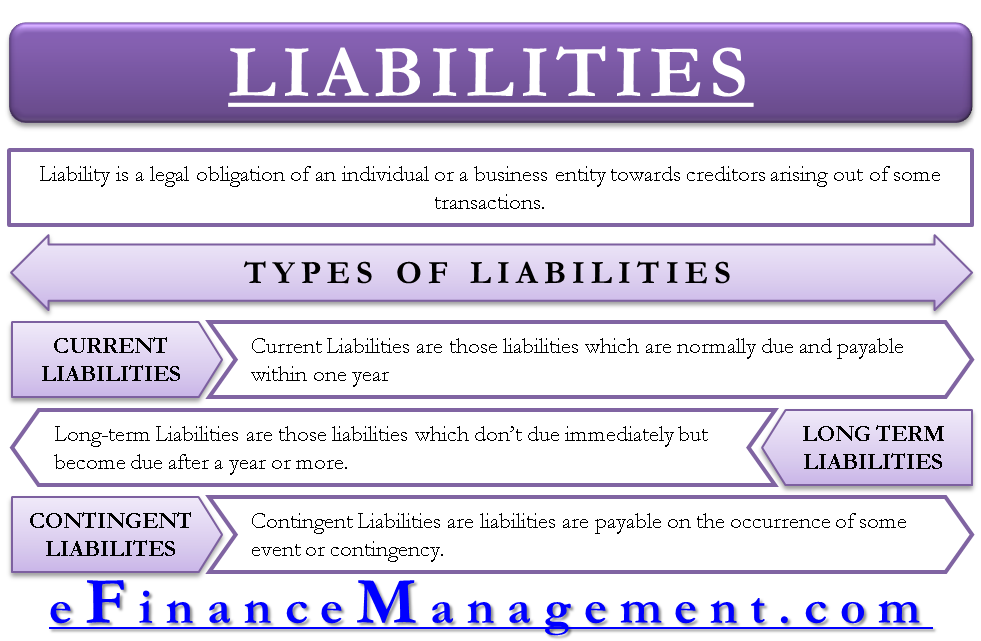
In accounting terms, a liability is defined as a present obligation of an entity arising from past events, the settlement of which is expected to result in an outflow of resources embodying economic benefits. Put simply, it is a debt or a financial obligation that a company must pay back to another party in the future.
The Accounting Equation and the Balance Sheet
To grasp the concept of a liability, one must first look at the fundamental accounting equation: Assets = Liabilities + Equity. This equation must always remain in balance. When a company acquires an asset—such as a new delivery truck—it must pay for it either by using its own cash (reducing another asset), increasing its equity (investing more capital), or taking on a liability (taking out a loan).
Liabilities are recorded on the right side of the balance sheet (or below assets in a vertical format). They provide the necessary context for where a company’s assets came from. If a company has $1 million in assets but $900,000 in liabilities, its true value (equity) is only $100,000.
The Distinction Between Debt and Liability
While the terms “debt” and “liability” are often used interchangeably in casual conversation, in professional accounting, debt is actually a subset of liabilities. All debts (like bank loans and bonds) are liabilities, but not all liabilities are debts. For instance, “Accounts Payable” (money owed to suppliers) or “Unearned Revenue” (money received for services not yet rendered) are liabilities, but they are not traditionally categorized as “interest-bearing debt.” Understanding this distinction is vital for accurate financial analysis.
Categorizing Liabilities: Current vs. Non-Current
Financial transparency requires that liabilities be categorized based on when they are due. This categorization allows investors and managers to determine whether a business has enough liquid resources to meet its upcoming obligations.
Current Liabilities: Short-Term Obligations
Current liabilities are obligations that are expected to be settled within one year or within the normal operating cycle of the business. These are the “immediate” bills that keep a business running. Common examples include:
- Accounts Payable: This is the money a company owes to its suppliers for goods or services purchased on credit.
- Short-term Loans: Bank lines of credit or notes payable that are due within 12 months.
- Accrued Expenses: Costs that have been incurred but not yet paid, such as employee wages, utilities, or taxes.
- Unearned Revenue: This occurs when a customer pays in advance for a service. The company owes the customer the service, making it a liability until the work is completed.
Non-Current Liabilities: Long-Term Obligations
Non-current liabilities, also known as long-term liabilities, are obligations that are not due for at least one year. These are typically used to fund long-term capital investments or infrastructure. Common examples include:
- Bonds Payable: Large corporations often issue bonds to investors to raise capital. These are formal contracts to pay back the principal plus interest over several years or decades.
- Deferred Tax Liabilities: This represents taxes that are owed but will not be paid until a future period, often due to differences between accounting rules and tax laws (such as depreciation timing).
- Long-term Leases: Obligations for equipment or real estate leases that extend beyond one year.
- Pension Obligations: The future payments a company is committed to providing to its retired employees.
Contingent Liabilities: The “Potential” Debts
A unique category in accounting is the contingent liability. These are obligations that may or may not arise depending on the outcome of an uncertain future event. A classic example is a pending lawsuit. If it is probable that the company will lose and the amount can be reasonably estimated, the liability must be recorded. If the outcome is merely possible but not certain, it is usually disclosed in the footnotes of the financial statements rather than on the balance sheet itself.

How Liabilities Impact Financial Health and Investment Decisions
For an investor or a business owner, liabilities are not inherently “bad.” In fact, they are often necessary for growth. However, the quantity and quality of those liabilities are the primary indicators of financial risk.
Analyzing Liquidity and Solvency
Analysts use liabilities to calculate two critical measures of health: liquidity and solvency.
- Liquidity refers to a company’s ability to pay its current liabilities with its current assets. The “Current Ratio” (Current Assets / Current Liabilities) is the gold standard here. A ratio below 1.0 suggests the company might struggle to pay its bills in the short term.
- Solvency refers to the ability to meet long-term obligations. If a company’s total liabilities consistently dwarf its total assets or its ability to generate cash flow, it faces the risk of insolvency or bankruptcy.
The Debt-to-Equity Ratio
One of the most important metrics in business finance is the Debt-to-Equity (D/E) ratio. By dividing total liabilities by shareholder equity, investors can see how much of the company’s growth is being funded by lenders versus owners. A high D/E ratio indicates that a company is “highly leveraged.” While this can amplify profits during good times, it increases the risk of collapse during economic downturns because interest payments must be made regardless of revenue levels.
The Strategic Use of Liabilities in Business Growth
In a sophisticated financial ecosystem, liabilities are viewed as a tool for “leverage.” Strategic borrowing can allow a company to expand much faster than it could if it relied solely on its own cash reserves.
Leveraging Other People’s Money (OPM)
Imagine a company that can earn a 15% return on a new factory. If they can borrow the money to build that factory at an interest rate of 5%, the 10% “spread” represents profit generated using someone else’s capital. This is the essence of financial leverage. By taking on a liability, the company increases its total asset base and, potentially, its return on equity for the shareholders.
Optimizing Cash Flow through Accounts Payable
Smart businesses also use liabilities to manage their cash flow. By negotiating longer payment terms with suppliers (increasing Accounts Payable), a company can keep its cash in its own bank account longer. This cash can be used to fund operations or earn interest elsewhere before the bill eventually comes due. In this sense, a liability functions as an interest-free loan from a supplier.
Common Pitfalls and Management Strategies
While liabilities are essential, poor management of these obligations is the number one cause of business failure. Managing liabilities requires a proactive approach to ensure that the “outflow of resources” does not exceed the “inflow of revenue.”
The Danger of Over-Leveraging
The most common pitfall is over-leveraging—taking on more debt than the business’s cash flow can support. This often happens during periods of easy credit. When the economy slows down or interest rates rise, the cost of servicing those liabilities can consume all available profit, leading to a “liquidity crunch.” Companies must maintain a “debt service coverage ratio” that ensures they have several times the necessary income to cover their interest and principal payments.
Tools for Tracking and Managing Business Debts
In the modern era, managing liabilities has been simplified by financial technology. Modern accounting software provides real-time dashboards that track “Days Payable Outstanding” (DPO) and alert managers to upcoming due dates. For personal finance and small businesses, tools that categorize liabilities into “productive debt” (mortgages, business loans) versus “consumptive debt” (high-interest credit cards) are essential for maintaining a healthy balance sheet.
Conclusion: The Balanced View of Liabilities
In conclusion, a liability in accounting is much more than just a “bill.” It is a sophisticated financial instrument that represents a company’s commitments to the outside world. While too much liability can lead to ruin, the strategic use of debt and credit is what allows the global economy to function and businesses to scale.
By understanding the difference between current and non-current obligations, monitoring key ratios like Debt-to-Equity, and utilizing liabilities to leverage growth, entrepreneurs and investors can navigate the complexities of finance with confidence. In the end, the goal of accounting is not to eliminate liabilities, but to manage them so effectively that they serve as a bridge to future prosperity rather than a weight that pulls the enterprise down.
aViewFromTheCave is a participant in the Amazon Services LLC Associates Program, an affiliate advertising program designed to provide a means for sites to earn advertising fees by advertising and linking to Amazon.com. Amazon, the Amazon logo, AmazonSupply, and the AmazonSupply logo are trademarks of Amazon.com, Inc. or its affiliates. As an Amazon Associate we earn affiliate commissions from qualifying purchases.