
The transition toward renewable energy is no longer a peripheral movement; it is a central pillar of modern technological advancement. As we move closer to a decentralized grid, the question of “how much energy does a solar panel produce” has shifted from a simple consumer query to a complex engineering calculation. To understand the output of a solar panel, one must look beyond the sticker on the back of the module and delve into the physics of photovoltaic (PV) cells, the efficiency of hardware architectures, and the software-driven optimization that defines contemporary energy systems.
The Photovoltaic Foundation: Understanding Rated Power vs. Real-World Output
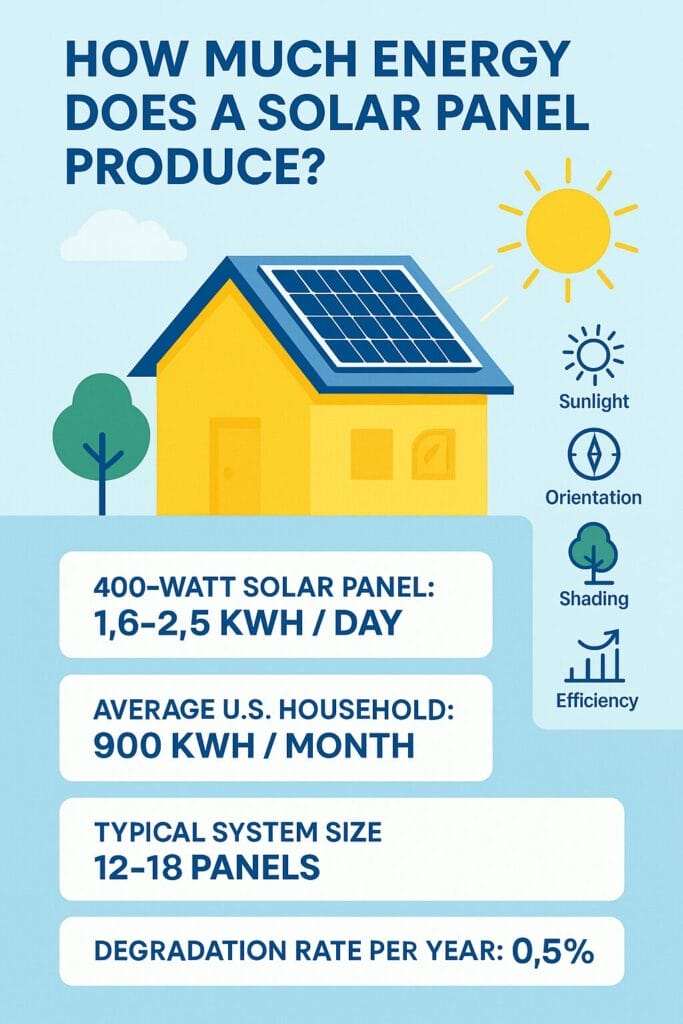
When a manufacturer labels a solar panel as a “400W” module, they are referring to its nameplate capacity. However, in the realm of technology, “potential” and “performance” are rarely synonymous. The energy production of a panel is a product of its hardware limitations and the environment in which it operates.
Standard Test Conditions (STC) Explained
In the tech industry, benchmarks are essential for comparison. For solar panels, these benchmarks are established under Standard Test Conditions (STC). STC requires a cell temperature of 25°C (77°F) and an irradiance of 1,000 Watts per square meter (W/m²). While these laboratory conditions provide a baseline for comparing the hardware of Brand A versus Brand B, they rarely reflect the reality of a rooftop installation. To find the actual energy produced, engineers often look at Pmax (Maximum Power Point) and how the panel’s circuitry handles fluctuations in light.
The Role of Monocrystalline vs. Polycrystalline Tech
The internal architecture of the solar cell determines the ceiling of its energy production. Monocrystalline silicon panels are currently the gold standard in the tech space. Carved from a single, high-purity silicon crystal, these cells allow electrons more room to move, resulting in higher efficiency ratings—typically between 19% and 23%. Polycrystalline panels, though more cost-effective to manufacture, utilize multiple silicon fragments melted together. The “grain boundaries” in these cells create resistance, lowering the energy output per square inch. For those seeking maximum energy density in a limited spatial footprint, the tech choice is clear: N-type monocrystalline cells represent the current apex of consumer-available hardware.
Bifacial Modules and Rear-Side Gain
One of the most significant technological leaps in recent years is the rise of bifacial solar panels. Traditional monofacial panels capture light only on the front side. Bifacial technology utilizes a transparent backsheet or dual-glass construction to capture reflected light from the ground or surrounding surfaces (the albedo effect). This can increase total energy production by 5% to 30% without increasing the physical dimensions of the array, showcasing how hardware design can bypass the theoretical limits of standard PV cells.
Factors Influencing Energy Yield: Hardware and Environmental Variables
The energy output of a solar panel is not a static figure but a variable influenced by a sophisticated interplay of environmental physics and electrical engineering.
Solar Irradiance and the Peak Sun Hour Metric
To calculate how much energy a panel produces, we must utilize the “Peak Sun Hour” metric. This is not merely an hour of daylight, but an hour during which solar intensity reaches an average of 1,000 W/m². For instance, a 400W panel in a region receiving 5 peak sun hours will theoretically produce 2,000 Watt-hours (2 kWh) of energy per day. However, the angle of incidence—the angle at which photons strike the silicon surface—is critical. Sophisticated mounting tech, such as dual-axis trackers, uses sensors and actuators to follow the sun, ensuring the panel is always perpendicular to the light source, thereby maximizing the “tech-adjusted” energy yield.
Temperature Coefficients and Thermal Efficiency
A common misconception in the gadget and hardware world is that “more sun and more heat” equals “more power.” In reality, solar panels are electronic components, and like a CPU or a GPU, they lose efficiency as they heat up. The “Temperature Coefficient” is a technical spec that indicates how much production drops for every degree above 25°C. High-end panels might have a coefficient of -0.25%/°C, while lower-tier hardware might lose 0.5% per degree. This thermal throttling means that a panel in a breezy, cool environment often produces more energy than the same panel in a stagnant, sweltering desert.
Inverter Technology: String vs. Micro-inverters
The energy produced by a solar panel is Direct Current (DC), but the digital world operates on Alternating Current (AC). The “bridge” between these two is the inverter. The choice of inverter tech drastically alters the system’s net output.
- String Inverters: These link panels together like a string of Christmas lights. If one panel is shaded by a chimney or a cloud, the output of every panel in the string is throttled to the level of the lowest performer.
- Micro-inverters: This tech places a small inverter behind every individual panel. This allows each module to operate at its individual Maximum Power Point (MPP). In terms of total energy yield over a year, micro-inverter systems often outperform string systems by 5% to 15% by mitigating “mismatch losses.”
Calculating the Kilowatt-Hour (kWh) Lifecycle
To move from theoretical watts to usable kilowatt-hours, we must apply a realistic formula that accounts for the “entropy” of the system.
The Mathematical Formula for Daily Production
A professional estimate for energy production follows this basic logic:
[Panel Wattage] x [Peak Sun Hours] x [System Efficiency Factor] = Daily Watt-hours.
The “System Efficiency Factor” (usually around 0.75 to 0.85) accounts for “soiling” (dust on the glass), DC-to-AC conversion losses, and wiring resistance. For a standard 400W panel in a 4-sun-hour zone, the calculation looks like this:
400W x 4 hours x 0.8 = 1,280Wh (1.28 kWh) per day.
Over a year, this single panel produces roughly 467 kWh—enough to power a modern high-efficiency refrigerator or a professional workstation for several months.
Measuring System Degradation Over Time
Solar panels are not “set it and forget it” hardware; they are subject to Light-Induced Degradation (LID) and Potential Induced Degradation (PID). Most silicon-based tech loses about 0.5% of its production capacity every year. When calculating long-term energy output, engineers must factor in this “decay curve.” High-end modules now guarantee 90% or higher output even after 25 years, a testament to the advancements in protective glass coatings and more stable chemical compositions in the silicon wafers.
Smart Monitoring and AI Optimization
The modern solar panel is no longer a “dumb” piece of glass; it is an integrated node in the Internet of Things (IoT). The delta between a high-performing system and an underperforming one often lies in the software.
IoT-Enabled Performance Tracking
Modern solar arrays are equipped with Gateway controllers that stream real-time data to the cloud. Through mobile apps and desktop dashboards, users can monitor the exact wattage each panel is producing at any given second. This granularity allows for “proactive maintenance.” If Panel #14 is producing 20% less energy than the others, the software can alert the user to a specific technical fault, such as a localized micro-crack or a specific obstruction, ensuring the system’s total energy yield remains optimized.
Machine Learning in Predictive Maintenance
Artificial Intelligence is now being integrated into large-scale solar farms and high-end residential systems to predict energy production based on meteorological data. By analyzing satellite weather feeds and historical production patterns, AI algorithms can adjust energy consumption habits—such as triggering a smart EV charger or a home battery system—exactly when the panels are hitting their peak output. This “smart-grid” integration ensures that the energy produced isn’t just a high number on a screen, but is utilized with maximum efficiency.
The Future of Output: Perovskites and Tandem Cells
Looking at the technological horizon, the quest for higher energy production is leading us toward “Perovskite” cells. While traditional silicon has a theoretical efficiency limit (the Shockley-Queisser limit) of about 33%, “tandem cells”—which layer perovskite on top of silicon—are already hitting 30% in lab settings and aim for much higher. This tech promises to nearly double the energy production of a standard-sized solar panel within the next decade, fundamentally shifting our expectations of what a single module can achieve.
In conclusion, the energy a solar panel produces is a dynamic figure defined by the synergy of hardware quality, environmental variables, and the software that manages the flow of electrons. As we move from 20% efficiency toward 30% and beyond, the solar panel is evolving from a simple utility into a sophisticated piece of high-tech hardware, capable of powering our increasingly digital lives with unprecedented precision.
aViewFromTheCave is a participant in the Amazon Services LLC Associates Program, an affiliate advertising program designed to provide a means for sites to earn advertising fees by advertising and linking to Amazon.com. Amazon, the Amazon logo, AmazonSupply, and the AmazonSupply logo are trademarks of Amazon.com, Inc. or its affiliates. As an Amazon Associate we earn affiliate commissions from qualifying purchases.