
In the world of global logistics and digital infrastructure, the term “ZIP code” is often used as a catch-all phrase for any localized routing identifier. However, for those operating within the Canadian technological landscape, the distinction between a U.S. ZIP code and a Canadian Postal Code is not merely a matter of nomenclature—it is a fundamental difference in data architecture.
Technically speaking, Canada does not use ZIP codes; it utilizes the Canadian Postal Code system, a sophisticated alphanumeric structure that serves as the backbone for national logistics, e-commerce geocoding, and data analytics. For developers, data scientists, and tech professionals, understanding the “what” and “how” of this system is essential for building robust software solutions that interface with the Great White North.
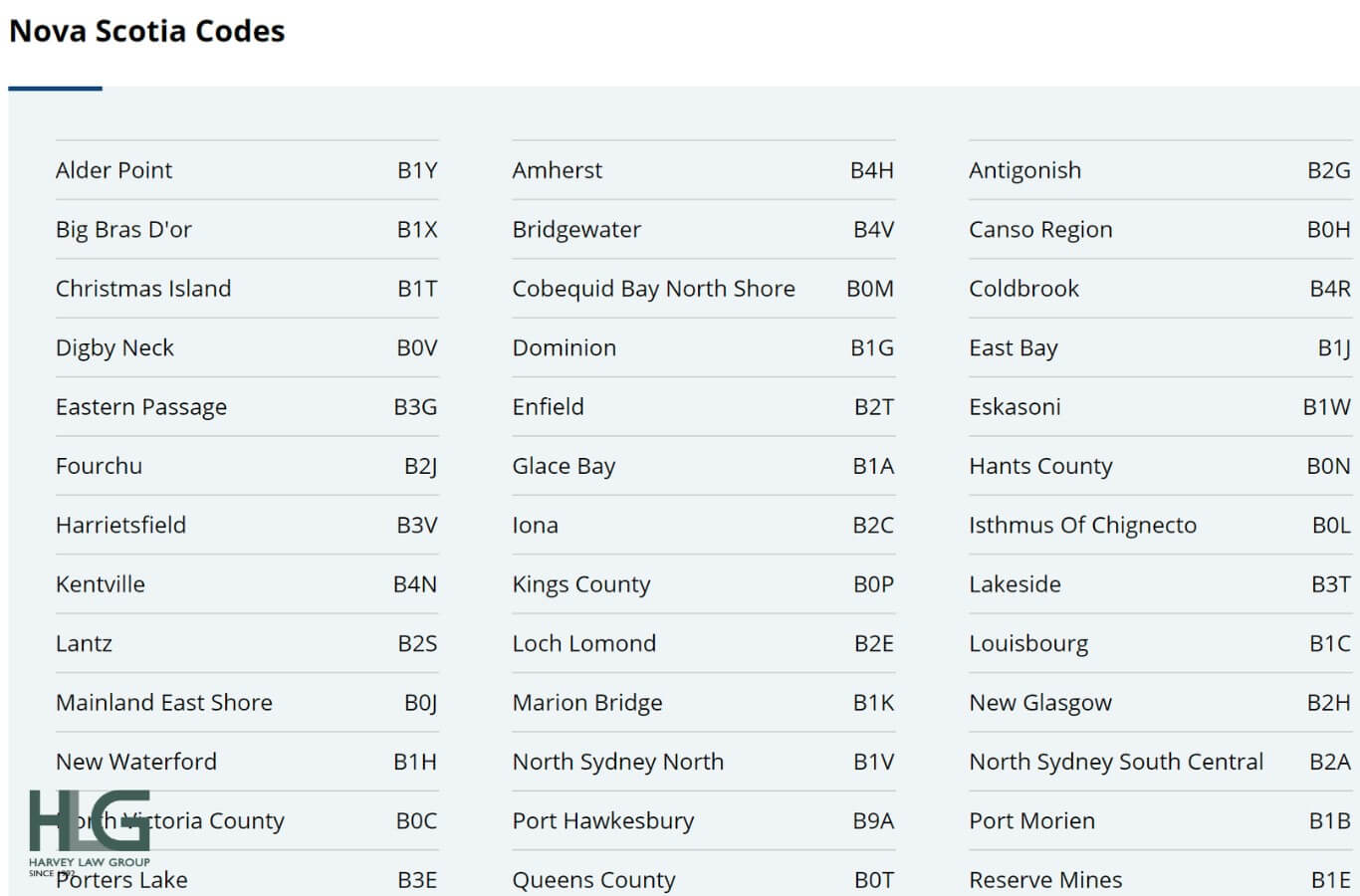
The Anatomy of a Postal Code: Alphanumeric Data Structures
At its core, a Canadian Postal Code is a six-character alphanumeric string in the format A1A 1A1. Unlike the purely numeric five-digit ZIP code system used by the United States Postal Service (USPS), the Canadian system provides a higher degree of granularity and data density.
The Forward Sortation Area (FSA)
The first three characters of the code represent the Forward Sortation Area (FSA). The FSA is a critical data point for regional logistics and macro-level data analysis.
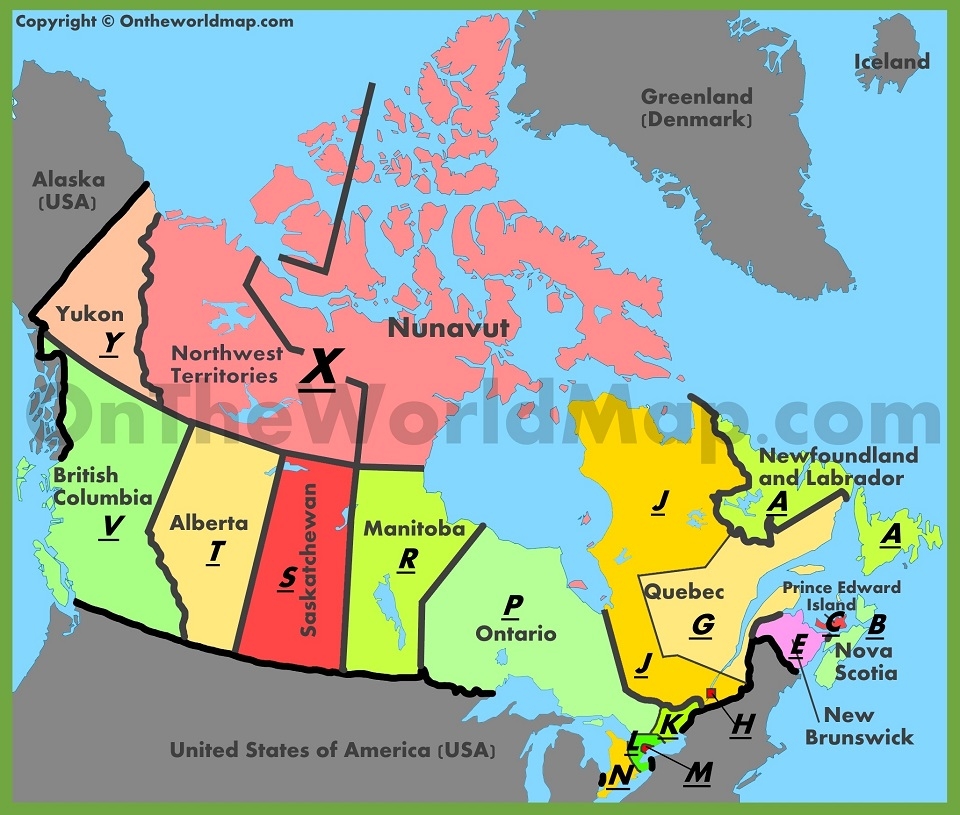
- The First Character: This letter designates a specific postal district, which usually corresponds to a province or a large metropolitan area. For example, “M” is dedicated to Toronto, while “V” covers British Columbia.
- The Second Character: This is always a digit (0–9). A zero indicates a wide-area rural region, while digits 1 through 9 signify urban areas. This binary distinction is vital for developers building shipping calculators or service-availability algorithms.
- The Third Character: This letter further narrows the geographic region down to a specific city, town, or a defined subsection of a major metropolitan center.
The Local Delivery Unit (LDU)
The final three characters of the code—the Local Delivery Unit (LDU)—provide the micro-level precision that defines the Canadian system. An LDU can represent a single city block, a large high-rise apartment building, or even a single large-volume institution such as a hospital or a government agency.
From a database management perspective, the LDU allows for incredibly precise geocoding. While a U.S. ZIP code might cover thousands of residents across several miles, a Canadian Postal Code can pinpoint a specific side of a street. This level of precision is a goldmine for tech companies specializing in last-mile delivery and localized service apps.
Character Constraints and OCR Optimization
An interesting technical quirk of the Canadian system is the exclusion of certain letters. The letters D, F, I, O, Q, and U are never used in postal codes. This is not an arbitrary choice; it is a design feature intended to enhance the accuracy of Optical Character Recognition (OCR) systems. By removing letters that could easily be confused with numbers (e.g., ‘0’ and ‘O’, ‘1’ and ‘I’), Canada Post ensures that automated sorting hardware experiences fewer read errors, increasing the overall throughput of the mail stream.
Integration and Geocoding: How Software Uses Postal Data
For any software platform—from e-commerce giants to local fintech apps—integrating Canadian address data requires a different approach than standard numeric systems. The technical implementation of postal code validation and geocoding is a cornerstone of modern digital infrastructure in Canada.
Regular Expressions (Regex) for Validation
In the development phase, ensuring data integrity at the point of entry is paramount. Developers typically use Regular Expressions (Regex) to validate Canadian Postal Codes. A standard Regex for this purpose must account for the specific sequence of letters and numbers while excluding the forbidden characters mentioned earlier. A common pattern used in web forms looks like this: ^[A-Z]d[A-Z] d[A-Z]d$.
This validation ensures that the database remains clean and that downstream processes, such as tax calculation or shipping estimates, do not fail due to malformed input.
The Role of Geocoding APIs
In modern tech stacks, the postal code acts as a primary key for geocoding services. APIs like Google Maps, Mapbox, or Canada Post’s own Address Complete use the postal code to return latitude and longitude coordinates. Because Canadian codes are so granular, the “centroid” of a postal code is often accurate to within a few dozen meters in urban areas.
This allows tech companies to build sophisticated features:
- Hyper-local Logistics: Food delivery apps can estimate arrival times with high precision.
- Dynamic Pricing: Ride-sharing apps use FSA data to identify high-demand zones.
- Edge Computing: Content Delivery Networks (CDNs) can use postal data to route traffic to the nearest server node for localized content delivery.
Database Management and Synchronization
Storing Canadian postal data requires specific considerations for database schema design. Unlike ZIP codes, which can be stored as integers (though usually stored as strings to preserve leading zeros), Canadian codes must be stored as strings. Furthermore, developers must decide whether to store the codes with or without the space. Standard practice in modern UI/UX design is to allow the user to type with or without a space, while the backend sanitizes the data into a uniform format (usually uppercase with no space) to optimize indexing and search speeds.
Digital Security and Verification in E-Commerce

Beyond logistics, the Canadian Postal Code is a vital component of digital security, specifically in the realm of payment processing and fraud prevention.
Address Verification Service (AVS)
The Address Verification Service (AVS) is a system used by credit card processors to verify that the address provided by a customer matches the address on file with the card issuer. For Canadian transactions, the postal code is the primary verification variable.
When a user initiates a transaction, the payment gateway sends the alphanumeric code to the bank. The bank’s software compares the alphanumeric string against its internal records. This is a highly effective layer of defense against “Card Not Present” (CNP) fraud. If the postal code doesn’t match, the transaction is often flagged or automatically declined by the security protocol.
Fraud Detection and Proxy Scrubbing
In the cybersecurity space, postal codes are used in conjunction with IP addresses to detect fraudulent activity. For example, if a user’s IP address originates from a different country but they provide a valid Canadian Postal Code, fraud detection algorithms (like those found in Shopify or Stripe) will increase the “risk score” of that transaction.
Furthermore, “proxy scrubbing” tools check whether the geographic location of the IP address aligns with the FSA of the postal code provided. This prevents bad actors from using stolen credit card information to purchase digital goods or initiate high-value shipments to drop points.
Data Hygiene and Privacy Compliance
As Canada moves toward stricter data privacy laws (such as the proposed Digital Charter Implementation Act), the handling of postal code data has become a tech-compliance issue. While a postal code is not usually considered Personally Identifiable Information (PII) on its own, when combined with other data points, it can potentially identify an individual—especially in rural LDUs where only a few houses share a code.
Tech companies must ensure that their data storage practices comply with PIPEDA (Personal Information Protection and Electronic Documents Act). This involves encrypting address fields at rest and implementing strict access controls to prevent data leaks.
The Future of Address Tech: AI and Predictive Logistics
The Canadian postal system is currently being integrated into the next generation of technological advancement, specifically within the realms of Artificial Intelligence (AI) and the Internet of Things (IoT).
Machine Learning in Route Optimization
Logistics companies are moving away from static routing to dynamic, AI-driven models. By feeding decades of postal code data into machine learning algorithms, companies can predict delivery delays based on weather patterns, traffic congestion within specific FSAs, and seasonal spikes in volume.
AI models can analyze the “density” of LDUs to optimize the loading of delivery vehicles. For instance, if an AI detects a high concentration of deliveries within a single high-rise LDU (a “vertical” route), it can assign a specific courier specialized in building deliveries, thereby increasing operational efficiency.
Smart Cities and Autonomous Delivery
As Canada explores the feasibility of autonomous delivery drones and sidewalk robots, the postal code is evolving into a set of “digital coordinates.” In a smart city infrastructure, an autonomous vehicle might not “read” a street sign; instead, it navigates via a mesh network where every LDU is mapped to a high-definition 3D coordinate system.
Tech startups in the autonomous space are already working on “last-meter” navigation. While a postal code gets a robot to the right building, computer vision and IoT sensors (which communicate with the building’s digital twin) take over the final leg of the journey. In this context, the “ZIP code” equivalent is merely the first layer of a multi-dimensional digital addressing system.
Blockchain and Traceability
The future of supply chain tech in Canada may involve the integration of postal codes into blockchain ledgers. By tagging shipments with a unique hash that includes the destination LDU, companies can provide immutable tracking data. This is particularly relevant for high-value tech components or pharmaceutical goods that require a strict chain of custody. Each handoff in the logistics chain—from the warehouse FSA to the final LDU—is recorded on the ledger, providing unprecedented transparency.
Conclusion
What we commonly refer to as a “Canada ZIP code” is, in reality, a sophisticated piece of digital infrastructure. For the tech professional, the Canadian Postal Code is a granular, alphanumeric data structure that enables precise geocoding, powers robust security protocols, and serves as the foundation for AI-driven logistics.
As software continues to eat the world, the ability to properly integrate, validate, and leverage this six-character string remains a vital skill for anyone building technology for the Canadian market. It is more than just a mailing address; it is a code that bridges the gap between the physical landscape of Canada and the digital systems that manage it.
aViewFromTheCave is a participant in the Amazon Services LLC Associates Program, an affiliate advertising program designed to provide a means for sites to earn advertising fees by advertising and linking to Amazon.com. Amazon, the Amazon logo, AmazonSupply, and the AmazonSupply logo are trademarks of Amazon.com, Inc. or its affiliates. As an Amazon Associate we earn affiliate commissions from qualifying purchases.