
In the modern landscape of professional sports, the trajectory of an athlete is no longer measured solely by points per game or defensive win shares. Instead, it is increasingly viewed through the lens of brand equity, market positioning, and the strategic scaling of personal identity. When analysts and fans ask, “What happened to Jaylen Wells?” they are often looking for a statistical update. However, from a brand strategy perspective, the answer lies in one of the most remarkable transformations of a personal brand in recent collegiate and professional basketball history.

Jaylen Wells’ journey from an unranked high school recruit to a pivotal player in the NBA draft conversation is more than a sports story; it is a masterclass in building a brand from the ground up, identifying market gaps, and executing a high-stakes “pivot” to a larger platform.
1. The Foundation of an Underdog Brand: The Sonoma State Era
Every strong brand begins with a core identity—a “brand promise.” For Jaylen Wells, that promise was built on the foundation of the “overlooked elite.” Unlike blue-chip prospects who enter the public eye with pre-built brand equity from Nike-sponsored circuits, Wells had to manufacture his own visibility at the Division II level with Sonoma State.
Authenticity as a Brand Core
In branding, authenticity is the most valuable currency. Wells’ time at Sonoma State allowed him to cultivate an authentic narrative of hard work and self-improvement. By dominating his environment—averaging over 22 points per game and earning CCAA Player of the Year honors—he established a “Proof of Concept.” In business terms, he perfected his product in a smaller market before attempting to scale. This stage was critical because it created a “scarcity” mindset among scouts and brand analysts; he was a high-value asset hidden in a low-visibility sector.
Identifying the Niche: The Division II Catalyst
Wells did not see Division II as a dead end, but as a niche market where he could maximize his “share of voice.” By becoming the undisputed face of his program, he built a localized brand that was eventually too large for its original container. This is a classic brand expansion strategy: dominate a specific segment so thoroughly that expansion into the general market becomes the only logical next step.
2. Strategic Scaling: The Washington State Rebrand
The transition from Sonoma State to Washington State University (WSU) represents the most critical “rebrand” in Wells’ career. In professional branding, scaling too quickly can lead to a dilution of the product if the infrastructure isn’t ready. Wells, however, timed his move to the Pac-12 perfectly, aligning his personal brand with a high-visibility “corporate” partner (WSU) that needed his specific skill set.
Strategic Visibility in the Pac-12
The jump to the Pac-12 was a calculated move to increase brand impressions. Suddenly, Wells was no longer performing for hundreds; he was performing for millions on national television. This shift required a change in brand messaging. At Sonoma, he was a volume scorer; at Washington State, he transitioned his brand into a “3-and-D” specialist—a highly marketable archetype in the modern NBA economy. By showing he could adapt his “product” to fit the needs of a larger organization, he increased his market value exponentially.
Performance as Marketing: Let the Product Speak
The most effective marketing for any brand is the quality of the product itself. During his tenure at WSU, Wells’ shooting percentages and defensive metrics served as his brand’s “white papers.” His ability to shoot over 40% from beyond the arc wasn’t just a stat; it was a “Unique Selling Proposition” (USP). In a market (the NBA Draft) that overvalues spacing and perimeter shooting, Wells positioned himself as a premium solution to a widespread problem.
3. The Professional Pivot: Entering the NBA Ecosystem
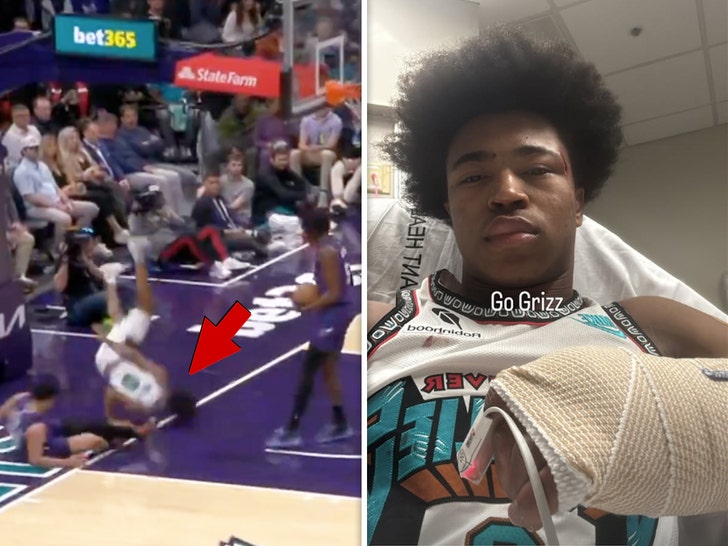
When we ask “what happened” to Jaylen Wells in the lead-up to the 2024 NBA Draft, we are witnessing the final stage of an initial brand rollout: the IPO (Initial Public Offering). Wells’ decision to stay in the draft and eventually join the Memphis Grizzlies represents the successful acquisition of his brand by a major global entity.
Crafting the Professional Identity
As Wells transitioned from a college student-athlete to a professional, his branding became more sophisticated. This involved managing his public persona through media interviews and draft workouts. He lean into the “grind” narrative, which aligned perfectly with the Memphis Grizzlies’ established corporate identity—the “Grit and Grind” culture. This alignment is a textbook example of “brand fit.” When a personal brand aligns with the corporate brand of the employer, the synergy creates a more resilient and marketable professional identity.
The Memphis Grizzlies Partnership
The Memphis Grizzlies’ selection of Wells was not just a talent acquisition; it was a strategic partnership. For Wells, the Grizzlies provided the platform and the “legacy brand” association. For the Grizzlies, Wells provided a cost-effective, high-upside asset that reinforced their organizational brand of finding “diamonds in the rough.” This stage of Wells’ career is about brand “maintenance and growth”—ensuring that the initial hype translates into long-term brand loyalty among the fanbase.
4. Lessons for Modern Personal Branding
The story of “what happened” to Jaylen Wells offers several high-level insights for entrepreneurs, professionals, and creators looking to build their own brands. His trajectory illustrates that where you start is less important than how you position your growth.
Consistency Over Hype
Wells’ brand was not built on a single viral moment. It was built on a multi-year track record of consistent “output.” In digital marketing and personal branding, many attempt to skip the foundational stages in favor of a “viral hit.” Wells’ success proves that “Brand Longevity” is a result of consistent performance over time. He didn’t just have one good game; he had three seasons of incremental growth.
The Power of Storytelling in Brand Growth
The narrative of the “Division II transfer making it to the league” is a powerful story. In brand strategy, stories are what connect the audience to the product. Wells and his management team effectively utilized this underdog narrative to build emotional equity with fans and scouts. People don’t just root for Jaylen Wells because he can shoot; they root for him because of the journey he represents.
Adaptability as a Competitive Advantage
Perhaps the most significant takeaway from the Wells case study is the importance of “Brand Pivoting.” Wells recognized that to reach the highest level of his industry, he had to evolve. He moved from a small-market lead to a large-market specialist. This ability to assess market needs and adjust one’s personal brand accordingly is what separates successful long-term brands from those that fade into obscurity.
5. Conclusion: The Future of the Wells Brand
So, what happened to Jaylen Wells? He successfully navigated the complex transition from a localized niche player to a global professional asset. He utilized strategic transfers, statistical excellence, and narrative consistency to build a personal brand that stood out in a saturated market.
As he begins his journey in the NBA, the challenge for the Jaylen Wells brand will shift from “acquisition” to “retention.” He has the attention of the market; now he must maintain his brand’s relevance through performance and community engagement. In the world of brand strategy, the work is never finished. However, if his past is any indication, Wells understands exactly how to manage his stock. He has proven that with the right positioning, an “underdog” brand can become a “market leader.”
Jaylen Wells didn’t just “happen”; he was strategically built, one game, one transfer, and one shot at a time. His story remains a blueprint for any professional looking to scale their personal brand in a competitive, high-stakes environment.
aViewFromTheCave is a participant in the Amazon Services LLC Associates Program, an affiliate advertising program designed to provide a means for sites to earn advertising fees by advertising and linking to Amazon.com. Amazon, the Amazon logo, AmazonSupply, and the AmazonSupply logo are trademarks of Amazon.com, Inc. or its affiliates. As an Amazon Associate we earn affiliate commissions from qualifying purchases.