
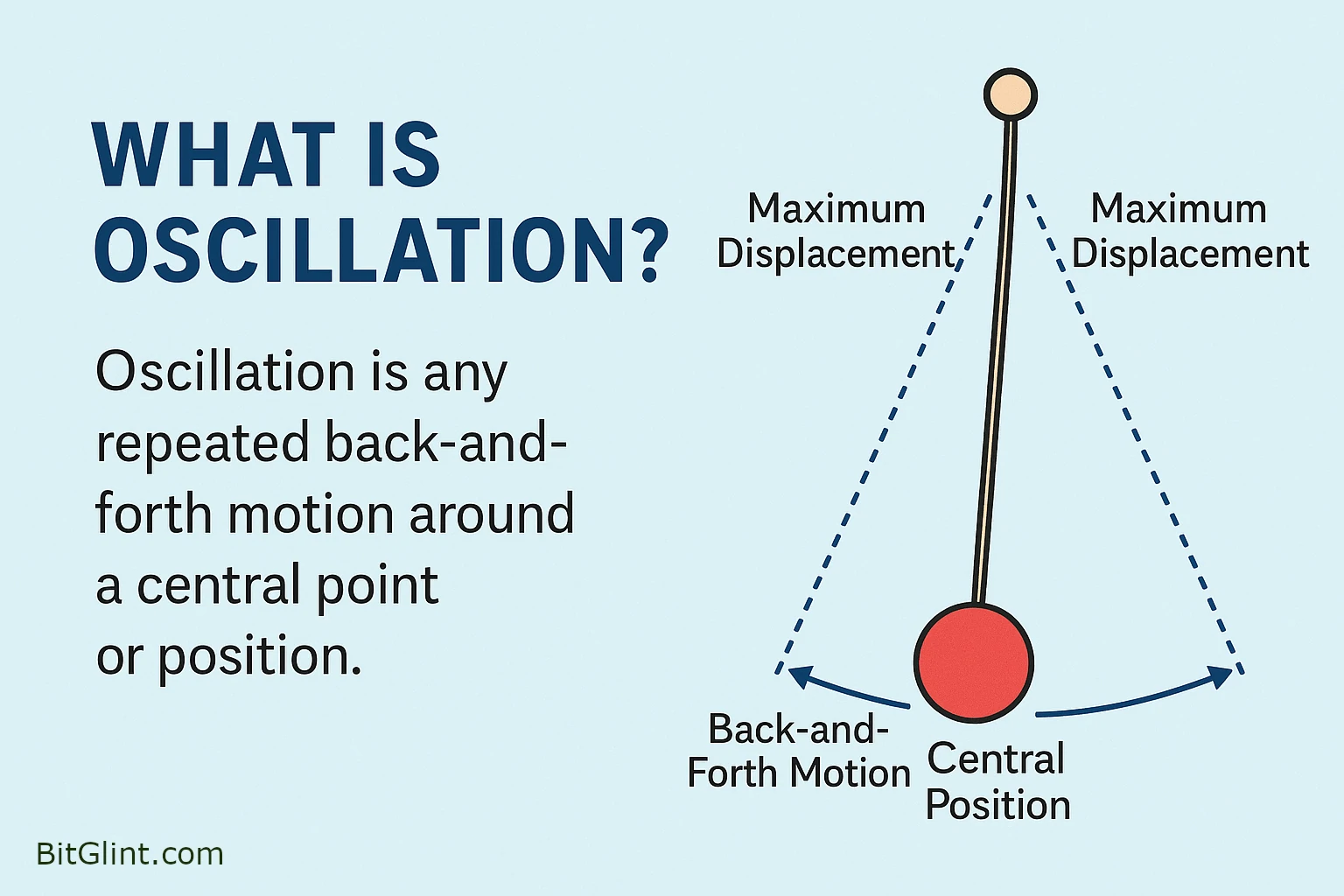
The term “oscillating” is a fundamental concept that permeates numerous aspects of technology, from the underlying principles of electronic circuits to the behavior of complex software algorithms. In its simplest definition, oscillation refers to a repetitive variation, typically in time, of some measure about a central value or between two or more different states. Within the realm of technology, this phenomenon is not merely an abstract scientific concept but a practical and often indispensable mechanism that enables the functionality of countless devices and systems. Understanding what oscillating means in tech is crucial for anyone seeking to grasp the inner workings of digital electronics, communication systems, and the very fabric of modern computing.
The Fundamental Nature of Oscillations in Electronics
At the heart of most modern electronic devices lies the controlled generation and manipulation of oscillating signals. These signals, often in the form of alternating currents or voltages, are the lifeblood of communication, computation, and signal processing. Without the ability to create and sustain precise oscillations, technologies like radio, Wi-Fi, and microprocessors would simply not exist.
Harmonic and Relaxation Oscillators: The Building Blocks
The most common and foundational types of oscillators in electronics can be broadly categorized into harmonic and relaxation oscillators.
Harmonic Oscillators: The Pursuit of Pure Frequencies
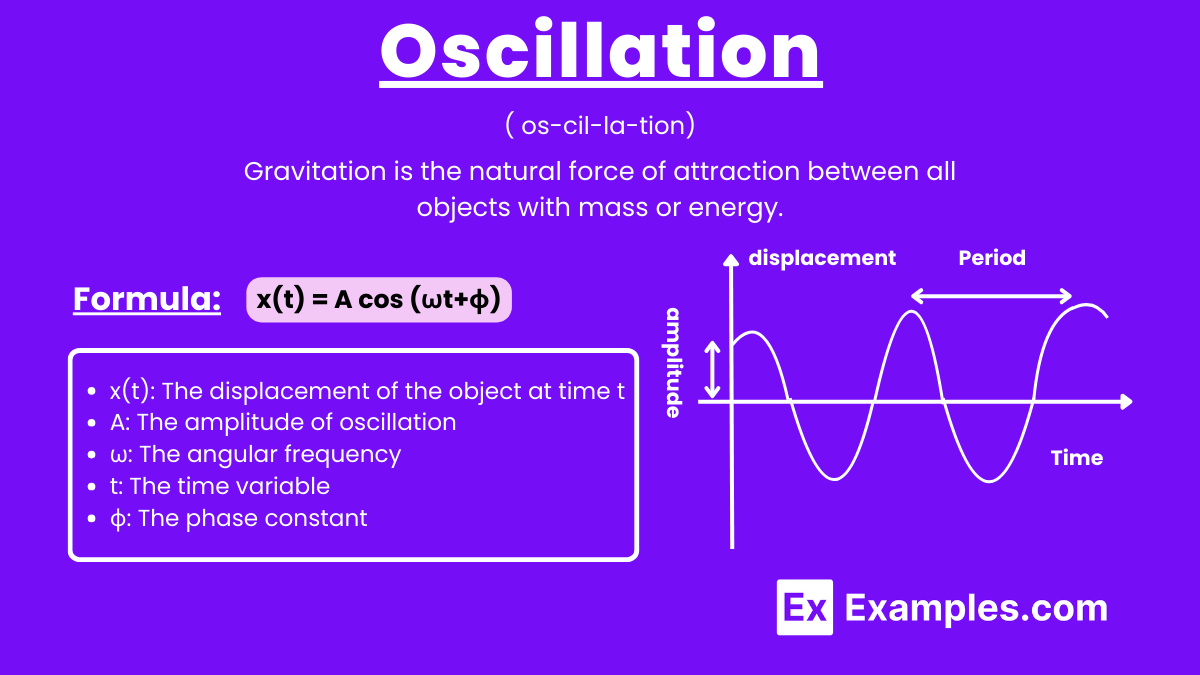
Harmonic oscillators are designed to produce a sinusoidal waveform, a smooth, repeating pattern characterized by a single, pure frequency. These are the workhorses for generating precise clock signals that synchronize the operations within microprocessors, driving their intricate calculations at billions of cycles per second. They are also essential in radio frequency (RF) transmitters and receivers, where they generate the carrier waves used to transmit information wirelessly.
A classic example of a harmonic oscillator is the LC oscillator, which utilizes an inductor (L) and a capacitor (C) to create a resonant circuit. When an initial charge is applied to the capacitor, it discharges through the inductor, generating a magnetic field. This field, in turn, induces a current that recharges the capacitor with the opposite polarity, and the cycle repeats. The frequency of oscillation is determined by the values of the inductor and capacitor, following the formula (f = frac{1}{2pisqrt{LC}}). Other harmonic oscillator circuits, such as the Colpitts and Hartley oscillators, employ active components like transistors to provide the necessary amplification and sustain the oscillations.
Relaxation Oscillators: Bistable Transitions and Pulse Generation
In contrast to harmonic oscillators, relaxation oscillators produce non-sinusoidal waveforms, often characterized by sharp transitions between distinct states. These are ideal for generating digital pulses, timing signals, and control signals. A prime example is the astable multivibrator circuit, which essentially flips between two unstable states, producing a continuous train of square or rectangular waves.
These circuits typically rely on components like capacitors, resistors, and active devices (transistors or operational amplifiers) that exhibit a threshold behavior. As a capacitor charges, it eventually reaches a voltage that triggers a switching element, causing the circuit to rapidly discharge or transition to its other state. This process then repeats, creating the oscillatory behavior. Relaxation oscillators are fundamental to the operation of timers, pulse generators, and clock dividers within digital systems. They are also crucial in applications like LED flashers and sweep generators in older oscilloscopes.
Oscillations in Digital Systems and Computing
While the generation of specific frequencies is paramount in analog electronics, the concept of oscillation in digital systems often refers to the synchronized toggling of states or the cyclical execution of operations. This cyclical behavior is the very essence of how computers process information and manage tasks.
Clock Signals: The Heartbeat of Processors
The most pervasive form of oscillation in digital computing is the clock signal. This is a regular, periodic pulse generated by a quartz crystal oscillator, which is then distributed throughout the processor and other digital components. Each pulse of the clock signal represents a discrete time interval, and operations within the processor are designed to occur in synchronization with these pulses.
Imagine a highly orchestrated dance; the clock signal is the music, dictating the rhythm and tempo. Instructions are fetched, decoded, and executed on specific beats of the clock. The speed of a processor, measured in gigahertz (GHz), directly corresponds to the frequency of its clock signal – billions of oscillations per second. A higher clock frequency generally means the processor can perform more operations in a given time, leading to faster performance. Maintaining a stable and precise clock frequency is therefore critical for the reliable operation of any digital system. Variations or jitter in the clock signal can lead to errors and system instability.
State Machines and Sequential Logic: Oscillating Between Possibilities
Beyond the global clock signal, many internal components of digital systems utilize the concept of oscillation within their design, particularly in the context of state machines and sequential logic. State machines are abstract models of computation that can be in one of several defined “states” at any given time. Transitions between these states are triggered by input signals and the current state.
In hardware, sequential logic circuits, such as flip-flops and registers, are designed to “remember” their state and change it based on clock pulses and input data. A flip-flop, for instance, can store a single bit of information (0 or 1). Upon receiving a clock pulse, it can toggle its output, effectively oscillating between storing a 0 and a 1, or between two different output values based on its inputs. This ability to store and change state in a sequential manner is fundamental to memory, data processing, and control logic within a computer. The cyclical nature of these state changes, driven by clock signals, is a form of oscillation inherent in the system’s operation.
Oscillations in Communication and Signal Processing
The ability to generate, modulate, and demodulate oscillating signals is the cornerstone of modern wireless and wired communication technologies. From broadcasting radio waves to transmitting data over fiber optic cables, oscillations play a critical role.
Carrier Waves and Modulation: Carrying Information on Waves
In wireless communication, information is typically encoded onto a high-frequency electromagnetic wave called a carrier wave. This carrier wave is itself an oscillation. The process of encoding information onto this wave is known as modulation. Different modulation techniques involve altering specific properties of the carrier wave, such as its amplitude, frequency, or phase, in accordance with the information signal.
For example, in Amplitude Modulation (AM) radio, the amplitude of the carrier wave is varied to represent the audio signal. In Frequency Modulation (FM) radio, the frequency of the carrier wave is varied. At the receiving end, a demodulator circuit is designed to detect these variations and reconstruct the original information signal. The generation of these stable, high-frequency carrier waves relies heavily on precise oscillators, ensuring that the transmitted signal is clean and can be accurately received and decoded. The frequencies involved can range from kilohertz for AM radio to gigahertz for Wi-Fi and mobile phone communication.
Digital Signal Processing (DSP) and Oscillatory Patterns
Digital Signal Processing (DSP) is a field that focuses on manipulating digital signals to extract information, enhance quality, or perform various transformations. Many DSP algorithms are inherently built upon the analysis and synthesis of oscillatory patterns within data.
Techniques like the Fast Fourier Transform (FFT) are used to decompose complex signals into their constituent frequencies, essentially identifying the underlying oscillations that make up the signal. This is vital for applications such as audio equalization, noise reduction, image compression, and spectral analysis. For instance, in audio processing, identifying the dominant frequencies (oscillations) allows for targeted adjustments to enhance clarity or remove unwanted hum. In telecommunications, FFTs are used to analyze the frequency spectrum and allocate bandwidth efficiently, preventing interference between different communication channels. The understanding and manipulation of oscillations are therefore central to the power and versatility of DSP.
Beyond the Basics: Advanced Oscillatory Concepts in Tech
The concept of oscillation extends beyond simple sine waves and clock pulses, finding application in more complex and sophisticated technological domains.
Feedback Loops and Control Systems: Maintaining Stability Through Oscillation
In control systems, oscillations are often a critical element for maintaining stability and achieving desired outcomes. Feedback loops are integral to most control systems, where the output of a system is monitored and fed back to influence its input. When implemented correctly, these feedback loops can lead to the system reaching and maintaining a desired state, often through controlled oscillations around that state.
Consider a thermostat controlling room temperature. If the room gets too cold, the heater turns on. As the room warms up, the heater eventually turns off. This on-off cycling around the set temperature is a form of controlled oscillation that maintains the desired environment. In more complex systems, such as autopilots in aircraft or robotic arms, precise feedback mechanisms often involve oscillations to correct for deviations and maintain stability. While uncontrolled oscillations can lead to instability, carefully designed oscillations are essential for responsiveness and accuracy.

Quantum Oscillations and Advanced Computing
At the frontier of technological innovation, concepts related to quantum mechanics are giving rise to new forms of oscillation with profound implications. For instance, in quantum computing, the states of qubits can be manipulated to exhibit superposition and entanglement. The evolution of these quantum states over time can be described as a form of oscillation, albeit governed by quantum mechanical principles.
Furthermore, phenomena like Rabi oscillations, observed in atomic and molecular systems, involve the periodic transition between two quantum states due to the application of a resonant electromagnetic field. Understanding and controlling these quantum oscillations are key to developing stable and scalable quantum computers. As technology pushes the boundaries of our understanding, the fundamental concept of oscillation continues to reveal new and exciting applications.
aViewFromTheCave is a participant in the Amazon Services LLC Associates Program, an affiliate advertising program designed to provide a means for sites to earn advertising fees by advertising and linking to Amazon.com. Amazon, the Amazon logo, AmazonSupply, and the AmazonSupply logo are trademarks of Amazon.com, Inc. or its affiliates. As an Amazon Associate we earn affiliate commissions from qualifying purchases.