
In the current digital landscape, the intersection of health and technology has birthed a new era of personal optimization. What was once a manual process of consulting printed charts and performing long-form arithmetic is now a seamless, instantaneous digital experience. The “how many calories to lose weight calculator” is no longer just a simple script on a webpage; it is the front-end manifestation of complex biological algorithms, data science, and sophisticated software engineering. As we move deeper into the age of personalized medicine and AI-driven wellness, understanding the technological framework behind these tools becomes essential for both developers and the tech-savvy health enthusiast.
The Architecture of Precision: Decoding the Logic of Caloric Algorithms
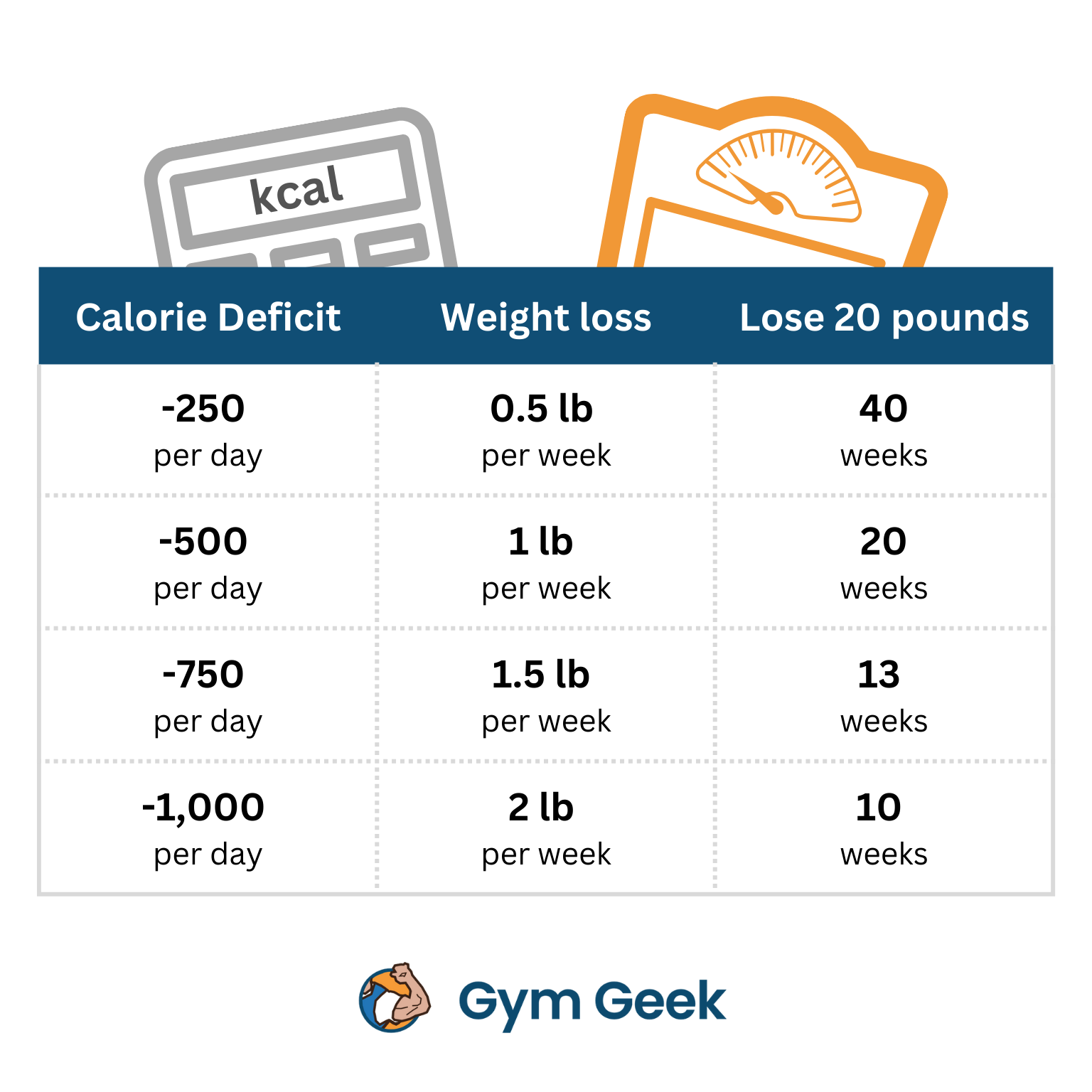
At its core, a weight loss calculator is a piece of software designed to solve a multi-variable equation. However, the transition from a static formula to a dynamic tech tool involves significant backend logic. To provide a user with an accurate number, the software must process diverse data points—age, sex, height, weight, and activity level—through established metabolic protocols.
From BMR to TDEE: The Mathematical Foundations in Code
The primary engine of any calorie calculator is the Basal Metabolic Rate (BMR) formula. Most modern software utilizes the Mifflin-St Jeor equation, which has been identified by researchers as the most accurate for contemporary populations. From a developer’s perspective, this involves creating a function that inputs user variables and outputs a baseline caloric requirement.
However, the “tech” happens in the layer above BMR: the Total Daily Energy Expenditure (TDEE). Sophisticated calculators use multipliers based on activity levels. The challenge for software designers is the “subjectivity gap”—users often struggle to accurately report their activity. Advanced applications are now solving this by integrating step-counting sensors and GPS data to automate the activity variable, replacing manual input with verified hardware data.
The Role of Machine Learning in Personalizing Caloric Needs
Static formulas are limited by their “average person” bias. The next generation of weight loss technology utilizes machine learning (ML) to refine these calculations. By analyzing data from millions of users, AI models can identify patterns that traditional formulas miss. For instance, an ML-driven calculator might notice that users with a specific body composition profile tend to have higher metabolic rates than the standard formula suggests.
Over time, these platforms use “feedback loops.” If a user inputs their weight daily and logs their food, the software can backtrack to calculate the user’s actual metabolic rate rather than an estimated one. This shift from predictive modeling to empirical tracking represents a massive leap in health-tech precision.
Integrating the Ecosystem: Connectivity and Real-Time Data Syncing
A standalone calculator is a tool, but an integrated calculator is a platform. The modern tech ecosystem relies heavily on the “Internet of Health Things” (IoHT), where various devices communicate to provide a holistic view of a user’s progress.
API Connectivity: Bridging the Gap Between Hardware and Software
The true power of a calories-to-lose-weight calculator is realized when it functions as a central hub for various APIs (Application Programming Interfaces). When a user steps on a smart scale, the weight data is instantly pushed to the cloud via Wi-Fi and updated in the calculator’s database. Simultaneously, data from a smartwatch—tracking heart rate variability and active minutes—is pulled into the algorithm to adjust the daily caloric target in real-time.
This interoperability requires robust backend infrastructure. Developers must ensure that data formats (JSON, XML) are compatible across platforms and that the latency between a “burned calorie” on a treadmill and a “remaining calorie” update on a smartphone is minimized. This real-time synchronization is what transforms a static calculator into a dynamic “living” guide.
Data Privacy and Security in Health-Tech Applications
As these calculators collect increasingly sensitive biological data, the importance of digital security cannot be overstated. High-end health platforms must implement end-to-end encryption and adhere to strict regulations like GDPR or HIPAA.
The technical challenge lies in balancing accessibility with security. Users want their data to sync across all devices instantly, but developers must ensure that PII (Personally Identifiable Information) is anonymized when used for algorithmic training. Security protocols, such as OAuth for third-party logins and secure cloud storage, are now standard requirements for any reputable weight loss technology.
The Future of Weight Management: AI and Predictive Analytics
We are moving beyond the era of looking at what we did and entering the era of predicting what will happen. The integration of predictive analytics into calorie calculators is the newest frontier in health technology.
Beyond Simple Math: Using AI to Predict Metabolic Adaptation
One of the greatest hurdles in weight loss is metabolic adaptation—the body’s tendency to slow down as weight is lost. Traditional calculators fail here because they assume a linear progression. Future-leaning tech tools are using neural networks to predict when a user is likely to hit a plateau.
By analyzing historical data trends, the software can preemptively adjust caloric recommendations or suggest a “maintenance break” to reset the user’s hormonal profile. This proactive approach to software design moves the calculator from a passive observer to an active coach, powered by data-driven foresight.
Computer Vision and Automated Calorie Tracking
The “input” side of the calorie equation has always been the weakest link in the user experience. Manually searching for and logging every gram of food is a friction point that leads to user churn. Technology is solving this through computer vision.
Using image recognition algorithms, users can now point their smartphone camera at a plate of food. The software identifies the components (e.g., grilled chicken, brown rice, broccoli), estimates the volume via depth-sensing cameras (like LiDAR on newer iPhones), and automatically calculates the caloric content. This data is then fed back into the weight loss calculator, creating a frictionless loop of data entry and analysis that was unthinkable a decade ago.
UX/UI Design Principles for Health Software
A calculator can have the most advanced AI in the world, but if the user interface (UI) is cluttered or the user experience (UX) is confusing, it will fail to gain traction. The psychology of design plays a critical role in the effectiveness of weight loss tools.
Simplifying Complex Bio-Data for the End User
The primary goal of a tech-focused calorie calculator is “data abstraction.” The backend is dealing with complex biological variables, thermal effects of food, and non-exercise activity thermogenesis (NEAT). The frontend, however, must be clean and intuitive.
Successful apps use data visualization—progress bars, heat maps, and trend lines—to communicate complex information at a glance. The technical challenge is to maintain the integrity of the data while distilling it into actionable insights. For example, instead of showing a raw number, the UI might display a “energy fuel gauge,” making the tech feel more human and less like a spreadsheet.
Gamification and Behavioral Tech in Fitness Tools
To keep users engaged, developers are increasingly turning to behavioral tech and gamification. This involves incorporating “variable reward” systems, push notifications triggered by specific data thresholds, and social connectivity features.
From a software perspective, this requires a sophisticated notification engine and a social graph database. When the calculator detects that a user has stayed within their caloric budget for seven consecutive days, it triggers a “streak” milestone. This intersection of psychology and software engineering is designed to create habit-forming loops, utilizing the same technology that drives social media engagement for the purpose of health improvement.
The Synergy of Biology and Bitrate
The “how many calories to lose weight calculator” is a prime example of how technology can demystify human biology. By wrapping complex metabolic equations in elegant software, integrating it with a web of hardware sensors, and refining it through machine learning, we have created tools that are far more than the sum of their parts.
As we look forward, the distinction between “health” and “tech” will continue to blur. We are heading toward a future where our caloric needs are calculated not by what we tell a website, but by what our internal biosensors communicate to the cloud. In this ecosystem, the calculator remains the central intelligence—a digital compass guiding the user through the complexities of their own physiology with the precision of high-level code. For the developer and the technologist, the mission remains clear: to continue refining these digital tools so that the path to health is as data-driven, efficient, and seamless as possible.
aViewFromTheCave is a participant in the Amazon Services LLC Associates Program, an affiliate advertising program designed to provide a means for sites to earn advertising fees by advertising and linking to Amazon.com. Amazon, the Amazon logo, AmazonSupply, and the AmazonSupply logo are trademarks of Amazon.com, Inc. or its affiliates. As an Amazon Associate we earn affiliate commissions from qualifying purchases.