
The question of what happens to a human body after a year of burial has transitioned from a purely biological inquiry into a sophisticated field of technological exploration. While traditional forensics once relied on manual observation and generalized timelines, modern “Digital Taphonomy” uses a suite of sensors, software, and artificial intelligence to visualize and predict decomposition with surgical precision. Understanding the one-year mark is no longer just about the transition from soft tissue to bone; it is about the data-driven recreation of environmental interactions that occur beneath the surface.

Digital Taphonomy: How Software Predicts the Unseen
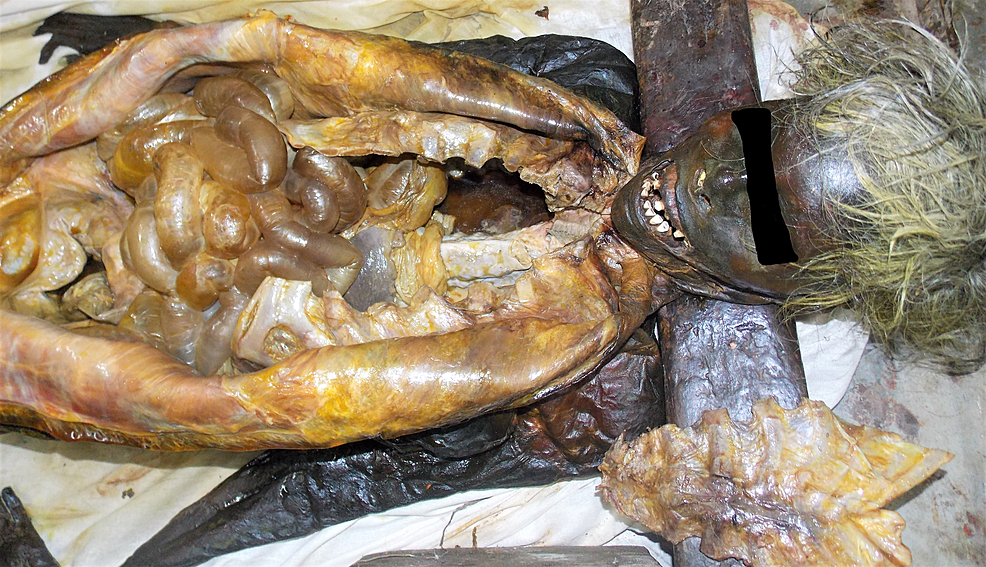
At the one-year mark, a buried body typically reaches the stage of advanced decomposition or skeletonization, depending on soil acidity and moisture. However, forensic technologists no longer need to physically disturb a site to understand this state. Digital taphonomy involves the use of complex modeling software to simulate the 12-month decay cycle based on specific environmental inputs.
Algorithmic Modeling of Decay
Modern forensic software, such as specialized GIS (Geographic Information Systems) and taphonomic simulators, can ingest variables like Accumulated Degree Days (ADD). By calculating the thermal energy available for biological activity over 365 days, these algorithms can generate a visual render of a body’s state. After one year, the software often predicts a “dry decay” phase. These models are essential for investigators who need to estimate the time of death without the margin of error inherent in older, manual methods.
LIDAR and 3D Scanning at Body Farms
The data fueling these models comes from “body farms”—forensic research facilities where remains are monitored using high-tech equipment. Researchers use terrestrial LIDAR (Light Detection and Ranging) and 3D laser scanners to capture the minute topographical changes in the soil surface above a burial site. Over a year, the “slump” of the grave—caused by the collapse of the thoracic cavity and the settling of soil—is mapped in sub-millimeter detail. This digital mapping allows tech-driven forensic teams to identify burial sites that are exactly one year old based solely on the structural signature of the earth.
IoT and Sensor Integration in Forensic Soil Analysis
What a body “looks like” after a year is heavily influenced by the chemical environment of the “grave soil.” To visualize this without exhumation, forensic scientists deploy Internet of Things (IoT) sensors that monitor the underground ecosystem in real-time.
Monitoring Volatile Organic Compounds (VOCs)
As a body approaches the one-year mark, the chemical “bloom” of early decomposition—characterized by gases like cadaverine and putrescine—shifts. Tech startups in the forensic space have developed “electronic noses” (e-noses) and gas chromatography-mass spectrometry (GC-MS) sensors that detect the specific VOC profile of a year-old burial. At this stage, the chemical signature becomes more subtle, shifting toward fatty acid breakdown products. These sensors provide a digital readout of the body’s status, indicating whether the remains are still in the active decay stage or have reached a stable, skeletal state.
Ground-Penetrating Radar (GPR) and Imaging Tech
Ground-Penetrating Radar has seen significant technological leaps in the last decade. High-frequency GPR antennas can now produce high-resolution hyper-spectral images of what lies beneath the surface. After one year, a body is often reduced to bone and some lingering ligaments. GPR technology identifies the “hyperbolic reflections” caused by the skeletal remains and the coffin (if present). Advanced signal processing software can then filter out soil noise to reveal a digital “X-ray” of the burial, showing the skeletal arrangement and any structural degradation of the site after 12 months of pressure and moisture.
AI and Machine Learning in Post-Mortem Interval (PMI) Estimation
The most significant tech trend in forensics is the application of Machine Learning (ML) to determine the Post-Mortem Interval (PMI). Determining that a body has been buried for exactly one year requires the analysis of millions of data points, a task now handled by neural networks.
Deep Learning and Image Recognition
AI models are now trained on massive datasets of decomposition imagery from various climates. When a body is recovered after a year, forensic photographers use multi-spectral imaging to capture details invisible to the human eye. These images are fed into deep-learning loops that compare the remains against thousands of other cases. The AI can identify specific markers—such as the degree of bone bleaching or the presence of specific fungal colonies—to confirm that the remains have been buried for approximately 52 weeks. This eliminates much of the human bias in forensic pathology.
The Role of Microbiome Sequencing Tech
One of the most innovative “tech” approaches to the one-year burial question involves the “Thanatomicrobiome”—the microbiome of death. High-throughput DNA sequencing technology allows scientists to analyze the microbial communities living in and around the body. After one year, the microbial signature undergoes a predictable “succession.” By using bioinformatics platforms to sequence the 16S rRNA gene, technicians can map the microbial clock. If specific anaerobic bacteria have been replaced by certain soil-dwelling fungi, the software can provide a high-confidence timestamp of one year.
The Business of Forensic Tech: Efficiency and Accuracy
The drive to understand what a buried body looks like after a year is not just a scientific pursuit; it is a technological race to increase the efficiency of the justice system. The integration of these technologies into standard police and archaeological workflows represents a significant shift in how we handle the deceased.
Automated Taphonomic Databases
Cloud-based platforms now allow forensic experts globally to upload data regarding burial sites. This “Big Data” approach means that a technician in one part of the world can use the documented 1-year decomposition profile of a body in a similar climate to predict the state of remains in their own jurisdiction. These databases use predictive analytics to suggest the best recovery tools—whether a site requires delicate manual excavation or if the remains are likely robust enough for mechanical assistance.
Virtual Autopsies (Virtopsy)
When a body is exhumed after a year, the “Virtopsy” has replaced the traditional invasive procedure in many high-tech jurisdictions. Using a combination of CT scans and MRI tech, forensic pathologists create a 3D digital twin of the remains. This allows them to examine the skeletal structure for trauma or pathology without damaging the fragile bones that have been softened by a year of soil acidity. This non-destructive testing is the pinnacle of current forensic technology, preserving the evidence in a digital format that can be “re-visited” in a virtual space for years to come.

The Future of Digital Remains
As we look toward the future, the intersection of technology and taphonomy will only grow deeper. We are moving toward a world where the “look” of a body after a year is a live data feed rather than a mystery. Through the use of biodegradable smart-sensors and satellite-based remote sensing, the monitoring of decomposition is becoming an automated, digital science.
The transition from a living being to a one-year-buried skeleton is a complex biological journey, but through the lens of modern technology, it is a sequence of measurable, predictable, and digitally reconstructible events. Whether through the precision of GPR, the analytical power of AI, or the microscopic insights of DNA sequencing, technology has provided us with a window into the earth, turning the “unseen” process of decay into a transparent, data-driven reality. For the tech industry, the 12-month burial mark is no longer a biological milestone; it is a benchmark for the accuracy of our most advanced predictive tools.
aViewFromTheCave is a participant in the Amazon Services LLC Associates Program, an affiliate advertising program designed to provide a means for sites to earn advertising fees by advertising and linking to Amazon.com. Amazon, the Amazon logo, AmazonSupply, and the AmazonSupply logo are trademarks of Amazon.com, Inc. or its affiliates. As an Amazon Associate we earn affiliate commissions from qualifying purchases.