
In the realm of personal finance and professional investing, precision is the primary differentiator between a calculated risk and a blind gamble. While we are often introduced to fractions in primary school as a way to understand “parts of a whole,” the modern financial world operates almost exclusively on decimals. Whether you are calculating the dividend yield on a blue-chip stock, determining the precise interest rate on a mortgage, or analyzing the profit margins of a growing side hustle, knowing how to make a fraction into a decimal is a non-negotiable skill.
This conversion is more than just a mathematical exercise; it is a gateway to financial literacy. In an era where digital tools handle much of the heavy lifting, understanding the underlying logic allows an investor to spot errors, verify automated reports, and gain a deeper intuitive sense of their net worth.
The Role of Precise Calculation in Financial Literacy
Before diving into the “how-to,” it is essential to understand why this conversion remains the cornerstone of financial analysis. Historically, the financial markets—particularly the New York Stock Exchange—quoted prices in fractions. Until the early 2000s, stocks were traded in sixteenths of a dollar. However, the shift toward “decimalization” was a monumental change that narrowed spreads and made the markets more accessible and transparent for the average investor.
From Stock Quotes to Interest Rates
In contemporary finance, interest rates are the most common place you will encounter the intersection of fractions and decimals. While a bank might advertise a loan at “five and three-quarters percent,” your financial software will require you to input “5.75%.” Converting that “three-quarters” into “.75” is the first step in calculating your monthly debt obligation. Without this conversion, the compounding formulas used to determine long-term wealth or debt become impossible to execute.
Why Decimals Rule the Modern Economy
Decimals are the language of digital commerce. Spreadsheets, algorithmic trading bots, and tax software all require decimal inputs to perform complex operations. Decimals allow for infinite granularity, which is vital when dealing with “basis points” (one-hundredth of one percent). In high-frequency trading or large-scale corporate finance, a fraction of a decimal point can represent millions of dollars in potential profit or loss.
The Mechanics of Conversion: A Step-by-Step Guide
Converting a fraction into a decimal is a straightforward process, but accuracy is paramount. There are two primary methods used by financial analysts to ensure their data remains “clean” and actionable.
The Division Method: The Gold Standard
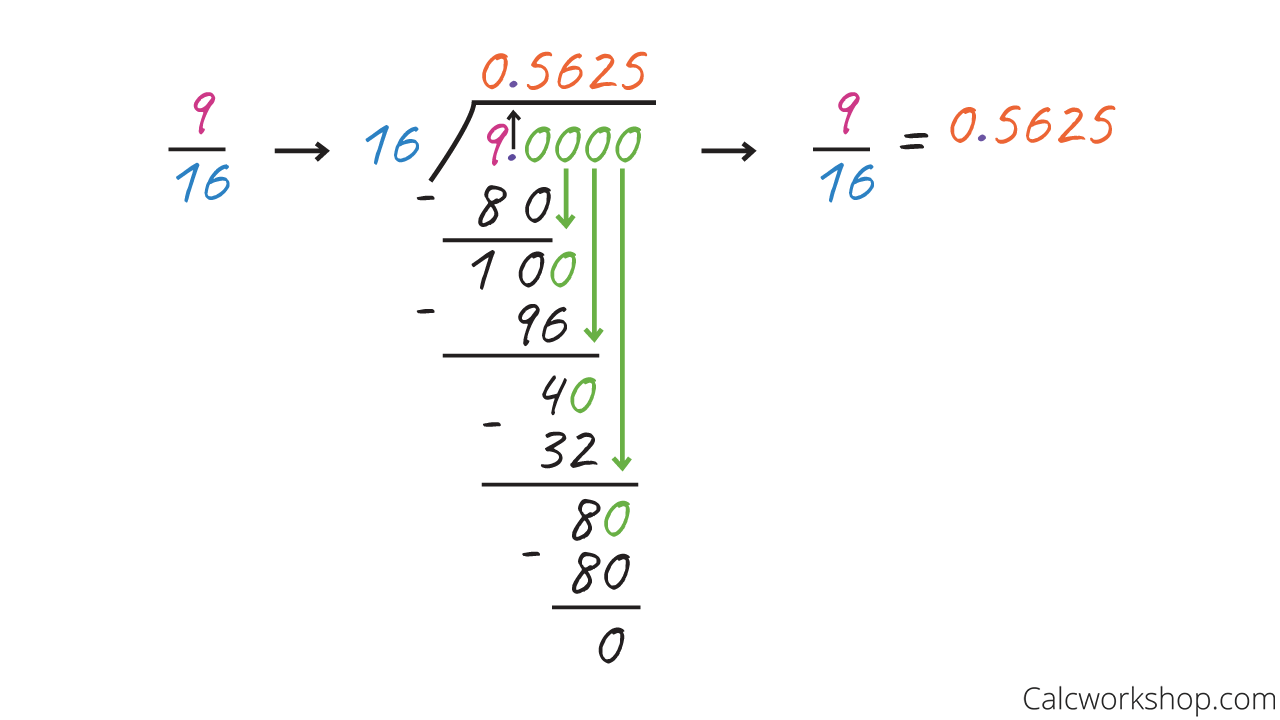
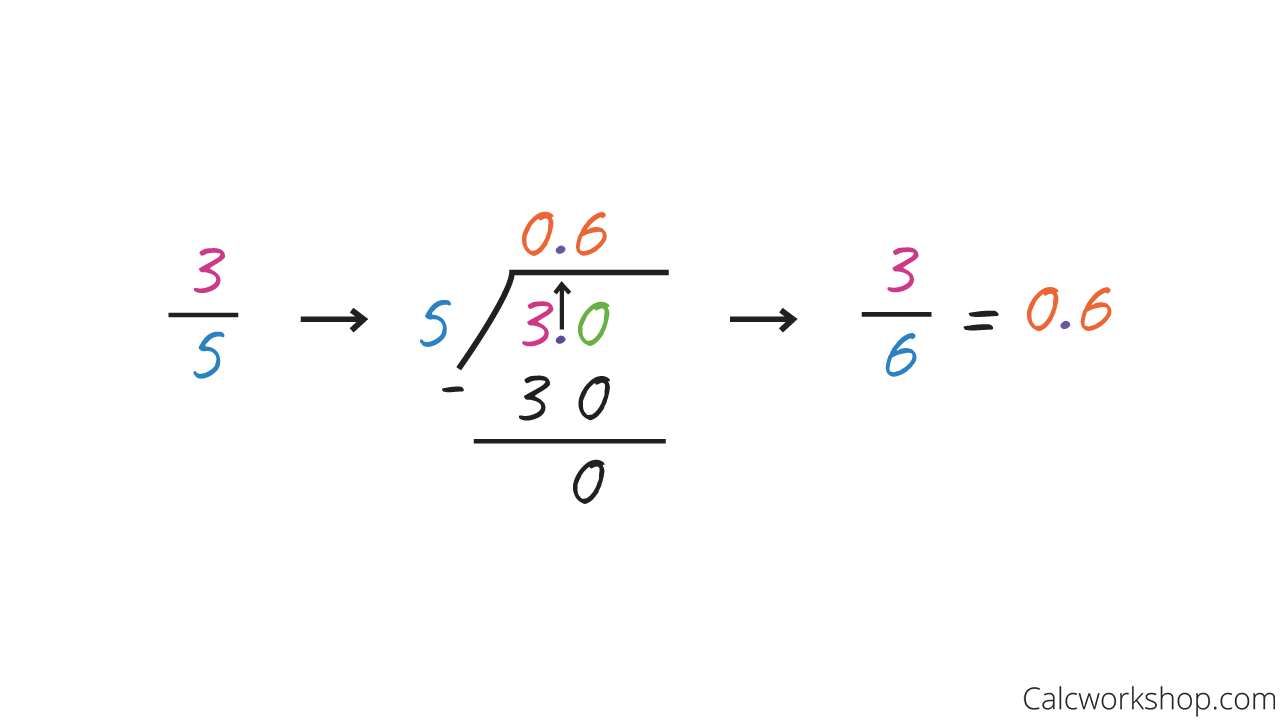
The most reliable way to convert any fraction into a decimal is the division method. Every fraction is, in essence, an unperformed division problem. The top number (numerator) is being divided by the bottom number (denominator).
- Identify the Numerator and Denominator: In the fraction 5/8, 5 is the numerator and 8 is the denominator.
- Perform the Division: Use a calculator or long division to divide the numerator by the denominator (5 ÷ 8).
- Finalize the Decimal: The result is 0.625.
In a money context, if you own 5/8 of a partnership, you own 62.5% of the entity. Converting this to a decimal allows you to multiply it against the total company valuation to find the exact dollar value of your equity.
Converting via Equivalent Fractions
For simpler fractions, many professionals use the “power of ten” method. This involves finding a way to make the denominator equal to 10, 100, or 1,000.
- If you have the fraction 1/4, you can multiply both the top and bottom by 25 to get 25/100.
- Any fraction with 100 as the denominator can be immediately written as a decimal (0.25).
This method is particularly useful for quick mental math during business negotiations or when evaluating discount rates on the fly.
Handling Repeating Decimals in Financial Projections
Not all fractions convert cleanly. For instance, 1/3 becomes 0.333… recurring. In financial modeling, these repeating decimals can cause “rounding errors” that accumulate over time. When projecting the growth of a retirement fund over 30 years, it is standard professional practice to carry decimals out to at least four or five places (e.g., 0.3333) before rounding to the nearest cent in the final calculation.
Real-World Applications in Personal Finance and Investing
Understanding the conversion process is only the beginning. The true value lies in applying this math to optimize your portfolio and manage your cash flow.
Calculating Dividend Yields and Basis Points
Investors often look at dividend yields to determine the income potential of a stock. If a company pays a fractional dividend relative to its share price, converting that to a decimal is necessary to compare it against other income-generating assets like T-bills or high-yield savings accounts.
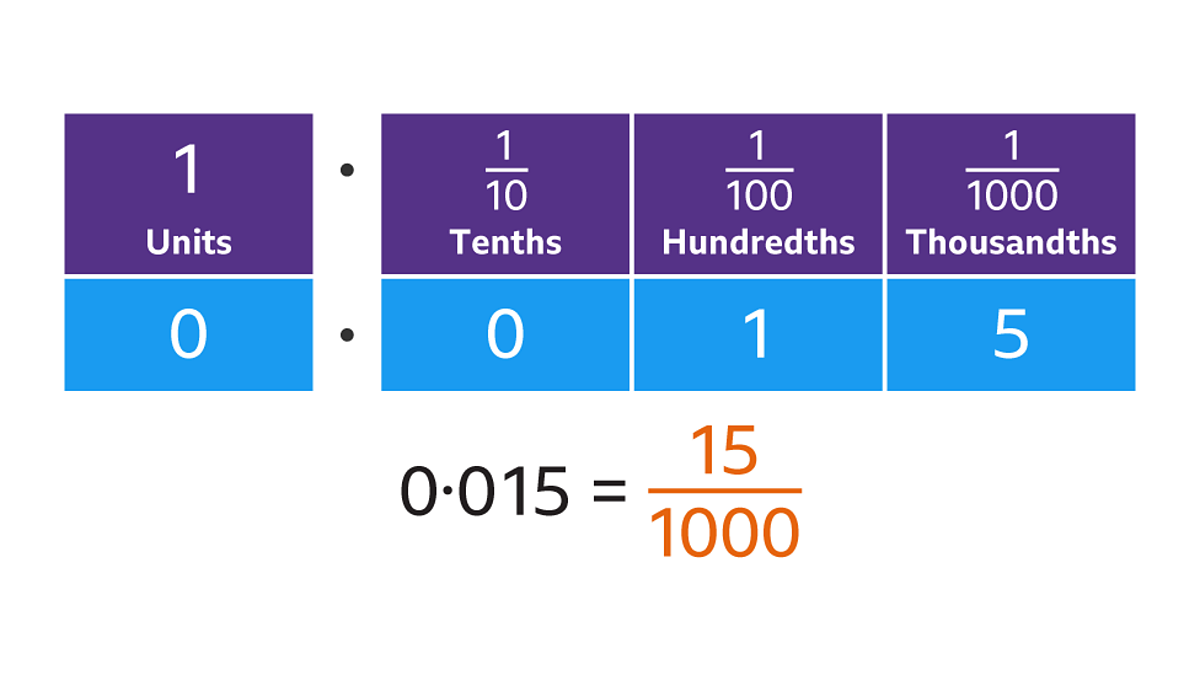
Furthermore, in the world of bonds and loans, we talk about “Basis Points” (BPS). One basis point is 1/100th of 1 percent. To use this in a financial formula, you must convert the fraction 1/100 to 0.01, and then convert that percentage to a decimal (0.0001). This level of precision is how professional traders identify arbitrage opportunities.
Understanding Loan Amortization and Interest
When you take out a mortgage or an auto loan, the interest is often expressed as a fraction within a percentage. However, the amortization schedule—the table showing how much of each payment goes toward interest versus principal—is calculated using decimals. By mastering the conversion, you can manually verify if your lender is calculating your interest correctly, potentially saving you thousands over the life of the loan by spotting discrepancies or understanding the impact of making extra principal payments.
Evaluating Side Hustle Profit Margins
For entrepreneurs and those with side hustles, fractions often appear in supply chains or unit measurements (e.g., “we used 2/3 of a gallon of raw material per unit”). To determine the exact cost of goods sold (COGS), you must convert that 2/3 into 0.666 and multiply it by the cost per gallon. This ensures your pricing strategy is rooted in decimal-perfect reality rather than “guesstimates,” which are the primary cause of small business failure.
Digital Financial Tools and Automation
While manual calculation builds the “mental muscle” of financial literacy, the modern professional relies on technology to maintain speed and scale.
Using Spreadsheet Formulas (Excel and Google Sheets)
In Excel, you don’t always need to perform the division yourself. If you type a fraction into a cell, Excel may try to format it as a date. To force a decimal conversion, you can use the formula =A1 where A1 contains the fraction, and then change the cell format to “Number” or “Currency.”
More importantly, the formula =DEGREES or custom division formulas like =5/8 allow you to build dynamic financial models. If your input (the numerator or denominator) changes, your decimal output—and thus your total projected profit—updates automatically.
Financial Calculators vs. Manual Calculation
While your smartphone has a basic calculator, professional-grade financial calculators (like the HP 12C or TI BA II Plus) are designed to handle fractional inputs for Time Value of Money (TVM) calculations. These tools convert fractions to decimals internally to calculate Net Present Value (NPV) and Internal Rate of Return (IRR). Even when using these tools, knowing the manual conversion allows you to perform “sanity checks” on the results.
Advanced Metrics: The Cost of Precision
As you move from basic personal finance into more advanced investing or business management, the stakes of fraction-to-decimal conversion increase.
Compounded Growth and Decimal Precision
The power of compounding is often called the eighth wonder of the world. However, compounding is sensitive to decimal precision. If an interest rate of 7 1/8% is rounded down to 7.1% instead of 7.125%, the difference over a 40-year investment period on a $100,000 principal is substantial.
- 7.125% results in approximately $1,556,000.
- 7.1% results in approximately $1,541,000.
That small fractional difference—just 0.025 in decimal form—results in a $15,000 loss in potential wealth.
The Cost of Rounding Errors in Business
In corporate finance, “rounding to the nearest million” is common for top-level reports, but the underlying accounting must be exact. When converting fractional inventory or fractional hours of labor into decimal costs, rounding too early in the equation can lead to “leakage.” Successful business owners ensure that every fraction is converted to a decimal at the start of the calculation to maintain integrity throughout the entire financial statement.
Conclusion: The Decimal as a Tool for Wealth
Making a fraction into a decimal is perhaps the most practical mathematical skill an individual can possess in the pursuit of financial independence. It bridges the gap between abstract concepts and concrete data. By mastering this conversion, you empower yourself to read a stock ticker with more insight, calculate a loan’s true cost with more accuracy, and manage a business with more professional rigors.
In the world of money, those who understand the numbers are the ones who keep them. Whether you are using a simple division method or an advanced spreadsheet formula, the goal remains the same: transforming parts into a precise whole, and transforming financial confusion into decimal-point clarity.
aViewFromTheCave is a participant in the Amazon Services LLC Associates Program, an affiliate advertising program designed to provide a means for sites to earn advertising fees by advertising and linking to Amazon.com. Amazon, the Amazon logo, AmazonSupply, and the AmazonSupply logo are trademarks of Amazon.com, Inc. or its affiliates. As an Amazon Associate we earn affiliate commissions from qualifying purchases.