
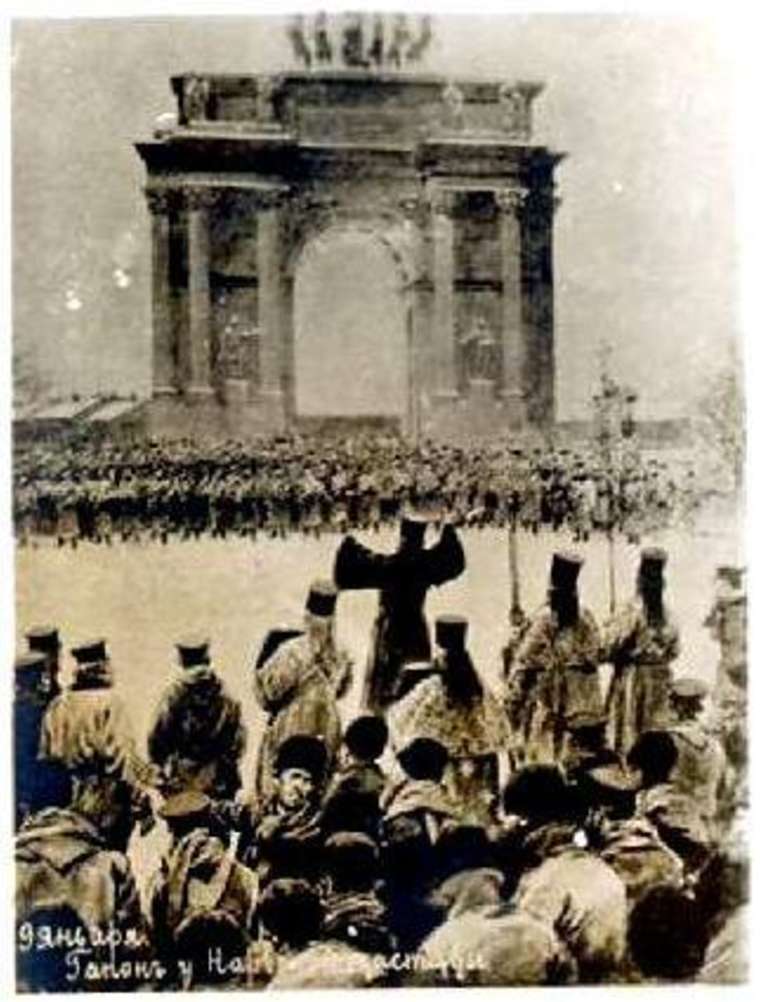
The events of January 22, 1905, known historically as “Bloody Sunday,” serve as a harrowing reminder of the friction between labor and capital. While often discussed in the context of political revolution, the core of the protest was fundamentally rooted in economic grievances. The workers who marched toward the Winter Palace in St. Petersburg were not merely seeking political change; they were demanding a transformation of their financial reality.
In this article, we analyze the financial drivers behind the Bloody Sunday protests and translate those historical lessons into the modern landscape of personal finance, business ethics, and investment strategy. By understanding the economic “why” behind this historical tragedy, modern professionals and investors can better navigate the complexities of wealth distribution and corporate governance.
The Economic Catalyst: Labor Demands and Financial Inequality
To understand why the workers were protesting, one must look at the balance sheets of the early 20th-century Russian industrial complex. The Russian economy was undergoing rapid, albeit uneven, industrialization. While the state was amassing capital, the workers were facing a catastrophic decline in purchasing power.
The Fight for a Living Wage
At the heart of the 1905 petition was a demand for a “living wage.” The workers were suffering under a regime of stagnant pay and soaring inflation. In modern financial terms, their real income was negative. The protest sought to establish a minimum wage that would allow for basic subsistence—a concept that remains a central pillar of economic discourse today. From a personal finance perspective, the St. Petersburg workers were fighting against a system that prevented any form of capital accumulation or savings for the lower class.
Reducing the Working Day: The 8-Hour Productivity Shift
The protesters demanded an 8-hour workday. At the time, shifts often lasted 12 to 14 hours. From a business finance perspective, the workers were arguing for a more sustainable model of human capital management. They recognized that extreme labor hours led to diminishing returns, high injury rates, and long-term economic instability for families. Today, this mirrors the conversation around the four-day workweek and the “burnout economy,” where companies are beginning to realize that worker well-being is a driver of long-term ROI.
Economic Representation and Collective Bargaining
The workers demanded the right to organize. Without the ability to collectively bargain, the individual worker had zero leverage in salary negotiations. In the language of modern business, the labor market was a monopoly (or monopsony) held by the industrialists. The protest was an attempt to introduce market competition into the labor sector, ensuring that the price of labor was determined by fair negotiation rather than state-enforced dictates.
Business Finance and the Cost of Industrial Resistance
Bloody Sunday was a failure of corporate and state governance. The refusal to address economic grievances led to a total shutdown of the industrial machine. For the modern business owner or investor, the financial fallout of 1905 provides a masterclass in the risks of ignoring “human capital” costs.
The ROI of Worker Welfare
Companies that invest in their employees often see higher retention rates, lower recruitment costs, and increased innovation. The Tsarist regime and the factory owners of 1905 viewed labor as a fixed, expendable cost. This led to massive “opportunity costs” when the subsequent strikes paralyzed the economy. In modern finance, we call this the “S” in ESG (Environmental, Social, and Governance) investing. Research consistently shows that companies with high social scores—those that treat workers fairly—outperform their peers in the long run.
Corporate Governance and Human Capital
The lack of a feedback loop between the “boardroom” (the Tsar’s advisors) and the “stakeholders” (the workers) led to a systemic collapse. Modern corporate identity focuses heavily on stakeholder capitalism, which argues that a business’s health is tied to the financial stability of its employees. When workers are financially precarious, the entire business ecosystem is at risk of disruption.
Impact of Labor Unrest on Market Stability
The events following Bloody Sunday led to a massive devaluation of Russian bonds and a flight of foreign capital. Investors hate instability. The protest and the state’s violent response proved that economic growth cannot be sustained without social equity. For today’s investor, analyzing a company’s labor relations is not just a moral choice; it is a fundamental part of risk assessment and portfolio management.
Modern Parallels: Financial Tools for Today’s Workers
While we no longer live in the industrial era of 1905, the economic tensions remain. The “side hustle” culture, the rise of the gig economy, and the pursuit of “FIRE” (Financial Independence, Retire Early) are the modern descendants of the labor movements of the past.
From Unions to Decentralized Finance (DeFi)
In 1905, workers used physical strikes to demand economic agency. Today, individuals are using technology and decentralized financial tools to gain autonomy from traditional corporate structures. DeFi and blockchain technology offer a way for workers to bypass traditional banking fees and gain access to global capital markets, providing a form of economic sovereignty that the St. Petersburg strikers could only dream of.
Investing in Companies with High ESG Scores
As an investor, you can “protest” with your capital. By moving funds into companies that prioritize fair wages, diverse leadership, and transparent financial reporting, you are incentivizing a more stable and equitable global economy. Modern investment platforms now make it easier than ever to filter portfolios for “social responsibility,” allowing your money to support the same values the workers of 1905 were fighting for.
Side Hustles and Financial Independence as a Form of Protest
In the current economy, many workers find that a single salary is insufficient for wealth building. The rise of “side hustles”—from freelance consulting to digital products—is a modern method of reclaiming economic power. By diversifying income streams, individuals reduce their reliance on a single employer, thereby gaining the leverage that the 1905 protesters sought through collective action.
Strategies for Personal Financial Resilience
The ultimate goal of the Bloody Sunday protesters was financial security. In the 21st century, achieving that security requires a proactive approach to personal finance and wealth management.
Building an Emergency Fund for Career Transitions
The 1905 protesters risked everything because they had nothing to lose. For the modern professional, an emergency fund (3–6 months of expenses) serves as a “strike fund.” It provides the financial “runway” to leave a toxic or underpaying job without the fear of immediate poverty. This is the cornerstone of personal financial advocacy.
Diversifying Income Streams to Mitigate Corporate Risk
The workers of St. Petersburg were at the mercy of a single industry. When that industry faltered or exploited them, they had no recourse. Modern financial planning emphasizes diversification—not just in your stock portfolio, but in your skill set and income sources. Digital security in the modern age means having multiple paths to liquidity.
Negotiating Compensation in the Digital Age
The protest of 1905 was a macro-negotiation. On a micro-level, every professional must be their own advocate. Using tools like Glassdoor, LinkedIn Salary, and industry benchmarks, workers can enter salary negotiations armed with the data necessary to demand their fair market value. Understanding the “business finance” of your employer allows you to position your demands in a way that aligns with the company’s growth, making a “yes” more likely.

Conclusion: The Enduring Value of Economic Advocacy
The workers of Bloody Sunday were protesting for the right to exist within a fair economic system. They wanted a piece of the prosperity they were helping to create. Today, while the methods have changed—from petitions and marches to index funds and digital side hustles—the objective remains the same: financial agency.
By viewing history through the lens of money and business, we see that economic stability is the bedrock of social stability. Whether you are an entrepreneur building a brand, an investor seeking growth, or a professional managing your personal budget, the lessons of 1905 are clear: Wealth is most sustainable when it is built on a foundation of fair exchange, transparent governance, and the recognition of human value. In the pursuit of financial freedom, we are all, in some way, continuing the work started on that cold Sunday in January over a century ago.
aViewFromTheCave is a participant in the Amazon Services LLC Associates Program, an affiliate advertising program designed to provide a means for sites to earn advertising fees by advertising and linking to Amazon.com. Amazon, the Amazon logo, AmazonSupply, and the AmazonSupply logo are trademarks of Amazon.com, Inc. or its affiliates. As an Amazon Associate we earn affiliate commissions from qualifying purchases.