
In the world of personal finance and investing, the most powerful tool at your disposal isn’t a complex algorithm or a high-priced advisor; it is the simple percentage. When we ask “what percent is,” we are seeking a ratio that provides context to raw numbers. Without percentages, a $1,000 gain or a $500 debt has no scale. However, when expressed as a percentage of your total income or your overall portfolio, these figures transform into actionable insights. Understanding the specific percentages that govern budgeting, investing, and debt management is the difference between financial stagnation and long-term wealth accumulation.
The Percentages of Budgeting: Building a Sustainable Foundation
Financial stability is rarely the result of a high income alone; rather, it is the result of how that income is partitioned. Percentages allow individuals to create a scalable blueprint for their lives, regardless of whether they earn $40,000 or $400,000 a year.
The 50/30/20 Rule as a North Star
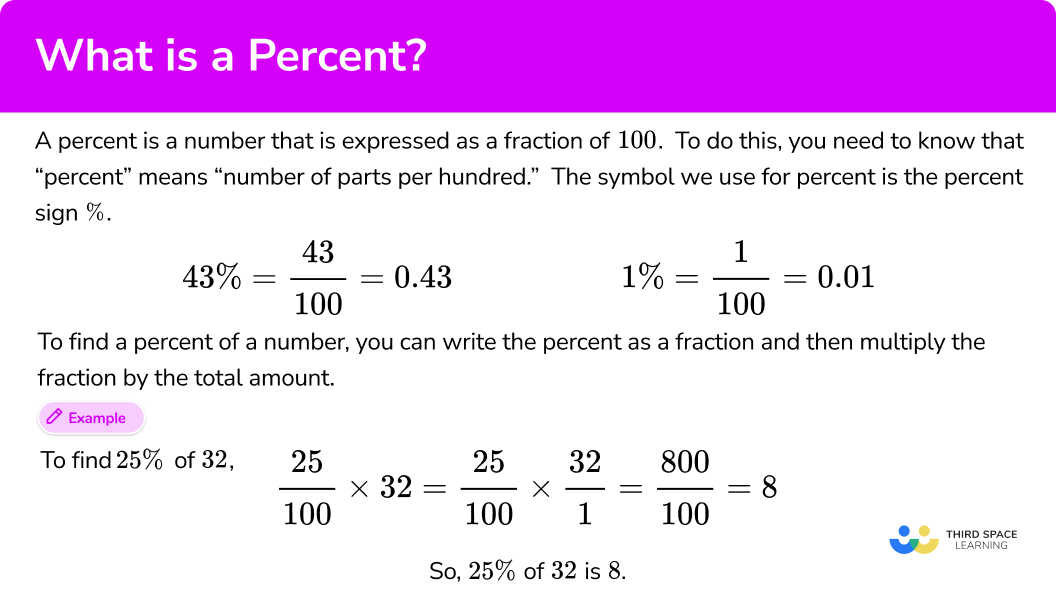
Perhaps the most famous percentage-based framework in personal finance is the 50/30/20 rule. This guideline suggests that 50% of your after-tax income should be allocated to “Needs” (housing, utilities, groceries), 30% to “Wants” (entertainment, dining out, hobbies), and 20% to “Savings and Debt Repayment.”
By viewing your lifestyle through this lens, you can quickly identify structural issues in your finances. If your “Needs” are consuming 70% of your income, you are “house poor” or “car poor,” meaning you have little margin for error. The power of this percentage is its flexibility; as your income grows, the 20% allocated to savings grows proportionally, ensuring that your wealth scales alongside your career.
Debt-to-Income (DTI) Ratios
When you apply for a mortgage or a car loan, lenders don’t just look at your salary; they look at your Debt-to-Income ratio. This is a calculation of what percent of your gross monthly income goes toward paying debts. Generally, a DTI of 36% or less is considered healthy, with no more than 28% going toward housing costs.
Understanding your DTI percentage is critical because it dictates your “borrowing power.” If your DTI exceeds 43%, most conventional lenders will view you as a high-risk borrower, potentially leading to higher interest rates or loan denials. Keeping this percentage low is a fundamental strategy for maintaining financial mobility.
The Emergency Fund Threshold
A common question in personal finance is “what percent of my expenses should be liquid?” While experts suggest keeping three to six months of expenses in a high-yield savings account, it is often more helpful to view this as a percentage of your annual volatility. For those in “gig economy” roles or commission-based sales, an emergency fund should represent a higher percentage of their annual safety net—up to 10% or 15% of their total net worth—to hedge against the unpredictability of their income streams.
Investing and Growth: The Power of Compounding Percentages
In the realm of investing, percentages are the primary language of progress. Whether you are analyzing a stock’s performance or determining your retirement readiness, the “what percent” question defines your strategy.
Compound Interest and Annual Percentage Yield (APY)
The concept of compound interest is often called the eighth wonder of the world. In this context, “what percent” refers to the rate of return you earn on your principal plus the interest already accumulated. A small difference in percentage can result in a massive difference in wealth over time.
For example, $10,000 invested at a 5% annual return will grow to approximately $43,219 over 30 years. However, at a 10% return (the historical average of the S&P 500), that same $10,000 grows to over $174,494. The percentage isn’t just a number; it is a multiplier of your time and labor. This is why chasing a higher APY in savings or lower expense ratios in index funds is a high-leverage activity for any investor.
Asset Allocation: The Percentage of Risk
Asset allocation is the process of deciding what percent of your portfolio should be in different asset classes, such as stocks, bonds, real estate, or cash. This is perhaps the most significant factor in determining your long-term returns and your exposure to market volatility.
A traditional “60/40” portfolio (60% stocks, 40% bonds) is designed for moderate growth with lower volatility. Conversely, a young investor might opt for a 90/10 split to maximize the percentage of growth-oriented assets. Determining “what percent” belongs in each bucket requires a deep understanding of your time horizon and risk tolerance. If a market correction of 20% would cause you to panic-sell, your equity percentage is likely too high for your psychological temperament.
The 4% Rule for Retirement Sustainability
One of the most researched percentages in finance is the “4% Rule.” Originating from the Trinity Study, this rule suggests that a retiree can withdraw 4% of their initial portfolio balance (adjusted for inflation each year) with a high probability of not running out of money for at least 30 years.
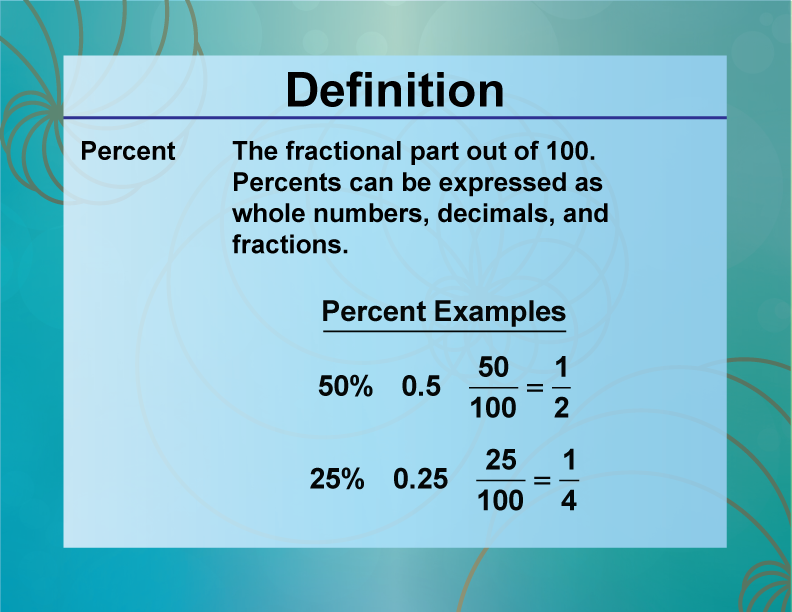
Knowing this percentage allows you to work backward to find your “Financial Independence Number.” If you need $60,000 a year to live, you can divide that by 0.04 to find that you need a portfolio of $1.5 million. This single percentage transforms a vague dream of retirement into a concrete, mathematical goal.
Business Finance and Profitability: Measuring Success
For entrepreneurs, freelancers, and side-hustlers, percentages are the pulse of the business. Raw revenue is a “vanity metric”; what matters is the percentage of that revenue that you actually keep.
Gross and Net Profit Margins
When evaluating the health of a business or a side hustle, we must ask: “What percent is the profit margin?”
- Gross Profit Margin measures what percent of revenue exceeds the cost of goods sold.
- Net Profit Margin measures what percent of revenue remains after all operating expenses, taxes, and interest have been paid.
A business with $1 million in revenue and a 2% net margin is often in a more precarious position than a business with $200,000 in revenue and a 40% net margin. High percentages in profit margins provide a “buffer” that allows a business to survive economic downturns or unexpected costs.
The Cost of Capital and Interest Rates
In business finance, “what percent” often refers to the cost of borrowing. If you take out a business loan at 8% interest to fund an expansion, that expansion must generate a return on investment (ROI) higher than 8% to be mathematically sound.
This “spread” between the cost of money and the return on money is how wealth is generated at scale. If the percentage cost of your debt exceeds the percentage growth of your assets, you are effectively working for your creditors rather than yourself. Monitoring the interest rate environment is essential for deciding when to leverage debt for growth and when to prioritize debt repayment.
Tax Percentages and Effective Tax Rates
Many people mistakenly believe they are in a “30% tax bracket” and will therefore pay 30% of their total income in taxes. However, understanding the difference between your marginal tax rate and your effective tax rate (the actual percent of your total income paid to the government) is vital for tax planning.
By utilizing deductions, credits, and tax-advantaged accounts like 401(k)s or IRAs, you can significantly lower your effective tax percentage. In the world of money, it’s not about how much you make, but what percentage you keep after the “tax man” takes his share.
Risk Management: Protecting Your Capital
Finally, percentages serve as the ultimate defensive tool. They allow us to quantify risk and set boundaries that prevent catastrophic financial loss.
The 1% Risk Rule in Trading and Investing
Active traders often use the “1% Risk Rule,” which dictates that they will never risk more than 1% of their total account value on a single trade. For example, if you have a $50,000 portfolio, you would set your stop-loss orders so that a single bad trade would only result in a $500 loss.
This percentage-based approach ensures that even a string of losses won’t wipe out your capital. It removes the emotion from the decision-making process and replaces it with a disciplined mathematical constraint.
Inflation: The Invisible Percentage
Inflation is the percentage by which the purchasing power of your money decreases over time. If inflation is at 3% and your savings account is only earning 1%, you are effectively losing 2% of your wealth every year.
To achieve “real” growth, your investment returns must exceed the inflation percentage. This is why holding too high a percentage of your net worth in cash can be a long-term risk. Understanding the “real rate of return” (Nominal Return minus Inflation) is the only way to accurately measure if you are actually getting wealthier or simply standing still while the value of the dollar moves beneath you.
Diversification and Concentration Percentages
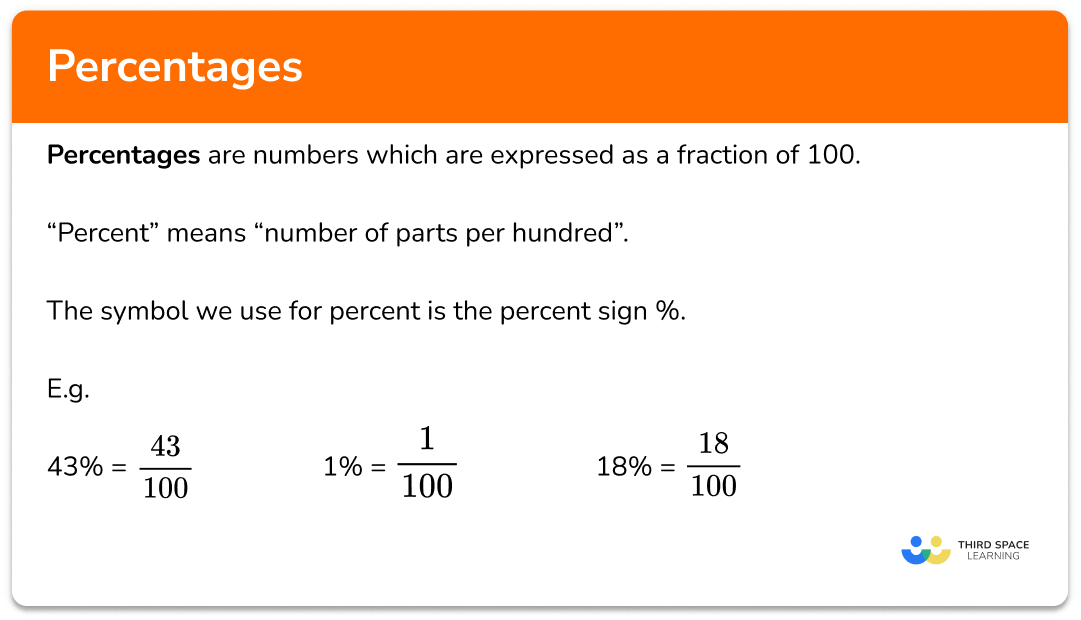
Investors often struggle with the balance between diversification (to reduce risk) and concentration (to build wealth). A common benchmark is that no single stock should represent more than 5% to 10% of your total portfolio.
By setting a “hard cap” on the percentage of your wealth tied to one company or sector, you protect yourself against “unsystematic risk”—the chance that a specific company will fail. While a high concentration in a winning stock can make you rich, a disciplined percentage limit ensures that a single failure won’t make you poor.
In conclusion, “what percent is” is the most important question you can ask your bank statement, your brokerage account, and your business ledger. Percentages provide the context, the constraints, and the catalysts required for a successful financial life. By mastering these ratios, you move away from guesswork and toward a calculated, predictable path to prosperity.
aViewFromTheCave is a participant in the Amazon Services LLC Associates Program, an affiliate advertising program designed to provide a means for sites to earn advertising fees by advertising and linking to Amazon.com. Amazon, the Amazon logo, AmazonSupply, and the AmazonSupply logo are trademarks of Amazon.com, Inc. or its affiliates. As an Amazon Associate we earn affiliate commissions from qualifying purchases.