
In our hyper-connected digital landscape, the question “What time is CDT now?” is more than a simple inquiry for a clock reading. It represents the fundamental need for synchronization in a globalized economy. For developers, IT professionals, and remote teams, Central Daylight Time (CDT) serves as a critical heartbeat for operations spanning from the tech hubs of Chicago and Austin to the remote data centers that power our cloud infrastructure. Understanding the technical nuances of this timezone—and how technology manages it—is essential for maintaining data integrity, optimizing workflow, and ensuring seamless user experiences across the globe.

The Mechanics of Time: Understanding CDT in a Connected Ecosystem
At its core, Central Daylight Time is a geographical and chronological construct, but in the realm of technology, it is a variable that must be precisely managed. CDT is the practice of observing Central Time at an offset of five hours behind Coordinated Universal Time (UTC-5). This shift occurs during the warmer months, moving away from Central Standard Time (CST), which sits at UTC-6.
Defining Central Daylight Time and its Relationship to UTC
In the tech world, UTC is the “true north.” Every localized timezone, including CDT, is merely an offset of this universal standard. When a user asks a search engine or an AI assistant “What time is CDT now,” the system performs a real-time calculation based on the current UTC. For software architecture, storing time in CDT is generally considered a “bad practice.” Instead, systems record events in UTC and translate them into CDT only at the UI/UX layer. This prevents discrepancies when users move between zones or when the system transitions between Daylight Saving and Standard time.
The Algorithm of Daylight Saving Time (DST)
The transition into CDT is not a manual switch but an algorithmic one. Most modern operating systems utilize the IANA Time Zone Database (often called the Olson database). This database contains a historical and future record of every timezone change globally. In the United States, the shift to CDT occurs on the second Sunday of March. For developers, coding the “spring forward” or “fall back” logic manually is a recipe for disaster. Tech professionals rely on libraries that reference these databases to ensure that scheduled tasks—like automated backups or server maintenance—don’t execute twice or fail to execute at all during the transition hour.
Technological Infrastructure and Precision Timekeeping
Behind the simple display of “CDT” on a smartphone lies a massive infrastructure of precision timekeeping. Time is not just a measurement; it is a vital component of network security and data synchronization.
Network Time Protocol (NTP) and Server Synchronization
Servers located in the Central timezone do not rely on internal quartz crystals to keep time; these are prone to “drift.” Instead, they use the Network Time Protocol (NTP) to synchronize with atomic clocks. NTP allows systems to maintain accuracy within milliseconds. This is crucial for distributed systems. If a server in Dallas (CDT) and a server in Frankfurt (CEST) are processing a single transaction, their clocks must be perfectly aligned. Without this high-tech synchronization, “race conditions” can occur, where a system cannot determine which piece of data was updated first, leading to potential data corruption or security vulnerabilities.
API Integration for Real-Time Timezone Management
For modern web applications, the “What time is it?” question is often solved via APIs. Developers use tools like the Google Maps Time Zone API or Abstract API to detect a user’s IP address, determine their location, and return the current CDT time. This is particularly important for e-commerce and fintech. Imagine a flash sale that starts at 10:00 AM CDT. The backend must use a precise API to ensure that a user in a different timezone cannot “cheat” the system by altering their local device clock to gain early access. The tech ensures that “now” is a universal constant for all users relative to the CDT start time.
The Impact of Timezones on Global Software Development
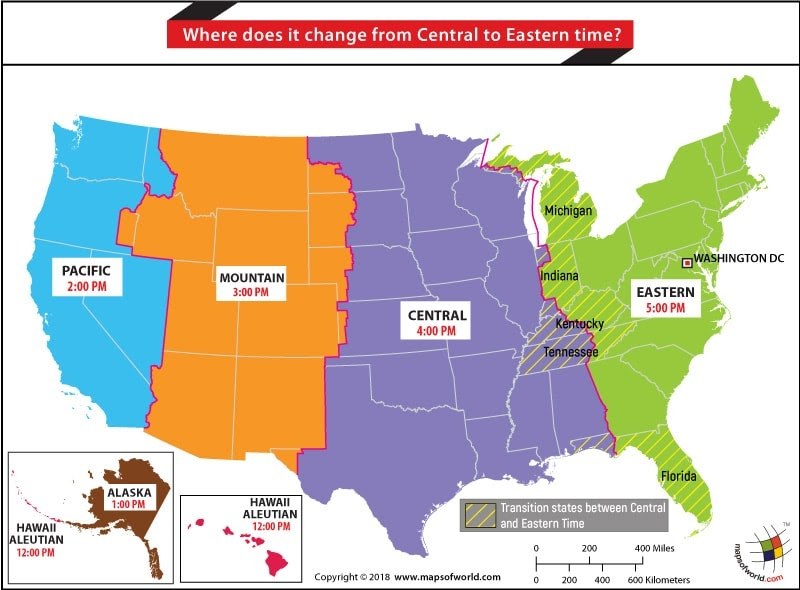
The shift to remote work has made the Central Time Zone a major player in the global tech talent market. Many US-based companies operate within the CDT window, requiring developers in Europe, Asia, and South America to align their “sprints” and “stand-ups” with this specific clock.
Managing Distributed Teams Across CDT and Beyond
Tech project management is heavily reliant on CDT as a benchmark. Many “Silicon Prairie” companies (tech firms based in the Midwest) use CDT as their operational baseline. For a developer in London, working with a team in Chicago means navigating a 6-hour gap. Tech leaders use tools like World Time Buddy or integrated Slack timezone features to visualize these gaps. The challenge isn’t just knowing the time in CDT, but understanding “overlap hours”—the window where both teams are online to collaborate on code reviews and deployments.
Avoiding Data Integrity Issues with ISO 8601 Standards
In software engineering, representing CDT must follow the ISO 8601 standard to avoid ambiguity. A timestamp like 2023-10-25T14:30:00-05:00 explicitly tells the system that it is 2:30 PM with a 5-hour offset from UTC. If a tech stack fails to use these standards, “What time is it now” becomes a dangerous question. Database logs could show events happening in the future or the past relative to the server’s local time. By strictly adhering to ISO standards, tech professionals ensure that logs, user activity, and security audits remain chronologically accurate regardless of where the server or the user is located.
Tools and Apps for Masterful Time Management
As the demand for precision increases, a new suite of “time-tech” tools has emerged to help users and professionals manage their relationship with CDT.
Digital Productivity Tools for CDT-Focused Operations
Productivity software has evolved beyond the simple calendar. Apps like “Cron” (now Notion Calendar) or “Morgen” allow users to overlay multiple timezones, making it easy to see how 9:00 AM CDT translates to other regions. For tech freelancers charging by the hour, time-tracking software like Toggl or Harvest automatically adjusts for CDT transitions, ensuring that billing is accurate even on the day when the clocks change. These tools remove the cognitive load of manual calculation, allowing professionals to focus on deep work rather than arithmetic.
Leveraging AI for Intelligent Scheduling
The latest trend in time-tech is the use of Artificial Intelligence to manage timezone conflicts. AI-driven scheduling assistants like Reclaim.ai or Clockwise analyze the “CDT now” status of all participants in a meeting request. They look for “Focus Time” blocks and automatically suggest the optimal meeting time that respects the work-life balance of participants across different zones. If a server goes down at 3:00 AM CDT, AI monitoring tools like PagerDuty identify which on-call engineer is currently in a daytime timezone to handle the alert, reducing the need to wake up local staff.
Future Trends: Decentralized Time and the End of DST?
The tech industry is currently at the forefront of a movement to change how we perceive and use timezones like CDT. There is a growing tension between traditional daylight saving practices and the needs of a 24/7 digital economy.
The Push for Permanent Standard Time in the Tech Sector
Many tech advocates argue for the abolition of Daylight Saving Time in favor of a permanent standard. The biannual “clock flip” is responsible for an increase in software bugs and scheduled task failures. In the legislative world, the “Sunshine Protection Act” has seen support from tech-heavy regions, as it would make CDT (or its standard equivalent) the year-round benchmark. For the tech sector, this would mean one less variable to account for in codebases, leading to more stable and predictable systems.

Cloud Computing and the Virtualization of Time
As we move toward a “serverless” future with platforms like AWS Lambda or Google Cloud Functions, the concept of a “local” time like CDT is becoming virtualized. In a serverless environment, your code might run in a data center in Iowa (CDT) for one request and in Virginia (EDT) for the next. This virtualization forces a shift toward “Time-as-a-Service.” In the future, we may see applications that don’t care about CDT at all, operating entirely on high-precision “Logical Clocks” or vector clocks that track the order of events rather than the wall-clock time.
In conclusion, “What time is CDT now” is a portal into the complex world of digital synchronization. From the NTP protocols that keep our servers aligned to the AI tools that manage our calendars, time is the invisible thread that holds the tech industry together. By understanding and mastering the technical aspects of Central Daylight Time, we can build more resilient systems and more efficient global teams, ensuring that our digital world stays perfectly in sync.
aViewFromTheCave is a participant in the Amazon Services LLC Associates Program, an affiliate advertising program designed to provide a means for sites to earn advertising fees by advertising and linking to Amazon.com. Amazon, the Amazon logo, AmazonSupply, and the AmazonSupply logo are trademarks of Amazon.com, Inc. or its affiliates. As an Amazon Associate we earn affiliate commissions from qualifying purchases.