
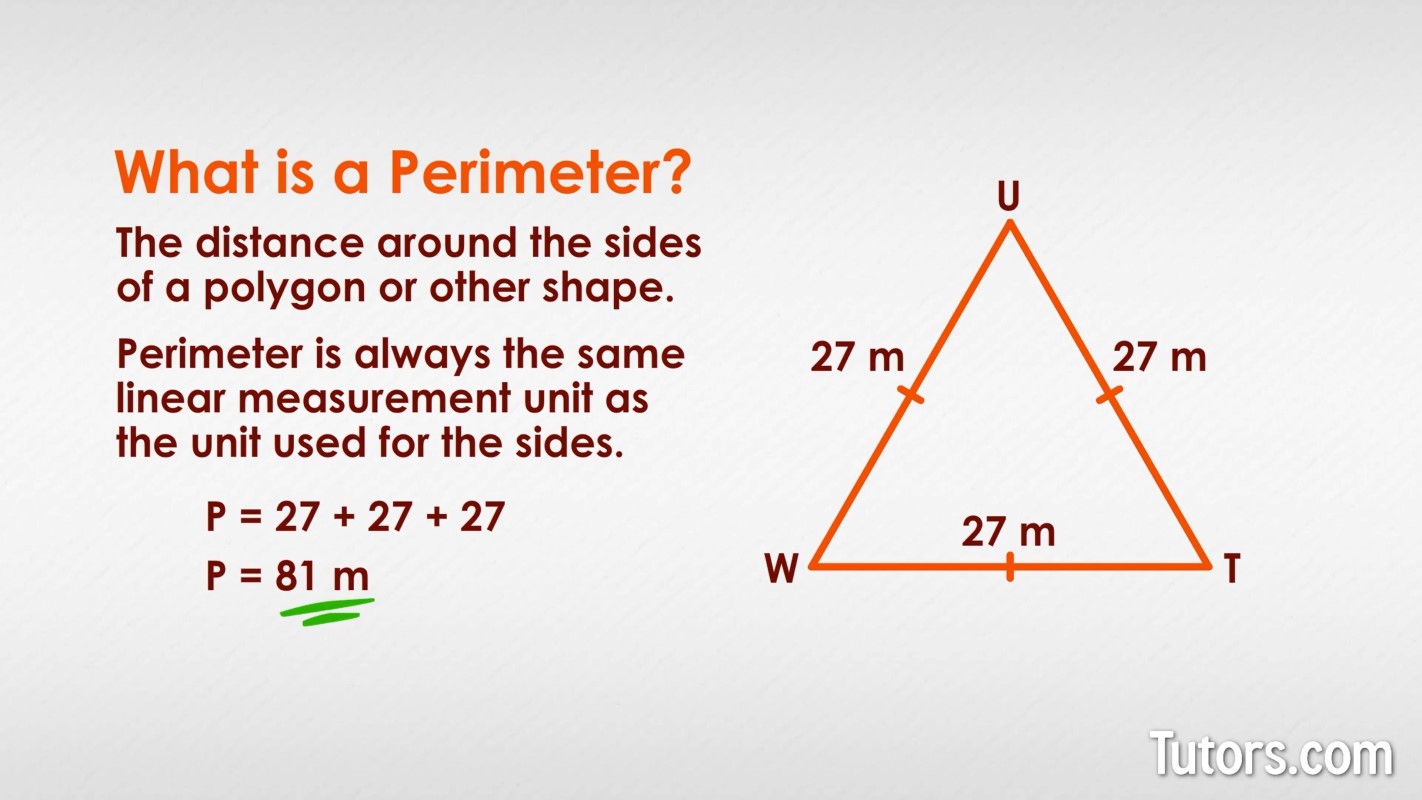
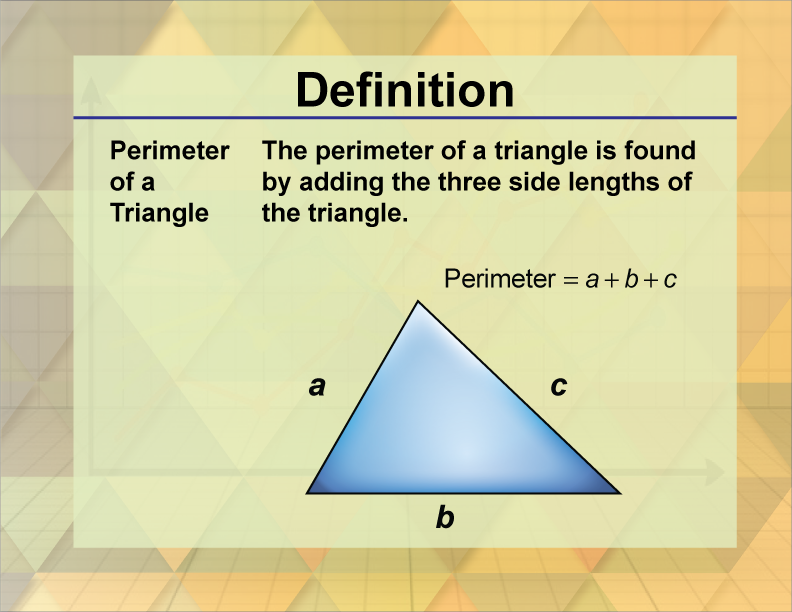
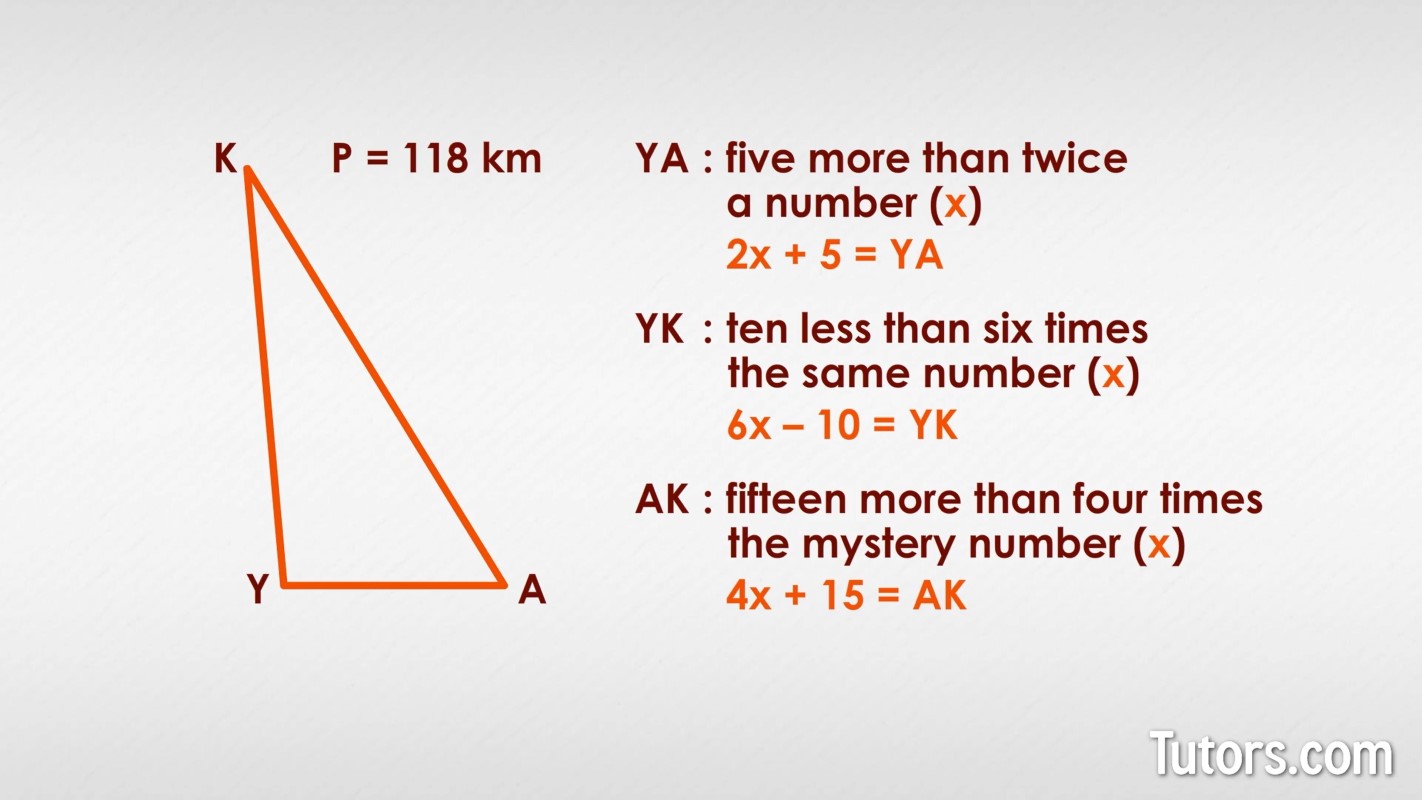
In the realm of mathematics, the question “what is the perimeter of a triangle” yields a simple answer: the sum of its three sides. However, in the rapidly evolving landscape of technology, this fundamental geometric concept serves as a cornerstone for everything from computer graphics and game engine physics to architectural software and artificial intelligence. When we transition from a chalkboard to a digital environment, calculating the perimeter of a triangle becomes an exercise in algorithmic efficiency, coordinate geometry, and data precision.
For software engineers, data scientists, and digital designers, understanding the perimeter of a triangle is not just about basic addition; it is about how we represent physical space within a binary system. This article explores the technical implementation of geometric boundaries and the critical role they play in the modern tech stack.
The Fundamentals of Geometric Computation in Digital Environments
Before a software program can calculate a perimeter, it must first define what a triangle is within a digital space. Unlike physical triangles, digital triangles are often defined by vertices—points in a two-dimensional or three-dimensional coordinate system.
Defining the Perimeter in Digital Space
In a standard software application, a triangle is rarely just three lengths ($a, b, c$). Instead, it is a set of coordinates: $P1(x1, y1)$, $P2(x2, y2)$, and $P3(x3, y3)$. To find the perimeter, the system must first perform a series of calculations using the distance formula, derived from the Pythagorean theorem. The distance between any two points is the square root of $(x2 – x1)^2 + (y2 – y1)^2$.
In tech, the “perimeter” represents the boundary or the “limit” of a specific polygon. This is essential for user interface (UI) design, where “hitboxes” or clickable areas are defined by these geometric boundaries. If a developer is building a custom vector graphics engine, the perimeter calculation is a high-frequency operation that must be executed with minimal latency.
The Role of Triangulation in 3D Modeling
In the world of 3D modeling and CAD (Computer-Aided Design) software, triangles are the fundamental building blocks of complex surfaces. This process, known as “tessellation” or “triangulation,” breaks down intricate objects into millions of tiny triangles.
Why is the perimeter relevant here? When calculating the surface area or the structural integrity of a 3D-printed part, the cumulative perimeter of the mesh triangles dictates how the “slicing” software generates the toolpath for the printer. The perimeter defines the outer shell of the object, influencing both the material usage and the digital rendering speed.
Implementing Perimeter Logic in Software Development
When we move from the concept to the code, the “perimeter of a triangle” becomes a function. Writing this function requires a consideration of algorithmic complexity and the specific needs of the application.
Algorithmic Efficiency: O(1) vs. Complex Mesh Calculations
For a single triangle, the perimeter calculation is an $O(1)$ operation—it takes constant time. However, in modern video games or geographical information systems (GIS), a program may need to calculate the perimeters of millions of triangles per second to handle real-time rendering or terrain analysis.
# A simple Python implementation using coordinate geometry
import math

def calculate_perimeter(p1, p2, p3):
    side1 = math.sqrt((p2[0] - p1[0])**2 + (p2[1] - p1[1])**2)
    side2 = math.sqrt((p3[0] - p2[0])**2 + (p3[1] - p2[1])**2)
    side3 = math.sqrt((p1[0] - p3[0])**2 + (p1[1] - p3[1])**2)
    return side1 + side2 + side3
In high-performance tech environments, developers often use SIMD (Single Instruction, Multiple Data) instructions to calculate these perimeters in parallel, leveraging the power of the GPU (Graphics Processing Unit) rather than the CPU.
Handling Floating-Point Precision in Geometric Apps
One of the greatest challenges in digital geometry is “floating-point errors.” In mathematics, $sqrt{2}$ is an exact value. In software, it is an approximation. When a tech tool calculates the perimeter of a triangle millions of times, these tiny errors can accumulate, leading to “gaps” in a 3D model or errors in a digital map.
Modern software frameworks, like those used in aerospace engineering or autonomous vehicle navigation, use high-precision data types and “epsilon” values (a tiny margin of error) to ensure that the perimeter and boundary calculations remain logically consistent across different hardware architectures.
The Perimeter in Computer Graphics and Game Engines
In game engines like Unreal Engine 5 or Unity, the perimeter of a triangle is more than just a measurement; it is a vital component of the physics engine.
Collision Detection and Bounding Boxes
When a character in a video game walks into a wall, the game calculates if the character’s boundary has intersected with the wall’s boundary. Most 3D objects are wrapped in “bounding volumes.” While some are boxes, many use “triangle meshes” for higher precision.
The perimeter of these triangles defines the “edge” where a collision occurs. If the perimeter logic is flawed, characters might “clip” through walls or fall through the floor. Developers use the perimeter to determine edge-case scenarios in physics, such as whether a projectile hit the exact edge of a shield or passed by it.
Texture Mapping and UV Unwrapping
To put a “skin” or texture on a 3D model, developers use a process called UV unwrapping. This projects a 3D triangle onto a 2D plane. To ensure the texture doesn’t look stretched or distorted, the perimeter of the 2D triangle must maintain a proportional relationship to the perimeter of the 3D triangle. Software tools like Adobe Substance or Blender use complex algorithms to ensure these perimeters align, maintaining visual fidelity in high-end digital environments.
AI and Machine Learning in Shape Recognition
With the rise of Artificial Intelligence and Computer Vision, the perimeter of a triangle has moved from a static calculation to a dynamic recognition task.
Computer Vision: Calculating Boundaries in Real-Time
In autonomous driving or robotic manufacturing, AI systems use cameras to “see” the world. These systems perform “image segmentation,” where they identify shapes within a frame. If a self-driving car identifies a triangular “Yield” sign, it must calculate its perimeter and area to determine its distance and orientation relative to the vehicle.
Computer vision libraries, such as OpenCV, use edge detection algorithms (like Canny edge detection) to find the perimeter of shapes in a digital image. This is done by identifying pixels where there is a sharp change in brightness, effectively “drawing” the perimeter of the object in the computer’s memory.
Neural Networks and Geometric Feature Extraction
In deep learning, “Convolutional Neural Networks” (CNNs) are trained to recognize geometric features. While we don’t manually program the perimeter formula into a neural network, the network learns to identify the “edges” (the perimeter) as a primary feature. This is used in medical imaging to detect the boundaries of tumors or in satellite imagery to outline the perimeters of buildings and agricultural land.
Future Trends: Geometric Security and Quantum Topology
As we look toward the future of technology, the way we calculate and utilize geometric perimeters is becoming even more sophisticated.
Geometric Cryptography
One emerging field is “lattice-based cryptography,” which is being developed as a defense against quantum computer attacks. This involves complex geometry where the “distance” or “perimeter” within high-dimensional shapes forms the basis of encryption keys. Understanding the boundaries of these geometric structures is the key to securing the digital world of tomorrow.
Quantum Computing and Complex Topology
In quantum computing, researchers are exploring “topological qubits.” Unlike standard bits, these are defined by the geometric properties and boundaries of quantum states. Here, the “perimeter” or the loop of a particle’s path can determine its quantum state, leading to a future where geometric calculations are performed at the subatomic level to drive next-generation computing power.
Conclusion
“What is the perimeter of a triangle?” is a question that starts in a primary school classroom but ends in the most advanced labs in Silicon Valley. In the tech industry, the perimeter is a bridge between the physical world and the digital one. It is the logic that allows us to render beautiful landscapes in games, the data that guides autonomous drones, and the math that secures our most private data. As technology continues to advance, our ability to calculate, manipulate, and utilize these geometric boundaries will remain a fundamental skill in the digital age.
aViewFromTheCave is a participant in the Amazon Services LLC Associates Program, an affiliate advertising program designed to provide a means for sites to earn advertising fees by advertising and linking to Amazon.com. Amazon, the Amazon logo, AmazonSupply, and the AmazonSupply logo are trademarks of Amazon.com, Inc. or its affiliates. As an Amazon Associate we earn affiliate commissions from qualifying purchases.