
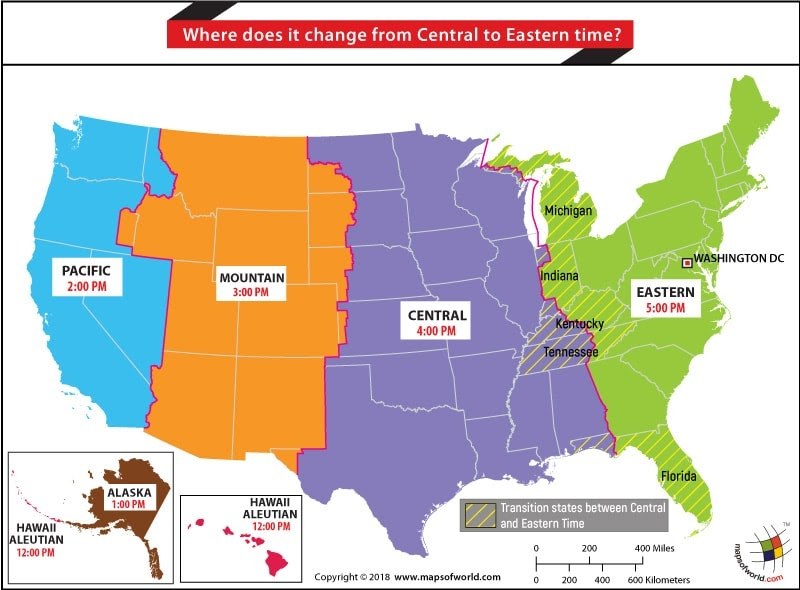
In our hyper-connected digital age, the question “What is the CST time right now?” is rarely just about a person checking their wristwatch before a meeting. For the modern technologist, time is a fundamental data point—a synchronized pulse that governs everything from database sharding and API authentication to high-frequency trading and cybersecurity protocols. Central Standard Time (CST), covering a massive vertical swath of North America including major tech hubs like Chicago, Dallas, and Austin, serves as a critical temporal anchor for global infrastructure.
Understanding CST within the context of technology requires looking beyond the wall clock. It involves understanding how distributed systems maintain a “source of truth,” how software handles the shifting sands of Daylight Saving Time, and why precision in timekeeping is the silent backbone of the modern internet.

The Architecture of Digital Time: From UTC to CST
To understand CST from a technical perspective, one must first understand Coordinated Universal Time (UTC). UTC is the primary time standard by which the world regulates clocks and time. CST is defined as an offset of UTC-6. When the region shifts to Central Daylight Time (CDT) during the summer months, the offset becomes UTC-5.
The Role of Network Time Protocol (NTP)
In the world of technology, keeping a server or a smartphone accurate to the millisecond is achieved through the Network Time Protocol (NTP). NTP is one of the oldest internet protocols still in use, designed to synchronize the clocks of computers over variable-latency data networks. When a user in the Central Time Zone queries their device for the time, a complex handshake occurs. The device queries an NTP server—often a Stratum 1 server connected directly to an atomic clock—to ensure that “CST” on that device matches the global standard within a fraction of a millisecond.
Hardcoding vs. Dynamic Time Zones
A common pitfall in early software engineering was “hardcoding” time offsets. Developers would simply subtract six hours from the system time to display CST. However, modern tech trends emphasize dynamic time zone management. Using libraries like Moment.js (now in maintenance) or the Intl.DateTimeFormat API in JavaScript, developers now rely on the IANA Time Zone Database. This database tracks the historical and future changes of time zones like America/Chicago, ensuring that software remains accurate even when governments change the dates for Daylight Saving Time.
Time Synchronization in Distributed Systems and Cloud Computing
As we move toward microservices and distributed architectures, the “CST time right now” becomes a critical factor in system consistency. If a database in a Dallas data center (CST) and a server in a London data center (UTC) are not perfectly synchronized, the results can be catastrophic for data integrity.
Database Consistency and Log Aggregation
In distributed databases like Google Spanner or CockroachDB, the “TrueTime” or “Logical Clock” mechanisms are vital. When a transaction occurs in the Central Standard Time zone, the system must timestamp that event with absolute precision. If logs from different regions are aggregated for debugging, a discrepancy of even a few seconds can make it impossible to reconstruct the sequence of events during a system failure. Tech professionals use CST as a regional reference point to ensure that local events correlate correctly with global logs.
The Challenge of “Wall Clock” vs. “Monotonic” Time
Tech stacks distinguish between “wall clock time” (which can jump forward or backward, such as during a leap second or a DST change) and “monotonic time” (which only moves forward). For performance profiling and latency measurements in CST-based data centers, developers rely on monotonic clocks. This prevents a “negative duration” error if a system update or time sync happens exactly while a process is being timed.
Cybersecurity and the Temporal Dimension of Defense

In the realm of digital security, time is a weapon and a shield. The accuracy of CST is not just a matter of convenience; it is a requirement for modern authentication and encryption.
Kerberos and Time-Based One-Time Passwords (TOTP)
Most corporate networks use the Kerberos authentication protocol. Kerberos has a “maximum clock skew” setting (usually five minutes). If a workstation in the CST zone has a clock that drifts too far from the Domain Controller, the user is locked out. Similarly, Multi-Factor Authentication (MFA) tools like Google Authenticator or Duo rely on TOTP. These codes are generated based on the current Unix timestamp. If your device’s understanding of CST is off by just a couple of minutes, the generated code will be invalid, highlighting how our access to digital assets is tethered to temporal accuracy.
Log Auditing and Forensic Analysis
When a security breach occurs, the first thing forensic analysts look at is the “Timeline of Compromise.” If a hacker accesses a server in Austin at 10:00 PM CST, but the security logs are recording in UTC or have drifted, the investigation can be derailed. Maintaining a synchronized CST reference across all regional endpoints allows security teams to map a path of lateral movement across a network with precision, providing the evidence needed for remediation and legal action.
CST as a Hub for Global Fintech and Trading
The Central Standard Time zone is home to some of the most time-sensitive technology in the world: the financial exchanges of Chicago. The Chicago Mercantile Exchange (CME) and the Chicago Board of Trade (CBOT) operate on a scale where microseconds equate to millions of dollars.
High-Frequency Trading (HFT) and Latency
In the world of High-Frequency Trading, the concept of “now” in CST is a competitive advantage. HFT firms spend millions on microwave towers and fiber optic cables to shave microseconds off the time it takes for a signal to travel between data centers. Here, the synchronization of time is handled by PTP (Precision Time Protocol), which is even more accurate than NTP, reaching sub-microsecond precision. For these systems, CST is the heartbeat of the market.
Regulatory Compliance and Time Stamping
Financial regulations, such as MiFID II, require that every trade be timestamped with extreme accuracy to prevent market manipulation like “front-running.” Tech teams in the financial sector must prove to regulators that their systems are synchronized to a traceable time source. For firms operating in the CST zone, this involves rigorous audits of their timekeeping infrastructure, ensuring that every packet of data can be traced back to the exact nanosecond it was processed.
The Human-Centric Tech: Scheduling and Remote Work
Finally, the relevance of CST extends to the software tools that facilitate the modern workplace. As remote work becomes the norm, the “CST time right now” is a constant calculation for project management and collaboration platforms.
Algorithmic Scheduling in SaaS
Tools like Slack, Zoom, and Calendly have sophisticated logic built into their backend to handle “time zone math.” When a developer in Berlin (CET) schedules a meeting with a product manager in Chicago (CST), the software must account for the seven-hour difference, but it must also account for the weeks when one region has switched to Summer Time and the other hasn’t. This “temporal UX” is a major focus for app developers, as errors in time conversion lead to missed opportunities and friction in the global economy.
Future Trends: AI and Predictive Timing
We are entering an era where AI doesn’t just react to the current time but predicts it. Predictive analytics engines, often hosted in CST-heavy regions like Texas’s growing “Silicon Hills,” use time-series data to forecast server load. By analyzing historical patterns based on Central Standard Time—such as when a massive population of users wakes up and begins checking emails—AI can preemptively scale cloud resources, demonstrating that time is not just a label, but a predictable variable in the tech lifecycle.
In conclusion, “What is the CST time right now?” is a query that initiates a cascade of technological events. From the NTP packets flying across the fiber optics to the sub-microsecond timestamps on a Chicago trading floor, CST is a vital component of the global tech stack. As our tools become more precise and our systems more distributed, our mastery over the digital representation of time will continue to be a defining factor in technological progress and security.
aViewFromTheCave is a participant in the Amazon Services LLC Associates Program, an affiliate advertising program designed to provide a means for sites to earn advertising fees by advertising and linking to Amazon.com. Amazon, the Amazon logo, AmazonSupply, and the AmazonSupply logo are trademarks of Amazon.com, Inc. or its affiliates. As an Amazon Associate we earn affiliate commissions from qualifying purchases.