
In the rapidly evolving landscape of modern technology, precision is the invisible force driving innovation. From the assembly of high-speed aerospace components to the delicate calibration of server racks in a data center, the difference between peak performance and catastrophic failure often comes down to a single measurement: torque. At the center of this world of precision is the torque wrench. While it may appear to be a simple hand tool to the uninitiated, the torque wrench is a sophisticated piece of engineering technology designed to apply a specific amount of rotational force to a fastener.
As we transition further into an era defined by high-tech manufacturing and automated systems, understanding the technology behind torque application is more critical than ever. A torque wrench is not merely a tool for tightening bolts; it is a high-precision instrument that ensures mechanical integrity, safety, and longevity in the world’s most advanced technological systems.
The Mechanics of Precision: How Torque Wrenches Redefine Modern Engineering
To understand what a torque wrench is from a technological perspective, one must first understand the physics of torque itself. Torque is a measure of the force that can cause an object to rotate around an axis. In mechanical engineering, when you tighten a bolt, you are essentially turning it into a very stiff spring. The tension created by this “stretching” of the bolt is what holds two components together. If the torque is too low, the connection is unstable. If it is too high, the material may undergo plastic deformation or total structural failure.
The Fundamental Physics of Torque
Technically speaking, torque is the cross-product of the force vector and the lever arm vector. In the context of a torque wrench, the tool allows a technician to measure this force in units such as Newton-meters (N·m) or pound-feet (lb·ft). The technology within the wrench is designed to provide a feedback mechanism—be it mechanical or digital—that signals when the desired threshold has been reached. This prevents the “over-torquing” phenomenon, which is a leading cause of hardware fatigue in high-tech machinery.
Why Precision Calibration Matters in Tech-Heavy Industries
In industries like robotics or semiconductor manufacturing, the margin for error is non-existent. For example, the fasteners within a robotic arm must be tightened to an exact specification to ensure that the sensors and actuators operate with micron-level repeatability. A torque wrench acts as the primary quality control device in these environments. Without the precision provided by these tools, the structural resonance of high-frequency tech equipment could cause fasteners to vibrate loose, leading to systemic hardware failure.
The Evolution of Torque Technology: From Beam Wrenches to Digital Innovations
The history of the torque wrench mirrors the history of industrial technology. What began as a simple mechanical lever has evolved into a sophisticated digital device capable of wireless data transmission and real-time monitoring. This evolution represents a shift from “analog intuition” to “data-driven precision.”
Analog Foundations: Beam and Click-Type Wrenches
The earliest form of torque technology was the beam wrench. This design utilizes the properties of material elasticity; as force is applied to the handle, the main beam flexes, while a separate indicator beam remains stationary, pointing to a scale. While simple, it provided the first technological leap toward measurable tightening.
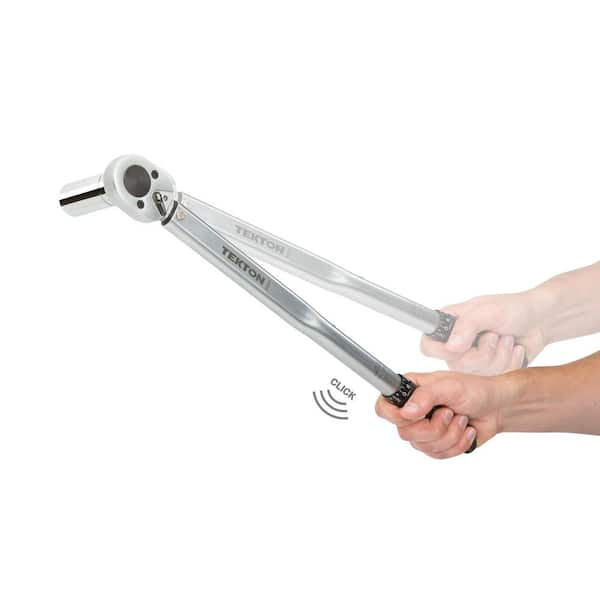
Following the beam wrench came the “click-type” wrench, which introduced a mechanical preset. Utilizing a spring-and-pawl mechanism, the tool produces an audible and tactile “click” when the internal spring tension is overcome by the applied force. This was a massive advancement in user interface technology for tools, allowing technicians to work faster without constantly monitoring a visual gauge.
The Digital Revolution: Electronic and Smart Torque Wrenches
In the modern tech era, the digital torque wrench has become the gold standard. These devices replace springs and beams with electronic strain gauges. A strain gauge is a sensor whose resistance varies with applied force. This change in resistance is converted into an electrical signal, processed by an onboard microprocessor, and displayed on an LCD screen.
Digital torque wrenches offer features that were previously impossible, such as:
- Angle Measurement: Measuring not just the force, but the degrees of rotation, which is critical for “torque-to-yield” fasteners used in modern high-performance engines.
- Visual and Haptic Alerts: LED light bars and vibration motors provide multi-sensory feedback to the user.
- Peak Mode vs. Track Mode: Tech tools can now record the maximum torque reached (Peak) or show the live force in real-time (Track).
IoT Integration and Data Logging in Industrial Maintenance
We are currently witnessing the integration of torque wrenches into the Internet of Things (IoT). “Smart” torque wrenches can now connect via Bluetooth or Wi-Fi to a central manufacturing execution system (MES). Every time a bolt is tightened, the tool logs the exact torque value, the time of application, and even the ID of the technician. This data-driven approach allows for “digital twinning” and exhaustive audit trails, ensuring that every component of a complex system—like a satellite or a wind turbine—is documented for its entire lifecycle.
Specialized Applications: Where High-Tech Hardware Meets Torque Precision
The importance of the torque wrench is most visible in sectors where technology is pushed to its absolute limits. In these niches, the tool is not just an accessory; it is a critical component of the assembly ecosystem.
Aerospace and Aviation Engineering
In aerospace technology, weight is the ultimate enemy. To save weight, engineers use exotic alloys and fasteners that are pushed to their maximum theoretical limits. This leaves a very narrow window for error. A torque wrench used in aircraft maintenance must be calibrated to extreme standards (often NIST-traceable) to ensure that airframe integrity is maintained under the intense thermal and pressure cycles of high-altitude flight.
High-Performance Electric Vehicle (EV) Assembly
The transition to EVs has introduced new challenges for torque technology. EV battery packs consist of thousands of individual cells and busbars. Because these components carry high-voltage electricity, the fasteners must be perfectly tightened to ensure low electrical resistance. A loose connection could lead to localized overheating and thermal runaway. Furthermore, many modern EV chassis use carbon fiber and aluminum composites, which are sensitive to over-tightening. Precision torque tools with “soft-stop” technology are essential to prevent fracturing these advanced materials.
Telecommunications and Data Center Infrastructure
As we build out 5G networks and massive data centers, the infrastructure supporting our digital world requires specialized mechanical assembly. Antenna arrays on cell towers are subject to high wind loads; the bolts securing them must be torqued to specifications that account for environmental vibration. In data centers, torque wrenches are used to secure high-density power distribution units (PDUs) where a single loose bolt could cause a spark, leading to catastrophic data loss and hardware damage.
Choosing the Right Tech: A Guide to Modern Torque Calibration Tools
For organizations looking to integrate precision torque tools into their workflow, the selection process is a matter of matching the tool’s technological capabilities to the specific requirements of the project.
Assessing Accuracy Ratings and ISO Standards
In the world of professional tech, not all torque wrenches are created equal. The most important metric is the accuracy rating, typically expressed as a percentage of the “Full Scale” (FS). High-end digital wrenches often boast accuracies of ±1% or ±2% clockwise. When selecting a tool for technical applications, one should look for compliance with international standards such as ISO 6789. This ensures that the tool has undergone rigorous testing and can maintain its calibration over thousands of cycles.
Ergonomics and User Interface in Digital Tools
The “User Experience” (UX) of a tool is a significant factor in technological efficiency. Modern torque wrenches are designed with ergonomic grips to reduce repetitive strain injuries in assembly line environments. Furthermore, the interface—how the data is presented—matters. Tools that offer “Target Torque” pre-programming allow a technician to cycle through different specifications for a complex assembly without ever leaving the workstation.

Future Horizons: AI and Augmented Reality (AR) Integration
The next frontier for torque technology is the integration of Augmented Reality. Imagine a technician wearing an AR headset that identifies the specific bolt they are looking at and overlays the required torque spec directly into their field of vision. The torque wrench, connected via Bluetooth, would then communicate with the headset to confirm when the task is complete. This fusion of hardware and software represents the future of mechanical maintenance, where human error is virtually eliminated through technological synergy.
In conclusion, a torque wrench is far more than a simple mechanical device; it is a sophisticated instrument of precision that sits at the intersection of physics, electronics, and digital data. Whether it is ensuring the safety of a commercial flight, the efficiency of a green energy grid, or the stability of a global data network, the technology within the torque wrench is a fundamental pillar of our modern, high-tech world. As we continue to build more complex and delicate systems, the role of this precision tool will only become more central to technological progress.
aViewFromTheCave is a participant in the Amazon Services LLC Associates Program, an affiliate advertising program designed to provide a means for sites to earn advertising fees by advertising and linking to Amazon.com. Amazon, the Amazon logo, AmazonSupply, and the AmazonSupply logo are trademarks of Amazon.com, Inc. or its affiliates. As an Amazon Associate we earn affiliate commissions from qualifying purchases.