
In the realm of personal and business finance, percentages are the fundamental language of measurement. Whether you are tracking the growth of a retirement portfolio, calculating the impact of inflation on your purchasing power, or determining the tax liability on a new investment, understanding how to find a percentage is the cornerstone of financial literacy. Percentages allow us to normalize data, making it possible to compare a small-cap stock’s performance against a blue-chip giant or to understand how a high-yield savings account stacks up against a treasury bond.

To master your money, you must move beyond the basic “part over whole” calculation and understand how percentages function across different financial instruments. This guide explores the essential methodologies for calculating percentages within the context of wealth management, debt reduction, and strategic business analysis.
The Foundations of Financial Percentages
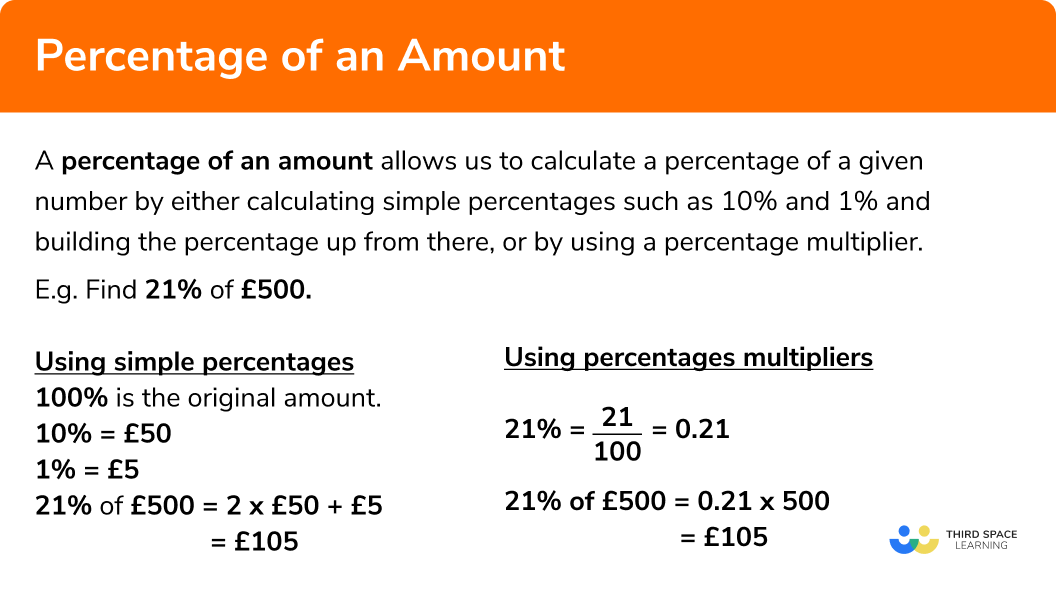
Before diving into complex yield curves or tax brackets, one must have a localized understanding of how a percentage represents a portion of a financial whole. In finance, a percentage is more than a number; it is a ratio that denotes the efficiency or cost of capital.
The Fundamental Formula for Financial Analysis
The basic formula for finding a percentage is simple: (Part / Whole) × 100. However, in a financial context, we often look for the “percentage change,” which is vital for tracking market volatility. To find the percentage increase or decrease of an asset, the formula is:
[(New Value – Old Value) / Old Value] × 100.
For example, if you purchased a share of a technology company at $150 and it is now trading at $180, your percentage gain is calculated by taking the $30 profit, dividing it by the original $150 investment, and multiplying by 100 to get a 20% return. This basic calculation is the building block for every major financial report, from quarterly earnings to personal net worth tracking.
Applying Percentages to Monthly Budgeting
One of the most practical applications of finding a percentage is the “50/30/20 Rule.” This is a foundational personal finance strategy that dictates how a household’s after-tax income should be allocated. To apply this, you must find the percentage of your total income that goes toward different categories:
- 50% for Needs: Housing, utilities, and groceries.
- 30% for Wants: Dining out, hobbies, and travel.
- 20% for Financial Goals: Debt repayment and savings.
By calculating these percentages monthly, you gain an objective view of your fiscal health. If your “Needs” category is consuming 65% of your income, finding that percentage allows you to identify exactly how much you need to reduce expenses or increase income to reach a sustainable financial equilibrium.
Measuring Investment Performance: ROI and Yield
For investors, finding a percentage is the primary way to measure the success of a capital allocation. Nominal dollar gains can be deceptive; a $1,000 profit is impressive on a $5,000 investment (20%), but mediocre on a $100,000 investment (1%).
Calculating Return on Investment (ROI)
ROI is the most common percentage used in the financial world. It evaluates the efficiency of an investment or compares the efficiencies of several different investments. To find the ROI percentage, you subtract the initial cost of the investment from its final value to find the “net profit,” then divide that profit by the initial cost.
In professional wealth management, we also look at “Annualized ROI.” If an investment returns 50% over ten years, its simple ROI is 50%, but its annualized percentage is much lower. Finding the annualized percentage is crucial because it allows investors to compare the performance of a real estate holding held for a decade against a mutual fund held for six months.
Understanding Dividend Yield and Capital Gains
Income investors focus heavily on “yield.” Finding the dividend yield percentage is essential for those seeking passive income. It is calculated by taking the annual dividends paid per share and dividing them by the share’s current price.
If a company pays $2.00 in annual dividends and the stock price is $50.00, the yield is 4%. This percentage allows an investor to compare the cash flow of a stock to the interest rate of a high-yield savings account. Without the ability to find this percentage, an investor might be lured by a high dollar-amount dividend that actually represents a low percentage return relative to the risk of the underlying asset.
Navigating Debt and Interest Rates
While percentages represent growth in investments, they represent the cost of borrowing in the world of debt. Finding the true percentage cost of a loan is the only way to effectively prioritize debt repayment.
Simple vs. Compound Interest
The most dangerous mistake a consumer can make is failing to understand how a percentage is applied over time. Simple interest is calculated only on the principal amount, while compound interest is calculated on the principal plus any accumulated interest.
When you are “finding a percentage” for a credit card balance, you are dealing with daily compounding. A 20% annual percentage rate (APR) is not simply 20% of your balance at the end of the year; it is a revolving charge that grows exponentially if only minimum payments are made. Understanding how to calculate the daily periodic rate (APR divided by 365) allows you to see exactly how much interest is accruing every 24 hours.
The Impact of Annual Percentage Rate (APR)
In the mortgage and auto loan industries, the “sticker price” interest rate is often lower than the APR. The APR is a more inclusive percentage that incorporates the interest rate plus any points, mortgage broker fees, and other charges that you pay to get the loan. When shopping for a mortgage, finding the APR percentage is the only “apples-to-apples” way to compare offers from different lenders. A loan with a 6.0% interest rate and high closing costs might actually have a higher APR than a 6.2% loan with no fees.
Taxes and Deductions: Finding Your Effective Rate
Taxation is perhaps the most complex area involving percentages. Many taxpayers are confused by the difference between their “tax bracket” and the actual percentage of their income that goes to the government.
Marginal vs. Effective Tax Rates
In a progressive tax system, your income is taxed at different percentages as it crosses certain thresholds. If you are in the “24% tax bracket,” you do not pay 24% on your entire income. Instead, you pay 10% on the first portion, 12% on the next, and so on.
To find your Effective Tax Rate, you take your total tax liability and divide it by your total taxable income. This single percentage is the most important number in tax planning. For example, a high-earning individual might be in the 37% marginal bracket but, through various deductions and credits, find their effective tax rate is only 22%. Finding this percentage is critical for determining how much to withhold from paychecks or set aside in estimated quarterly payments for business owners.
Calculating Sales Tax and Investment Discounts
On a more granular level, finding the percentage of sales tax or a discount on a financial product is a daily necessity. If an investment firm offers a “2% load” (a commission fee) on a mutual fund purchase, finding that percentage tells you exactly how much of your capital is being diverted away from the market and into the firm’s pockets before your money even begins to work for you.
Strategic Business Finance: Margin and Markup
For business owners and corporate finance professionals, finding percentages is the key to maintaining profitability. Two of the most frequently confused terms are “margin” and “markup,” yet they represent very different financial realities.
Gross Profit Margin Analysis
Gross profit margin is a percentage that shows the total revenue a company keeps after covering the direct costs associated with producing its goods or services. The formula is: [(Total Revenue – Cost of Goods Sold) / Total Revenue] × 100.
If a business sells a product for $100 and it costs $70 to make, the profit is $30. The gross margin is 30%. Finding this percentage is vital because it reveals the health of the business model. If the margin percentage starts to shrink over time, it indicates that production costs are rising faster than the company can raise prices, signaling a need for operational changes.
Calculating Business Growth Trajectories
Finally, finding the percentage of Year-over-Year (YoY) growth is the standard metric for assessing business momentum. Stakeholders look for consistent percentage increases in revenue, user acquisition, and net income. A company that grows by $1 million in revenue every year is actually slowing down in terms of percentage growth (moving from 100% growth to 50% growth, etc.). By finding the percentage of growth rather than the raw dollar amount, financial analysts can identify when a company is reaching market saturation and when it is time to pivot strategies.
In conclusion, finding a percentage is not merely a mathematical exercise; it is a diagnostic tool for financial success. Whether you are calculating the ROI of a stock, the APR of a loan, or the effective tax rate of your household, these percentages provide the clarity needed to make informed, professional financial decisions. Mastery of these calculations ensures that you are not just a spectator of your financial life, but an active manager of your economic future.
aViewFromTheCave is a participant in the Amazon Services LLC Associates Program, an affiliate advertising program designed to provide a means for sites to earn advertising fees by advertising and linking to Amazon.com. Amazon, the Amazon logo, AmazonSupply, and the AmazonSupply logo are trademarks of Amazon.com, Inc. or its affiliates. As an Amazon Associate we earn affiliate commissions from qualifying purchases.