
The landscape of survival gaming is littered with titles that enter “Early Access” and never emerge. However, few projects have undergone as radical a technological metamorphosis as 7 Days to Die. After more than a decade in Alpha development, the transition to what is colloquially known as “2.0”—officially branded as the Version 1.0 release—represents more than just a marketing milestone. It is a comprehensive overhaul of the game’s underlying software architecture, rendering pipelines, and procedural generation algorithms.
To understand what 7 Days to Die 2.0 is, one must look past the gameplay of scavenging and crafting and examine the technical engineering required to manage a fully destructible, voxel-based open world at scale.
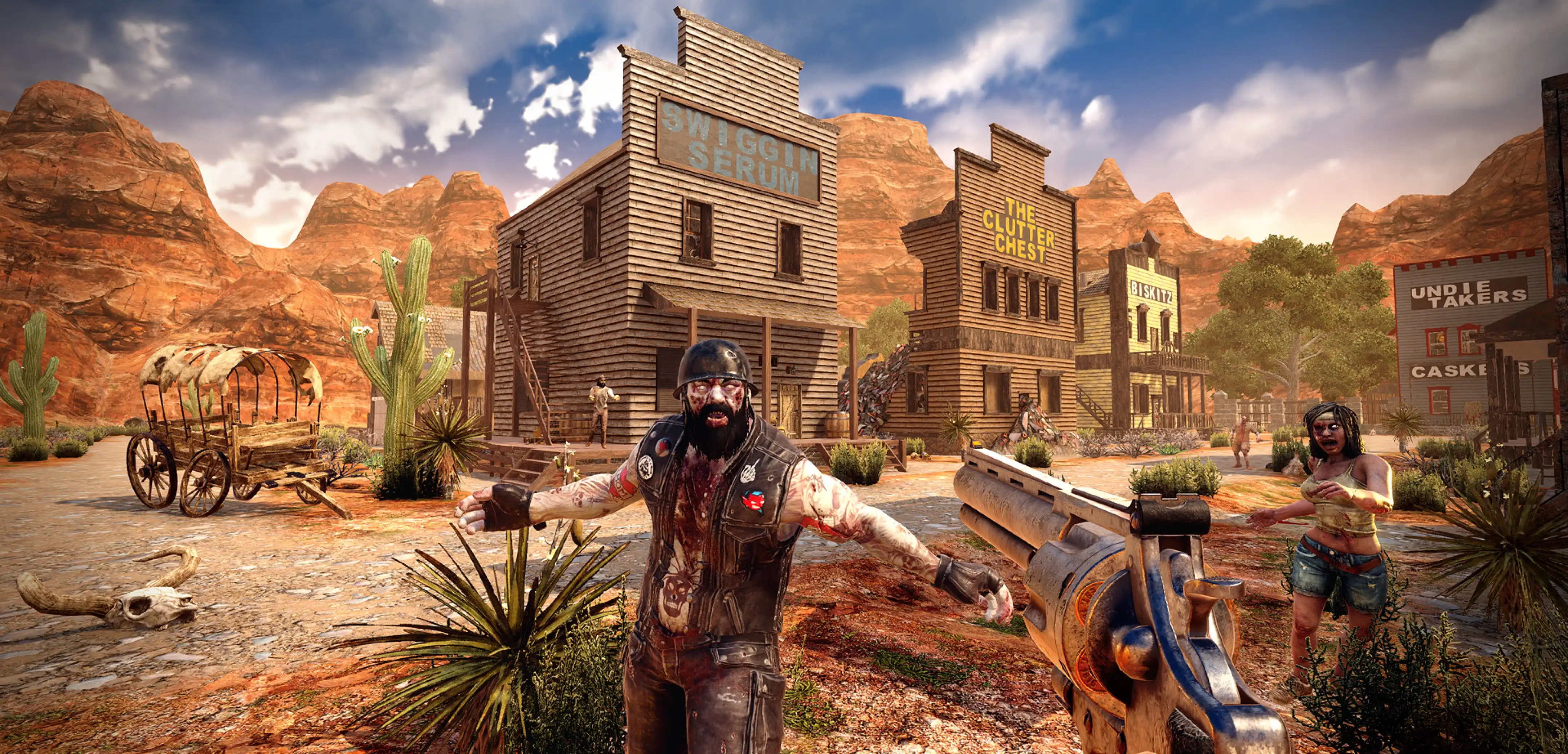
The Longest Alpha in Software History: From Voxel Experiments to 1.0
The journey of 7 Days to Die began in 2013, built on an early iteration of the Unity engine. At its inception, the game was a technical experiment: could a developer combine the structural physics of a voxel-based builder (like Minecraft) with high-fidelity 3D assets and complex AI? For years, the answer was a “work in progress” characterized by significant technical debt and performance bottlenecks.
Redefining Early Access Architecture
Early versions of the game struggled with memory leaks and inefficient data handling. Because every block in a 100-square-kilometer map can be destroyed or modified, the game must track millions of data points simultaneously. The “2.0” evolution represents a move toward a more “Data-Oriented Technology Stack” (DOTS) philosophy. This shift allows the software to handle larger quantities of entities—zombies, particles, and debris—without the exponential performance degradation seen in previous builds. By refactoring the core codebase, the developers at The Fun Pimps have moved from a “feature-first” development model to a “stability-first” infrastructure.
The Transition to the Version 1.0 Gold Standard
The jump to 1.0 is effectively the “2.0” of the game’s lifecycle. It introduces a unified codebase that bridges the gap between PC and next-generation consoles. In the tech world, maintaining parity between different hardware architectures is a monumental task, especially for a game with high CPU demands. The 2.0 era marks the point where the developers successfully optimized the engine’s multithreading capabilities, ensuring that the heavy lifting of physics calculations and world-loading is distributed more evenly across modern multi-core processors.
The Technological Backbone: Voxel Rendering and Procedural Generation
At the heart of 7 Days to Die 2.0 is its sophisticated handling of voxels. Unlike traditional games where the terrain is a static “mesh” that players simply walk over, this game’s world is entirely dynamic. If you dig a hole, the geometry of the world must update in real-time.
Optimized Random World Generation (RWG)
One of the most significant technical achievements in the 2.0 era is the “Random World Generation” (RWG) system. In earlier iterations, generating a new map could take upwards of thirty minutes and often resulted in broken terrain or “floating” structures. The latest tech stack utilizes improved deterministic algorithms to create realistic topography, road networks, and “Points of Interest” (POIs) in a fraction of the time. This system uses hierarchical stamping, where the engine first determines the biome and elevation, then carves out riverbeds, and finally places complex city grids, all while ensuring that the underlying voxel data remains consistent.
The Evolution of Structural Integrity Systems
Physics in a voxel world is notoriously difficult to calculate. In 7 Days to Die 2.0, the “Structural Integrity” (SI) system has been refined to prevent the immersion-breaking “infinite bridges” seen in other builders. The engine calculates the load-bearing capacity of every block. When a support beam is destroyed, the software must perform a recursive check of all connected blocks to determine if a collapse is triggered. The 2.0 update optimizes these calculations so they occur on a separate thread, preventing the “micro-stuttering” that used to plague the game during large-scale structural failures.
AI Pathfinding and Combat Mechanics 2.0
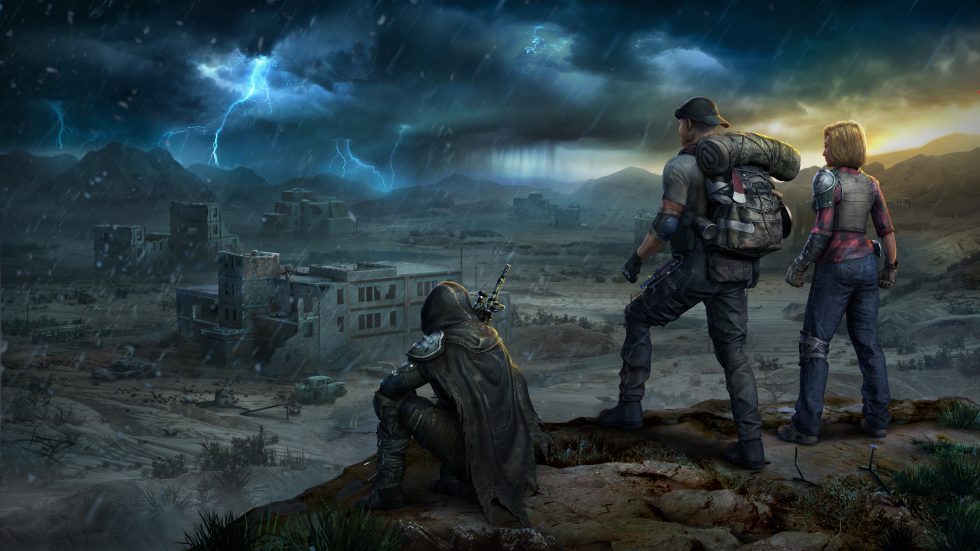
If the world is the body of the game, the AI is its nervous system. In a world where every wall can be broken, AI pathfinding cannot rely on static “navmeshes” used in traditional shooters.
Dynamic Pathing in Destructible Environments
The zombies in 7 Days to Die 2.0 utilize a sophisticated “A* Pathfinding” (A-star) algorithm that is updated in real-time as the environment changes. If a player builds a wall, the AI doesn’t just run into it; it calculates the “cost” of breaking through that wall versus finding an open window or a weaker door. This “tactical AI” is a significant tech leap, as it requires the software to constantly scan the immediate voxel neighborhood of the player to identify structural weaknesses. This creates a cat-and-mouse game between the player’s engineering and the engine’s problem-solving capabilities.
Performance Optimization for Large-Scale Hordes
The “Blood Moon” events—where dozens of enemies attack at once—are the ultimate stress test for the game’s engine. In the 2.0 framework, the developers implemented “entity pooling” and “LOD (Level of Detail) biasing” specifically for the AI. This means that zombies at a distance consume significantly fewer CPU cycles, with their animations and pathing complexity scaling up only as they enter the player’s immediate vicinity. This allows for much larger horde sizes than were technically possible in the Alpha years.
Graphic Overhauls and the New Rendering Pipeline
One of the most visible aspects of the 2.0 transition is the move toward a modern rendering pipeline. For years, the game was criticized for its “dated” look, a byproduct of using legacy shaders and low-resolution textures to save on performance.
High-Definition Asset Integration
With the 1.0/2.0 update, the developers have replaced thousands of legacy models with high-fidelity assets that utilize PBR (Physically Based Rendering) materials. PBR allows the game engine to simulate how light interacts with different surfaces—the matte finish of a rusted car, the glint of a steel blade, or the wetness of a muddy road—in a way that looks realistic under varying lighting conditions. This was made possible by optimizing the way the Unity engine handles “draw calls,” allowing more detail to be rendered on-screen without crashing the GPU.
Lighting, Shadows, and Atmospheric Effects
The environmental tech has also seen a massive upgrade. The 2.0 era introduces a global illumination system and improved volumetric fog. These aren’t just aesthetic choices; they are technical implementations that utilize “depth buffers” to create a sense of scale and atmosphere. The transition from day to night now involves dynamic shadow mapping, where the shadows of every individual tree and building elongate and shift based on the position of the light source, a task that is particularly taxing in a world where those trees and buildings can be removed at any moment.
The Future of Modular Game Design and Cross-Platform Synergy
The “2.0” designation finally brings the game into the modern era of software as a service (SaaS) and cross-platform compatibility. The technical groundwork laid in this version is designed to sustain the game for another decade.
Unified Codebases for Console and PC
Historically, the console version of 7 Days to Die was a separate product, handled by a third-party developer, which eventually led to a legal and technical dead end. The 2.0 transition fixes this by utilizing a unified codebase. By developing for PC and consoles (PlayStation 5 and Xbox Series X/S) simultaneously, The Fun Pimps can push updates, security patches, and new features across all platforms at once. This requires a modular design approach where the UI and input systems are abstracted from the core game logic, allowing the software to detect the hardware it’s running on and adjust its performance profile accordingly.
Long-term Support and the Software Lifecycle
What makes 7 Days to Die 2.0 a true “Tech” story is its resilience. It is a case study in how to modernize a legacy project without abandoning the original vision. By moving to Version 1.0, the developers have finalized the “core” of the engine, allowing future updates to focus on content rather than fixing fundamental architectural flaws. The game now supports advanced modding APIs, allowing the community to interface with the game’s code in more stable and powerful ways.
In conclusion, 7 Days to Die 2.0 is the realization of a decade’s worth of technical refinement. It represents the successful navigation of a software project through the “Valley of Death” that claims most Early Access titles. Through optimized voxel math, sophisticated AI pathing, and a modernized rendering pipeline, it has transformed from a clunky technical demo into a robust, high-performance survival platform. For the tech-minded observer, it is a testament to the power of iterative development and the enduring potential of the Unity engine when pushed to its absolute limits.
aViewFromTheCave is a participant in the Amazon Services LLC Associates Program, an affiliate advertising program designed to provide a means for sites to earn advertising fees by advertising and linking to Amazon.com. Amazon, the Amazon logo, AmazonSupply, and the AmazonSupply logo are trademarks of Amazon.com, Inc. or its affiliates. As an Amazon Associate we earn affiliate commissions from qualifying purchases.