
In the realm of personal and business finance, numbers are the primary language. However, raw data—such as a $500 profit or a $1,200 expense—rarely tells the full story on its own. To truly understand the health of an investment, the efficiency of a business, or the progress of a savings goal, we must look at the relationship between numbers. This is where the percentage becomes the most powerful tool in a financier’s toolkit.
Understanding how to calculate the percentage of two numbers is not just a mathematical exercise; it is a fundamental skill for financial literacy. Whether you are calculating the return on an investment (ROI), determining a discount during a sale, or analyzing corporate profit margins, the ability to manipulate these ratios allows you to make informed, data-driven decisions. This guide will walk you through the essential formulas and their real-world applications in the world of money.
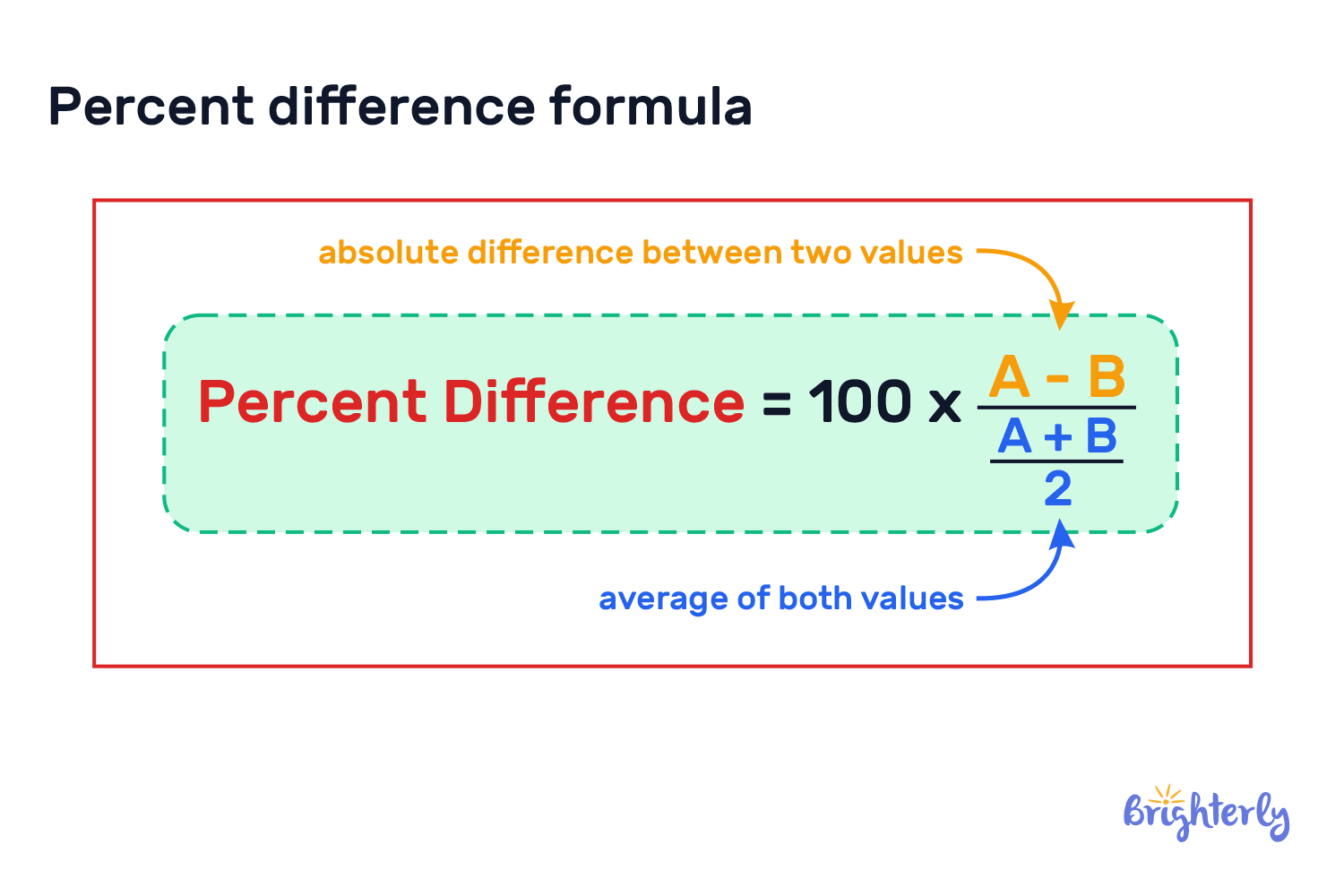
The Foundation of Financial Literacy: Understanding the Part and the Whole
At its core, a percentage is a way of expressing a number as a fraction of 100. In finance, this translates to understanding what portion of a “whole” amount (like total income or total capital) a “part” (like an expense or a dividend) represents.
The Basic Formula: (Part / Whole) x 100
To find the percentage that one number represents of another, you use a straightforward division and multiplication steps. The formula is:
Percentage = (Value / Total Value) × 100
For example, if your monthly take-home pay is $5,000 and your rent is $1,500, you calculate the percentage of your income spent on housing by dividing 1,500 by 5,000, which equals 0.3. Multiplying by 100 gives you 30%. In financial planning, this allows you to benchmark your spending against common standards, such as the “30% rule” for housing costs.
Identifying the “Base” Number in Financial Transactions
The most common mistake in financial calculations is selecting the wrong “whole” or base number. When calculating a sales tax, the base is the purchase price. When calculating a dividend yield, the base is the current stock price. In a business setting, identifying whether you are calculating a percentage of revenue or a percentage of cost is vital. If a product costs $80 to make and you sell it for $100, the $20 profit is 25% of the cost, but it represents only 20% of the total revenue. Knowing which base to use ensures that your financial reporting remains accurate and transparent.
Measuring Progress: Calculating Percentage Increase and Decrease
In the world of investing and wealth management, static numbers are less important than the direction and velocity of change. To measure how much your portfolio has grown or how much a stock has plummeted, you need the formula for percentage change.
Tracking Investment Growth Over Time
The formula for percentage increase or decrease is:
Percentage Change = [(New Value – Old Value) / Old Value] × 100
Consider an investment in a mutual fund. If you invested $10,000 last year (Old Value) and your balance is now $11,200 (New Value), the calculation would be ($11,200 – $10,000) / $10,000. This results in 0.12, or a 12% increase. This calculation is essential for comparing the performance of different asset classes. It allows an investor to see that a $1,200 gain on a $10,000 investment (12%) is actually more impressive than a $5,000 gain on a $100,000 investment (5%).
Calculating the Impact of Inflation on Purchasing Power
Inflation is the percentage increase in the price of goods and services over time, which conversely represents a percentage decrease in the purchasing power of your money. If a basket of goods cost $100 last year and costs $107 today, the inflation rate is 7%. For someone seeking “Online Income” or managing a “Side Hustle,” understanding this percentage is critical. If your side business’s revenue grew by 5% in a year where inflation was 7%, your “real” income—in terms of what it can actually buy—has actually decreased. Calculating these percentages helps you adjust your pricing or investment strategy to stay ahead of the curve.
Business Economics: Navigating Profit Margins and Markups

For entrepreneurs and business owners, percentages are the difference between a thriving enterprise and a failing one. Two of the most frequently confused but vital calculations are profit margins and markups.
Gross vs. Net Profit Margin Calculations
Profit margin tells you how many cents of every dollar in sales a company actually keeps in earnings.
- Gross Profit Margin = [(Revenue – Cost of Goods Sold) / Revenue] × 100
- Net Profit Margin = [Net Income / Revenue] × 100
If a business generates $500,000 in revenue and has a net income of $50,000 after all taxes and expenses, the net profit margin is 10%. Investors use this percentage to evaluate the efficiency of a company. A high net profit margin suggests a company has a “moat” or a competitive advantage, allowing them to keep costs low or prices high.
The Pitfalls of Confusing Markup with Margin
While “margin” is calculated based on the selling price, “markup” is calculated based on the cost price.
Markup = [(Selling Price – Cost) / Cost] × 100
If an item costs $50 to produce and you sell it for $100, the markup is 100%. However, the profit margin is only 50%. Confusing these two can lead to disastrous pricing errors. A business owner who wants a 25% profit margin but mistakenly applies a 25% markup will find themselves short of their financial targets, as a 25% markup only yields a 20% margin.
Debt and Interest: Decoding the Real Cost of Borrowing
Percentages can work for you (in investments) or against you (in debt). Understanding how interest rates are calculated is the key to minimizing the “Money” you lose to financial institutions.
Simple vs. Compound Interest Percentages
When you take out a loan or open a savings account, the interest rate is expressed as a percentage.
- Simple Interest is calculated only on the principal: Principal × Rate × Time.
- Compound Interest is calculated on the principal plus the accumulated interest of previous periods.
In the world of credit cards, percentages are often expressed as an Annual Percentage Rate (APR). Because credit cards compound interest monthly (or even daily), the “Effective Annual Rate” (EAR) is often higher than the advertised APR. By calculating the percentage of interest you are paying relative to your principal balance, you can prioritize which debts to pay off first—a strategy known as the “Avalanche Method,” where you target the highest percentage interest rate regardless of the balance size.
Calculating Tax Burdens and Effective Tax Rates
In personal finance, your “tax bracket” (the percentage of tax on your last dollar earned) is often different from your “effective tax rate” (the actual percentage of your total income that goes to the government).
Effective Tax Rate = (Total Tax Paid / Total Taxable Income) × 100
If you earn $100,000 and pay $15,000 in taxes, your effective rate is 15%, even if you are in a 24% marginal bracket. Knowing how to calculate this percentage allows you to accurately value tax-advantaged accounts like a 401(k) or an IRA, where the “savings” are essentially the percentage of tax you avoid paying today.
Strategic Tools for Precision: From Excel to Mental Shortcuts
While the formulas are simple, the application in complex financial environments often requires tools and quick-thinking strategies to maintain accuracy.
Using Spreadsheet Formulas for Financial Modeling
In modern finance, software like Excel or Google Sheets is indispensable. To calculate the percentage of two numbers in a cell, you simply use the formula =A1/B1 and then click the “Percent Style” button. For more complex financial tools, such as calculating the Internal Rate of Return (IRR) or the CAGR (Compound Annual Growth Rate), spreadsheets use these foundational percentage formulas to project future wealth. Mastering these digital tools allows you to perform “what-if” scenarios: “What happens to my retirement fund if my average annual return drops by just 1%?”

Mental Math Hacks for Quick Financial Decisions
Sometimes, you need to make a financial decision on the spot—like calculating a tip or evaluating a “limited time” discount.
- The 10% Rule: To find 10% of any number, simply move the decimal point one place to the left. If a bill is $84.00, 10% is $8.40. Doubling that gives you 20% ($16.80).
- The Rule of 72: This is a shortcut to see how long it takes for an investment to double. Divide 72 by the annual percentage return. At a 10% return, your money doubles in 7.2 years.
By internalizing these percentage calculations, you transform from a passive observer of your bank account into an active manager of your wealth. Whether you are analyzing a corporate balance sheet or a personal budget, the ability to calculate and interpret the percentage of two numbers is the bridge between having data and having financial wisdom.
aViewFromTheCave is a participant in the Amazon Services LLC Associates Program, an affiliate advertising program designed to provide a means for sites to earn advertising fees by advertising and linking to Amazon.com. Amazon, the Amazon logo, AmazonSupply, and the AmazonSupply logo are trademarks of Amazon.com, Inc. or its affiliates. As an Amazon Associate we earn affiliate commissions from qualifying purchases.