
In the rapidly evolving landscape of the 21st century, the term “flex” has transcended its origins as a physical description of muscle contraction. Within the technology sector, “flex” has become a multifaceted concept representing adaptability, responsiveness, and structural resilience. From the way websites are coded to the physical composition of our smartphones, understanding what “flex” means is essential for anyone navigating the digital frontier. In a tech context, “flex” refers to the ability of a system—whether software, hardware, or infrastructure—to adjust its parameters dynamically to meet changing demands without compromising performance.
The Foundation of Web Layouts: Understanding CSS Flexbox
At the heart of the modern internet lies a crucial layout model known as the CSS Flexible Box Layout, commonly referred to as “Flexbox.” Before its introduction, web developers struggled with complex layouts, often relying on “floats” and “tables” that were notoriously difficult to manage across different screen sizes. When a developer asks, “What does flex mean?” in a coding environment, they are referring to a one-dimensional layout method for arranging items in rows or columns.
The Problem of Responsive Design
In the early days of mobile browsing, websites were static. A site designed for a desktop monitor would look broken on a smartphone. The industry needed a way for containers to “flex” their dimensions to fill available space or shrink to prevent overflow. Flexbox solved this by providing a logic where the parent container (the flex container) could alter its items’ width, height, and order to best fit the available space.
Key Mechanics: Axes and Alignment
To understand Flexbox, one must understand the main axis and the cross axis. Unlike traditional layouts, Flexbox allows for effortless alignment. Properties such as justify-content and align-items give developers surgical precision over how whitespace is distributed. This “flexing” of space ensures that a navigation bar or a photo gallery looks professional and remains functional whether viewed on a 30-inch ultra-wide monitor or a 5-inch handheld device.
Impact on User Experience (UX)
The meaning of “flex” in web development is ultimately about the end-user. By utilizing flexible layouts, developers ensure that information is accessible and readable. It eliminates the need for horizontal scrolling and ensures that interactive elements like buttons are always within reach. In this niche, “flexing” is the silent engine behind the seamless browsing experience we now take for granted.
Hardware Innovation: The Rise of Flexible Displays and Electronics
While “flex” defines the logic of software, it is also revolutionizing the physical world of hardware. For decades, consumer electronics were defined by their rigidity—glass, metal, and plastic components that were prone to cracking or breaking under pressure. Today, “flex” refers to a new generation of materials that allow devices to bend, fold, and roll.
OLED and the Foldable Revolution
The most visible manifestation of “flex” in hardware is the Flexible Organic Light-Emitting Diode (OLED). Unlike traditional LCDs that require a rigid backlight, OLED pixels emit their own light and can be printed on flexible substrates like plastic or metal foil. This technology is what allows companies to manufacture foldable smartphones and rollable televisions. In this context, “flex” means the convergence of durability and portability, allowing a tablet-sized screen to be folded into a pocket-sized device.
Wearable Tech and Electronic Skin (E-Skin)
Beyond smartphones, the concept of “flex” is pushing the boundaries of medical technology and wearables. Engineers are currently developing “flexible electronics”—circuits that can be applied directly to the skin like a temporary tattoo. These flexible sensors can monitor heart rate, glucose levels, or muscle activity without the bulk of traditional hardware. Here, “flex” signifies a future where technology is no longer a tool we carry, but a subtle, flexible extension of the human body.
Challenges in Flexible Engineering
Despite the excitement, “flexing” hardware presents significant engineering hurdles. Repeated bending causes stress on materials, leading to fatigue and eventual failure. To “flex” effectively, every component—including the battery, the motherboard, and the protective casing—must be reimagined. The tech industry is currently in a race to discover the most resilient polymers and hinge mechanisms that can withstand hundreds of thousands of “flexes,” defining the next era of mechanical reliability.
Cloud Computing and Infrastructure: The Concept of Resource Flexing

In the realm of enterprise technology and DevOps, “flex” takes on a more abstract but equally vital meaning. It refers to “Elasticity” or “Scalability”—the ability of a cloud infrastructure to expand or contract its computing resources based on real-time traffic. This is often referred to as “resource flexing.”
Auto-scaling and Load Balancing
Imagine an e-commerce platform during a Black Friday sale. Under normal conditions, the servers handle a steady flow of traffic. However, during a peak event, the traffic might increase by 1,000%. A rigid infrastructure would crash. A “flex” infrastructure uses auto-scaling to automatically spin up new virtual servers to handle the load. When the rush is over, the system “flexes” back down to its original size. In this niche, “flex” means operational resilience and cost-efficiency.
The Move to Serverless Computing
The ultimate “flex” in cloud architecture is serverless computing (Function as a Service). In this model, developers do not manage servers at all. The cloud provider dynamically manages the allocation of machine resources. The “flex” here is instantaneous; the code only runs when triggered, and the resources used are exactly proportional to the task at hand. This removes the “rigidity” of paying for idle server time, allowing businesses to “flex” their budgets more effectively.
Hybrid Cloud and Multi-Cloud Flexibility
For large corporations, “flex” also describes the strategy of using multiple cloud providers (like AWS, Azure, and Google Cloud) simultaneously. This prevents “vendor lock-in.” If one provider experiences an outage, the company can “flex” its operations over to another provider. This strategic flexibility is a cornerstone of modern digital security and business continuity planning.
Artificial Intelligence: Cognitive Flexibility and Adaptive Algorithms
As we move into the era of Artificial Intelligence, “flex” is beginning to describe the internal logic of machine learning models. Unlike traditional software that follows a rigid “if-then” logic, modern AI is designed with a degree of “flexibility” that allows it to learn from new data and adapt its outputs.
Neural Network Adaptability
In deep learning, the “flex” occurs within the neural networks. During the training phase, the weights and biases of the model are adjusted (flexed) to minimize error. This allows the AI to recognize patterns it has never seen before. A truly flexible AI model can generalize its knowledge, applying what it learned in one context (e.g., recognizing cats) to another (e.g., recognizing tigers).
Generative AI and Multimodal Flexibility
The latest breakthrough in AI is “multimodal flexibility.” This refers to a single model’s ability to process and generate different types of data—text, images, audio, and code. For instance, a flexible large language model (LLM) can “flex” between acting as a creative writer, a debugger for Python code, and a translator for ancient Greek. This versatility is the hallmark of the current “AI flex,” where the power of a tool is measured by the breadth of its applications.
The Cultural Tech “Flex”: Status Signaling through Specifications
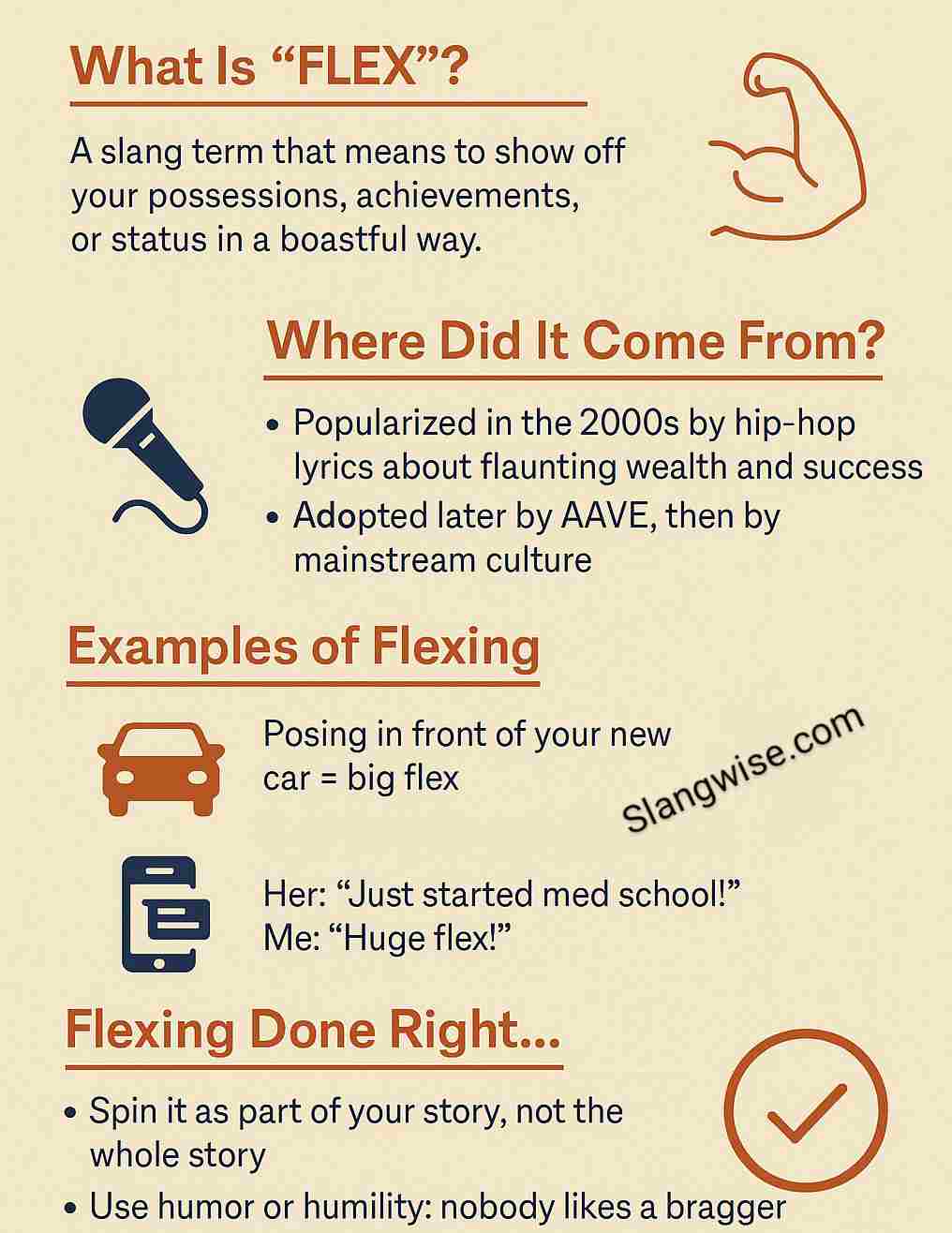
Finally, we cannot ignore the social dimension of technology. In the tech community, the term “flex” is often used as a verb to describe the act of showcasing high-end specifications or exclusive access. While this borders on social behavior, it is deeply rooted in tech culture and product marketing.
Spec Culture and Performance Benchmarking
For PC builders and gamers, “flexing” involves displaying a rig with the latest GPU, liquid cooling, and overclocked processors. In this subculture, “to flex” means to demonstrate technological superiority through benchmarks and performance metrics. It is a celebration of “bleeding-edge” technology, where having the highest “flex” capacity (processing power) is a point of pride.

Exclusivity and Beta Access
In the software world, a “flex” might be having access to a highly restricted private beta or a “pro” tier of a groundbreaking tool before it goes mainstream. This form of “flexing” highlights the social capital associated with being an early adopter. Whether it is a “founder’s badge” on a new social platform or a low-digit user ID on a developer forum, these digital markers are the modern “flex” of the tech-savvy elite.
In conclusion, “what does flex mean” in the tech world is a question with many answers, all of which point toward a common theme: the rejection of rigidity. Whether it is the fluid layout of a website, the foldable screen of a smartphone, the elastic nature of cloud servers, or the adaptive intelligence of an AI, “flex” is the defining characteristic of innovation. It represents the transition from a world of fixed constraints to a world of infinite, dynamic possibilities.
aViewFromTheCave is a participant in the Amazon Services LLC Associates Program, an affiliate advertising program designed to provide a means for sites to earn advertising fees by advertising and linking to Amazon.com. Amazon, the Amazon logo, AmazonSupply, and the AmazonSupply logo are trademarks of Amazon.com, Inc. or its affiliates. As an Amazon Associate we earn affiliate commissions from qualifying purchases.