
In the rapidly evolving world of technology, we often marvel at the latest smartphone application, the speed of a new cloud computing service, or the uncanny capabilities of generative artificial intelligence. Yet, beneath the slick user interfaces and the complex lines of code lies a physical world governed by the movement of electrons. At the heart of this world is the electrical engineer.
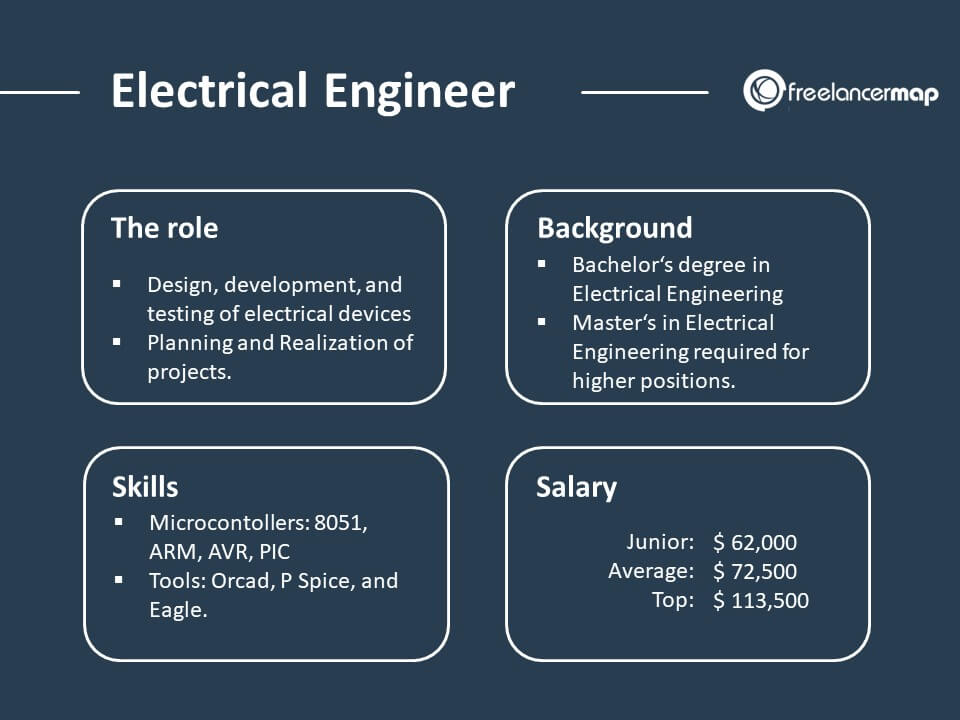
Often described as the architects of the modern digital age, electrical engineers design, develop, and supervise the manufacturing of electrical equipment. However, in the context of today’s tech industry, their role has expanded far beyond traditional power grids. They are the bridge between theoretical physics and functional hardware, ensuring that the software we rely on has a fast, reliable, and efficient physical home.
The Architect of Hardware: Designing the Foundation of Modern Devices
Every piece of technology, from the wearable fitness tracker on your wrist to the massive servers housing the global internet, begins with the work of an electrical engineer. Their primary responsibility is to create the hardware infrastructure that allows digital information to exist.
Integrated Circuits and Microprocessors
The most critical component of modern tech is the integrated circuit (IC), or the “chip.” Electrical engineers specializing in Very Large Scale Integration (VLSI) design these microscopic landscapes. They determine how billions of transistors are arranged on a sliver of silicon to perform logic operations. Without the innovation of electrical engineers in optimizing these circuits, the trend of “Moore’s Law”—the doubling of transistors on a chip every two years—would have stalled decades ago. They work to reduce heat, increase processing speed, and minimize power consumption, which is essential for the longevity of mobile devices.
Consumer Electronics and Gadgetry
When we look at the latest gadgets, we see the results of complex PCB (Printed Circuit Board) design. Electrical engineers are responsible for the layout of these boards, ensuring that signals travel between components without interference. This involves a deep understanding of electromagnetic compatibility (EMC). If you’ve ever wondered why your phone doesn’t malfunction when it’s near a Wi-Fi router or a microwave, it is because an electrical engineer meticulously designed the shielding and circuit paths to prevent “noise” from disrupting the device’s functionality.
Driving the Digital Revolution: Infrastructure and Telecommunications
While some electrical engineers focus on the devices in our hands, others focus on the invisible threads that connect them. The tech niche of telecommunications is perhaps the most significant contribution of electrical engineering to the 21st century.
Signal Processing and Data Transmission
At its core, the internet is a series of electrical and optical signals. Electrical engineers develop the algorithms and the hardware required for signal processing. This involves converting analog data (like your voice or a physical image) into digital bits and then back again at the destination. They work on the modulation techniques that allow data to be sent over copper wires, fiber-optic cables, and through the air via radio waves. Their goal is to maximize bandwidth—the “width” of the pipe—so that 4K video streams and massive data transfers can happen instantaneously.
The Role in 5G and Future Networking
The rollout of 5G technology is a landmark achievement for electrical engineering. This generation of connectivity requires a complete overhaul of hardware, utilizing millimeter waves and massive MIMO (Multiple Input, Multiple Output) antenna arrays. Electrical engineers design the base stations and the specialized modems within our devices that can handle these high frequencies. They are already looking toward 6G, exploring how terahertz frequencies can enable the “Internet of Everything,” where billions of devices are connected with near-zero latency.
The Intersection of Electrical Engineering and AI Tools
The rise of Artificial Intelligence (AI) is often viewed as a software revolution. However, software is limited by the hardware it runs on. Electrical engineers are currently at the forefront of the AI arms race, creating the specialized environments needed for machine learning to thrive.

Hardware Acceleration for Artificial Intelligence
Standard CPUs (Central Processing Units) are not optimized for the massive parallel mathematical operations required by deep learning. Electrical engineers have stepped in to design GPUs (Graphics Processing Units) and TPUs (Tensor Processing Units). These are specialized hardware accelerators that can process thousands of data points simultaneously. By designing the physical architecture specifically for AI workloads, engineers have enabled models like GPT-4 to be trained in a fraction of the time it would take on traditional hardware.
Smart Systems and Automation
Beyond the data center, electrical engineers integrate AI into “Edge Computing.” This involves putting AI capabilities directly into hardware sensors. For example, in a self-driving car, electrical engineers design the LIDAR and radar systems that capture environmental data, as well as the high-speed onboard processors that interpret that data in real-time. This synergy between electrical hardware and AI software is what allows for “smart” automation in everything from industrial robots to home thermostats.
Sustainable Tech and Energy Management
As the tech industry grows, so does its appetite for power. A major part of an electrical engineer’s role in the current landscape is ensuring that technology remains sustainable. This involves a shift toward green energy and extreme efficiency in power distribution.
Renewable Energy Integration
The tech giants of the world, such as Google and Amazon, are some of the largest consumers of green energy. Electrical engineers are responsible for the systems that integrate solar, wind, and hydroelectric power into the grid. They design high-efficiency inverters and converters that minimize energy loss when switching between direct current (DC) and alternating current (AC). Without this expertise, the transition to a carbon-neutral tech industry would be physically impossible.
Power Electronics in Electric Vehicles (EVs)
The EV market is a prime example of electrical engineering innovation. Engineers in this field work on power electronics—the systems that manage the flow of electricity from the battery to the motor. They develop sophisticated Battery Management Systems (BMS) that monitor the health of every individual cell in a battery pack, ensuring safety and maximizing the range of the vehicle. In this niche, the electrical engineer is essentially reinventing the “engine” for the digital age.
Digital Security and Hardware Integrity
When we talk about digital security, we usually think of firewalls and encryption. However, the first line of defense is actually the hardware itself. Electrical engineers play a vital role in protecting our digital ecosystem from the ground up.
Designing Secure Systems at the Chip Level
Cybersecurity experts have long recognized that software-based security can be bypassed if the underlying hardware is vulnerable. Electrical engineers design “Hardware Roots of Trust” and secure enclaves within microprocessors. These are isolated areas of a chip where sensitive data, like biometric information or encryption keys, are stored and processed. By building security into the physical silicon, engineers make it significantly harder for hackers to gain unauthorized access through “side-channel attacks” or hardware trojans.
Firmware and Low-Level Programming
The bridge between hardware and software is known as firmware. Electrical engineers often write the low-level code that tells the hardware how to behave the moment it is powered on. This involves a deep understanding of both the physical circuitry and the logical requirements of the operating system. Ensuring that firmware is secure and up-to-date is a constant challenge, as it prevents malicious actors from taking control of a device before the software-level security has even loaded.
Conclusion: The Invisible Force Behind Innovation
So, what does an electrical engineer do? They are the silent enablers of every technological trend we see today. They take the abstract concepts of mathematics and physics and turn them into the tangible components that define our era. Whether they are designing the next generation of AI chips, building the infrastructure for global 5G connectivity, or ensuring that our devices are powered by clean energy, their work is the foundation upon which the entire tech industry is built.
As we move toward a future defined by even more complex challenges—from quantum computing to fully autonomous cities—the role of the electrical engineer will only become more vital. They are not just managing wires and circuits; they are crafting the nervous system of our modern world, ensuring that as our digital ambitions grow, the hardware is ready to support them. In the tech niche, the electrical engineer is the ultimate problem solver, turning the impossible into the functional, one electron at a time.
aViewFromTheCave is a participant in the Amazon Services LLC Associates Program, an affiliate advertising program designed to provide a means for sites to earn advertising fees by advertising and linking to Amazon.com. Amazon, the Amazon logo, AmazonSupply, and the AmazonSupply logo are trademarks of Amazon.com, Inc. or its affiliates. As an Amazon Associate we earn affiliate commissions from qualifying purchases.