
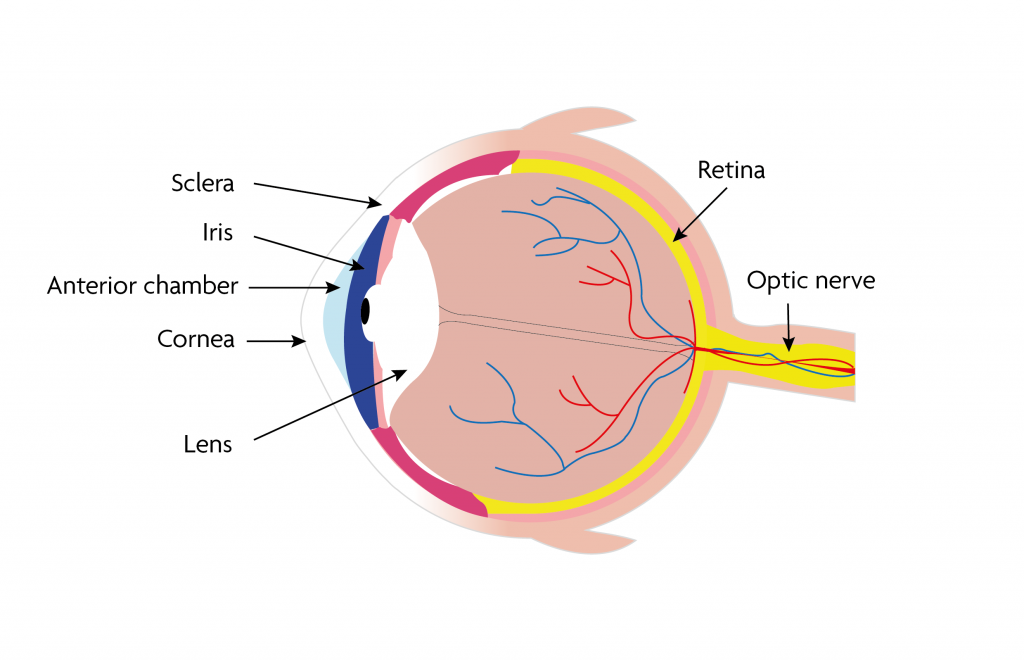
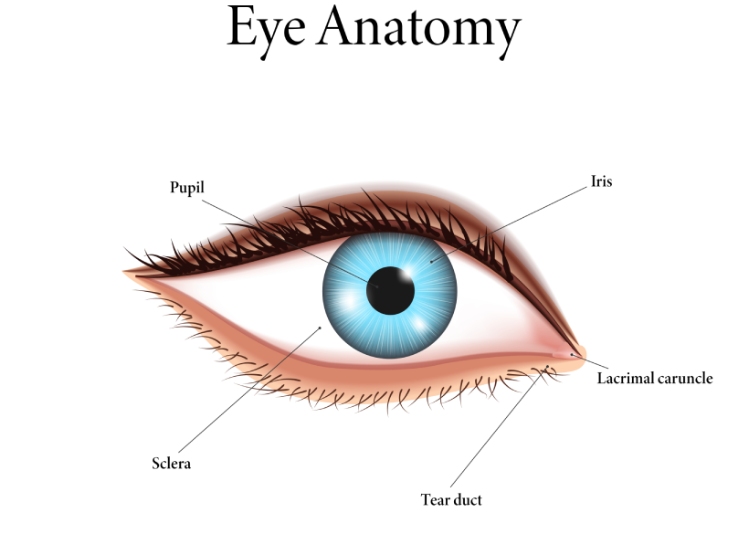
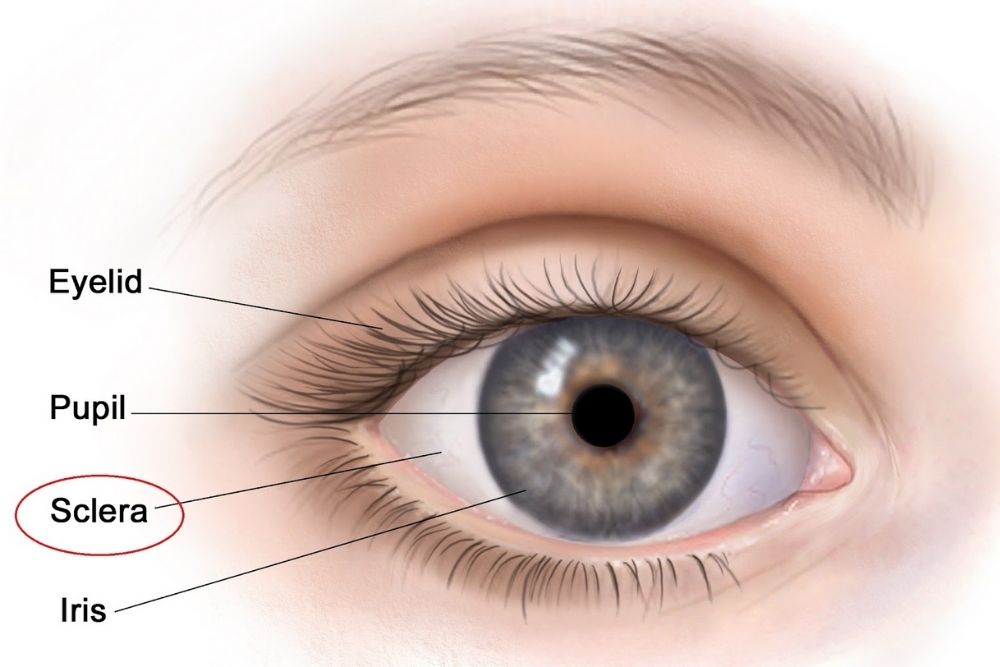
In common parlance, we often refer to it simply as the “white of the eye.” Anatomically, this fibrous, protective outer layer is known as the sclera. While it has traditionally been viewed as a mere structural component—a silent backdrop for the vibrant iris—the tech world is beginning to view the sclera through a vastly different lens. In the realms of biometrics, artificial intelligence, and spatial computing, the “white background” of the human eye is no longer a passive feature; it is a high-fidelity data source that is revolutionizing how we interact with machines and secure our digital lives.
Beyond the Pupil: The Sclera in Biometric Authentication
For decades, biometric security focused almost exclusively on fingerprints and iris patterns. However, as cyber threats evolve, the tech industry has sought more complex, non-spoofable modalities. This has led to the rise of sclera-vein recognition, a field of technology that maps the intricate patterns of blood vessels on the white surface of the eye.
Sclera Recognition vs. Iris Scanning
While iris scanning is highly accurate, it often requires specialized infrared cameras and controlled lighting to be effective, particularly for darker eye colors. Sclera recognition offers a compelling alternative. The vascular patterns within the sclera are unique to every individual—even identical twins—and remain relatively stable throughout a person’s life. Unlike the iris, which can be obscured by eyelashes or require high-contrast imaging, the sclera’s “white background” provides a high-contrast canvas that allows standard high-resolution smartphone cameras to map vein patterns with remarkable precision.
Enhanced Security Protocols in the Digital Age
The integration of sclera-based biometrics into mobile devices represents a significant leap in multi-factor authentication (MFA). Tech companies are developing “eye-print” algorithms that can verify a user’s identity by analyzing the junction points and branching of the scleral vessels. This is significantly harder to spoof than a static photo or a 3D mask, as modern sensors can detect blood flow and light reflection, ensuring the “liveness” of the subject. As we move toward a passwordless future, the white of the eye is becoming a literal key to our encrypted data.
Ocular-Centric Computing: Eye-Tracking and the Future of UI
The emergence of spatial computing, led by devices like the Apple Vision Pro and Meta Quest Pro, has moved the sclera to the forefront of user interface (UI) design. In these environments, the “white background” of the eye acts as a critical reference point for eye-tracking sensors.
Gaze-Contingent Rendering in VR/AR
To create a seamless virtual experience, hardware must know exactly where a user is looking. This is achieved through a process called gaze-contingent rendering. High-speed infrared cameras inside the headset track the movement of the pupil against the backdrop of the sclera. By calculating the ratio of the iris to the white space around it, the software can determine the user’s focal point with sub-millimeter accuracy. This allows the system to allocate processing power only to the area where the user is looking—a technique known as foveated rendering—thereby optimizing performance and battery life.
Accessibility and Assistive Tech: Navigating with the Sclera
Beyond gaming and productivity, the technology used to track the sclera is a cornerstone of assistive technology. For individuals with limited motor function, eye-tracking software transforms the sclera into a navigational tool. By measuring the displacement of the iris relative to the scleral boundaries, developers have created “eye-typing” interfaces and gaze-controlled wheelchairs. Here, the white of the eye is not just an anatomical feature; it is a cursor that enables digital and physical agency for millions of people worldwide.
AI and Diagnostic Imaging: Reading the Sclera for Health Insights
The intersection of MedTech and Artificial Intelligence (AI) has birthed a new era of non-invasive diagnostics. Because the sclera is highly vascularized and reactive to systemic changes, it serves as a “bio-display” that AI algorithms can now read to predict various health conditions.
Deep Learning Algorithms in Ophthalmology
AI models are currently being trained on millions of images of the sclera to identify early markers of disease. For instance, subtle yellowing (icterus) of the sclera can be detected by computer vision long before it is visible to the naked eye, signaling liver dysfunction or jaundice. Furthermore, tech startups are developing AI tools that analyze scleral redness and vessel thickness to monitor blood pressure and cardiovascular health. By turning a standard smartphone camera into a diagnostic tool, these companies are democratizing healthcare through ocular data.
Wearable Tech: Continuous Ocular Monitoring
The next frontier in tech is the “smart contact lens.” These devices, currently in various stages of R&D by tech giants and biotech firms, utilize the sclera as a mounting point for micro-sensors. Because the sclera is less sensitive than the cornea, it is an ideal location for sensors that monitor glucose levels in tears or intraocular pressure for glaucoma patients. The data collected is transmitted wirelessly to a smartphone, turning the white of the eye into a continuous stream of health telemetry.
Privacy, Ethics, and the Future of Ocular Data
As with any technological advancement that relies on biological markers, the “digitization” of the sclera brings significant ethical considerations. When the white of our eyes becomes a data point, the conversation must shift toward data sovereignty and privacy.
The Commodification of Biometric Markers
In an era where “data is the new oil,” ocular information is incredibly valuable. If a device can track exactly what you look at, how long you linger on an advertisement, and even your physiological state based on scleral vessel dilation, it creates a profile of “intent” that is far more invasive than a mere browser history. Tech companies are currently grappling with how to utilize this data to improve user experience without infringing on personal privacy. The challenge lies in creating “on-device” processing where biometric data never leaves the local hardware, preventing the creation of centralized databases of our unique biological signatures.
Protecting Sensitive Biological Data in the Cloud
As we integrate sclera-based diagnostics and authentication into the cloud, the risk of “biometric identity theft” increases. Unlike a password, you cannot change the vascular pattern of your eye if a database is breached. This has led to the development of “cancelable biometrics”—a tech trend where the raw image of the eye is transformed into an encrypted mathematical string. Even if the data is stolen, the original biological pattern cannot be reconstructed. Ensuring the security of the “white background” of the eye will be one of the defining challenges for digital security experts in the coming decade.
In conclusion, the sclera is far more than just the white background of the eye. In the hands of modern technologists, it is a sophisticated interface, a robust security key, and a vital health diagnostic tool. As AI continues to refine its ability to decode the subtle signals within the sclera, our relationship with our own biology—and the devices we use to navigate the world—will become more integrated than ever before. The future of technology is not just in the chips and screens we build, but in how we leverage the data written in the very whites of our eyes.
aViewFromTheCave is a participant in the Amazon Services LLC Associates Program, an affiliate advertising program designed to provide a means for sites to earn advertising fees by advertising and linking to Amazon.com. Amazon, the Amazon logo, AmazonSupply, and the AmazonSupply logo are trademarks of Amazon.com, Inc. or its affiliates. As an Amazon Associate we earn affiliate commissions from qualifying purchases.