
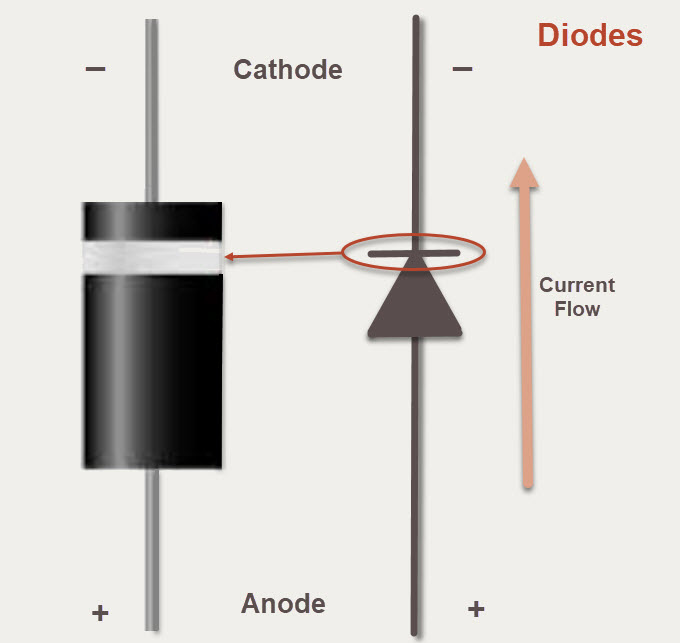
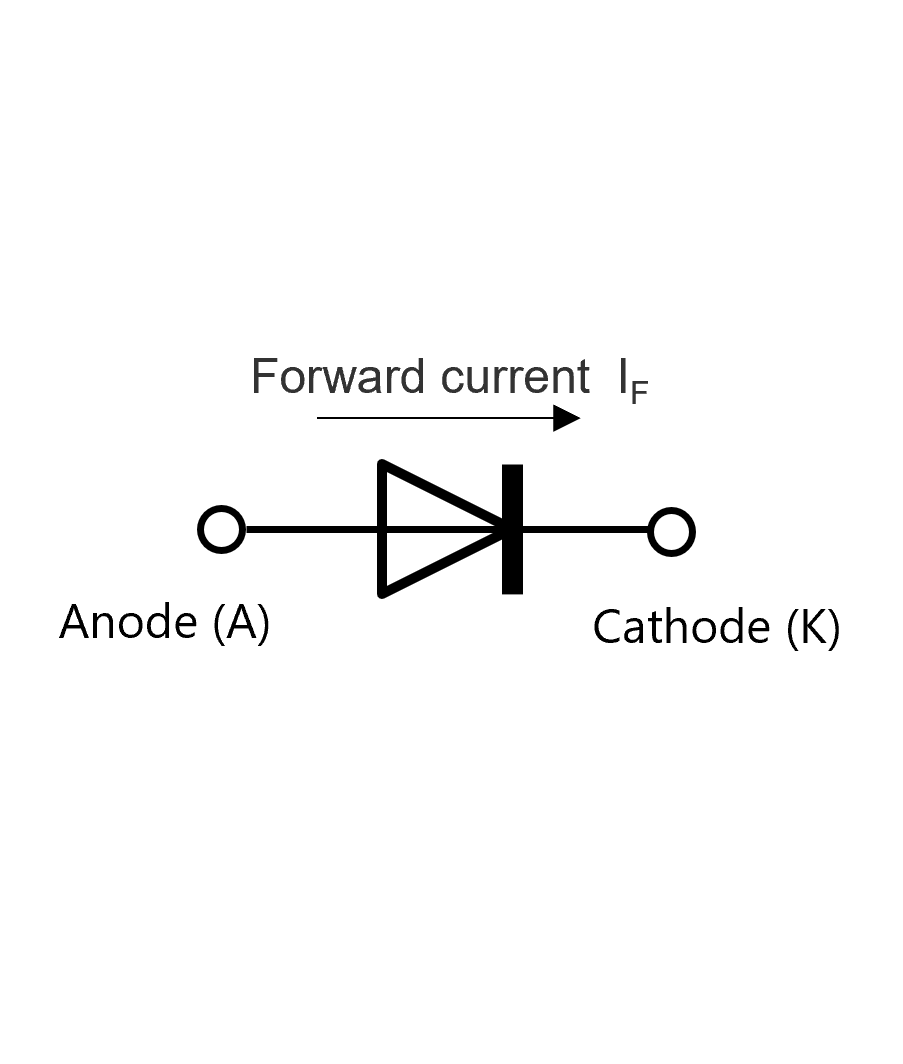
In the vast ecosystem of modern electronics, some components receive all the glory. Microprocessors are heralded as the “brains” of a device, while high-capacity batteries are the “heart.” However, none of these complex systems could function without the humble diode. Though small and often overlooked, the diode is one of the most critical components in the tech world. At its simplest, a diode is a semiconductor device that acts as a one-way switch for current. It allows electricity to flow easily in one direction but severely restricts it from flowing in the opposite direction.

To understand why our smartphones, laptops, and electric vehicles work reliably, we must look closer at the physics, the practical applications, and the evolving variations of this fundamental technological building block.
The Fundamental Mechanics of Diodes
To grasp what a diode does, one must first understand the “how.” Unlike a resistor, which simply resists current, or a capacitor, which stores it, a diode is an active participant in directing the flow of electrons. Most modern diodes are made from silicon, a semiconductor that has been “doped” with impurities to change its electrical properties.
The P-N Junction Explained
The core of a diode is the P-N junction. This is created by joining a P-type (positive) semiconductor and an N-type (negative) semiconductor. The P-type material has an abundance of “holes” (missing electrons), while the N-type material has an abundance of free electrons.
When these two materials are joined, a small area at the interface becomes neutral as electrons fill the nearby holes. This creates the “depletion region,” which acts as an insulating barrier. This microscopic architecture is the reason a diode can control the direction of current; it creates a gate that requires specific conditions to open.
Forward vs. Reverse Bias
The magic of the diode happens when you apply a voltage. If you connect the positive terminal of a battery to the P-side and the negative to the N-side, you are applying “Forward Bias.” This pushes the electrons and holes toward the junction, shrinking the depletion region and allowing current to flow freely.
Conversely, if you reverse the battery terminals—connecting positive to the N-side and negative to the P-side—you are applying “Reverse Bias.” This pulls the electrons and holes away from the junction, widening the depletion region and effectively blocking the current. In the context of digital security and hardware longevity, this one-way gate is what prevents a device from being fried if a user accidentally inserts a battery the wrong way.
Diverse Types of Diodes and Their Specialized Functions
While the basic function of a diode remains the same, engineering advancements have led to specialized versions designed for specific technological tasks. From the screens we look at to the high-speed internet cables that span the globe, different diodes serve different masters.
Light Emitting Diodes (LEDs)
The LED is perhaps the most famous type of diode in the modern consumer tech niche. Unlike a standard diode that simply conducts current, an LED is designed so that when electrons cross the P-N junction, they release energy in the form of photons.
The shift from incandescent bulbs to LED technology has revolutionized energy efficiency in gadgets and home lighting. In smartphones, Organic LEDs (OLEDs) allow for vibrant, high-contrast screens where each pixel can be turned off individually, leading to deeper blacks and better battery life. The LED is a perfect example of how a fundamental electronic component can evolve into a multi-billion-dollar industry within the hardware tech sector.
Zener Diodes and Voltage Regulation
While most diodes are designed to block reverse current entirely, the Zener diode is an intentional exception. It is designed to allow current to flow backward once a specific, predetermined voltage—known as the Zener voltage—is reached.
This makes them indispensable for voltage regulation. In sensitive AI servers or high-end PC power supplies, Zener diodes act as a safety valve. If the voltage spikes, the Zener diode “opens” in reverse, shunting the excess electricity away from delicate microchips and preventing hardware failure. This level of digital security at the hardware layer is what keeps our most expensive tech safe from power surges.
Schottky Diodes for High-Speed Switching
In the world of high-speed computing and digital signals, speed is everything. Standard diodes have a small delay when switching between conducting and non-conducting states. Schottky diodes, which use a metal-semiconductor junction rather than a P-N junction, have a much lower forward voltage drop and an incredibly fast switching speed. These are used extensively in high-frequency applications and switching power supplies, where efficiency and speed are the primary design goals.
The Role of Diodes in Consumer Electronics and Circuit Design
Beyond the physics, we must look at how diodes are deployed in the gadgets we use every day. They are the gatekeepers of power, ensuring that the electricity coming from a wall outlet is transformed into a form that a processor can use without exploding.
Rectification: Converting AC to DC
The most common application of diodes is “rectification.” The power grid provides Alternating Current (AC), which periodically reverses direction. However, almost all digital tech—laptops, tablets, and AI-driven smart home devices—requires Direct Current (DC), which flows in only one direction.
By using a “bridge rectifier”—an arrangement of four diodes—engineers can take the oscillating AC wave and flip the negative portions so they all point in the same direction. Without the diode’s ability to rectify current, the modern era of portable electronics simply would not exist. Every “power brick” or charging cable you own contains a diode-based system to ensure your device receives a steady, safe flow of DC power.
Circuit Protection and Voltage Clamping
Tech hardware is fragile. A static discharge from a finger or a small surge in a USB port can destroy a motherboard. Diodes are used in “clamping circuits” to protect these inputs. By placing diodes in specific orientations, engineers can ensure that if a voltage exceeds a certain threshold, the diode redirects the “spike” to the ground before it reaches the CPU or memory modules. This form of “transient voltage suppression” is a silent guardian in every smartphone and laptop on the market.
Diodes in the Age of AI and Advanced Computing
As we move further into the era of Artificial Intelligence and high-performance computing, the role of the diode is evolving from a simple switch to a sophisticated component in optoelectronics and data transmission.
Optoelectronics and Fiber Optic Communication
The internet as we know it runs on light. Laser diodes are the engines of fiber optic networks. These specialized diodes convert electrical signals into highly focused beams of light that can travel hundreds of miles through glass fibers with minimal signal loss. In the data centers that house AI models like GPT-4, these laser diodes facilitate the massive data transfer rates required for neural network training.
Furthermore, on the receiving end, photodiodes do the opposite: they catch the incoming light and convert it back into electrical pulses. This diode-to-diode communication loop is the backbone of the global digital infrastructure.
The Future of Power Efficiency in Data Centers
As AI tools demand more power, the efficiency of power delivery becomes a top-tier tech trend. Modern “Wide Bandgap” semiconductors, like Gallium Nitride (GaN) and Silicon Carbide (SiC), are being used to create diodes that can handle much higher voltages and temperatures than traditional silicon.
These advanced diodes allow for much smaller and more efficient power converters. In massive data centers, switching to SiC or GaN-based diode systems can reduce energy waste by significant percentages. In a world where tech companies are racing to achieve carbon neutrality while scaling up AI, these “next-gen” diodes are at the center of the sustainability conversation.
Conclusion: Why the Diode Remains Irreplaceable
From the simple task of ensuring a battery is inserted correctly to the complex requirement of beaming terabytes of data across the ocean, the diode is the unsung hero of the technology world. It provides the control, protection, and conversion necessary for every other electronic component to do its job.
As we look toward a future defined by even more powerful AI, faster connectivity, and greener energy solutions, the diode will continue to evolve. Whether it is through the development of new semiconductor materials or the integration of diodes into quantum computing architectures, this “one-way valve” remains one of the most elegant and essential inventions in the history of tech. Understanding what diodes do is more than just a lesson in electronics; it is an insight into the very logic that governs our digital lives.
aViewFromTheCave is a participant in the Amazon Services LLC Associates Program, an affiliate advertising program designed to provide a means for sites to earn advertising fees by advertising and linking to Amazon.com. Amazon, the Amazon logo, AmazonSupply, and the AmazonSupply logo are trademarks of Amazon.com, Inc. or its affiliates. As an Amazon Associate we earn affiliate commissions from qualifying purchases.