
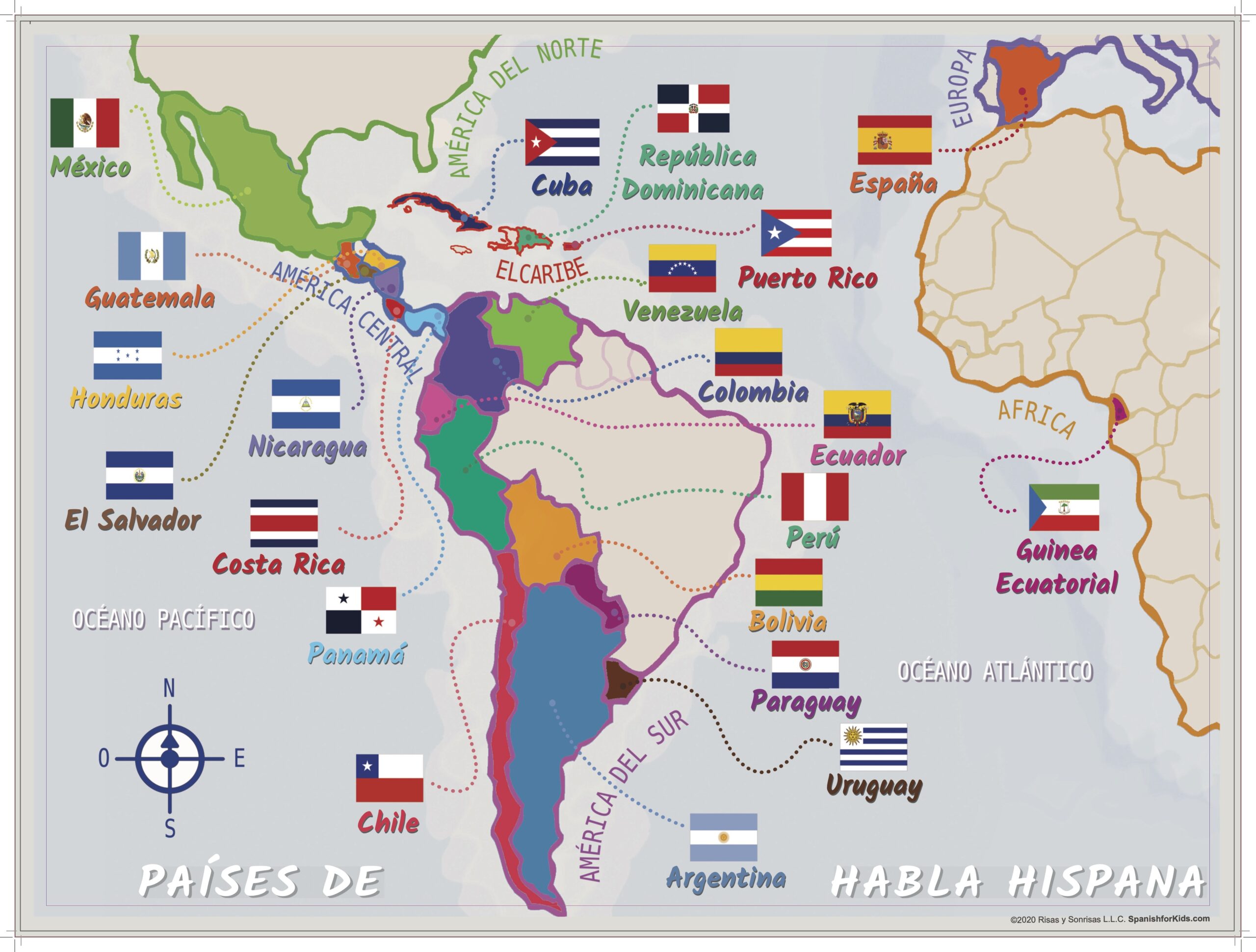
In the contemporary landscape of global commerce, the question “what countries talk Spanish” is no longer a simple geographical inquiry; it is a fundamental pillar of international brand strategy. Spanish is the second most spoken native language in the world, with over 500 million native speakers spanning more than 20 countries. For a brand looking to scale, this demographic represents an unparalleled opportunity. However, the Spanish-speaking world—often referred to as the Hispanosphere—is not a monolith.
To successfully navigate these markets, a brand must move beyond basic translation and delve into the complexities of regional identity, cultural nuances, and localized consumer behavior. This article explores how to build a dominant brand presence across the Spanish-speaking world, ensuring your corporate identity resonates from the streets of Madrid to the bustling avenues of Mexico City and the growing bilingual hubs of the United States.

Mapping the Spanish-Speaking Market: Beyond a Single Language
To define a brand strategy for Spanish speakers, one must first identify where these consumers reside and how their economic environments differ. While the core language remains the same, the purchasing power, consumer habits, and market maturity vary significantly between regions.
The Economic Power of the Hispanosphere
When we look at the list of countries where Spanish is the official language—including Spain, Mexico, Colombia, Argentina, Peru, Chile, and dozens of others—we see a diverse economic portfolio. Mexico serves as a massive manufacturing and export hub with deep ties to the North American market. Spain offers a gateway to the European Union with a sophisticated, high-spending consumer base. Meanwhile, countries like Chile and Uruguay are often cited for their economic stability and digital infrastructure.
From a brand perspective, understanding this economic map allows for better resource allocation. For instance, a luxury brand might prioritize the high-net-worth sectors of Madrid or Mexico City, while a fintech startup might find more fertile ground in the “unbanked” populations of Central America or the burgeoning tech scenes in Medellín and Buenos Aires.
Regional Differences: Spain vs. Latin America
A common mistake in brand strategy is treating “Spanish” as a universal constant. In reality, the linguistic and cultural divide between Spain (Peninsular Spanish) and Latin America (Hispano-American Spanish) is vast.
In Spain, the tone of branding often leans toward the formal or the avant-garde, reflecting its European context. In contrast, Latin American markets often value warmth, community-centric messaging, and a more informal “tú” (informal you) or “vos” (in the Rioplatense region) approach. If your brand uses vosotros (the plural “you” used exclusively in Spain) in a marketing campaign in Mexico, your brand will immediately feel foreign and out of touch. Successful brand strategy requires a “multi-local” approach rather than a one-size-fits-all Spanish template.
Localizing Your Brand Identity: Why Translation Isn’t Enough
In the world of professional branding, “translation” is a mechanical process, while “localization” or “transcreation” is a strategic one. To resonate with Spanish speakers, your brand must speak their cultural language, not just their dictionary words.
Linguistic Nuances and Dialectical Sensitivity
The Spanish language is famous for its regional variations in vocabulary. A word that is perfectly innocent in one country can be a profound vulgarity in another. For example, the verb coger is a standard term for “to take” or “to catch” in Spain, but in many parts of Latin America, it has a strong sexual connotation.
A brand strategy that fails to account for these nuances risks not only embarrassment but total alienation of its target audience. This is where “Brand Voice” documentation becomes vital. Corporate identity guides for the Spanish-speaking market should include a “Lexicon of Preference,” identifying which regionalisms to use or avoid based on the specific country of entry.
Visual Identity and Cultural Symbolism
Branding is visual as much as it is linguistic. Colors, symbols, and imagery carry different weights across the Hispanosphere. While the color red might signify passion and energy globally, its political or religious associations can vary locally.
Furthermore, the “aspiration” factor varies. In many Latin American markets, branding imagery that reflects diverse, local faces is increasingly preferred over “Eurocentric” stock photography. Conversely, in some high-end sectors, a “European” aesthetic associated with Spain can command a premium price point. A strategic brand audit must evaluate whether your visual assets align with the cultural aesthetics of the specific Spanish-speaking demographic you are targeting.
Strategic Marketing Channels in the Spanish-Speaking World
Once the brand identity is localized, the next challenge is distribution. How does a brand reach Spanish speakers effectively? The digital habits of these populations offer unique insights into where a brand should invest its marketing budget.
The Role of Social Media and Messaging in Latin American Branding
In most Spanish-speaking countries, social media is not just a leisure activity; it is a primary tool for commerce. Latin America, in particular, has some of the highest social media penetration rates in the world.
Platforms like WhatsApp are central to the brand-consumer relationship. In countries like Colombia, Brazil (though Portuguese-speaking, it mirrors the trend), and Mexico, consumers expect to be able to message a brand directly on WhatsApp to ask questions or complete a purchase. A brand strategy that doesn’t include a “conversational commerce” component is missing a massive opportunity. Professional branding here involves creating a persona that feels accessible, responsive, and human through these direct messaging channels.
Building Trust through Hyper-Local Influencers
In many Spanish-speaking markets, there is a historical skepticism toward large, impersonal corporations. To combat this, brands often use “personal branding” via influencers to bridge the trust gap.
However, the strategy must be hyper-local. A Spanish YouTuber may have millions of followers, but they might not have the same cultural “clout” in Argentina as a local creator. By partnering with influencers who speak the local slang and understand local pain points, a global brand can gain “neighborhood” credibility. This is particularly effective in the beauty, tech, and food and beverage sectors, where personal recommendation carries more weight than a traditional billboard.
Case Studies in Hispanic Branding Success
To understand how to successfully navigate the “what countries talk Spanish” landscape, we can look at brands that have mastered the art of regional adaptation.
Adapting Global Giants for Local Tastes
Consider the case of global food and beverage brands. Companies like Coca-Cola or McDonald’s don’t just translate their menus; they adapt their brand story. In Spain, McDonald’s might emphasize the origin of their local Spanish beef to appeal to European standards of transparency. In Mexico, they might introduce spicy flavor profiles or breakfast items like McMolletes to honor local traditions.
The brand’s “Core Identity” (quality, speed, consistency) remains the same, but the “Extended Identity” (the flavors and cultural tie-ins) is flexible. This is the hallmark of a sophisticated brand strategy: knowing what is non-negotiable and what must be adapted to survive in a local market.
Avoiding Common Pitfalls in Cross-Border Strategy
The history of branding is littered with “lost in translation” failures. There are famous (and sometimes apocryphal) tales of cars being named “Nova” (which sounds like no va, or “doesn’t go” in Spanish). While many of these are urban legends, the risk is real.
The most common pitfall today is not a single word, but a “tonal mismatch.” Brands that try to use a “neutral Spanish” (often called Español Neutro) often end up sounding robotic or like a dubbed movie from the 1990s. While Español Neutro is useful for technical manuals, it is often a death sentence for emotional branding. Consumers want to feel that a brand was made for them, not just translated into their language.

Conclusion: The Future of Branding in the Spanish-Speaking World
As the digital divide closes and the middle class continues to grow across Latin America, the importance of a dedicated Spanish-language brand strategy will only increase. Furthermore, with the United States now housing the second-largest Spanish-speaking population in the world, “international” branding is now a domestic necessity for American companies.
To answer “what countries talk Spanish” is to identify a diverse, vibrant, and economically powerful network of consumers. Success in these markets requires a commitment to cultural intelligence, linguistic precision, and a willingness to adapt your corporate identity to fit the local context. By treating the Spanish-speaking world not as a single checkbox, but as a collection of unique cultural opportunities, brands can build lasting loyalty and drive significant global growth. Professional branding is, at its heart, the art of connection—and in the Hispanosphere, that connection begins with speaking the right language, in the right way.
aViewFromTheCave is a participant in the Amazon Services LLC Associates Program, an affiliate advertising program designed to provide a means for sites to earn advertising fees by advertising and linking to Amazon.com. Amazon, the Amazon logo, AmazonSupply, and the AmazonSupply logo are trademarks of Amazon.com, Inc. or its affiliates. As an Amazon Associate we earn affiliate commissions from qualifying purchases.