
The pursuit of financial security and prosperity is a cornerstone of modern life. Many grapple with the complexities of budgeting, investing, and generating income, often feeling overwhelmed by debt, the volatility of markets, or the elusive nature of financial freedom. While seemingly unrelated, the ancient wisdom of Buddhism, particularly its Four Noble Truths, offers a profound and surprisingly practical framework for navigating these challenges. This philosophical lens, when applied to the realm of personal finance, can illuminate the root causes of our financial struggles and pave the way for sustainable wealth creation and lasting financial peace.

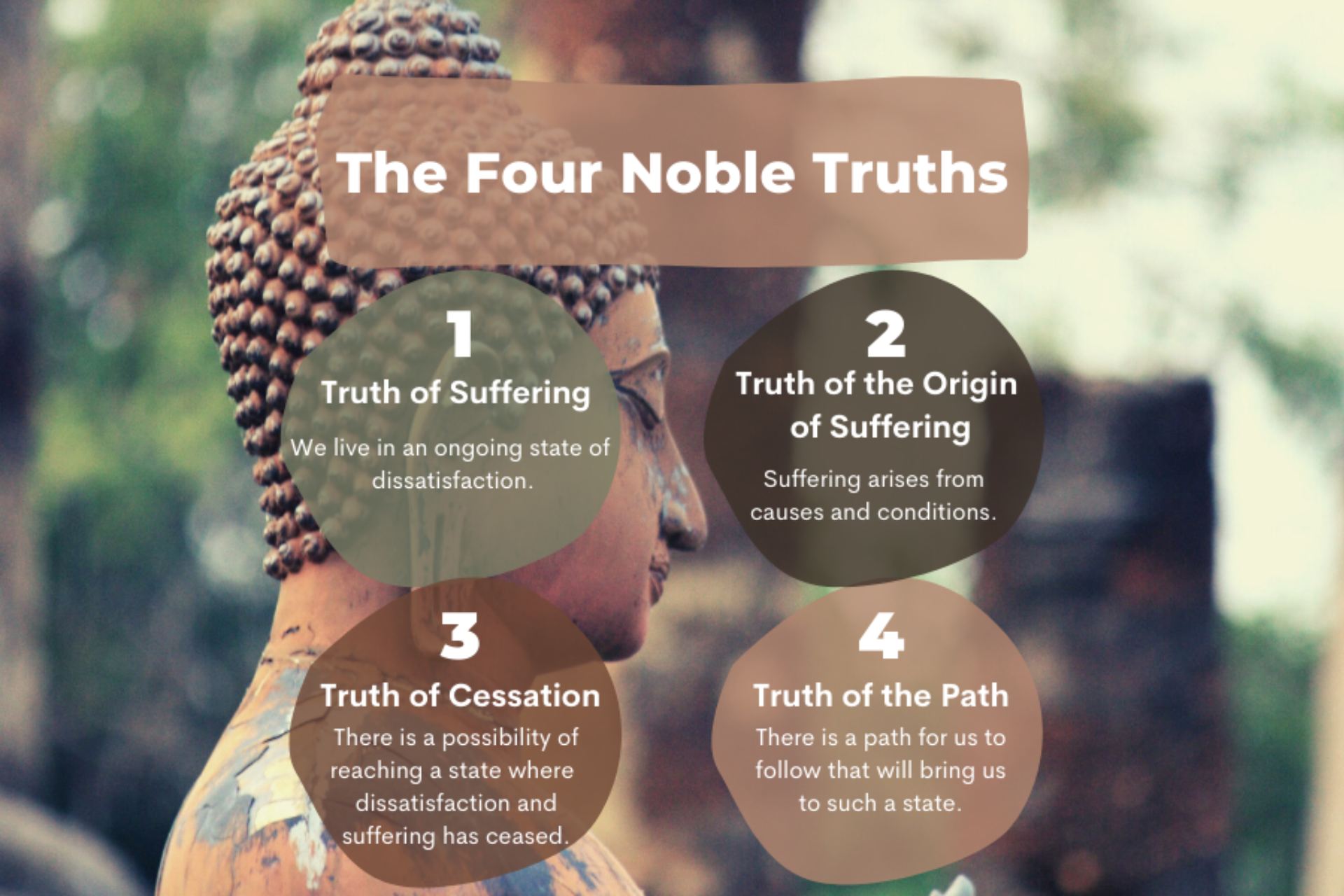
The Four Noble Truths, at their core, are an analysis of the human condition, identifying suffering, its origin, its cessation, and the path to its cessation. When translated into the language of personal finance, these truths provide a powerful diagnostic tool and a roadmap to a more fulfilling and secure financial future. They encourage us to confront our financial realities with honesty, understand the drivers of our financial woes, discover the possibility of overcoming them, and embrace a disciplined approach to achieving our financial goals.
H2: The Truth of Financial Suffering (Dukkha)
The first Noble Truth, Dukkha, translates to suffering, dissatisfaction, or unease. In the context of money, this is universally experienced. It’s the gnawing anxiety of mounting credit card bills, the stress of living paycheck to paycheck, the fear of unexpected expenses, or the deep dissatisfaction of never feeling like you have enough. This isn’t just about lacking money; it’s about the negative emotional and psychological states that accompany financial insecurity and mismanagement.
H3: Recognizing the Manifestations of Financial Dukkha
Financial suffering manifests in a multitude of ways. For many, it’s the burden of debt. High-interest credit card debt, student loans, mortgages – these financial obligations can feel like chains, restricting freedom and creating constant worry. The monthly payments, the looming interest, the fear of default – these are all potent sources of financial Dukkha.
Another common manifestation is income instability. Freelancers, entrepreneurs, and those in volatile industries often experience the stress of inconsistent earnings. This unpredictability makes planning difficult, fosters anxiety about the future, and can lead to a perpetual state of financial vigilance, which itself is a form of suffering.
Furthermore, unsustainable spending habits are a significant contributor. The constant desire for more, the impulse purchases, the societal pressure to keep up with appearances – these habits, though seemingly innocuous in the moment, lead to a cycle of overspending, debt accumulation, and ultimately, a deeper state of financial dissatisfaction. We chase external validation through consumption, only to find ourselves in a worse financial position and still feeling unfulfilled.
Finally, financial illiteracy itself breeds Dukkha. Not understanding basic financial principles, investment strategies, or tax implications leaves individuals vulnerable to poor decisions, exploitation, and a general sense of helplessness in managing their money. This lack of knowledge creates a fertile ground for financial anxiety and missed opportunities.
H2: The Origin of Financial Suffering (Samudaya)
The second Noble Truth, Samudaya, identifies the origin or cause of suffering. In the financial realm, this origin is rooted in our desires, attachments, and aversions related to money. It’s not the absence of wealth that inherently causes suffering, but rather our craving for more wealth than we have, our attachment to the wealth we possess, and our aversion to experiencing financial loss or scarcity.
H3: The Role of Craving and Attachment in Financial Distress
Our craving for financial abundance can be a powerful motivator, but when unchecked, it becomes a primary driver of Dukkha. This craving can manifest as an insatiable desire for luxury goods, a relentless pursuit of higher incomes without a clear purpose, or a constant comparison with others’ financial status. This endless pursuit often leads to overworking, neglecting well-being, and making impulsive financial decisions in the hope of achieving a distant, often undefined, financial nirvana.
Conversely, attachment to our existing wealth can also be a source of suffering. This isn’t about being financially generous; it’s about the fear of losing what we have. This fear can lead to overly conservative investment strategies, missed growth opportunities, and a reluctance to take calculated risks that could lead to greater financial security in the long run. The anxiety of protecting our assets can be as debilitating as the anxiety of lacking them.
Our aversions also play a significant role. We may have an aversion to the perceived complexity of investing, leading us to avoid it altogether and miss out on potential growth. We might have an aversion to budgeting or tracking our expenses, as it feels restrictive, leading to uncontrolled spending. We might also have an aversion to discussing money, hindering open communication with partners or family, and preventing collaborative financial planning.
H3: The Impact of Ignorance and Misconceptions on Financial Habits
Beyond craving and attachment, ignorance and misconceptions are fundamental origins of financial suffering. Many of us operate under flawed assumptions about money. We might believe that expensive things equal happiness, that debt is a necessary evil, or that investing is only for the rich and knowledgeable. This ignorance prevents us from adopting effective financial strategies, making informed decisions, and breaking free from detrimental patterns. The misunderstanding of compound interest, the power of diversified portfolios, or the benefits of early saving can all perpetuate cycles of financial struggle.
H2: The Cessation of Financial Suffering (Nirodha)

The third Noble Truth, Nirodha, speaks of the cessation of suffering. In the financial context, this means achieving a state of financial peace, security, and freedom. It is the state where money serves as a tool for a fulfilling life, rather than being a source of constant anxiety and dissatisfaction. This cessation is not about becoming exorbitantly wealthy, but rather about developing a healthy, balanced, and sustainable relationship with money.
H3: Defining Financial Peace and Freedom
Financial peace is characterized by a lack of debilitating financial stress. It means having sufficient resources to meet your needs comfortably, being prepared for emergencies, and feeling a sense of control over your financial future. It’s the ability to sleep at night without the weight of debt or the fear of financial ruin.
Financial freedom, on the other hand, is the state where your passive income or accumulated assets generate enough wealth to cover your living expenses, allowing you to pursue your passions, spend time with loved ones, or contribute to causes you care about, without the necessity of traditional employment. This doesn’t necessarily imply early retirement, but rather the liberty to choose how you spend your time and energy.
H3: The Attainability of Financial Well-being
The cessation of financial suffering is entirely attainable. It requires a conscious shift in perspective and a commitment to implementing sound financial practices. It is about understanding that financial well-being is not a distant dream reserved for a select few, but a tangible outcome of informed choices and consistent effort. By addressing the roots of our financial distress, we can actively cultivate a more prosperous and peaceful financial existence. This truth offers hope and empowers individuals to believe in their capacity to transform their financial lives.
H2: The Path to Financial Well-being (Magga)
The fourth Noble Truth, Magga, outlines the path to the cessation of suffering – the Noble Eightfold Path. When adapted to personal finance, this path becomes a practical guide, an actionable set of principles for cultivating financial well-being. It involves developing the right understanding, intention, speech, action, livelihood, effort, mindfulness, and concentration regarding money.
H3: Right Understanding and Intention in Finance
Right Understanding in finance means gaining a clear and accurate comprehension of financial principles, market dynamics, and your own financial situation. This includes understanding concepts like compound interest, inflation, risk tolerance, and the difference between assets and liabilities. It’s about moving beyond myths and misconceptions to a grounded understanding of how money works and how to make it work for you.
Right Intention involves cultivating a genuine desire to achieve financial well-being not for the sake of greed or ego, but for the purpose of security, freedom, and the ability to live a meaningful life. This means setting clear, achievable financial goals that align with your values, such as providing for your family, pursuing education, or supporting charitable causes, rather than simply accumulating wealth for its own sake.
H3: Right Speech, Action, and Livelihood for Financial Health
Right Speech in finance translates to honest and transparent communication about money. This includes open discussions with partners about financial goals and challenges, avoiding deceptive financial claims, and refraining from spreading financial misinformation. It’s about using your words to build trust and clarity around financial matters.
Right Action encompasses ethical and responsible financial behavior. This means living within your means, avoiding unnecessary debt, honoring your financial commitments, and acting with integrity in all financial dealings. It’s about consistently making choices that support your long-term financial health.
Right Livelihood emphasizes earning money in ways that are ethical, contribute positively to society, and do not cause harm. For individuals, this might mean choosing a career path that aligns with their values or developing income streams that are sustainable and responsible. For businesses, it means operating with integrity and a commitment to fair practices.
H3: Right Effort, Mindfulness, and Concentration for Financial Discipline
Right Effort involves applying diligent energy towards your financial goals. This means consistently saving, investing wisely, educating yourself, and taking proactive steps to improve your financial situation. It’s about not giving up when faced with challenges, but rather redoubling your efforts with a clear purpose.
Right Mindfulness is the practice of being fully present and aware of your financial decisions and their consequences. It involves paying attention to your spending habits, understanding your emotional triggers related to money, and making conscious choices rather than acting on impulse. It’s about observing your financial behavior without judgment and making informed adjustments.
Right Concentration in finance refers to the ability to focus your attention and energy on your financial goals. This involves disciplined saving, consistent investing, and resisting distractions or temptations that could derail your progress. It’s about developing the mental fortitude to stay committed to your financial plan, even when faced with short-term desires or market fluctuations.
By diligently cultivating these principles – Right Understanding, Right Intention, Right Speech, Right Action, Right Livelihood, Right Effort, Right Mindfulness, and Right Concentration – individuals can navigate the complexities of personal finance with clarity, purpose, and resilience. This eightfold path offers a comprehensive and sustainable approach to overcoming financial suffering and achieving lasting financial peace and well-being. It empowers us to transform our relationship with money from one of anxiety and struggle to one of empowerment and fulfillment.
aViewFromTheCave is a participant in the Amazon Services LLC Associates Program, an affiliate advertising program designed to provide a means for sites to earn advertising fees by advertising and linking to Amazon.com. Amazon, the Amazon logo, AmazonSupply, and the AmazonSupply logo are trademarks of Amazon.com, Inc. or its affiliates. As an Amazon Associate we earn affiliate commissions from qualifying purchases.