
In the realm of finance, numbers are rarely viewed in isolation. A profit of $10,000 might seem substantial for a small side hustle, but it is a drop in the ocean for a multi-national corporation. To provide context, compare performance, and make informed decisions, we rely on the most versatile tool in the financial toolkit: the percentage.
Understanding how to find the percentage of two numbers is not merely a mathematical exercise; it is a fundamental skill for anyone looking to master their personal budget, evaluate investment opportunities, or scale a business. At its core, a percentage is a way of expressing a ratio as a fraction of 100, allowing for a standardized comparison across different scales and values.
The Fundamental Formula: Why Percentage Calculations Matter in Your Financial Life
Before diving into complex financial models, one must master the basic mechanics of the percentage. In the world of money, the “two numbers” in question usually represent a “part” and a “whole.” Whether you are looking at your tax rate, a discount at a store, or your savings rate, the logic remains the same.
The Basic Equation: Part Over Whole
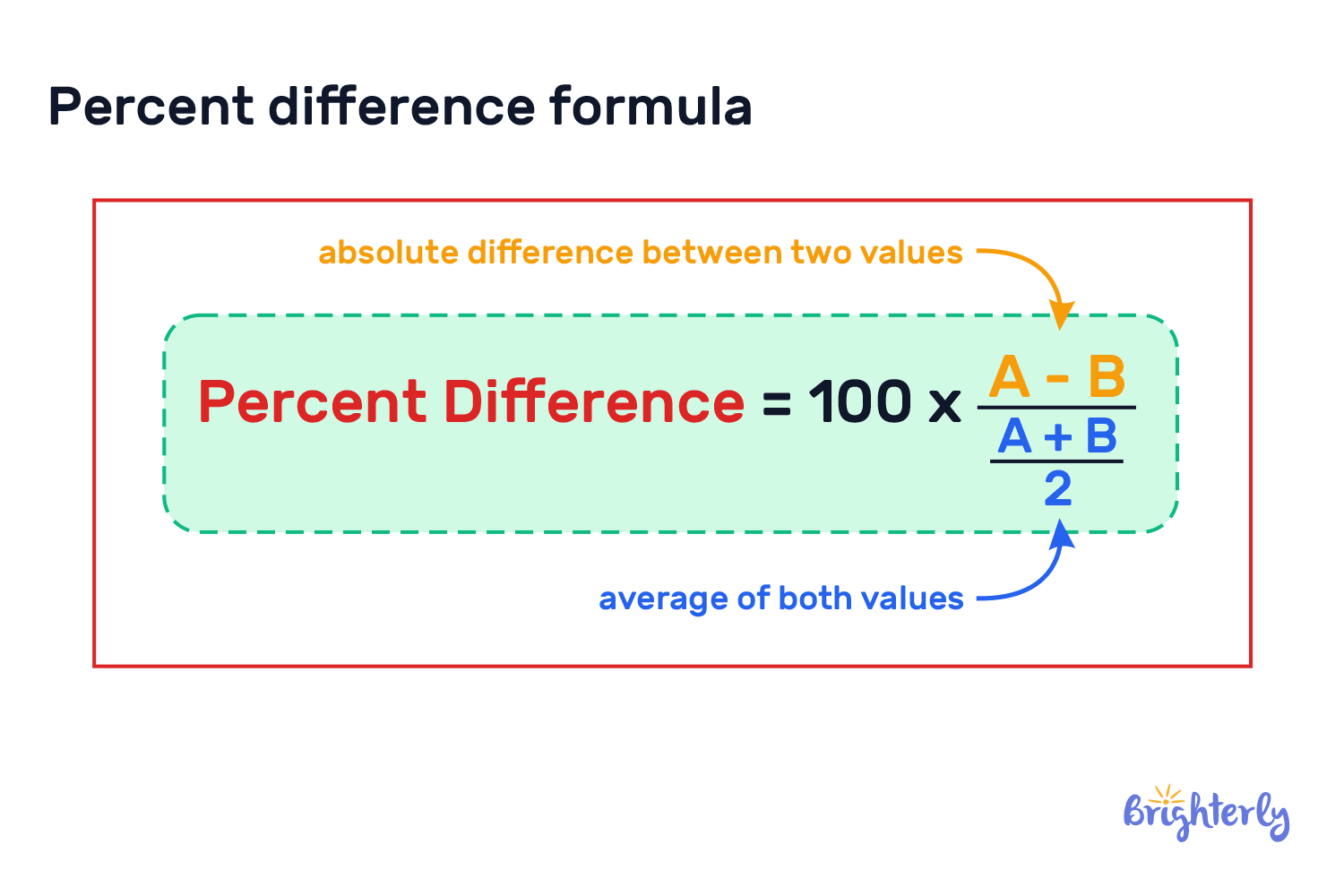
The simplest way to find the percentage of two numbers is to divide the smaller number (the part) by the larger number (the whole) and then multiply the result by 100.
Formula: (Part / Whole) × 100 = Percentage
For example, if you decide to save $500 out of a $4,000 monthly paycheck, you are dividing 500 by 4,000 to get 0.125. Multiplying by 100 gives you 12.5%. This figure is far more useful than the raw number of $500 because it allows you to track your saving consistency regardless of whether your income fluctuates in the future.
Decimal Conversions and Financial Precision
In professional financial analysis, percentages are often handled as decimals. Moving the decimal point two places to the left (e.g., 5% becomes 0.05) is a crucial step when calculating interest or taxes. If you are calculating the capital gains tax on an investment, you don’t just “see” a percentage; you apply it as a multiplier. Precision here is vital. A mistake of a single decimal point in a business contract or an investment projection can lead to catastrophic financial errors. Understanding the relationship between the fraction, the decimal, and the percentage ensures that you remain in control of the math behind your money.
Applying Percentage Logic to Investing and Market Growth
In the investing world, percentages are the primary language. Investors rarely talk about “making fifty dollars”; they talk about a “5% return.” This is because percentages allow for the comparison of different asset classes. You can compare the 8% return of a stock index fund against the 4% yield of a high-interest savings account to determine where your capital is best utilized.
Calculating Return on Investment (ROI)
The most common application of finding the percentage between two numbers in investing is the Return on Investment (ROI). This calculation tells you how much your money has grown relative to your initial cost.
Formula: [(Current Value – Original Cost) / Original Cost] × 100
If you bought a share of a tech company for $150 and it is now worth $180, the “two numbers” you are comparing are the profit ($30) and the initial investment ($150). Dividing 30 by 150 gives you 0.20, or a 20% ROI. This percentage allows you to see the efficiency of your investment.
Understanding Year-over-Year (YoY) Growth
For long-term financial health, consistency is more important than a single win. Year-over-Year (YoY) growth is a percentage calculation used to compare financial data from one year against the previous year. This is essential for identifying trends in your net worth or your business’s revenue. By finding the percentage difference between last year’s earnings and this year’s, you can strip away seasonal volatility and see if your financial strategy is actually trending upward.
The Impact of Compound Interest on Long-Term Wealth
Percentage calculations also reveal the “magic” of compound interest. When you earn a percentage of interest on your principal, and then earn interest on that interest in the next period, your wealth grows exponentially. Understanding that a 7% average annual return will double your money approximately every ten years (the Rule of 72) is a direct application of percentage logic that helps in retirement planning and long-term goal setting.
Mastering Business Finance: Percentages in Profitability and Margins

For entrepreneurs and business owners, the ability to find the percentage of two numbers is the difference between a thriving enterprise and a failing one. Revenue is a “vanity metric,” but margins—expressed as percentages—are the “sanity metric.”
Gross Profit Margin vs. Net Profit Margin
A business might generate $1 million in sales, but if the costs are $950,000, the business is on thin ice.
- Gross Profit Margin compares the profit left after the cost of goods sold (COGS) to the total revenue.
- Net Profit Margin compares the final profit (after all expenses, taxes, and interest) to the total revenue.
If your Net Profit Margin is 10%, it means for every dollar your business takes in, you keep ten cents. Tracking these percentages monthly allows a business owner to see if expenses are creeping up or if pricing needs to be adjusted.
Pricing Strategies: Markup Percentages
Setting the right price for a product requires a firm grasp of markup percentages. Many new business owners confuse “margin” with “markup.”
- Markup is the percentage added to the cost to reach the selling price.
- Margin is the percentage of the selling price that is profit.
If an item costs you $50 and you want a 50% markup, you sell it for $75. However, your profit margin on that $75 sale is only 33.3% ($25 profit divided by $75 selling price). Understanding how to calculate these two different percentages is vital for maintaining cash flow and ensuring that your business remains solvent.
Evaluating Operational Efficiency
Businesses also use percentages to evaluate efficiency, such as the “Cost of Acquisition” (CAC) as a percentage of “Lifetime Value” (LTV). If you spend $20 to acquire a customer who spends $100 over their lifetime, your acquisition cost is 20% of your LTV. Keeping this percentage low is the key to scaling a profitable business.
Practical Percentages for Personal Budgeting and Debt Management
On a personal level, percentages help transform a dry list of expenses into a strategic financial plan. They provide a bird’s-eye view of where your money is going and where you are vulnerable.
The 50/30/20 Rule: Allocating Your Income
One of the most popular budgeting frameworks is the 50/30/20 rule. This strategy suggests that:
- 50% of your income should go to Needs (housing, utilities, groceries).
- 30% should go to Wants (dining out, hobbies, travel).
- 20% should go to Savings and Debt Repayment.
To implement this, you must find the percentage of your total income that each spending category represents. If your “Needs” are currently 65% of your income, the percentage calculation tells you exactly how much you need to cut back or how much more you need to earn to reach financial equilibrium.
Interest Rates: The Cost of Borrowing Money
When you take out a loan or carry a credit card balance, you are dealing with the Annual Percentage Rate (APR). This is the “price” of the money you are borrowing. Finding the percentage of interest relative to your principal helps you realize the true cost of debt. For instance, a 20% APR on a $5,000 credit card balance means you are paying $1,000 a year just for the privilege of carrying that debt. Calculating this percentage helps prioritize “high-interest” debt repayment, which is often the most effective way to improve your financial standing.
Tax Planning and Effective Tax Rates
Your “tax bracket” is often different from your “effective tax rate.” While you might be in the 24% marginal bracket, after deductions and credits, your actual tax paid might only be 15% of your total income. Knowing how to calculate this percentage helps you accurately estimate how much you need to set aside for the IRS and how much “take-home” pay you actually have to work with.
Advanced Tools and Tips for Error-Free Financial Math
While the formulas are straightforward, the complexity of modern finance often requires more than a pencil and paper. To ensure accuracy in your financial journey, leveraging tools is a professional necessity.
Utilizing Spreadsheet Functions
In tools like Microsoft Excel or Google Sheets, finding the percentage of two numbers is automated. If Cell A1 contains your profit and Cell B1 contains your total revenue, the formula =A1/B1 formatted as a percentage will give you an instant, dynamic update. Advanced users use these functions to create “What-If” scenarios—calculating how a 2% increase in interest rates would affect their monthly mortgage payment or how a 10% reduction in overhead would impact business profits.
Avoiding Common Mathematical Pitfalls in Finance
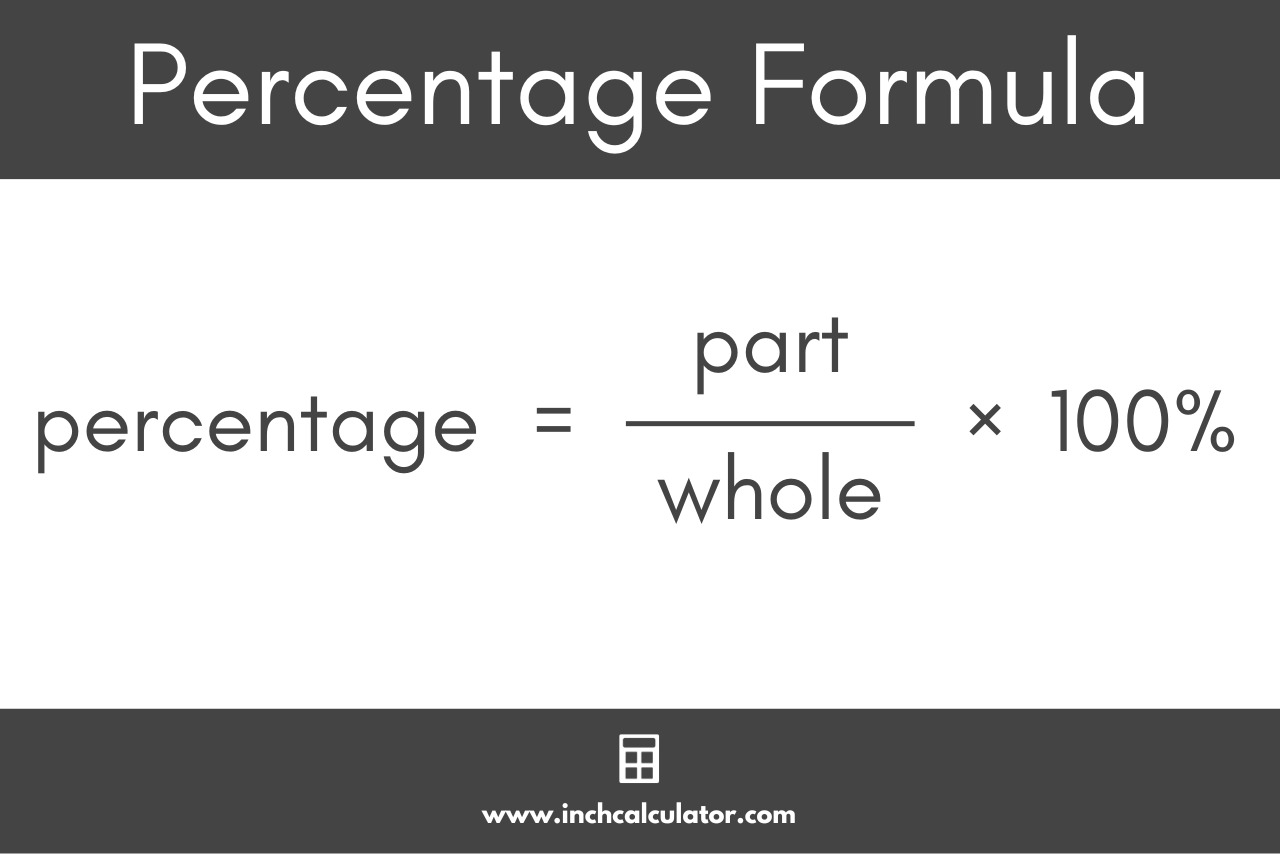
One of the most common errors in financial math is “percentage point” confusion. If an interest rate rises from 3% to 4%, it has risen by 1 percentage point, but it has actually increased by 33.3% ($1 / 3 = 0.333$). In the world of investing and banking, failing to distinguish between these two can lead to a gross misunderstanding of market movements.
Always ensure you are comparing the correct “base” number. When calculating a percentage decrease, the base is the original, higher number. When calculating a percentage increase, the base is the original, lower number. Keeping your “two numbers” clearly defined is the only way to ensure your financial data remains an asset rather than a liability.
By mastering the simple art of finding the percentage of two numbers, you equip yourself with the clarity needed to navigate the complex world of money. Whether you are analyzing a stock’s performance, setting a price for a new product, or simply trying to save for a rainy day, the percentage is the metric that turns raw data into actionable financial wisdom.
aViewFromTheCave is a participant in the Amazon Services LLC Associates Program, an affiliate advertising program designed to provide a means for sites to earn advertising fees by advertising and linking to Amazon.com. Amazon, the Amazon logo, AmazonSupply, and the AmazonSupply logo are trademarks of Amazon.com, Inc. or its affiliates. As an Amazon Associate we earn affiliate commissions from qualifying purchases.