
In an era characterized by economic volatility, rising inflation, and the pervasive “subscription-based” lifestyle, the concept of saving money has evolved. It is no longer merely about tucking spare change into a ceramic jar; it is a sophisticated discipline of resource allocation. Saving money is the foundational pillar of wealth building, providing the necessary liquidity to weather unforeseen crises and the capital required to leverage investment opportunities.
True financial sovereignty begins with a shift in perspective: viewing savings not as what is “left over” at the end of the month, but as a non-negotiable expense paid to your future self. This guide explores the multi-faceted strategies required to master personal finance, optimize expenditures, and leverage modern tools to build a robust financial fortress.
1. Mastering the Fundamentals of Strategic Budgeting
Budgeting is often perceived as a restrictive practice, yet in reality, it is a roadmap to freedom. Without a clear understanding of where capital is flowing, it is impossible to identify inefficiencies or redirect resources toward high-impact goals.
The 50/30/20 Rule: A Framework for Balance
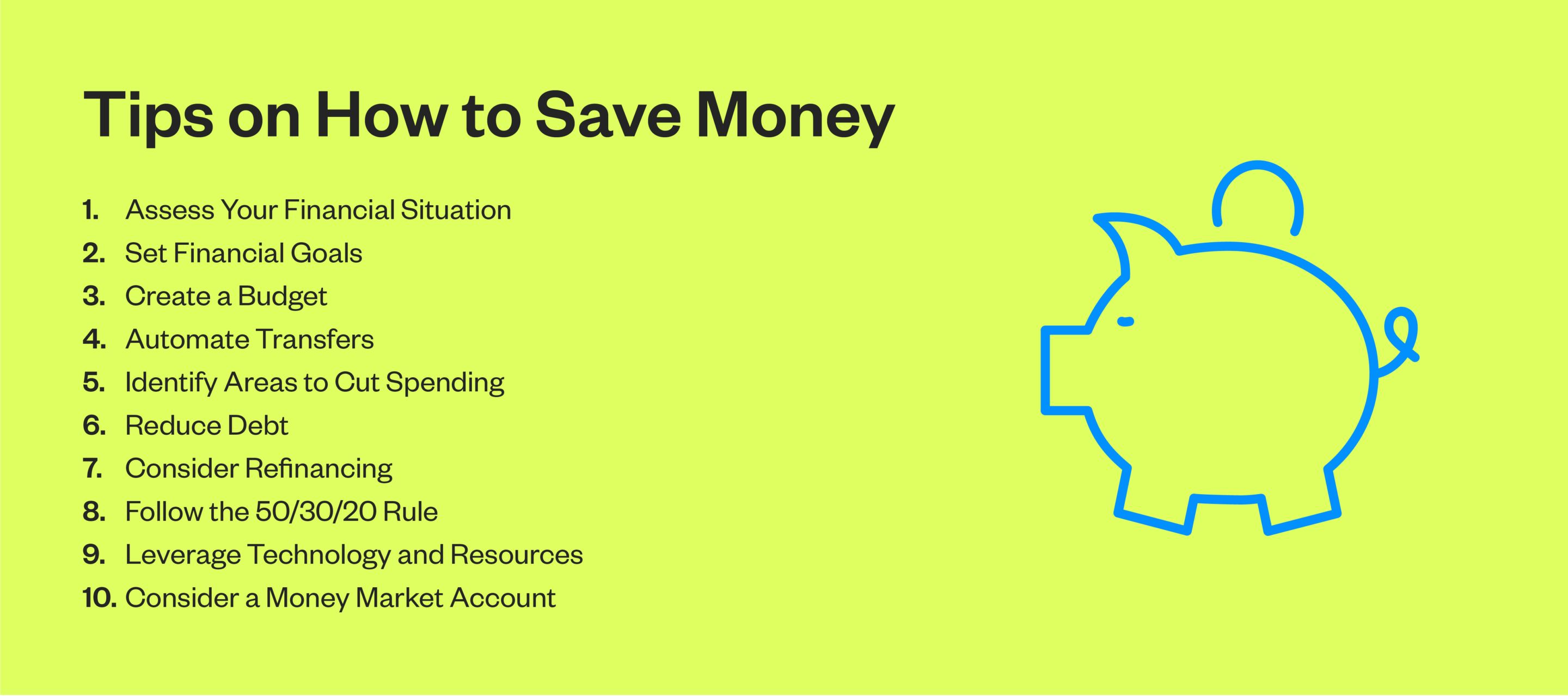
One of the most effective frameworks for modern budgeting is the 50/30/20 rule. This method allocates 50% of after-tax income to “Needs” (housing, utilities, groceries), 30% to “Wants” (dining out, hobbies, travel), and 20% to “Savings and Debt Repayment.” This structure ensures that even while enjoying the fruits of one’s labor, a significant portion of income is consistently diverted toward wealth accumulation. For those aiming for accelerated financial independence, many choose to invert the “Wants” and “Savings” categories, aiming for a 40% or 50% savings rate.
Leveraging High-Yield Savings Accounts (HYSA)
Traditional brick-and-mortar banks often offer negligible interest rates on savings. To protect the purchasing power of your capital against inflation, it is essential to utilize High-Yield Savings Accounts (HYSAs). These accounts, often provided by digital-first financial institutions, offer interest rates significantly higher than the national average. By keeping your emergency fund in an HYSA, you ensure your liquid cash is working for you, generating passive returns while remaining accessible for urgent needs.
The Psychology of “Paying Yourself First”
The most common mistake in personal finance is saving what remains after spending. To break this cycle, one must adopt the “Pay Yourself First” mentality. This involves automating a transfer to your savings or investment accounts the moment your paycheck hits. By removing the decision-making process, you treat your savings goal with the same urgency as a mortgage or utility bill.
2. Optimizing the Modern Cost of Living
In a globalized economy, the “lifestyle creep” phenomenon often erodes the benefits of career advancement. As income increases, so too does the standard of living, often leaving the net savings rate stagnant. Realizing significant savings requires a surgical analysis of recurring costs and consumption habits.
Deconstructing the Subscription Economy
We live in a “subscription-first” world, where everything from software and entertainment to vitamins and clothing is billed monthly. Individually, these costs seem nominal; collectively, they represent a significant drain on capital. A quarterly “subscription audit” is vital. By identifying underutilized services and canceling redundant platforms, the average household can often recover hundreds, if not thousands, of dollars annually.
Strategic Debt Management and Refinancing
Not all debt is created equal, but high-interest consumer debt—specifically credit card debt—is the primary enemy of saving. Carrying a balance at a 20% or 25% APR makes wealth accumulation virtually impossible. Saving money in this context means prioritizing debt “avalanches” (paying off the highest interest first) or “snowballs” (paying off the smallest balance first for psychological momentum). Furthermore, refinancing high-interest loans or mortgages during favorable interest rate environments can save tens of thousands of dollars over the life of the loan.
Mindful Consumption vs. Frugality
There is a distinction between being cheap and being frugal. Frugality is the intentional use of resources to maximize value. This involves adopting a “quality over quantity” mindset. Purchasing a high-quality item that lasts a decade is a more effective saving strategy than replacing a low-quality item every year. Additionally, practicing the “30-day rule” for non-essential purchases—waiting a full month before buying—allows the initial dopamine hit to fade, often revealing that the “need” was merely a fleeting impulse.

3. Expanding the Income Equation and Tax Efficiency
Saving is limited by the “floor” of your expenses, but it is empowered by the “ceiling” of your income. To truly save at scale, one must look beyond simple cost-cutting and focus on maximizing the net amount available to be saved.
Scaling Side Hustles into Secondary Income Streams
In the digital age, the barriers to entry for generating additional income are lower than ever. Whether through consulting, freelancing, or e-commerce, a side hustle provides a dual benefit: it increases your total income and often allows for tax deductions related to business expenses. If the entirety of a side hustle’s profit is funneled directly into savings or investments, it can shave years off a retirement timeline.
Maximizing Tax-Advantaged Investment Vehicles
Saving money is as much about what you keep as what you earn. Utilizing tax-advantaged accounts like the 401(k), 403(b), or IRAs (Traditional and Roth) is essential. These accounts allow your savings to grow tax-deferred or tax-free. Furthermore, many employers offer matching contributions—this is effectively a 100% return on your investment and should be the first priority in any savings strategy. Failing to capture an employer match is essentially leaving free money on the table.
Investing in Marketable Skills and Self-Education
The highest return on investment (ROI) often comes from increasing your own earning potential. Saving $500 a month through strict budgeting is admirable, but increasing your salary by $20,000 through a certification or advanced degree provides a much larger pool for potential savings. A portion of your savings should always be earmarked for “Personal R&D”—books, courses, and networking that elevate your market value.
4. Financial Tools and Technical Efficiency
The modern saver has access to a suite of technological tools that were unavailable to previous generations. These tools provide the data and automation necessary to maintain a high savings rate with minimal friction.
AI-Driven Budgeting and Tracking Apps
Manual spreadsheets are effective but time-consuming. Modern financial apps use AI to categorize spending automatically, identify trends, and alert users to anomalies. Tools that provide a “Net Worth” overview are particularly powerful; seeing your total assets climb relative to your liabilities provides the psychological reinforcement needed to stay disciplined.
The Power of “Micro-Saving” and Round-Ups
For those who struggle with the discipline of large transfers, “round-up” apps offer a frictionless entry point. These tools round up every transaction to the nearest dollar and invest or save the difference. While the amounts seem small, over the course of a year, this “invisible” saving can accumulate into a significant emergency fund or the seed money for a new investment.
Cashback Ecosystems and Reward Optimization
If you have the discipline to pay off credit card balances in full every month, credit card rewards can be a legitimate saving tool. By aligning your spending with cards that offer high cashback percentages on your most frequent categories (such as groceries or travel), you effectively receive a 2% to 5% discount on your life. When these rewards are redirected into a savings account rather than spent on luxuries, they become a component of your broader financial strategy.

Conclusion: The Long-Term Vision
Saving money is not an end in itself; it is a means to an end. Whether the goal is early retirement, starting a business, or providing a legacy for the next generation, the principles remain the same: spend less than you earn, invest the difference wisely, and remain disciplined in the face of consumerist pressure.
The most successful savers are those who view their finances through a professional lens. They understand that every dollar saved is a “worker” that can be sent out to earn more dollars through the power of compound interest. By mastering budgeting fundamentals, optimizing the cost of living, increasing income potential, and utilizing modern financial tools, anyone can move from a state of financial fragility to one of enduring wealth and security. The journey to financial independence is a marathon, not a sprint, and every small adjustment made today compounds into a significantly more prosperous tomorrow.
aViewFromTheCave is a participant in the Amazon Services LLC Associates Program, an affiliate advertising program designed to provide a means for sites to earn advertising fees by advertising and linking to Amazon.com. Amazon, the Amazon logo, AmazonSupply, and the AmazonSupply logo are trademarks of Amazon.com, Inc. or its affiliates. As an Amazon Associate we earn affiliate commissions from qualifying purchases.