
The cinematic experience has undergone several radical transformations since the days of silent films and monochromatic screens. While the industry spent decades perfecting visual fidelity through 4K resolution and auditory depth through Dolby Atmos, the physical dimension of storytelling—the sense of touch and movement—remained largely untapped. This is where D-BOX enters the technological landscape. D-BOX is a sophisticated haptic motion system that synchronizes on-screen action with physical feedback, effectively adding a “third dimension” to the sensory experience of media.
Unlike traditional “4D” theaters that rely on environmental effects like water mist or scents, D-BOX focuses exclusively on precision-engineered motion and vibration. By leveraging advanced actuators and proprietary software, D-BOX transforms the act of watching a film into a high-fidelity physical engagement. To understand what a D-BOX movie theater is, one must look past the seat itself and into the complex ecosystem of hardware and software that powers it.
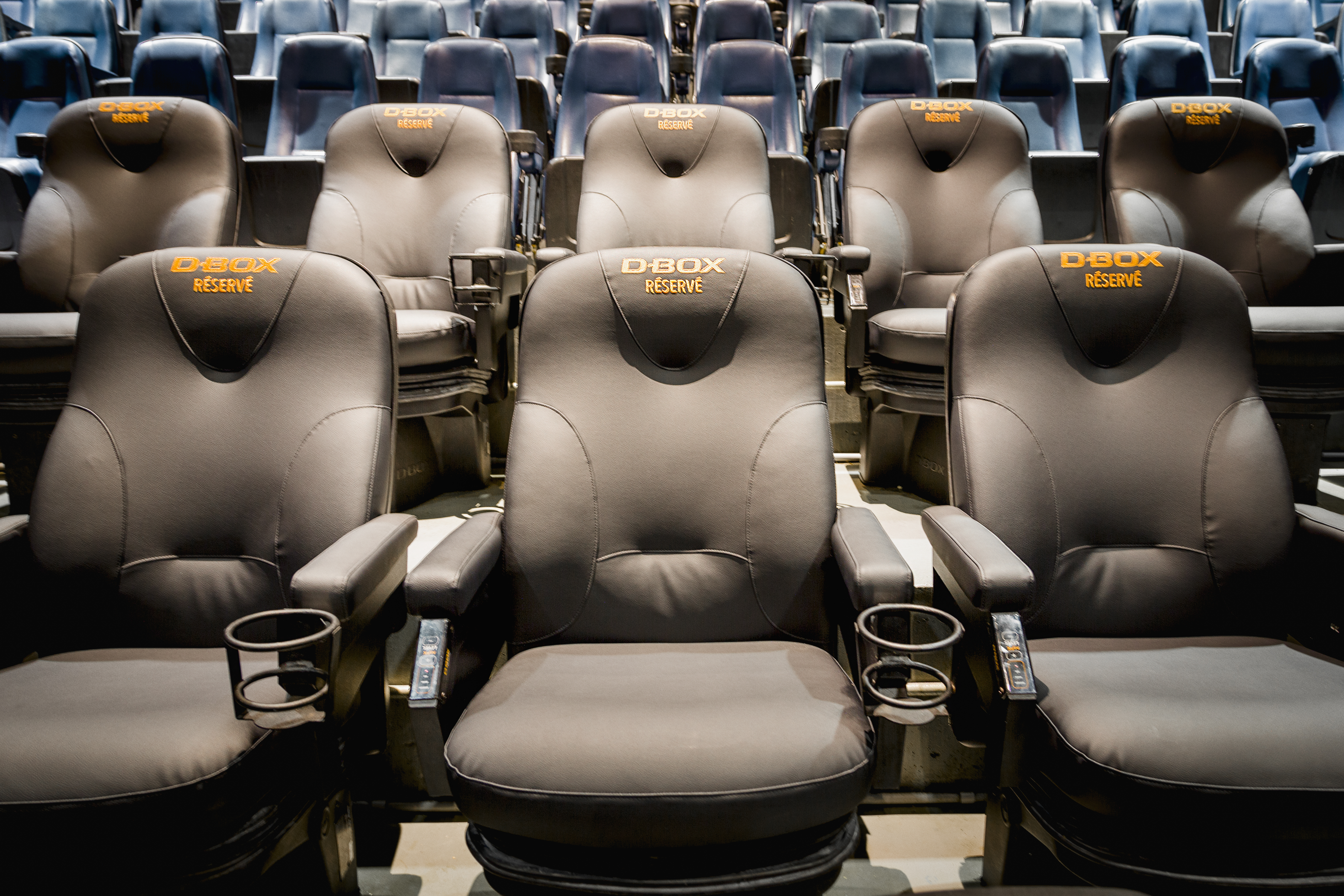
The Mechanics of Motion: Haptic Feedback and Actuators
At the core of the D-BOX experience lies a sophisticated array of hardware components designed to mimic physics with extreme accuracy. Unlike the bulky hydraulic systems used in early flight simulators, D-BOX utilizes electro-mechanical actuators. These devices are the “engines” of the seat, responsible for translating digital data into physical movement.
The Physics of Three Degrees of Freedom (3DoF)
D-BOX technology is built around the concept of “Degrees of Freedom” (DoF). Most high-end D-BOX installations in modern theaters utilize a system that provides three specific types of movement: pitch, roll, and heave.
- Pitch refers to the forward and backward tilting, simulating the sensation of a car braking or an airplane climbing.
- Roll is the side-to-side tilting, essential for mimicking the swaying of a ship or a high-speed cornering maneuver in a racing sequence.
- Heave involves vertical movement—up and down—which allows the viewer to feel the impact of a landing or the subtle vibrations of a cobblestone road.
By combining these three axes of movement with varying intensities, the system can replicate almost any physical sensation, from the massive G-forces of a space shuttle launch to the subtle heartbeat of a character in a suspenseful thriller.
High-Frequency Vibrations and Intelligent Haptics
Beyond the large-scale movements, D-BOX seats are equipped with haptic motors capable of generating high-frequency vibrations. This is where the “tech” truly separates itself from “gimmick.” These actuators can vibrate at frequencies that the human body interprets as textures or engine hums. For instance, a designer can program the seat to vibrate differently for a smooth electric car engine versus a sputtering vintage diesel truck. This level of granular detail is achieved through rapid-response electromagnetic pulses, ensuring that there is zero perceptible latency between the visual on-screen and the physical response in the seat.
The Software Layer: D-BOX Motion Code and Synchronization
Hardware is only half of the equation. The “intelligence” of a D-BOX theater resides in its proprietary software and the specialized data stream known as “D-BOX Motion Code.” This is not a simple automated response to audio frequencies (like a subwoofer “shaker”); it is a meticulously choreographed data track.
The Art of Motion Coding
Every frame of a D-BOX-enabled film is analyzed by specialized “Motion Designers.” These are technicians who work closely with film studios to ensure that the physical feedback aligns with the director’s vision. They use a proprietary software suite to “score” the movie, much like a composer scores a soundtrack.
For every scene, the motion designer decides the intensity, the direction, and the frequency of the movement. If a character closes a heavy door on the left side of the screen, the designer can trigger a subtle haptic “thud” specifically in the left-side actuators of the theater seats. This manual coding process ensures that the motion is purposeful and narrative-driven, rather than a constant, distracting vibration.
The D-BOX HEM (Haptic Experience Management) System
In a commercial theater setting, the synchronization of this data is managed by the HEM system. This server-side technology interfaces directly with the theater’s digital cinema server (DCP). As the movie plays, the HEM extracts the Motion Code and distributes it via a dedicated network to the individual seats.

The tech stack involved here must be incredibly robust. To maintain immersion, the motion must be synchronized within milliseconds of the audio and video. If the seat tilts even a fraction of a second after a car turns on screen, it can cause motion sickness or break the viewer’s immersion. D-BOX uses a high-speed communication protocol to ensure that the latency is lower than the human threshold of perception, creating a seamless “brain-to-body” connection.
Ecosystem Integration: From Commercial Cinema to the Home
While most people encounter D-BOX in a commercial theater, the company’s technological footprint has expanded significantly. The architecture of the D-BOX ecosystem is designed to be modular, allowing the same high-fidelity motion code to be used across different hardware platforms.
The HaptiSync Hub
For home theaters and enthusiasts, D-BOX developed the HaptiSync technology. This is a breakthrough in digital synchronization. The HaptiSync Hub uses integrated audio sensors to “listen” to the movie or game being played. It then matches the audio signature against a cloud-based library of thousands of Motion Codes. Once a match is found, it streams the synchronized motion data to the user’s haptic chair. This eliminates the need for complex wiring into the video source and allows D-BOX to work with streaming services like Netflix, Disney+, and HBO Max.
Expansion into Gaming and VR
The tech industry’s push toward the Metaverse and Virtual Reality (VR) has provided a new frontier for D-BOX. In gaming, the motion isn’t pre-coded; it is generated in real-time based on the game engine’s physics. D-BOX provides SDKs (Software Development Kits) for popular engines like Unity and Unreal Engine.
When a gamer plays a racing simulator, the D-BOX system pulls telemetry data—such as tire slip, suspension travel, and RPM—directly from the game’s code. This real-time data processing represents the pinnacle of haptic technology, as the hardware must respond to unpredictable user inputs instantly. In VR, this motion is critical for reducing “simulator sickness,” as it aligns the inner ear’s vestibular system with the visual movement perceived through the headset.
The Future of Haptic Immersion: AI and Adaptive Tech
As we look toward the future of cinema and interactive media, D-BOX is evolving to incorporate more adaptive and automated technologies. The manual “coding” of movies is labor-intensive, and the next step in this technological evolution involves Artificial Intelligence.
AI-Generated Motion Tracks
One of the most exciting developments in haptic tech is the use of AI to analyze video and audio files to generate motion tracks automatically. By using machine learning models trained on decades of manually coded D-BOX content, software can now predict the appropriate physical response for a given scene. While “Director’s Cut” motion will likely always require a human touch, AI allows for the rapid deployment of haptic feedback for live broadcasts, such as sporting events or news, where manual coding is impossible.
Personalization and Biometric Feedback
Modern D-BOX seats in high-end “Lux” theaters are beginning to offer more than just preset movements. The technology is moving toward personalization. Through a control panel on the armrest, users can already adjust the “intensity” of the motion. However, future iterations may include biometric sensors that adjust the haptic feedback based on the viewer’s heart rate or skin conductance, intensifying the movement during high-stress scenes to mirror the character’s physiological state.
From a tech perspective, this represents a shift from “broadcast” haptics (the same for everyone) to “responsive” haptics. It turns the movie theater seat into a sophisticated piece of wearable technology, albeit one that you sit on rather than wear.
Conclusion: The Technological Significance of the D-BOX Experience
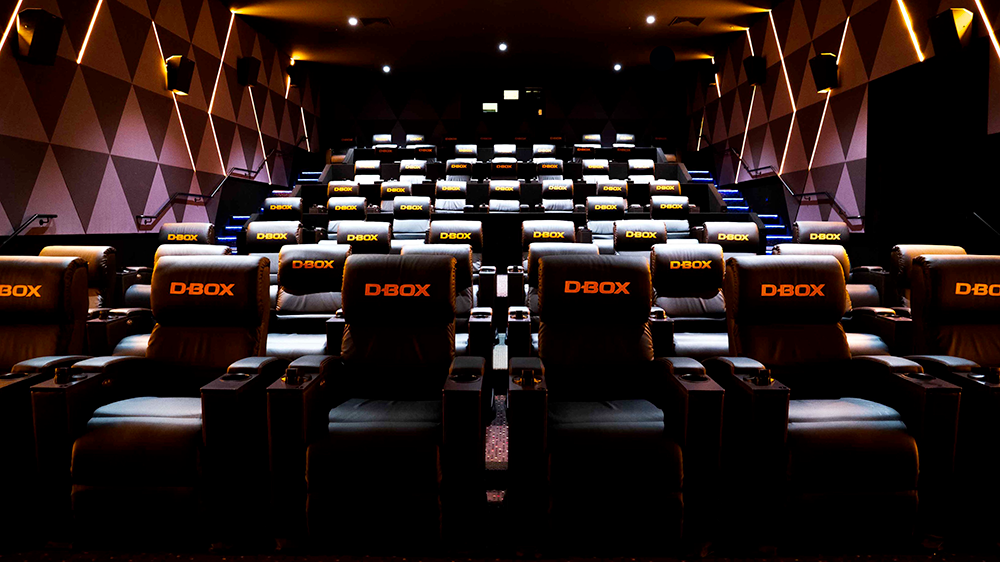
A D-BOX movie theater is far more than just a room with vibrating chairs. It is a testament to the sophistication of modern haptic engineering and digital synchronization. By bridging the gap between digital data and physical sensation, D-BOX has solved one of the longest-standing challenges in media technology: how to involve the human tactile system in a non-interactive medium.
Through the use of high-precision electro-mechanical actuators, a dedicated Motion Code data stream, and low-latency synchronization servers, D-BOX provides a level of immersion that visual and audio upgrades alone cannot achieve. As the technology continues to integrate with AI and real-time game engines, the line between “watching” a story and “feeling” a story will continue to blur. For the tech-savvy cinephile, D-BOX represents the current peak of sensory hardware integration in the entertainment industry.
aViewFromTheCave is a participant in the Amazon Services LLC Associates Program, an affiliate advertising program designed to provide a means for sites to earn advertising fees by advertising and linking to Amazon.com. Amazon, the Amazon logo, AmazonSupply, and the AmazonSupply logo are trademarks of Amazon.com, Inc. or its affiliates. As an Amazon Associate we earn affiliate commissions from qualifying purchases.