
In the early days of networked computing, navigating the digital landscape was a task reserved for specialists who memorized complex numerical strings. Today, we take for granted the simplicity of typing a name followed by a short suffix into a browser. Among these suffixes, one reigns supreme in both recognition and usage: .com. But when we ask “what is .com called,” we are peeling back the first layer of the global Domain Name System (DNS), a sophisticated hierarchical naming system that serves as the backbone of the modern internet.
To the average user, .com is simply part of a website address. To a technologist, however, .com is a “Top-Level Domain” (TLD). Understanding what this means requires an exploration of internet protocols, the transition from numerical IP addresses to human-readable labels, and the technical infrastructure that allows billions of devices to communicate instantaneously across the globe.
The Anatomy of a URL: Defining the Top-Level Domain (TLD)
When discussing what .com is called, the technical term is a Top-Level Domain (TLD). In the hierarchy of the Domain Name System, the TLD is the final segment of a domain name—the part that follows the final “dot.” If we look at a URL like www.example.com, “example” is the second-level domain (SLD), and “.com” is the TLD.
The Hierarchical Structure of DNS
The Domain Name System is organized like an inverted tree. At the very top is the “Root Zone,” which is technically represented by an empty string or a silent dot (though users rarely see it). Below the root zone sit the TLDs. These are managed by specific registries that oversee the database of all domain names registered under that extension.
The .com TLD is categorized as a generic Top-Level Domain (gTLD). Unlike country-code Top-Level Domains (ccTLDs) such as .uk or .jp, which are reserved for specific geographic entities, gTLDs are intended for general use. The nomenclature “.com” was derived from the word “commercial,” indicating its original purpose for business and corporate entities.
The Role of the Root Zone
Every time a user enters a .com address, the request begins at the DNS root servers. These servers do not know the IP address of example.com, but they do know where to find the “registry” for the .com TLD. The root zone serves as the ultimate authority, directing the computer’s request to the appropriate TLD nameserver. Without this organized hierarchy, the internet would be a chaotic collection of disconnected servers with no centralized way to translate names into locations.
The Evolution of the Commercial Domain: From ARPANET to Global Standard
The history of the .com TLD is synonymous with the history of the commercial internet. In the mid-1980s, as the internet transitioned from the military-funded ARPANET to a more public-facing network, the need for a standardized naming convention became apparent. On January 1, 1985, .com was introduced as one of the original TLDs, alongside .edu, .gov, .mil, .net, and .org.
The First .com Registration
The technical milestone for .com occurred on March 15, 1985, when the domain symbolics.com was registered by Symbolics Inc., a computer systems company. At that time, the internet was primarily used by research institutions and government agencies. The “commercial” designation was a visionary step, anticipating a future where private enterprise would dominate the digital space.
Why “Commercial” Became the Default
While other TLDs were restricted—such as .gov for government entities and .edu for accredited institutions—.com remained relatively open. This flexibility, combined with the explosive growth of e-commerce in the 1990s, cemented .com as the default “neighborhood” of the web. Technologically, the infrastructure supporting .com had to scale at an unprecedented rate. What began as a small file (the HOSTS.txt file) manually updated by researchers evolved into a globally distributed database managed by automated protocols.
How the Domain Name System (DNS) Processes .com Requests

Understanding what .com is called also requires understanding how it functions within a network request. The process of turning example.com into an IP address (like 192.0.2.1) is known as DNS resolution. This technical “handshake” happens in milliseconds but involves multiple layers of communication.
The Recursive Resolver and the Root Server
When you click a link, your device queries a “Recursive Resolver” (usually provided by your ISP or a service like Cloudflare). The resolver starts at the top of the hierarchy. It asks the Root Server: “Where is the .com TLD?” The Root Server responds with the location of the .com TLD nameservers.
TLD Nameservers: The Gatekeepers of .com
The .com TLD nameservers are managed by a registry—currently Verisign. These servers maintain a massive directory of every registered .com domain. When the resolver asks the .com nameserver for example.com, the TLD server points the resolver toward the “Authoritative Nameserver” for that specific domain. This final server provides the actual IP address of the website’s hosting server.
This multi-step process ensures that the internet remains decentralized. No single server has to store every record; instead, the .com TLD serves as a specialized directory that handles only “commercial” requests, distributing the technical load across a global network.
The Different Flavors of TLDs: Beyond the Standard .com
While .com is the most famous, it is part of a larger family of extensions. As the web expanded, the original “Big Six” TLDs were not enough to accommodate the millions of new users and businesses. This led to the expansion of the TLD space into different technical categories.
gTLDs vs. ccTLDs
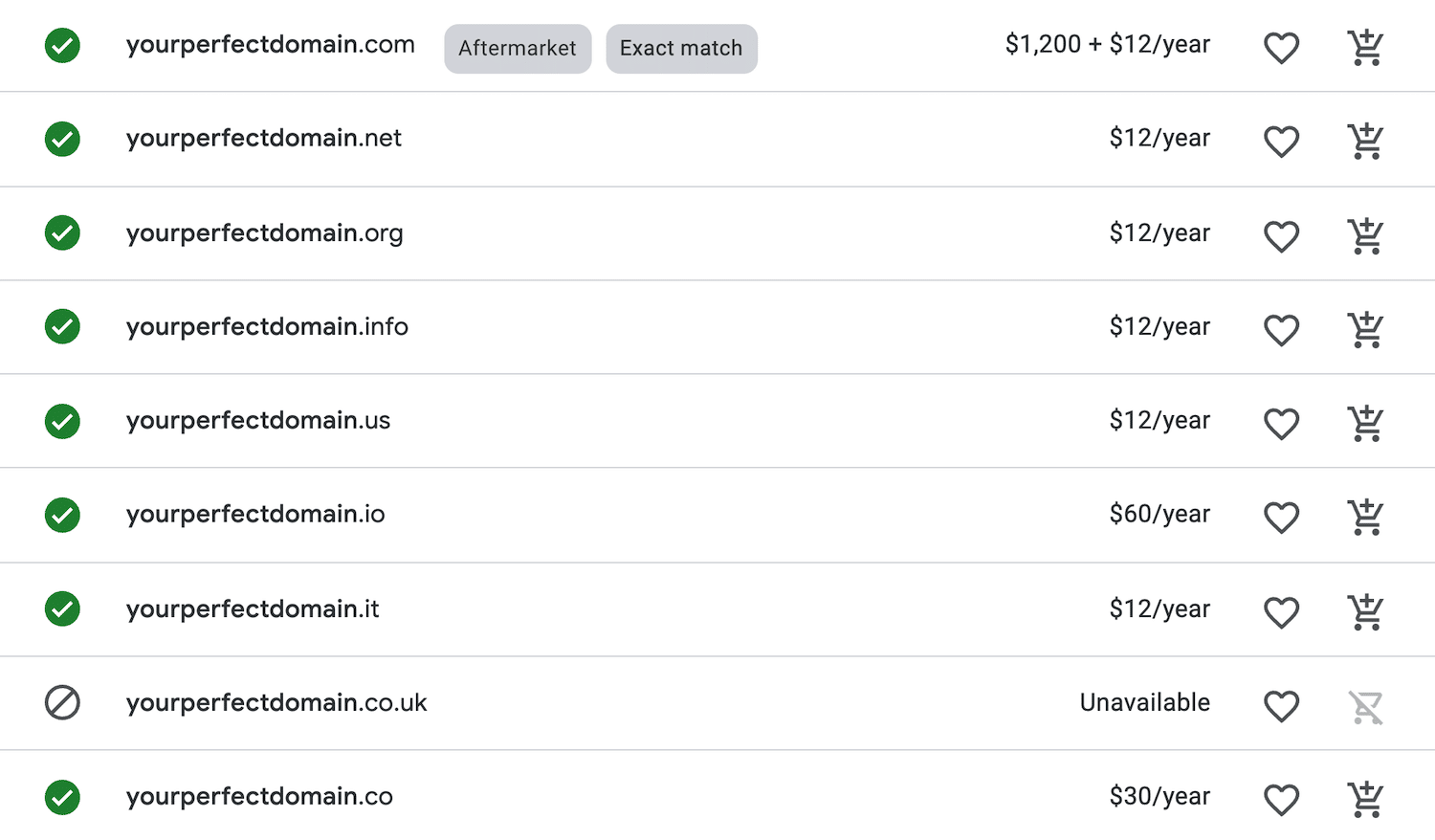
As mentioned, .com is a generic Top-Level Domain (gTLD). In contrast, country-code Top-Level Domains (ccTLDs) are two-letter suffixes like .ca (Canada) or .de (Germany). Technically, ccTLDs are often managed by national registries and may have specific residency requirements. The .com TLD remains the most technically “neutral” as it is accessible to anyone regardless of their physical location, which contributed to its global dominance.
The Rise of New gTLDs (nTLDs)
In 2012, ICANN (the Internet Corporation for Assigned Names and Numbers) opened the doors for a massive expansion of the TLD space. This introduced hundreds of “New gTLDs” (nTLDs) like .tech, .app, and .security. These operate on the same technical DNS protocols as .com, but they allow for more granular categorization. Despite this influx of competition, the technical reliability and historical legacy of the .com registry maintain its status as the most robust and widely recognized TLD in existence.
Security and Management of the .com Registry
Because .com is the primary gateway for global commerce, its security is a matter of international importance. If the .com TLD were to fail or be compromised, a significant portion of the global economy would go offline. This makes the management of the .com registry a high-stakes technical operation.
Verisign and the Governance of the Web
Since the late 1990s, the technical operation of the .com TLD has been handled by Verisign under a contract with ICANN. Verisign operates several of the world’s 13 root servers and manages the .com registry with “five-nines” (99.999%) availability. This requires massive server farms, sophisticated DDoS (Distributed Denial of Service) protection, and real-time synchronization of global databases to ensure that when a new .com is registered, it propagates across the entire internet almost instantly.
DNSSEC and Protecting the Infrastructure
One of the most critical technical advancements in the .com space is the implementation of DNS Security Extensions (DNSSEC). DNSSEC adds a layer of cryptographic signatures to the DNS resolution process. It ensures that when a resolver asks for a .com address, the response it receives is authentic and has not been intercepted or forged by a malicious actor. By signing the .com zone, the registry provides a “chain of trust” from the root of the internet down to the individual domain name, protecting users from “cache poisoning” and other sophisticated cyberattacks.
In summary, while we may casually refer to it as “dot-com,” it is officially known as a Top-Level Domain. It is a fundamental component of the internet’s technical architecture, a legacy of the early commercialization of networking, and a highly secured database that facilitates the modern digital world. From the first registration in 1985 to the multi-layered DNSSEC-protected environment of today, .com remains the definitive standard for how we identify and locate information in the vast expanse of the web.
aViewFromTheCave is a participant in the Amazon Services LLC Associates Program, an affiliate advertising program designed to provide a means for sites to earn advertising fees by advertising and linking to Amazon.com. Amazon, the Amazon logo, AmazonSupply, and the AmazonSupply logo are trademarks of Amazon.com, Inc. or its affiliates. As an Amazon Associate we earn affiliate commissions from qualifying purchases.