
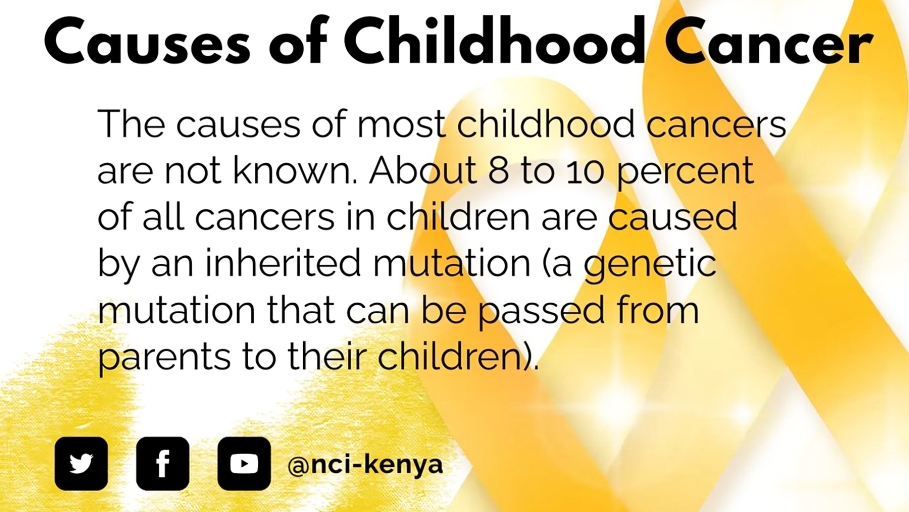
For decades, the question of what causes childhood cancer has remained one of the most poignant mysteries in modern medicine. Unlike adult cancers, which are often linked to lifestyle factors such as smoking, diet, or environmental pollutants accumulated over a lifetime, pediatric oncology presents a different set of challenges. Childhood cancers are rarely the result of long-term exposure. Instead, they are deeply rooted in the biological blueprints of development.
Today, the quest to understand these causes has shifted from the traditional laboratory bench to the high-powered server room. The integration of cutting-edge technology—ranging from AI-driven genomic sequencing to big data analytics—is finally peeling back the layers of complexity surrounding pediatric malignancies. By leveraging the latest in digital security, software engineering, and hardware innovation, researchers are identifying the genetic and environmental triggers that lead to these devastating diagnoses.
1. The Genomic Revolution: Next-Generation Sequencing (NGS) and Data Processing
At the heart of identifying the causes of childhood cancer is the study of the human genome. Traditional microscopy and basic genetic testing were limited in scope, but the advent of Next-Generation Sequencing (NGS) has revolutionized our capability to see the “why” behind the disease.
The Power of Whole Genome Sequencing (WGS)
Whole Genome Sequencing involves scanning the entire 3.2 billion base pairs of the human genome. In the context of childhood cancer, this technology allows researchers to identify “germline” mutations—inherited genetic variations that predispose a child to cancer—as well as “somatic” mutations that occur spontaneously during fetal development. By utilizing high-throughput sequencing hardware, scientists can now process a child’s entire genetic map in days rather than years, pinpointing specific structural variations that trigger the uncontrolled growth of cells.
Bioinformatics: The Software Behind the Science
Raw genetic data is essentially useless without the software required to interpret it. Bioinformatics platforms are the unsung heroes of pediatric oncology. These sophisticated software suites use algorithms to filter out “noise” (benign genetic variations) to find the “signal” (pathogenic mutations). By comparing the genetic data of healthy children with those diagnosed with cancer, these tools can identify recurring patterns across thousands of cases, highlighting specific gene clusters that may be responsible for the onset of pediatric leukemia or neuroblastoma.
Liquid Biopsies and Non-Invasive Diagnostic Tech
One of the most exciting technological trends is the development of “liquid biopsy” technology. This involves using high-sensitivity sensors to detect circulating tumor DNA (ctDNA) in a simple blood sample. For researchers trying to understand the origins of cancer, liquid biopsies offer a real-time window into how cancer cells evolve at the earliest stages of a child’s life, providing data that was previously impossible to obtain without invasive and dangerous surgeries.
2. Artificial Intelligence and Machine Learning: Connecting Environmental and Genetic Dots
If genomics provides the map, Artificial Intelligence (AI) provides the navigator. One of the greatest challenges in determining the causes of childhood cancer is the sheer volume of variables. Researchers must account for genetic predisposition, maternal health during pregnancy, and potential environmental exposures.
Predictive Modeling and Pattern Recognition
Machine learning algorithms are uniquely suited to handle multi-dimensional datasets. By feeding AI systems vast amounts of data—including electronic health records (EHRs), environmental sensor data, and genetic profiles—researchers can create predictive models. For instance, AI can analyze geographical clusters of childhood cancer cases and cross-reference them with satellite imagery or sensor data tracking air and water quality. This allows technology to identify potential environmental triggers that a human researcher might overlook.
Deep Learning in Histopathology
Understanding the cause of a cancer often requires looking at the cellular level. AI-powered digital pathology tools use deep learning to analyze images of tumor cells with a level of precision that exceeds human capability. These tools can identify minute morphological changes in cells that indicate a specific developmental error. By understanding exactly how a cell “went wrong” during a child’s development, researchers can work backward to identify the biological catalyst—whether it be a specific protein malfunction or a localized genetic glitch.
Accelerating Drug Discovery and Causal Research
AI isn’t just identifying causes; it’s simulating them. Virtual “digital twins” of cellular environments allow researchers to simulate how certain genetic mutations respond to different triggers in a software-controlled environment. This reduces the need for years of animal testing and allows for the rapid identification of the molecular pathways that lead to tumor formation. In the tech-driven world of modern medicine, finding the cause and finding the cure are becoming two sides of the same coin.
3. Big Data and Global Biobanks: The Role of Collaborative Cloud Computing
Childhood cancer is, thankfully, rare compared to adult cancer. However, this rarity makes it difficult for any single hospital or research center to gather enough data to identify definitive causes. This is where cloud computing and big data come into play.
Breaking Down Data Silos
In the past, research data was often locked away in local servers, inaccessible to the global scientific community. Today, cloud-based platforms like the St. Jude Cloud or the National Cancer Institute’s Data Commons provide a centralized repository for pediatric genomic data. These platforms use high-performance computing (HPC) to allow researchers from across the globe to run complex simulations and analyses on a shared dataset. By aggregating data from tens of thousands of cases worldwide, tech is helping researchers find the “rare of the rare” causes that occur in only a handful of children each year.
Digital Security and Patient Privacy
When dealing with the genetic data of children, digital security is paramount. The infrastructure supporting childhood cancer research must adhere to the highest standards of data encryption and cybersecurity. Technologies like blockchain are being explored to ensure that patient data is anonymized and secure, yet still accessible for legitimate scientific inquiry. This balance of transparency and security is what allows large-scale collaborative studies to exist, providing the statistical power needed to confirm the causes of various pediatric cancers.
Standardizing Pediatric Oncology Data
One of the tech industry’s greatest contributions to this field is the standardization of data formats. Through the use of APIs (Application Programming Interfaces) and standardized data protocols, disparate systems can “talk” to one another. This interoperability ensures that a genomic sequence generated in a lab in Tokyo can be seamlessly integrated with clinical data from a hospital in New York. This global synchronization is essential for identifying the subtle, cross-border environmental or genetic factors that might be contributing to the global rise in certain pediatric diagnoses.
4. The Future of Tech-Driven Oncology: Precision Diagnostics and Functional Genomics
As we look toward the future, the technology used to identify the causes of childhood cancer is becoming more proactive and personalized. We are moving away from broad generalizations toward “precision medicine,” where the cause is identified on an individual basis.
CRISPR and Functional Genomics
CRISPR-Cas9 and other gene-editing technologies are no longer just potential treatments; they are vital diagnostic tools. By using CRISPR to “knock out” specific genes in a lab setting, researchers can observe the resulting cellular behavior. This functional genomics approach allows scientists to prove that a specific genetic error actually causes the cancer, rather than just being associated with it. It is the ultimate “stress test” for genetic hypotheses.
Wearable Tech and Real-Time Environmental Monitoring
In the coming years, the integration of wearable technology and IoT (Internet of Things) sensors could provide even more clues. If a child has a genetic predisposition to cancer, wearable devices could monitor physiological changes or environmental exposures in real-time. This “digital phenotyping” could provide the missing link between a child’s genetic “loaded gun” and the environmental “trigger” that causes the disease to manifest.

The Integration of Multi-Omics
The final frontier in using tech to understand the causes of childhood cancer is “Multi-Omics.” This refers to the integrated analysis of the genome (DNA), the transcriptome (RNA), the proteome (proteins), and the metabolome (metabolites). Processing this level of biological data requires astronomical amounts of computing power and sophisticated AI algorithms. By looking at all these layers simultaneously, technology is providing a holistic view of the biological breakdown that leads to cancer, offering a definitive answer to “what is causing” the disease in a way that was unimaginable only a decade ago.
The marriage of technology and oncology is not just about better treatments; it is about fundamentally understanding the origins of the disease. Through the power of NGS, the analytical capabilities of AI, the collaborative potential of the cloud, and the precision of gene editing, we are finally decoding the complex signals that lead to childhood cancer. In the world of high-tech medicine, information is the most powerful tool we have, and we are currently in the midst of an information explosion that promises to change the landscape of pediatric oncology forever.
aViewFromTheCave is a participant in the Amazon Services LLC Associates Program, an affiliate advertising program designed to provide a means for sites to earn advertising fees by advertising and linking to Amazon.com. Amazon, the Amazon logo, AmazonSupply, and the AmazonSupply logo are trademarks of Amazon.com, Inc. or its affiliates. As an Amazon Associate we earn affiliate commissions from qualifying purchases.