
Choosing a business entity is one of the most consequential financial decisions an entrepreneur or investor will ever make. While it may appear to be a mere administrative formality, the legal structure of a business serves as the foundational architecture for how capital is managed, how taxes are paid, and how personal wealth is shielded from professional risk. In the realm of business finance, an entity is not just a label; it is a strategic tool used to optimize cash flow, attract investment, and ensure long-term fiscal sustainability.

At its core, a business entity is an organization established to conduct trade or business. However, the specific type of entity chosen determines the “rules of the game” regarding the flow of money. From the simplicity of a sole proprietorship to the complex equity structures of a C-Corporation, each model offers distinct advantages and disadvantages that can either accelerate or hinder a founder’s financial goals.
Understanding the Financial Implications of Business Entities
The primary reason to distinguish between different business entities lies in taxation. The internal revenue services of most jurisdictions treat various structures differently, which can result in thousands—or even millions—of dollars in tax savings or liabilities over the life of a company.
Tax Efficiency and Pass-Through Entities
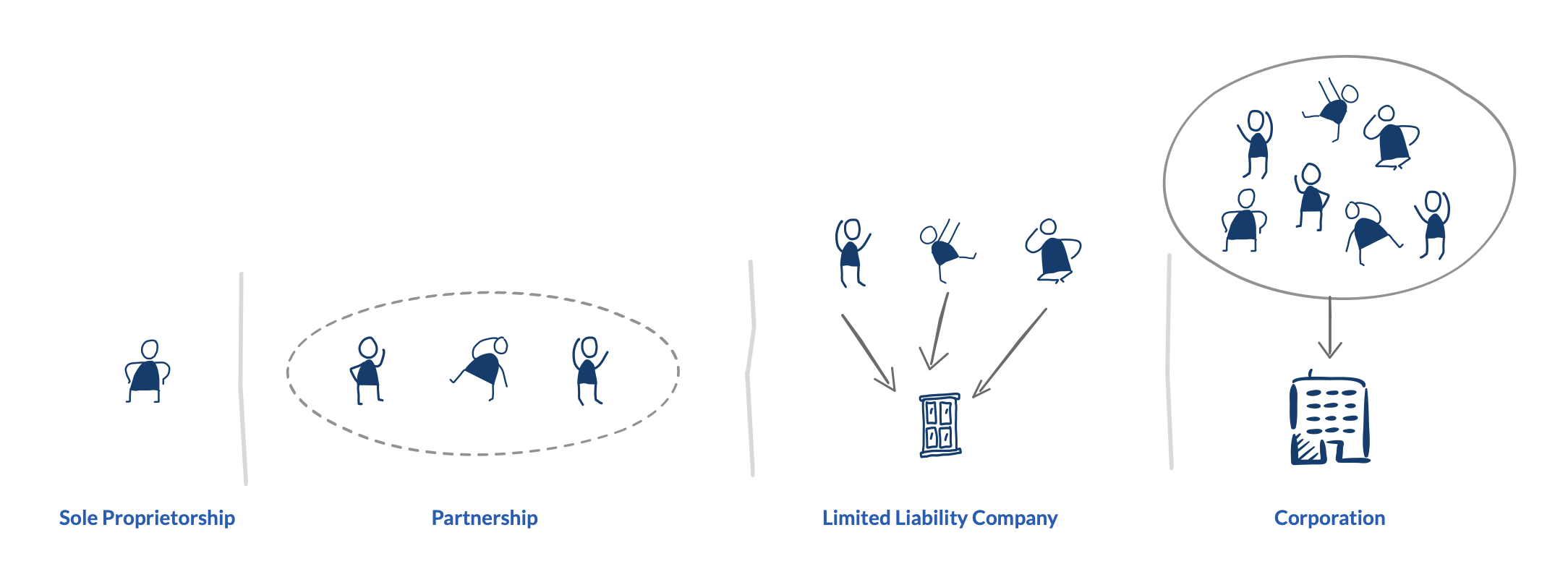
For many small to mid-sized businesses, “pass-through” entities are the preferred choice for maximizing immediate income. Structures such as Sole Proprietorships, Partnerships, and Limited Liability Companies (LLCs) are generally not taxed at the entity level. Instead, the profits and losses of the business “pass through” directly to the owners’ personal tax returns.
From a money-management perspective, this avoids the “double taxation” often associated with larger corporations. However, it also means that the business owners are responsible for paying self-employment taxes on all profits. For high-earning individuals, this can be a significant financial burden, leading many to explore the S-Corporation election. An S-Corp allows owners to split their income between a “reasonable salary” (subject to payroll taxes) and “distributions” (not subject to self-employment taxes), creating a sophisticated strategy for retaining more take-home pay.
Corporate Tax Structures and Double Taxation
In contrast, C-Corporations are recognized as entirely separate tax-paying entities. This creates a scenario known as double taxation: the corporation pays taxes on its earnings at the corporate rate, and then shareholders pay personal income taxes on any dividends received.
While this sounds disadvantageous, the C-Corp remains the gold standard for large-scale business finance. Corporate tax rates are often lower than the top individual marginal tax rates. Furthermore, C-Corps have the unique ability to retain earnings within the company to fund future growth without triggering immediate tax hits for the owners. For businesses looking to reinvest every dollar into research and development or global expansion, the corporate structure offers a level of financial flexibility that pass-through entities cannot match.
Protecting Personal Wealth: The Shield of Limited Liability
In the world of personal finance and investing, risk management is just as important as wealth generation. A business entity acts as a legal “firewall” between an individual’s private assets—such as their home, savings, and retirement accounts—and the liabilities of their business.
Separating Personal and Business Assets
The concept of “limited liability” is perhaps the most significant financial innovation in modern history. By forming an LLC or a Corporation, a business owner ensures that if the company incurs debt or is sued, only the assets owned by the business are at risk.
For the savvy investor, this separation is non-negotiable. Without a formal business entity, an entrepreneur is essentially gambling their entire personal net worth on every business transaction. Establishing a formal entity creates a clear boundary, allowing for “calculated risk.” If a venture fails, the financial damage is contained within the entity’s balance sheet, preserving the individual’s personal financial stability and allowing them to live to fight another day in the marketplace.
Risks of Sole Proprietorships and General Partnerships
Conversely, sole proprietorships and general partnerships offer no such protection. In these models, the owner and the business are seen as one and the same in the eyes of the law. If a sole proprietorship defaults on a loan, the creditor can pursue the owner’s personal bank accounts and property.
From a wealth-building perspective, these structures are often viewed as “starter” models. While they are inexpensive to set up and require minimal paperwork, the long-term financial risk often outweighs the short-term cost savings. As a business begins to generate significant revenue or enters into contracts with high liability, transitioning to a limited liability structure becomes a fundamental requirement for sound financial planning.

Choosing the Right Entity for Capital Growth and Investment
Beyond taxes and liability, the choice of business entity dictates how a company can raise capital. Whether a founder is looking for a small business loan, an angel investment, or an initial public offering (IPO), the entity structure must align with the expectations of the financial markets.
Attracting Venture Capital through C-Corps
For entrepreneurs aiming for explosive growth and high-level venture capital (VC) funding, the C-Corporation is often the only viable choice. Institutional investors prefer C-Corps because they offer standardized share classes (Common vs. Preferred stock), which allow for complex ownership structures and clear exit strategies.
From a money-raising standpoint, the C-Corp structure allows for the issuance of stock options, which is a vital tool for attracting top-tier talent without depleting cash reserves. Furthermore, certain tax incentives, such as Section 1202 Qualified Small Business Stock (QSBS), can allow investors to exclude up to 100% of their capital gains from federal taxes if the business meets specific criteria. This makes C-Corps an incredibly powerful vehicle for generating tax-free wealth for founders and early investors alike.
Scaling via LLCs and S-Corps
For businesses that do not plan to go public or seek venture capital, the LLC remains the most flexible vehicle for growth. LLCs can have an unlimited number of members and allow for “disproportionate distributions.” This means that if two partners invest different amounts of capital, the profit-sharing can be structured to reflect that financial reality, rather than being strictly tied to ownership percentages.
S-Corporations, while excellent for tax savings, have strict limitations on growth. They are limited to 100 shareholders, all of whom must be U.S. citizens or residents, and they can only issue one class of stock. For a local service business or a consulting firm, these limits are rarely an issue. However, for a tech startup with global ambitions, the S-Corp structure can become a financial bottleneck that prevents the entry of foreign investors or institutional capital.
Compliance, Maintenance, and Long-Term Financial Health
A business entity is not a “set it and forget it” solution. To maintain the financial benefits of the structure—specifically the limited liability protection—the entity must remain in “good standing” with the government.
Operational Costs and Administrative Overheads
Every entity type comes with a different price tag for maintenance. Sole proprietorships have virtually zero overhead, whereas C-Corps and LLCs require annual registration fees, franchise taxes, and potentially complex tax filings.
When calculating the ROI of a business structure, owners must account for these ongoing administrative costs. A sophisticated financial strategy involves balancing the tax savings of a structure against the cost of the CPAs and legal counsel required to manage it. For example, the S-Corp election might save an owner $10,000 in self-employment taxes, but if the additional payroll processing and tax preparation costs total $4,000, the “net” financial gain is $6,000.
Financial Reporting and Transparency
Proper business entities require strict adherence to “corporate formalities.” This includes maintaining separate bank accounts, keeping detailed meeting minutes, and ensuring that business funds are never commingled with personal funds.
From a financial auditing perspective, this transparency is invaluable. Accurate bookkeeping and entity-level financial reporting allow business owners to track key performance indicators (KPIs), manage cash flow more effectively, and present a professional “packet” to lenders when seeking financing. Failing to maintain these boundaries can lead to “piercing the corporate veil,” a legal scenario where a court ignores the entity’s protection and holds the owners personally liable because they treated the business like a personal piggy bank.
Conclusion: Strategic Alignment of Structure and Goals
Ultimately, the question of “what is a business entity” is answered by its impact on an individual’s financial trajectory. It is the legal and fiscal container for one’s professional ambitions. Whether the goal is to minimize taxes as a solo freelancer, protect a family’s assets while managing real estate, or build a multi-billion dollar enterprise, the entity is the engine that drives those results.
Selecting the right structure requires a deep dive into one’s current cash flow needs, long-term growth projections, and risk tolerance. By aligning the business entity with these financial objectives, entrepreneurs can ensure they are not only making money but also keeping it, growing it, and protecting it for the future. In the complex world of business finance, the right entity is not just a legal requirement—it is a competitive advantage.
aViewFromTheCave is a participant in the Amazon Services LLC Associates Program, an affiliate advertising program designed to provide a means for sites to earn advertising fees by advertising and linking to Amazon.com. Amazon, the Amazon logo, AmazonSupply, and the AmazonSupply logo are trademarks of Amazon.com, Inc. or its affiliates. As an Amazon Associate we earn affiliate commissions from qualifying purchases.