
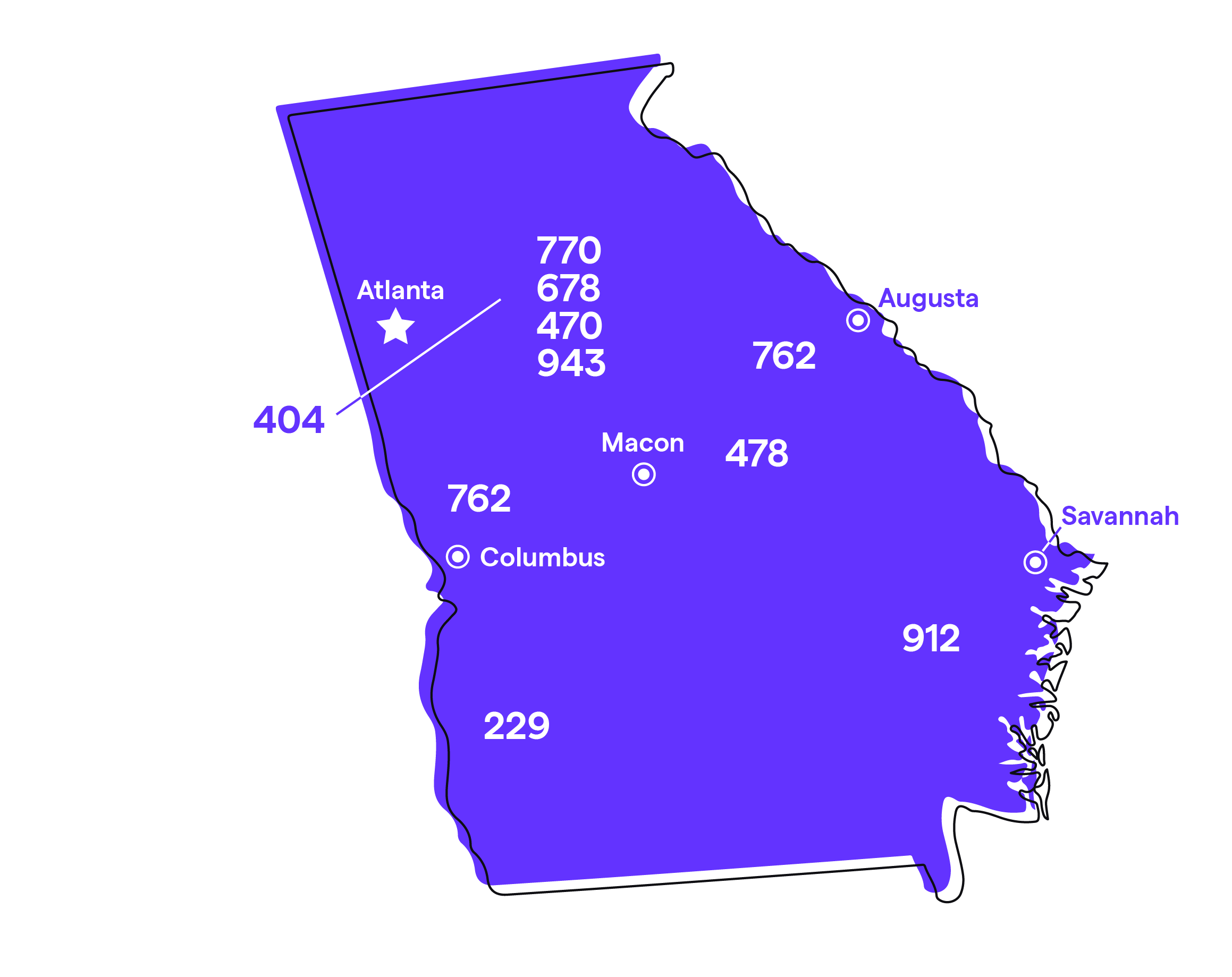
In the early days of telecommunications, a phone number was a physical map. A specific set of digits tied a household or a business to a copper wire connected to a specific central office. Today, as Atlanta solidifies its reputation as the “Silicon Orchard” of the South, the city’s area codes—404, 770, 678, and 470—have evolved from simple routing instructions into complex components of a global digital infrastructure.
Understanding the Atlanta area code system requires more than a simple list of numbers; it requires an exploration of how the North American Numbering Plan (NANP) adapts to rapid urban growth, the technical shift from analog switching to Voice over IP (VoIP), and the future of identity in a world of unified communications.

The Evolution of Atlanta’s Telecommunications Infrastructure
The story of Atlanta’s area codes is essentially a history of the city’s technological expansion. When the North American Numbering Plan was established in 1947, 404 was one of the original 86 area codes, covering the entire state of Georgia. As the technical requirements for phone lines increased with the advent of fax machines, pagers, and dial-up internet, the infrastructure had to adapt.
From 404 to the Overlay Era
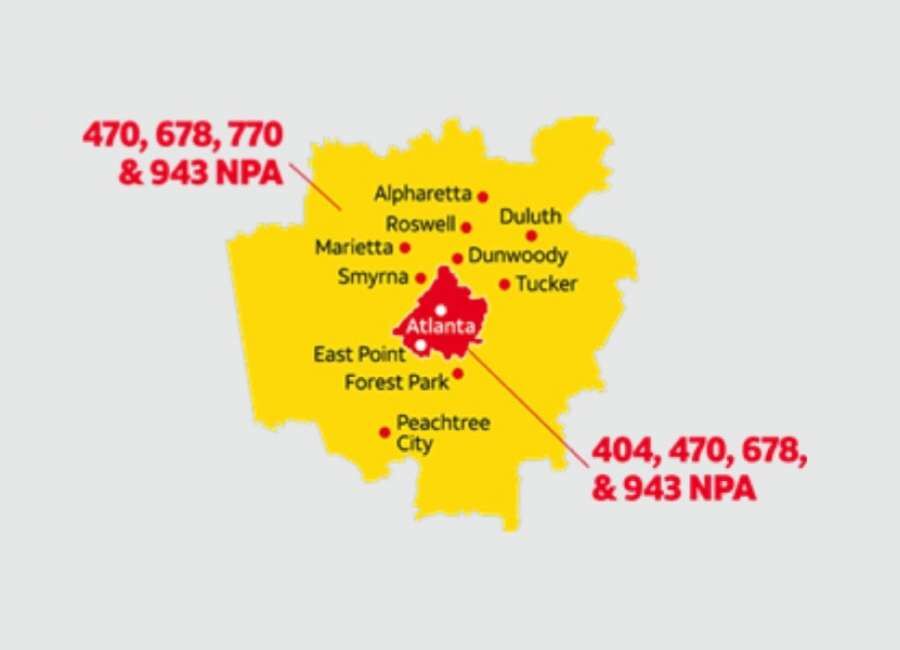
Initially, the solution to “number exhaustion” was the geographic split. In 1995, the 770 area code was introduced to serve the suburbs, while 404 was restricted to the area roughly within the Interstate 285 perimeter. However, as the tech boom of the late 90s hit, even this split wasn’t enough.
In 1998, Atlanta became one of the first major metropolitan areas to implement an “overlay.” Instead of splitting the city geographically again—which would have required businesses to change their stationery and signage—the 678 code was added to the same footprint as 404 and 770. This necessitated the transition to ten-digit dialing, a major technical shift in how local calls were routed through central office switches.
The Engineering Behind the North American Numbering Plan (NANP)
At a fundamental technical level, an area code like 404 is a Numbering Plan Area (NPA) code. The NANP structure follows a NXX-NXX-XXXX format. The first three digits (NPA) route the call to a specific region. The second three digits, known as the Central Office (CO) code or prefix, route the call to a specific switch.
For Atlanta’s network engineers, managing these codes involves coordinating with the North American Numbering Plan Administrator (NANPA) to ensure that “blocks” of numbers are allocated to service providers (like AT&T, Verizon, or bandwidth-as-a-service startups) without overlap. As Atlanta’s population and device density surged, the technical move from 404/770 to the 678 and 470 overlays demonstrated a sophisticated transition from hardware-based routing to software-defined numbering.
Navigating the Multi-Code Landscape: 404, 770, 678, and 470
Atlanta currently operates under a complex overlay system. For a technologist or a business owner, understanding which code to use is less about geography and more about availability and legacy status within the network.
The 404 Legacy: The Core of the Network
The 404 area code is the “vintage” infrastructure of Atlanta. Because it was the original code, it carries a certain level of digital prestige. From a technical perspective, 404 numbers are the most “exhausted.” Finding an available 404 number in the wild—without purchasing it from a secondary broker—is increasingly difficult.
In the backend of telecommunications databases, 404 numbers are often associated with the oldest switching stations in downtown Atlanta. When a 404 call is placed, it often traverses the most established legacy trunks before being handed off to modern fiber-optic networks.
The Rise of Overlays: How 678 and 470 Scaled Connectivity
When 678 and later 470 (introduced in 2010) were launched, they represented the modernization of Atlanta’s telephony. Unlike 404, these codes were designed in the era of mobile phones and digital exchanges.
The 470 area code, in particular, was a response to the massive influx of Internet of Things (IoT) devices, tablets with cellular data, and mobile-first residents moving to the metro area. From a network management standpoint, 470 and 678 are “boundaryless.” They cover the entire metro area, allowing for more flexible load balancing across the various digital switches that manage traffic from Gwinnett County down to the airport.
Virtual Telephony and the De-localization of Area Codes
One of the most significant shifts in the technology of Atlanta’s area codes is the rise of VoIP and virtualized numbers. In the modern tech stack, a 404 or 470 area code is no longer tethered to a physical copper wire in a Georgia soil.
VoIP and SIP Trunking: Breaking Geographical Barriers
Cloud communication platforms like Zoom, Twilio, and RingCentral have decoupled the area code from the physical location. Through a process called Session Initiation Protocol (SIP) Trunking, a software developer in San Francisco can spin up a thousand “404” numbers to run a localized marketing campaign or a customer support center.
This virtualization uses a cloud-based PBX (Private Branch Exchange) to route data packets over the internet rather than through traditional circuit-switched networks. When a user dials an Atlanta number assigned to a VoIP service, the call is converted into packets, routed through a gateway, and delivered to a device that could be located anywhere in the world. This has made the “Atlanta area code” a digital asset rather than a geographic locator.
The Technology of Number Portability
Local Number Portability (LNP) is the technical protocol that allows users to keep their Atlanta area code even if they switch service providers or move across the country. This is managed through a central database known as the Number Portability Administration Center (NPAC).
The NPAC serves as a massive routing directory. When you dial an Atlanta number, the network queries the NPAC to see if that number has been “ported.” If a 404 number has been moved from a landline to a mobile carrier or a cloud service, the database provides the new Location Routing Number (LRN). This high-speed lookup happens in milliseconds, ensuring that the caller is connected seamlessly regardless of the underlying technology.
Security and the Future of Mobile Identification in Atlanta
As Atlanta continues to grow as a fintech and cybersecurity hub, the area codes associated with the city face new technological challenges, specifically regarding digital identity and fraud prevention.
STIR/SHAKEN Protocols and Caller ID Authentication
Because Atlanta area codes like 404 and 770 are well-known and trusted, they are frequent targets for “neighbor spoofing.” This is a technique where robocallers use VoIP technology to mimic a local area code to increase the likelihood of the call being answered.
To combat this, the telecommunications industry has implemented the STIR/SHAKEN framework (Secure Telephone Identity Revisited and Signature-based Handling of Asserted information using toKENs). This technology uses digital certificates to “sign” a call at the point of origin. When an Atlanta-based call reaches a recipient, the carrier verifies the digital signature. If the signature doesn’t match the purported 404 or 470 origin, the call is flagged as “Scam Likely.” This cryptographic verification is the new frontline of defense in maintaining the integrity of Atlanta’s numbering plan.
The Transition to 5G and IoT-Driven Number Exhaustion
Looking forward, the proliferation of 5G technology and the Internet of Things is putting unprecedented pressure on area code capacity. In a 5G-enabled Atlanta, it isn’t just people who need phone numbers; it is smart traffic lights, industrial sensors, and autonomous delivery vehicles.
Each of these devices requires a unique identifier, often a 10-digit NANP number. This “device density” is why overlays like 470 are so critical. Future technical adjustments may include the introduction of even more overlay codes or a move toward IPv6-style identification systems that move beyond the traditional 10-digit phone number entirely.
Conclusion: The Digital Identity of the “A”
What is the Atlanta phone area code? Technically, it is a suite of four codes—404, 770, 678, and 470—that form the backbone of the region’s communication network. But in the context of modern technology, these codes represent much more. They are the metadata of a city in motion, the legacy of a 1940s switching system, and the digital assets of a cloud-based future.
As we move toward a more unified communications model, the distinction between a “local” and “long-distance” number continues to blur. However, the technical infrastructure required to maintain these codes—from SIP trunking and SIP gateways to STIR/SHAKEN authentication—ensures that the Atlanta area code remains a vital piece of our digital identity. Whether you are dialing from a vintage landline in Buckhead or a cloud-based app in a different hemisphere, the “A” is coded into the very fabric of the global network.
aViewFromTheCave is a participant in the Amazon Services LLC Associates Program, an affiliate advertising program designed to provide a means for sites to earn advertising fees by advertising and linking to Amazon.com. Amazon, the Amazon logo, AmazonSupply, and the AmazonSupply logo are trademarks of Amazon.com, Inc. or its affiliates. As an Amazon Associate we earn affiliate commissions from qualifying purchases.