
In the complex world of commercial finance and risk management, many business owners encounter terms that seem counterintuitive. Perhaps none is more confusing than “Inland Marine Insurance.” Despite its name, this policy has very little to do with the ocean or maritime activities in the modern context. Instead, it is one of the most critical financial tools for protecting business assets that are constantly on the move, in transit, or stored away from a primary place of business.
As businesses become increasingly mobile—relying on sophisticated equipment, global logistics, and off-site projects—understanding the nuances of an inland marine policy is essential for maintaining a healthy balance sheet. This article explores the financial strategic importance of inland marine insurance, the specific protections it offers, and why it is a cornerstone of modern business finance.

The Evolution and Definition of Inland Marine Insurance
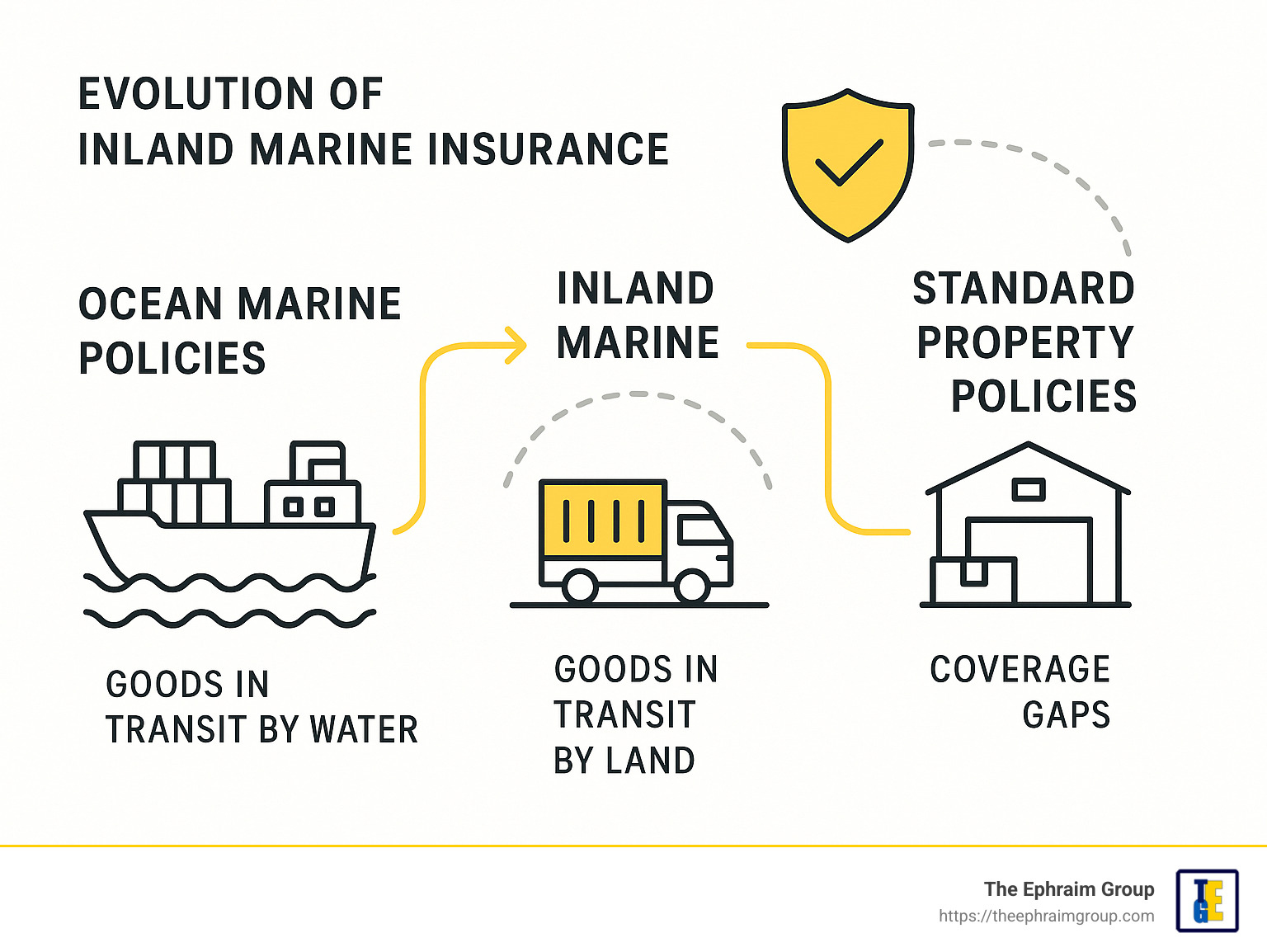
To understand why a land-based insurance policy carries a “marine” title, one must look back at the history of global trade. Historically, “Ocean Marine” insurance was the standard for protecting goods shipped across seas. However, as trade moved inland via rivers, canals, and eventually railways and trucks, the insurance industry needed to adapt.
From High Seas to Highways: A Brief History
The term “Inland Marine” was coined to distinguish land-based transport from traditional ocean-faring voyages. In the early 20th century, as the trucking industry exploded, the need for a policy that covered goods “in transit” became paramount. Traditional property insurance was designed for fixed locations—factories, warehouses, and offices. It was not built to handle the risks of a highway collision or theft from a trailer at a truck stop. Inland marine insurance filled this gap, evolving from its nautical roots into a versatile financial instrument for the land-based economy.
Defining “Property in Transit” in Modern Finance
In modern financial terms, inland marine insurance provides coverage for property that is mobile or used to facilitate transportation and communication. This includes everything from high-end construction equipment and medical imaging machines to fine art and fiber optic cables. If an asset is not permanently bolted to a foundation at a specific insured address, it likely falls under the purview of an inland marine policy. For a business, this means protecting the capital invested in mobile hardware that standard commercial property insurance would exclude.
Key Components and Coverage Types for Business Growth
Not all inland marine policies are created equal. Because the “Money” niche requires a precise understanding of where capital is allocated and protected, it is important to categorize the different “floaters” and endorsements that make up this coverage.
Bailee’s Customers Coverage
One of the most significant financial risks for service-based businesses—such as dry cleaners, computer repair shops, or specialized refurbishers—is the liability associated with holding someone else’s property. In legal and financial terms, this is known as a “bailment.” If a fire breaks out in a repair shop and destroys $100,000 worth of customer laptops, a standard property policy might only cover the building and the shop owner’s tools. Bailee’s Customers Coverage, a subset of inland marine, pays for the loss of the customers’ goods, preventing a catastrophic legal and financial liability that could bankrupt a small enterprise.
Builders Risk and Installation Floaters
For businesses involved in real estate development or high-end contracting, the “Builders Risk” policy is a fundamental financial safeguard. This coverage protects materials, fixtures, and equipment being used in the construction or renovation of a structure. If expensive HVAC units are delivered to a job site and stolen before they are installed, an installation floater (part of the inland marine family) ensures the business doesn’t have to eat the cost of replacement. This keeps project budgets on track and protects the investor’s ROI.
Motor Truck Cargo Insurance
For logistics and trucking companies, the cargo is the lifeblood of the business. Motor Truck Cargo insurance protects the transporter from the financial loss of the goods they are hauling. Given that a single tractor-trailer can carry hundreds of thousands of dollars in electronics or pharmaceuticals, the absence of this inland marine coverage would represent an unmanageable financial risk. It ensures that if an accident occurs, the carrier can satisfy the owner of the goods without depleting their own corporate reserves.
Why Inland Marine Insurance is a Critical Financial Strategy
From a pure personal finance and business management perspective, insurance is often viewed as a “sunk cost.” However, savvy financial officers view inland marine policies as a form of “liquidity protection.”
Filling the Gaps in Standard Property Insurance
Standard Commercial Property Insurance is typically location-dependent. It covers “Building and Personal Property” at a specific address. The moment a piece of equipment moves 100 feet away from that address, the coverage may drop significantly or vanish entirely. For a tech company that sends employees home with $5,000 workstations or a marketing firm that takes expensive cameras to an off-site shoot, this creates a “coverage gap.” Inland marine insurance acts as a financial bridge, ensuring that the asset’s value is protected regardless of its physical coordinates.
Risk Mitigation and Balance Sheet Protection
In corporate finance, the goal is to minimize volatility. An unexpected loss of $50,000 in specialized equipment due to a transit accident can disrupt cash flow and lead to missed opportunities. By paying a predictable premium for an inland marine policy, a business converts a potential “black swan” financial event into a manageable operational expense. This protection of the balance sheet is especially vital for mid-sized companies that may not have the cash reserves to self-insure against the loss of high-value mobile assets.
Assessing Your Business Needs: Who Should Invest?
Determining whether your business requires an inland marine policy involves an audit of your “mobile” asset value. If the total value of your equipment that leaves the office exceeds your comfortable “out-of-pocket” replacement threshold, the investment is likely necessary.
Construction and Contracting Industries
Contractors are the primary users of inland marine insurance. Between “Inland Marine Tools and Equipment” floaters and “Builders Risk” policies, the construction industry relies on these policies to secure financing. Most lenders will not release funds for a large-scale project unless there is proof of inland marine coverage, as the lender needs to know that the collateral (the materials and equipment) is protected against theft, vandalism, and transit damage.
Logistics, Transportation, and Specialized Tech
As we move toward a more digital and mobile economy, the definition of a “tool” has changed. For a data science firm, a mobile server unit is a tool. For a medical diagnostic company, a mobile MRI trailer is a tool. These high-cap-ex (capital expenditure) items require specialized inland marine forms. Furthermore, industries dealing in “Fine Arts” or “High-Value Jewelry” use inland marine “block” policies to protect inventory that is frequently moved between galleries or showrooms.
Financial Considerations: Costs, Premiums, and ROI
The cost of an inland marine policy is not arbitrary; it is a calculation of risk, value, and history. Understanding these factors can help a business owner optimize their insurance spend.
Factors Influencing Your Premium
Insurance underwriters look at several financial and operational data points to determine the premium:
- Valuation of Property: Is the property insured for “Replacement Cost” or “Actual Cash Value”? Replacement cost is more expensive but offers better financial protection.
- Territory of Operation: Does the equipment stay within a 50-mile radius, or does it travel across state lines? Greater distances typically equate to higher premiums.
- Security Measures: For transit coverage, the presence of GPS tracking, locked storage, and alarm systems can lead to premium discounts.
- Deductible Structure: Choosing a higher deductible can lower the monthly premium, which is a common strategy for businesses with strong cash reserves looking to protect only against “catastrophic” losses.

The Long-term Value of Asset Protection
When calculating the Return on Investment (ROI) for an inland marine policy, one must consider the “cost of inaction.” The total loss of a primary piece of revenue-generating equipment can lead to business interruption, lost contracts, and reputational damage. In this light, the inland marine policy is not just an insurance product; it is a business continuity tool. It ensures that the capital invested in the physical tools of the trade remains secure, allowing the business to focus on growth and income generation rather than disaster recovery.
In conclusion, while the name “Inland Marine” may be an artifact of 19th-century trade, its relevance in the 21st-century financial landscape has never been greater. By bridging the gap between fixed-location property insurance and the realities of a mobile, globalized economy, these policies provide the necessary safety net for business assets in motion. Whether you are a small business owner with a van full of tools or a corporate treasurer overseeing millions in transit cargo, the inland marine policy is an indispensable component of a sophisticated financial strategy.
aViewFromTheCave is a participant in the Amazon Services LLC Associates Program, an affiliate advertising program designed to provide a means for sites to earn advertising fees by advertising and linking to Amazon.com. Amazon, the Amazon logo, AmazonSupply, and the AmazonSupply logo are trademarks of Amazon.com, Inc. or its affiliates. As an Amazon Associate we earn affiliate commissions from qualifying purchases.