
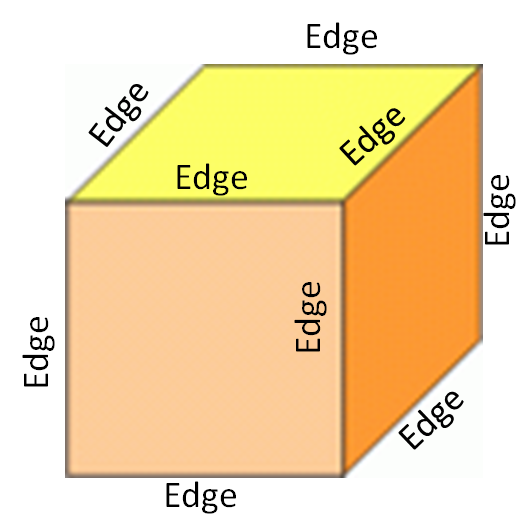
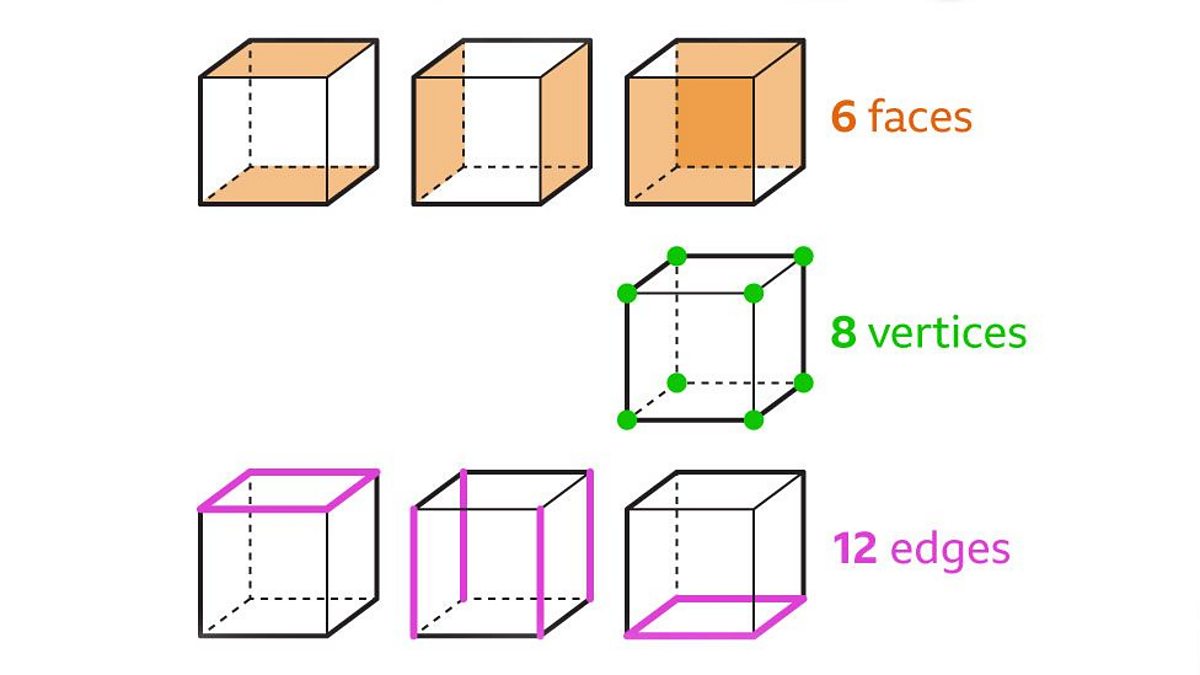
In the traditional sense, an edge is where two surfaces meet on a three-dimensional object or where two lines intersect to form a boundary on a two-dimensional plane. However, within the rapidly evolving landscape of technology, the concept of an “edge” on a shape transcends basic geometry. It becomes a critical component of user experience (UX) design, a fundamental data point for artificial intelligence, and a structural philosophy for hardware engineering. Understanding what an edge represents in these contexts is essential for understanding how we interact with the digital and physical tools that define our modern era.
The Geometry of User Experience: Why Shape Edges Matter in UI/UX
In digital product design, the “shape” of an interface is rarely just an aesthetic choice. Every button, card, and window is defined by its edges, and the treatment of these boundaries significantly impacts how a user perceives and interacts with software.
Soft Edges vs. Hard Edges: The Psychology of Corners
One of the most debated topics in interface technology is the use of rounded corners (often referred to as “soft edges”) versus sharp, 90-degree angles. From a technical standpoint, a rounded edge is a more complex mathematical construct—requiring more pixels and anti-aliasing to appear smooth.
Psychologically, humans are hardwired to perceive sharp edges as potentially threatening or “industrial,” whereas rounded shapes are seen as friendly and approachable. Tech giants like Apple and Google have leaned heavily into the “squircle”—a mathematical hybrid between a square and a circle—to define their operating systems. In UI design, an edge on a shape acts as a visual affordance, signaling to the user where one functional element ends and another begins.
Responsive Design and the Boundaries of the Viewport
In the context of web and mobile software, the “edge” also refers to the boundaries of the viewport. As we move toward a multi-device ecosystem, shapes must be “liquid.” The edges of a container in a software application are no longer static; they are defined by CSS frameworks and layout engines that recalculate the shape’s boundaries in real-time. The “edge” here is a dynamic constraint that ensures information density remains optimal, whether the shape is being viewed on a 6-inch smartphone or a 32-inch monitor.
Accessibility and the High-Contrast Edge
For users with visual impairments, the edge of a shape is the primary source of navigation. High-contrast “focus rings” are temporary edges that appear around shapes when a keyboard user navigates a page. Tech accessibility standards (WCAG) require these edges to have specific luminosity ratios. Without a clearly defined edge, a shape in a digital environment loses its functional identity, becoming indistinguishable from the background and rendering the software unusable for a segment of the population.
Computational Vision: How AI Defines the Edge of a Shape
While humans perceive edges instinctively, for an Artificial Intelligence or a computer vision system, an edge is a series of mathematical discontinuities. “Edge detection” is one of the foundational pillars of modern AI tools, enabling everything from facial recognition to autonomous driving.
Algorithms and Pixel Contrast
To a computer, an image is a grid of numbers representing color and brightness. An “edge” is identified where there is a significant jump in these values. Algorithms like the Canny Edge Detector or the Sobel Operator scan images for these sharp changes in intensity.
By identifying the edges of a shape, an AI can perform “feature extraction.” For instance, in a medical AI tool scanning an X-ray, the edge of a shape might indicate the boundary of a tumor or the structural integrity of a bone. The precision with which the software can define that edge is often the difference between a life-saving diagnosis and a missed abnormality.
Real-World Applications: From Autonomous Vehicles to Augmented Reality
In the realm of autonomous gadgets, detecting the edge of a shape is a matter of safety. A self-driving car must distinguish the edge of a sidewalk from the edge of the road. It uses LiDAR and computer vision to map 3D shapes in real-time, identifying the “edges” of obstacles.
Similarly, in Augmented Reality (AR), software must detect the edges of physical shapes in a room—like a table or a wall—to anchor digital objects. If the software fails to correctly identify the edge of the physical shape, the digital overlay will appear to “float” or clip through reality, breaking the immersion. Here, the “edge” is the bridge between the physical world and digital data.
Deep Learning and Shape Segmentation
Modern AI has moved beyond simple line detection into “instance segmentation.” This is the process where a neural network identifies every pixel belonging to a specific shape and draws a precise boundary—an edge—around it. This tech is used in photo editing apps (like “Magic Eraser” tools) to instantly separate a subject from its background. The AI isn’t just looking for a line; it is understanding the intent of the shape’s edge.
The Hardware Perspective: Engineering the Physical Edge of Technology
Beyond software and code, the physical “edge” of hardware gadgets represents the pinnacle of industrial engineering. The transition from “bezels” to “edge-to-edge” displays has been the defining trend of the last decade in consumer electronics.
Industrial Design and Ergonomics
In gadgets like smartphones, tablets, and wearables, the edge of the shape is where the user makes physical contact. Engineers must balance the “edge” between aesthetics and ergonomics. A razor-sharp edge might look futuristic, but it is uncomfortable to hold. This led to the development of 2.5D glass—where the glass edge of a screen is slightly curved to meet the metal frame seamlessly. This technical feat requires precision milling and chemical tempering to ensure that the “edge” of the shape is both durable and aesthetically pleasing.
Screen-to-Body Ratios and the “Edge-to-Edge” Revolution
The “edge” of a screen used to be a thick plastic border known as a bezel. As display technology transitioned from LCD to OLED, manufacturers were able to fold the display circuitry underneath the screen itself, allowing the “shape” of the image to extend to the very edge of the physical device.
This “edge-to-edge” philosophy has driven innovations in under-display cameras and haptic buttons. When the edge of the display disappears, the device becomes a “window” into the software, minimizing the distraction of the hardware. However, this creates a tech challenge: “accidental touch rejection.” Software must be smart enough to know when a user’s palm is resting on the edge of the shape versus an intentional input.
Thermal Management at the Boundaries
In high-performance hardware like gaming laptops or servers, the edge of the internal components (like the heat sink or the chassis) is designed for thermal dissipation. The “shape” of cooling fins is maximized to create as much surface area—and therefore as many “edges”— as possible to allow heat to escape. In this context, the edge is a functional tool for temperature regulation, ensuring that the technology can operate at peak performance without throttling.
The “Edge” as a Topological Concept in Network Technology
While we often think of shapes as physical or visual, network architects often speak of the “shape” of a network. In this niche, “Edge Computing” refers to a literal shift in where data is processed.
Decentralization and the Network Edge
In traditional cloud computing, the “shape” of the network is centralized; data travels from a device to a distant server and back. “Edge computing” changes the geometry of this flow. By moving processing power to the “edge” of the network—closer to the user’s device—tech companies can reduce latency.
The “shape” of the network becomes a distributed web rather than a hub-and-spoke. For technologies like 5G and the Internet of Things (IoT), the “edge” is the frontier where the digital world meets the physical world. This is where real-time data from smart sensors is processed, making the “edge” of the network shape the most critical point for security and speed.
Digital Security at the Perimeter
In cybersecurity, the “edge” of a corporate network is the perimeter that must be defended. As the “shape” of the modern workplace changes—moving from a single office building to thousands of remote home offices—the edge becomes porous. Software-Defined Perimeters (SDP) and “Zero Trust” architectures are tech tools designed to secure these shifting edges. Here, the “edge” isn’t a physical line, but a digital boundary of authentication.

Conclusion: The Multifaceted Edge
What is an edge on a shape? In the world of technology, it is far more than a geometric intersection. It is the psychological bridge between a user and an interface; it is the mathematical data point that allows an AI to “see”; it is the engineering marvel of a bezel-less display; and it is the functional frontier of network processing.
As we continue to push the boundaries of what is possible, our definition of an “edge” will continue to evolve. Whether we are smoothing the edges of a UI for better mental health, or sharpening the edge detection of an autonomous drone for better safety, the “edge” remains the most important part of any shape in the tech ecosystem. It is where the interaction happens, where the data is processed, and where the future is shaped.
aViewFromTheCave is a participant in the Amazon Services LLC Associates Program, an affiliate advertising program designed to provide a means for sites to earn advertising fees by advertising and linking to Amazon.com. Amazon, the Amazon logo, AmazonSupply, and the AmazonSupply logo are trademarks of Amazon.com, Inc. or its affiliates. As an Amazon Associate we earn affiliate commissions from qualifying purchases.