
In the modern globalized economy, the tools of international influence have shifted from the battlefield to the ledger. While military might remains a cornerstone of geopolitics, the primary weapon of the 21st century is the economic sanction. For investors, business leaders, and financial professionals, understanding economic sanctions is no longer just a matter of following the news; it is a critical component of risk management and financial literacy.
An economic sanction is a commercial and financial penalty applied by one or more countries against a targeted self-governing state, group, or individual. These measures are typically used to achieve political, social, or military objectives without resorting to armed conflict. In the “Money” niche, sanctions represent a significant disruption to the flow of capital, affecting everything from commodity prices to the stability of international banking systems.
The Mechanics of Economic Sanctions: How Financial Pressure is Applied
Economic sanctions are not a monolith; they range from targeted “smart sanctions” to comprehensive trade embargoes. To understand their impact on the financial world, one must first understand the various levers that governments pull to restrict the movement of money.
Trade Embargoes and Tariffs
The most traditional form of economic sanction is the trade embargo. This is a total or partial ban on trade with a particular country. When a nation is placed under an embargo, businesses are prohibited from exporting goods to or importing goods from that jurisdiction.
Tariffs, while often viewed through the lens of protectionism, are also used as a retaliatory sanction. by imposing high taxes on specific goods, a government can make it financially untenable for a foreign nation to sell its products, thereby draining its foreign currency reserves and weakening its industrial base.
Financial Asset Freezes
In the modern era, asset freezes have become the preferred tool for targeting individuals and entities. When a government—such as the United States via the Office of Foreign Assets Control (OFAC)—identifies a sanctioned party, it mandates that all financial institutions within its jurisdiction freeze that party’s assets.
This means that bank accounts, real estate holdings, and investment portfolios are effectively locked. The “money” still exists, but it is inaccessible. For the global financial system, this requires rigorous “Know Your Customer” (KYC) protocols to ensure that no bank inadvertently processes a transaction for a sanctioned individual.
Capital Market Restrictions
Perhaps the most sophisticated form of economic sanction involves restricting a nation’s access to international capital markets. This can include banning the purchase of a country’s sovereign debt or preventing its corporations from issuing new stocks or bonds on international exchanges. By cutting off a nation’s ability to borrow money or raise equity, sanctioning bodies can stifle the target’s economic growth and force a depletion of its domestic savings.
The Strategic Role of Sanctions in Global Business Finance
Sanctions are often described as “non-kinetic warfare.” From a business finance perspective, they are tools used to manipulate the cost of doing business and the availability of capital to influence behavior.
Coercive Diplomacy through Capital
The primary goal of an economic sanction is to create enough financial pain that the target entity is forced to change its policy. Whether the goal is nuclear non-proliferation, the cessation of human rights abuses, or the ending of a military invasion, the mechanism is the same: making the status quo too expensive to maintain. For business leaders, this means that geopolitical risks are directly tied to the cost of capital. When a major economy is sanctioned, the ripple effects can lead to a credit crunch in related industries.
Protecting National Economic Interests
While often framed in moral or political terms, sanctions are frequently used to protect national economic interests. By sanctioning foreign competitors or industries that use unfair subsidies, a nation can protect its domestic market and ensure the long-term viability of its own corporations. In this sense, sanctions are an extension of a nation’s broader economic strategy, used to ensure a “level playing field” or to gain a competitive advantage in the global market for resources and technology.
How Sanctions Impact Global Markets and Personal Investing
For the individual investor, economic sanctions can be a source of significant market volatility. Because the global economy is deeply interconnected, a sanction placed on one country can have unintended consequences for portfolios thousands of miles away.
Market Volatility and Commodity Prices
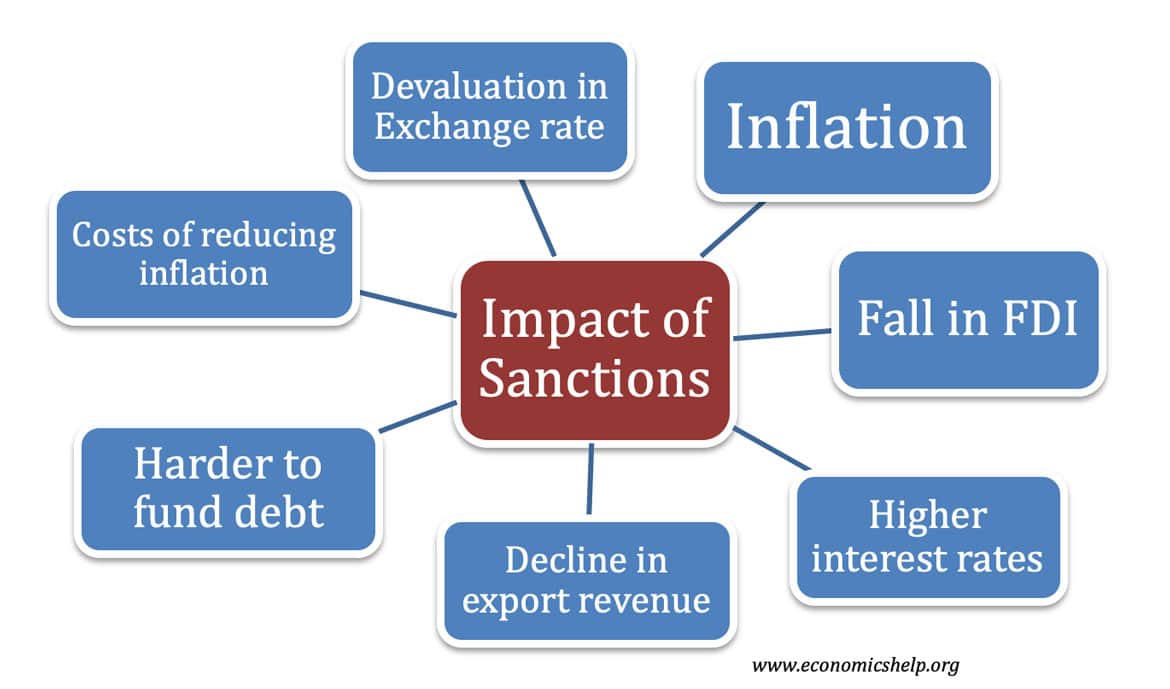
Sanctions often target resource-rich nations. When a major oil, gas, or mineral producer is hit with sanctions, the global supply of those commodities shrinks, leading to immediate price spikes. We have seen this repeatedly in the energy markets. For an investor, this can mean significant gains in energy sector stocks but a corresponding loss in transportation or manufacturing stocks that rely on cheap fuel. Understanding the “sanction risk” of a commodity is essential for any diversified portfolio.
Supply Chain Disruptions and Inflation
In the world of business finance, efficiency is king. Many companies rely on “just-in-time” supply chains that cross multiple borders. When sanctions are imposed, these supply chains are often severed overnight. Businesses are forced to find new suppliers, often at higher costs, which leads to “cost-push inflation.” This inflation erodes the purchasing power of consumers and can lead to higher interest rates as central banks struggle to stabilize the economy.
The Risks for International Diversification
The cornerstone of modern investing is diversification, often involving international equities. However, sanctions introduce a unique risk: the risk of “trapped capital.” If an investor holds stocks in a country that suddenly becomes the target of comprehensive sanctions, those assets may become un-tradable. In some cases, brokerage firms may be legally required to prevent the sale of these securities, leaving investors with “zombie assets” that have value on paper but cannot be converted back into cash.
Navigating Compliance and Financial Risk Management
For corporations and financial institutions, the “Money” side of sanctions is primarily a matter of compliance. The penalties for violating sanctions can be astronomical, often reaching billions of dollars in fines, not to mention the irreparable damage to a brand’s reputation and its ability to access the U.S. dollar clearing system.
The Role of OFAC and International Regulatory Bodies
In the United States, the Treasury Department’s Office of Foreign Assets Control (OFAC) is the primary body responsible for administering and enforcing economic sanctions. Globally, the United Nations Security Council and the European Union also maintain their own sanction lists.
For any entity involved in international finance, cross-referencing every transaction against these lists is a daily necessity. The complexity of these regulations has given rise to a multi-billion dollar “RegTech” (Regulatory Technology) industry, which uses AI and big data to monitor the global movement of money in real-time.
Due Diligence in Modern Corporate Finance
In today’s environment, due diligence goes far beyond checking a balance sheet. It involves “Ultimate Beneficial Ownership” (UBO) checks. Sanctioned individuals often hide their wealth behind layers of shell companies and offshore trusts.
For a business looking to engage in a merger or acquisition, or for a bank extending a large line of credit, the financial risk is high. If they accidentally transact with a “blocked person” through an intermediary, they could face severe “secondary sanctions.” This has led to a more cautious approach to international business, where the “cost of compliance” is a permanent line item in the budget of any major financial institution.
The Future of Money: Sanctions in a Digital World
As we look toward the future, the nature of economic sanctions is evolving with the rise of digital assets and decentralized finance (DeFi). Some nations have explored using cryptocurrencies to bypass the traditional banking system and evade sanctions. This has led to a “cat and mouse” game between regulators and sanctioned entities.
From a financial perspective, this struggle is defining the future of the global monetary system. Will the U.S. dollar remain the dominant reserve currency if it is used as a weapon of sanction? Or will the world move toward a more fragmented financial system where “sanction-proof” digital currencies play a larger role? For anyone interested in the future of money, the intersection of sanctions and financial technology is the most important frontier to watch.

Conclusion
Economic sanctions are a powerful, complex, and double-edged sword in the world of finance. They are designed to exert pressure and achieve political ends, but their secondary effects move through the global economy like a shockwave. For the savvy investor or business professional, understanding the mechanics of these sanctions is vital. By recognizing how sanctions affect supply chains, commodity prices, and capital markets, one can better navigate the risks and opportunities of an increasingly volatile global financial landscape. In the end, money is the ultimate language of power, and sanctions are the grammar that dictates how that power is used on the world stage.
aViewFromTheCave is a participant in the Amazon Services LLC Associates Program, an affiliate advertising program designed to provide a means for sites to earn advertising fees by advertising and linking to Amazon.com. Amazon, the Amazon logo, AmazonSupply, and the AmazonSupply logo are trademarks of Amazon.com, Inc. or its affiliates. As an Amazon Associate we earn affiliate commissions from qualifying purchases.